Why use an argon tube furnace for BIBC carbonization? Prevent oxidation and ensure structural integrity.
Updated 3 months ago
The carbonization of Bowl-in-Bowl Carbon structures (BIBCs) requires a high-temperature tube furnace with argon protection to facilitate controlled pyrolysis while preventing destructive oxidation. This specialized setup provides the precise thermal environment necessary to transform polymer precursors into a highly graphitized carbon framework. Without these specific conditions, the delicate bowl-in-bowl architecture would undergo oxidative combustion, resulting in total material loss and the collapse of the microscopic morphology.
Core Takeaway: To successfully synthesize BIBCs, you must balance high-temperature thermal decomposition with an oxygen-free environment. Argon serves as a critical inert barrier that preserves structural integrity and maximizes the electrical conductivity of the resulting carbon framework.
Preventing Oxidative Combustion and Material Loss
The Role of Argon as an Inert Shield
Argon is a noble gas that effectively displaces oxygen and moisture within the tube furnace. This creates a completely inert environment, preventing carbonized materials from reacting with oxygen at high temperatures.
Preventing Material Ablation
At temperatures such as 700°C to 1300°C, carbon materials are highly susceptible to "burning off" if even trace amounts of oxygen are present. Argon protection prevents this ablation, ensuring the polymer coating converts into carbon rather than ash.
Maximizing Product Yield
By isolating the reaction from ambient air, the argon atmosphere ensures that the chemical conversion process is efficient. This maximizes the final yield of the BIBCs and ensures the material retains its intended chemical composition and mass.
Maintaining Structural Integrity and Morphology
Preserving the Bowl-in-Bowl Architecture
The unique "bowl-in-bowl" shape is a complex microscopic morphology that is highly sensitive to uncontrolled chemical reactions. A tube furnace provides a stable and uniform temperature field that allows the structure to stabilize during the transition from polymer to carbon.
Regulating Pore Structure
The inert atmosphere is critical for accurately controlling the resulting pore structure and graphitic interlayer spacing. This precision is necessary to ensure the final material possesses the specific surface area and storage capacity required for high-performance applications.
Managing Volatile Release
During pyrolysis, surface-modified molecules undergo dehydration and decarboxylation. The controlled environment of a tube furnace allows these volatile components to be purged steadily by the argon flow, preventing internal pressure build-up that could rupture the bowl structures.
Enhancing Material Properties
Achieving High Electrical Conductivity
High-temperature treatment facilitates the rearrangement of carbon atoms into a highly graphitized framework. This structural reorganization is the primary driver for enhancing the electrical conductivity of the BIBCs.
Promoting Molecular Rearrangement
The stable heat provided by the furnace enables polycyclic aromatic hydrocarbon rearrangement. This process is essential for creating a robust carbon skeleton with high long-term stability and specific structural defects.
Protecting Surface Modifications
If the BIBCs include nitrogen doping or metal nano-alloys, argon protection is even more critical. It prevents the oxidation of these functional components, ensuring the final catalyst or electrode possesses the intended valence states and conductivity.
Understanding the Trade-offs
Gas Purity vs. Material Quality
Using industrial-grade argon instead of high-purity (99.999%) argon can introduce trace contaminants. These impurities may cause minor surface etching or unwanted structural defects, which can degrade the performance of the BIBCs.
Flow Rate and Thermal Uniformity
While a high argon flow rate ensures an oxygen-free environment, it can also create temperature gradients within the tube. These fluctuations may lead to uneven carbonization, where samples at the gas inlet differ in quality from those deeper in the furnace.
Equipment Sealing Challenges
The effectiveness of the argon atmosphere is entirely dependent on the mechanical seals of the tube furnace. Even a microscopic leak can allow oxygen to enter via back-diffusion, which can compromise an entire batch of materials during the cooling phase.
Strategic Implementation for Carbonization
- If your primary focus is Structural Precision: Utilize high-purity argon and a slow heating ramp rate to ensure the delicate bowl-in-bowl morphology is not disrupted by rapid gas evolution.
- If your primary focus is Electrical Performance: Target higher carbonization temperatures (above 800°C) to maximize graphitization, ensuring the furnace seals are checked to prevent oxidation at these extremes.
- If your primary focus is Pore Regulation: Carefully calibrate the argon flow rate to ensure consistent removal of decomposition byproducts without inducing significant thermal gradients across the sample boat.
Mastering the balance between high-energy thermal treatment and strict atmospheric isolation is the definitive requirement for producing high-performance, architecturally sound Bowl-in-Bowl Carbon structures.
Summary Table:
| Key Feature | Role in Carbonization | Impact on BIBC Quality |
|---|---|---|
| Argon Shield | Displaces oxygen/moisture | Prevents oxidative combustion and material loss |
| Inert Atmosphere | Controlled pyrolysis | Preserves delicate bowl-in-bowl morphology |
| High-Temp Range | 700°C to 1300°C treatment | Maximizes graphitization and electrical conductivity |
| Uniform Heat | Stable thermal field | Ensures consistent pore structure and surface area |
Elevate Your Material Research with THERMUNITS
Precision is paramount in the synthesis of advanced carbon structures like BIBCs. THERMUNITS is a leading manufacturer of high-performance thermal processing solutions tailored for material science and industrial R&D. We provide the rigorous atmospheric control and thermal uniformity your research demands.
Our comprehensive range of equipment includes:
- Tube & Atmosphere Furnaces (Optimized for BIBC carbonization)
- Muffle, Vacuum, Rotary, and Hot Press Furnaces
- CVD/PECVD Systems & Vacuum Induction Melting (VIM) Furnaces
- Dental Furnaces and High-Quality Thermal Elements
Don't let oxidation or thermal gradients compromise your results. Partner with THERMUNITS for reliable, high-purity thermal environments designed for breakthroughs.
Contact Our Engineering Team Today
References
- Xiaoyu Wu, Ming Chen. Tailoring Versatile Cathodes and Induced Anodes for Zn–Se Batteries: Anisotropic Orientation of Tin‐Based Materials within Bowl‐In‐Ball Carbon. DOI: 10.1002/advs.202403224
Mentioned Products
- Vertical 1700C Vacuum and Atmosphere Tube Furnace with 80mm Alumina Tube
- 1200°C Atmosphere Controlled Automatic Bottom Loading Furnace with 6 Inch Quartz Tube
- 1700C High Temperature Alumina Tube Furnace with 18 Inch Heated Zone and Vacuum Sealing Flanges
- 1200C Hybrid Muffle and Tube Furnace for Material Research with Dual Atmosphere Control Quartz Tubes
- Three Zone Tube Furnace with 11 Inch or 15 Inch Quartz Tube and Hinged Flanges for Vacuum Atmosphere Heat Treatment
People Also Ask
- How is an industrial-grade vertical tube furnace utilized in smelting leaching residues? Enhance Metal Recovery Efficiency
- What is the function of a laboratory-grade vertical tube furnace in fast pyrolysis? Optimize Composite Research.
- How does a vertical tube furnace facilitate thermoelectric alloy melting? Precision synthesis for material homogeneity.
- Why is a thermocouple sensor indispensable for monitoring the vertical tube furnace during gallium oxide nanowire production? Optimize VLS Growth
- What are the advantages of using a vertical tube furnace for crucible experiments simulating steel-slag interactions?

Tech Team · ThermUnits
Last updated on Jun 02, 2026
Related Products

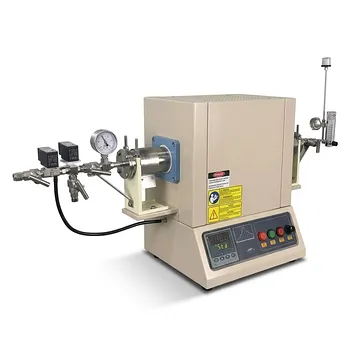
Vertical 1700C Vacuum and Atmosphere Tube Furnace with 80mm Alumina Tube
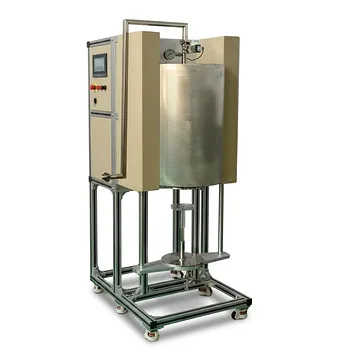
1200°C Atmosphere Controlled Automatic Bottom Loading Furnace with 6 Inch Quartz Tube
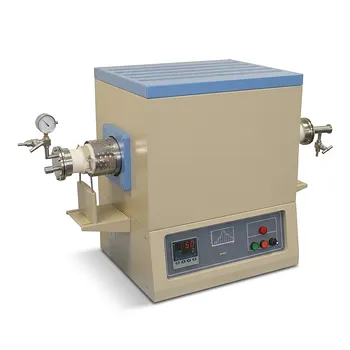
1700C High Temperature Alumina Tube Furnace with 18 Inch Heated Zone and Vacuum Sealing Flanges
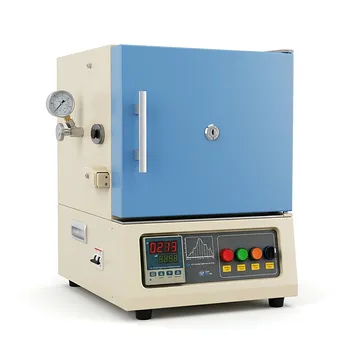
1200C Hybrid Muffle and Tube Furnace for Material Research with Dual Atmosphere Control Quartz Tubes

Three Zone Tube Furnace with 11 Inch or 15 Inch Quartz Tube and Hinged Flanges for Vacuum Atmosphere Heat Treatment

Compact Vertical Split Quartz Tube Furnace with Stainless Steel Vacuum Flanges for Rapid Thermal Quenching and Controlled Atmosphere Material Processing
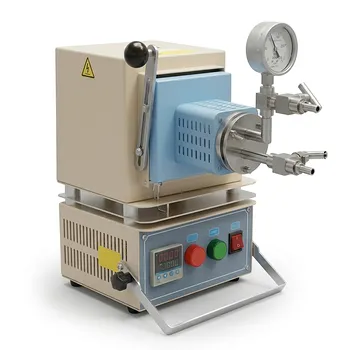
Compact Hybrid Muffle and Tube Furnace for 1000C Controlled Atmosphere Laboratory Material Sintering
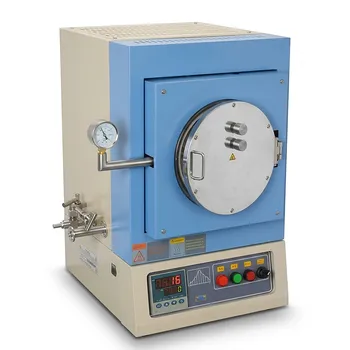
1100°C High Temperature Quartz Chamber Furnace 8 Inch OD with 7.6 Liter Capacity and Vacuum Atmosphere Capability
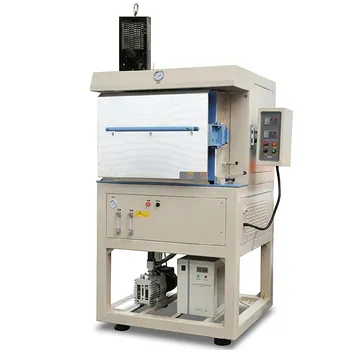
1200C Hydrogen Atmosphere Box Furnace with 5 Heated Sides and 64L Chamber

1200°C 5 Inch Vertical Quartz Tube Furnace with Stainless Steel Vacuum Flanges
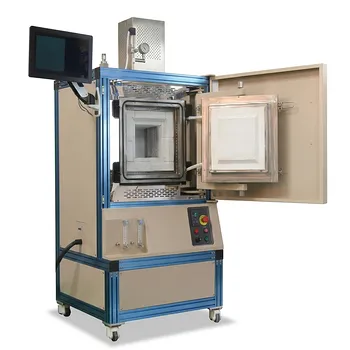
High Temperature Hydrogen Atmosphere Box Furnace 1650C Max Reducing Environment Material Synthesis System 8x8x8 Chamber

Compact High Temperature 1600C Tube Furnace with 50mm Alumina Tube and Vacuum Flanges for Material Sintering

High Temperature 1700C Six Zone Split Tube Furnace with Alumina Tube and Water Cooled Flanges

1800C High Temperature Compact Vacuum Tube Furnace with 60mm OD Alumina Tube and Kanthal MoSi2 Heating Elements

1700C Hydrogen Gas Tube Furnace with 60mm Alumina Process Tube and Integrated Hydrogen Safety Detector
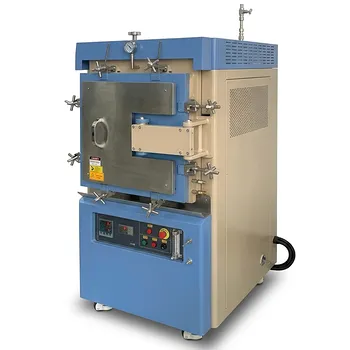
Atmosphere Controlled Muffle Furnace 1700C Maximum Temperature 80L High Capacity Vacuum Inert Gas Box Furnace

High Temperature 1700C Benchtop Tube Furnace with 5 Inch Heating Zone High Purity Alumina Tube and Vacuum Sealing Flanges
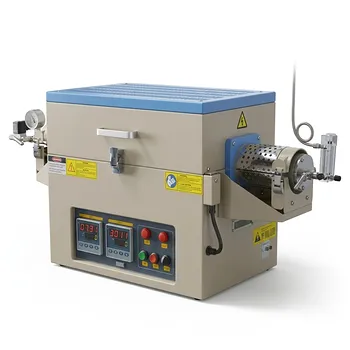
1100C Dual Zone Hydrogen Gas Tube Furnace with Quartz Tube and Integrated H2 Leak Detection System

High Temperature 1700C Vertical Tube Furnace for Powder Spherification and Material Sintering