Why is a high vacuum system necessary for the VLS synthesis of Gallium Oxide? Master Purity & Growth Control
Updated 3 months ago
A high vacuum system is the fundamental requirement for the VLS synthesis of Gallium Oxide. By lowering the background pressure to approximately 10⁻³ Torr, the system eliminates residual oxygen interference and prevents the uncontrolled oxidation of the substrate. This controlled environment ensures that Gallium and Oxygen precursors reach the silver catalyst in precise concentrations, allowing for the exact supersaturation and precipitation required to grow high-quality $Ga_2O_3$ nanowires.
Core Takeaway: High vacuum systems provide the thermodynamic and kinetic control necessary to prevent parasitic oxidation while facilitating the specific phase-change equilibrium required for the Vapor-Liquid-Solid (VLS) growth mechanism to function.
Maintaining Chemical Purity and Stoichiometry
Eliminating Residual Oxygen Interference
In a VLS system, the presence of even trace amounts of uncontrolled oxygen can lead to bulk oxidation rather than selective nanowire growth. High vacuum systems remove atmospheric gases and moisture that would otherwise react prematurely with the precursors, ensuring that the oxidation of Gallium occurs only where intended. This precision is vital for maintaining the stoichiometric balance of $Ga_2O_3$, which directly impacts the material's electronic and optical properties.
Protecting the Substrate Integrity
Pre-reaction of the substrate surface can inhibit the formation of the liquid catalyst alloy necessary for VLS. By reducing the pressure, the system prevents the formation of an unwanted oxide layer on the substrate before the growth process begins. This ensures a clean interface, which is critical for the stability and alignment of the resulting nanowires.
Physics of the VLS Growth Mechanism
Precise Supersaturation in the Catalyst
The VLS process relies on precursors dissolving into a liquid silver catalyst droplet until it becomes supersaturated. Once supersaturated, the solid Gallium Oxide precipitates out at the liquid-solid interface to form the nanowire. A high vacuum environment allows for a stable and predictable flux of gas-phase precursors, enabling this equilibrium growth to happen without disruption from impurity collisions.
Enhancement of Molecular Mean Free Path
At lower pressures, the mean free path—the average distance a molecule travels before colliding with another—increases significantly. This allows Gallium and Oxygen molecules to migrate directionally toward the catalyst droplets rather than scattering into the chamber walls. This efficient transport ensures a uniform distribution of growth across the entire substrate surface.
Understanding the Trade-offs
System Complexity vs. Material Quality
Achieving and maintaining a vacuum of $10^{-3}$ Torr requires sophisticated mechanical and molecular pump sets, which increase the cost and complexity of the experimental setup. While lower pressures generally yield higher purity, extremely high vacuums can sometimes cause the unintended sublimation or evaporation of certain sensitive precursors or thin films. Finding the "sweet spot" in pressure is essential; for $Ga_2O_3$, the $10^{-3}$ Torr range provides the necessary balance between purity and efficient precursor delivery.
Growth Rate vs. Vapor Pressure
Lowering the pressure effectively lowers the boiling points and increases the volatility of the precursors. While this facilitates evaporation at lower temperatures, it may also require a more delicate adjustment of the temperature gradients to control the growth rate. If the vacuum is too high and the temperature is not precisely tuned, the precursors may pass through the growth zone too quickly to participate in the VLS reaction.
How to Apply Vacuum Control to Your Synthesis Goal
If you are optimizing your VLS synthesis process, your vacuum strategy should align with your specific material objectives:
- If your primary focus is High Crystal Purity: Aim for the highest possible vacuum before introducing precursors to ensure all residual nitrogen and oxygen are removed from the chamber.
- If your primary focus is Nanowire Uniformity: Prioritize a stable, controlled vacuum pressure throughout the entire heating cycle to maintain a constant precursor flux to the catalyst.
- If your primary focus is Interface Quality: Use a high-vacuum annealing step prior to synthesis to clean the substrate and promote better atomic diffusion at the catalyst-substrate junction.
A well-maintained high vacuum environment is the bridge between chaotic bulk reactions and the precise, bottom-up engineering of functional nanomaterials.
Summary Table:
| Key Reason | Impact on VLS Mechanism | Benefit to Resulting Nanowires |
|---|---|---|
| Oxygen Removal | Prevents parasitic/bulk oxidation | High stoichiometric purity & quality |
| Flux Control | Stabilizes catalyst supersaturation | Uniform diameter and morphology |
| Mean Free Path | Enables directional precursor migration | Efficient transport & growth rate |
| Interface Protection | Keeps substrates free of oxide layers | Improved alignment and stability |
Elevate Your Nanomaterial Synthesis with THERMUNITS
Precise control over vacuum and temperature is the foundation of high-quality Gallium Oxide (Ga2O3) growth. THERMUNITS is a leading manufacturer of high-performance thermal processing equipment, providing the specialized systems you need for successful VLS and CVD applications.
From advanced CVD/PECVD systems and Vacuum Furnaces to Atmosphere and Tube units, our equipment is engineered for the rigors of material science R&D. We empower researchers to achieve the exact supersaturation and purity levels required for next-generation semiconductors.
Ready to optimize your thermal processing?
Contact THERMUNITS Today to discuss your project requirements and discover how our laboratory heat treatment solutions can enhance your research outcomes!
References
- Tổng hợp dây nano Ga2O3/GaAs(100) bằng phương pháp hơi lỏng rắn sử dụng xúc tác hạt nano Ag. DOI: 10.57001/huih5804.2024.091
Mentioned Products
- High Temperature Vertical Atmosphere Controlled Furnace 1700C Automatic Bottom Loading 13 Liter Vacuum Thermal System
- High Vacuum Pressure Chamber Furnace 800C 3.5 Bar Sintering System for Superconducting Materials
- High Temperature Vacuum Lamination Hot Press Furnace Machine for Semiconductor Wafer Bonding and Advanced Composite Thermal Processing
- Vertical Vacuum Furnace 1100C High Temperature 8 Inch Quartz Chamber Water Cold Flange System
- Induction Heating System with Temperature Control for High Temperature Vacuum Sintering and Melting
People Also Ask
- What are the advantages of using a Bottom-Loading High-Temperature Furnace in Barium Titanate Fast Firing? Superior Microstructure
- In what ways does an atmosphere control system affect nanoporous gold structure? Control Oxygen for Precision Design.
- Why must carbothermic reduction of spent Li-battery powders be in an atmosphere furnace? Ensure High-Yield Recovery
- What are the primary technical advantages of atmosphere furnaces compared to vacuum furnaces? Optimize High-Volume Production
- How does an atmosphere furnace improve the quality of powder metallurgy components? Achieve High-Density Sintering.

Tech Team · ThermUnits
Last updated on Jun 02, 2026
Related Products
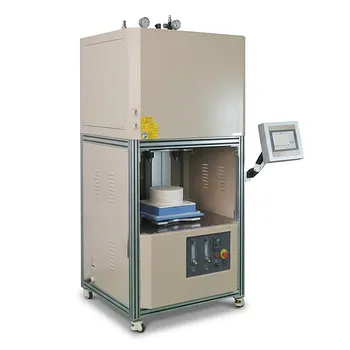
High Temperature Vertical Atmosphere Controlled Furnace 1700C Automatic Bottom Loading 13 Liter Vacuum Thermal System
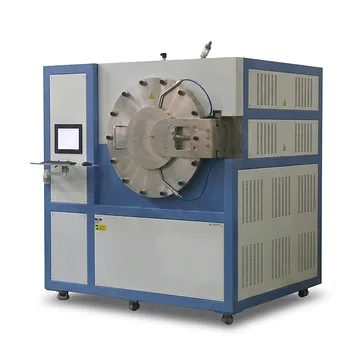
High Vacuum Pressure Chamber Furnace 800C 3.5 Bar Sintering System for Superconducting Materials
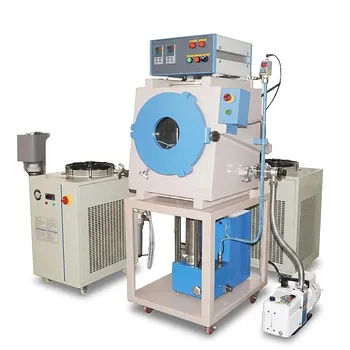
High Temperature Vacuum Lamination Hot Press Furnace Machine for Semiconductor Wafer Bonding and Advanced Composite Thermal Processing
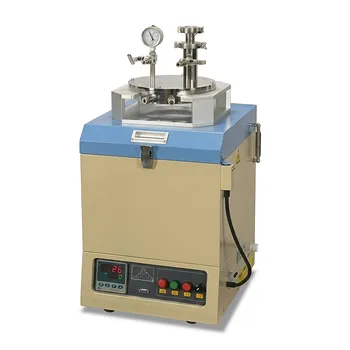
Vertical Vacuum Furnace 1100C High Temperature 8 Inch Quartz Chamber Water Cold Flange System
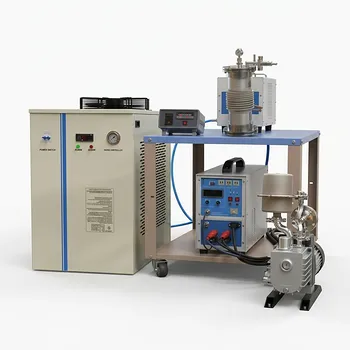
Induction Heating System with Temperature Control for High Temperature Vacuum Sintering and Melting
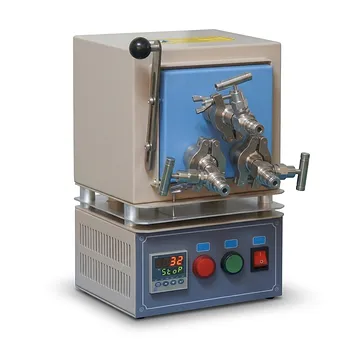
Triple Tube Compact Hybrid Muffle Furnace 1000C High Vacuum Thermal Processing System
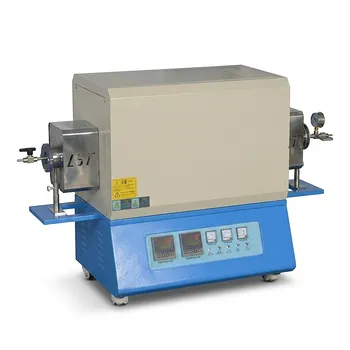
High Temperature Dual Zone Vacuum Tube Furnace for Material Research and CVD Processing
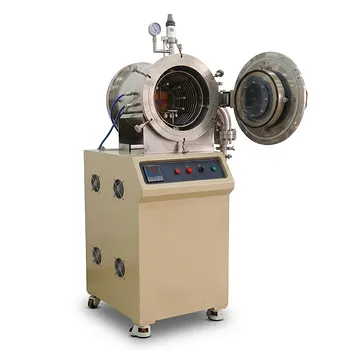
High Temperature Cold Wall High Vacuum Chamber Furnace 1400C for Advanced Material Processing
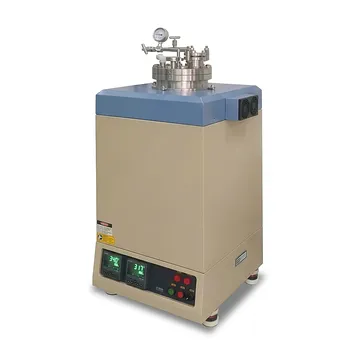
High Temperature 1000C Vacuum Furnace with 8 Inch ID Chamber for Material Sintering and Research Annealing
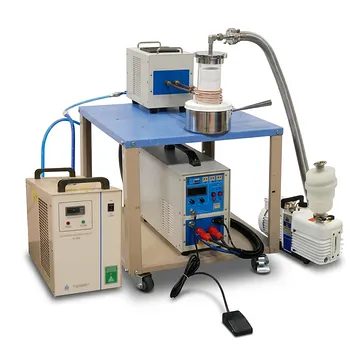
1900C Maximum High Temperature 7KW Vacuum Induction Melting System with 60mm Quartz Tube and Manual Temperature Control for Metallic Alloy Research
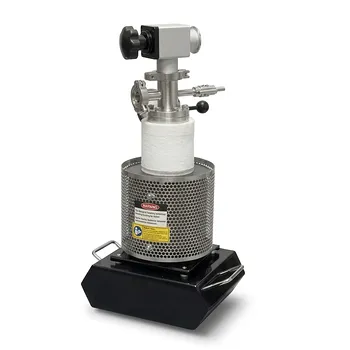
High Temperature 1100C Compact Top Loading Vertical Vacuum Tube Furnace for High Vacuum Noble Metal Melting and Material Research

High Temperature 1700C Vertical Tube Furnace for Powder Spherification and Material Sintering
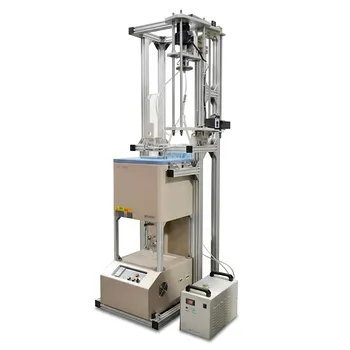
500C Vacuum Vertical Tube Furnace 84mm OD Sample Rotation Lifting System
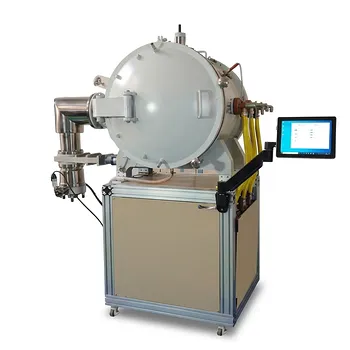
High Temperature Cold Wall Vacuum Furnace for Advanced Material Sintering and Annealing 1600C Heating Area 200x200x300mm
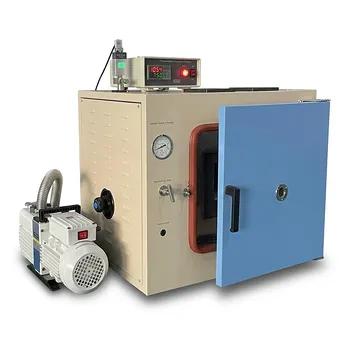
Compact High Vacuum Box Furnace 1050C Max 6.2L Ceramic Chamber Stainless Steel Shell Programmable Temperature Controller for Material Science Research
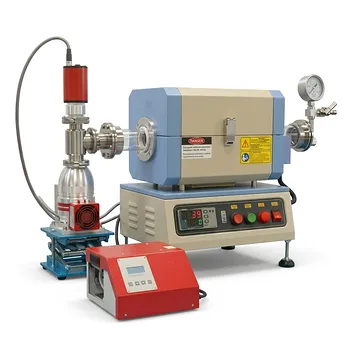
High Vacuum Compact Tube Furnace 1200C with Integrated Turbo Pump System and 8 Inch Heating Zone
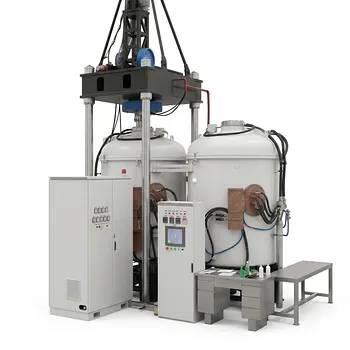
High Pressure 600T Vacuum Induction Hot Press Furnace for Advanced Material Heat Treatment and Sintering
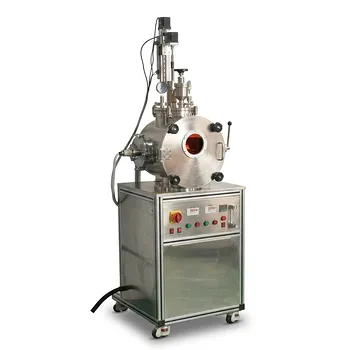
High Vacuum Melting Casting Furnace with Mechanical Stirring and Secondary Charge for Metallic Alloy Research
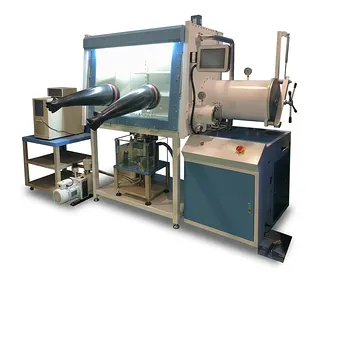
High Temperature Induction Melting System with Integrated Ultra High Purity Glove Box for Metallic Alloy Processing
