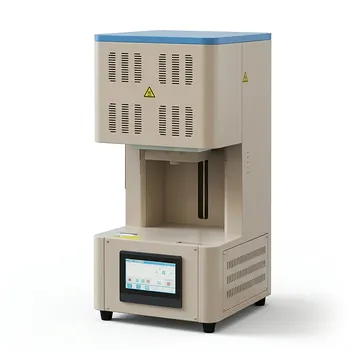
Why must carbothermic reduction of spent Li-battery powders be in an atmosphere furnace? Ensure High-Yield Recovery
Updated 3 months ago
The atmosphere control furnace is the critical component for ensuring that reduced metals do not revert to their oxidized states during high-temperature processing. By maintaining a strict nitrogen-protected environment, the furnace prevents metallic nickel, cobalt, and low-valence manganese oxides from reacting with oxygen at the 750 °C roasting temperature. This precise control ensures that the carbon material successfully converts high-valence metals into chemical states optimized for selective leaching and efficient recovery.
Core Takeaway: Atmosphere control is necessary to prevent the re-oxidation of valuable battery metals at high temperatures, ensuring they remain in the specific chemical states required for efficient downstream recycling.
The Critical Role of an Inert Environment
Shielding Reduced Metals from Oxygen
At the standard reduction temperature of 750 °C, atmospheric oxygen is highly reactive and will immediately attempt to re-oxidize any reduced materials. The atmosphere control furnace uses nitrogen gas to displace oxygen, creating a protective shield around the battery powder.
This shield is what allows metallic nickel and cobalt to remain in their metallic state once the carbon has done its work. Without this protection, the energy used to reduce these metals would be wasted as they spontaneously return to their high-valence oxide forms.
Stabilizing Low-Valence Manganese
Manganese recovery relies on maintaining the metal in a low-valence oxide state during the roasting process. In an open-air environment, manganese would rapidly transition back to higher oxidation states that are significantly harder to process.
The nitrogen-protected environment ensures that the carbothermic reduction is the only chemical reaction dictating the final state of the manganese. This consistency is vital for maintaining the purity of the final recycled product.
Impact on Downstream Recovery Efficiency
Optimizing the Selective Leaching Process
The primary goal of carbothermic reduction is to prepare the "black mass" for selective leaching, where specific metals are dissolved into solution. Leaching agents are designed to target specific chemical states, such as metallic forms or low-valence oxides.
If the atmosphere is not controlled, the resulting mixture will contain a chaotic variety of oxidation states. This leads to poor leaching yields and increases the complexity of separating the metals later in the process.
Maximizing Carbon Efficiency
In a controlled atmosphere, the carbon material acts as the sole reducing agent, targeting the high-valence metals directly. This makes the process highly predictable and chemically efficient.
In an uncontrolled environment, the carbon would also react with incoming atmospheric oxygen. This would consume the carbon prematurely and potentially leave the battery metals under-reduced and unrecoverable.
Understanding the Trade-offs
Operational Complexity and Seal Integrity
Using an atmosphere control furnace introduces significant mechanical complexity compared to standard kilns. The furnace must be perfectly sealed to prevent nitrogen leakage and oxygen ingress, which requires specialized gaskets and monitoring equipment.
Cost of Consumables
Maintaining a constant flow of nitrogen adds a continuous operational cost to the recycling process. While this increases the overhead, it is generally considered a mandatory expense because the loss of metal recovery efficiency in an open-air system would be far more costly.
How to Apply This to Your Project
When designing or scaling a lithium battery recycling operation, the choice of thermal equipment dictates the success of your metal recovery.
- If your primary focus is maximizing the purity of recovered Cobalt and Nickel: You must prioritize a furnace with a high-precision nitrogen delivery system to ensure these metals remain in a metallic state.
- If your primary focus is reducing chemical reagent costs in leaching: Use a strictly controlled atmosphere to ensure consistent metal valency, which allows for more predictable and efficient leaching chemistry.
- If your primary focus is high-volume throughput: Ensure your atmosphere control furnace is equipped with advanced oxygen sensors to maintain a protective environment even during continuous feeding and discharging.
Proper atmosphere control transforms a simple heating process into a precise chemical tool for high-yield battery material reclamation.
Summary Table:
| Key Process Factor | Role of Atmosphere Control | Benefit to Recycling Yield |
|---|---|---|
| Oxidation Control | Displaces oxygen with nitrogen | Prevents Ni, Co, and Mn from re-oxidizing |
| Metal Valency | Maintains low-valence states | Optimizes powders for selective leaching |
| Carbon Efficiency | Prevents carbon-oxygen reaction | Ensures carbon only reduces battery metals |
| Purity Standards | Eliminates atmospheric interference | Produces consistent, high-purity black mass |
Maximize Your Metal Recovery with THERMUNITS Precision Engineering
Successful lithium battery recycling depends on absolute control over your thermal environment. THERMUNITS is a leading manufacturer of high-temperature laboratory and industrial equipment, specializing in the solutions you need for efficient carbothermic reduction.
Our comprehensive range includes Atmosphere Control Furnaces, Rotary Kilns, Vacuum Induction Melting (VIM) Furnaces, and CVD/PECVD systems—all engineered to provide the nitrogen-protected environments essential for preventing oxidation and ensuring high-purity material output.
Whether you are conducting material science R&D or scaling up industrial recycling, our team delivers the thermal expertise to enhance your lab's efficiency and recovery rates.
Ready to upgrade your heat treatment process?
Contact THERMUNITS Today for a Custom Solution
References
- Shiteng Qin, Hongyu Zhao. Study on the influence mechanism of carbothermal reduction and selective leaching of valuable metals in spent lithium batteries. DOI: 10.1002/jctb.7645
Mentioned Products
- 1650C High Temperature Atmosphere Controlled Box Furnace with 65L Chamber for Advanced Material Sintering and Industrial Heat Treatment
- 1200C Atmosphere Controlled Automatic Bottom Loading Furnace with 6 Inch Quartz Tube Dual Zone System
- 1200°C Atmosphere Controlled Automatic Bottom Loading Furnace with 6 Inch Quartz Tube
- High Temperature Vertical Atmosphere Controlled Furnace 1700C Automatic Bottom Loading 13 Liter Vacuum Thermal System
- High Temperature Oxygen and Inert Atmosphere Controlled Furnace 8 Liter 1700C Sintering System for Advanced Materials RD
People Also Ask
- What role does atmosphere control play in technical ceramics and glass? Master Material Purity and Precision
- What role does a high-temperature atmosphere furnace play in the direct electrochemical reduction of CO2? - Key Insights
- What is the role of a high-temperature box furnace in the solid-state synthesis of Europium-doped M3MgSi2O8 phosphors?
- What is the role of a high-temperature box furnace in Na3MnZr(PO4)3 synthesis? Engineering High-Performance NASICON.
- What physical conditions does a high-temperature atmosphere furnace provide for MXene exfoliation? Process Guide

Tech Team · ThermUnits
Last updated on Jun 02, 2026
Related Products
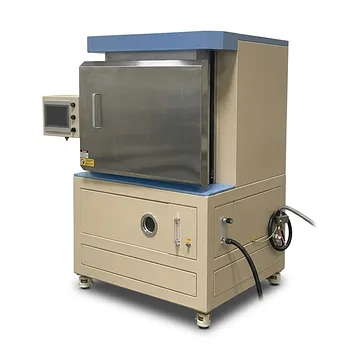
1650C High Temperature Atmosphere Controlled Box Furnace with 65L Chamber for Advanced Material Sintering and Industrial Heat Treatment
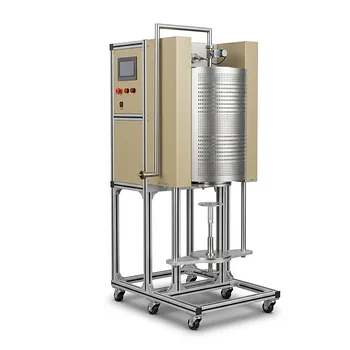
1200C Atmosphere Controlled Automatic Bottom Loading Furnace with 6 Inch Quartz Tube Dual Zone System
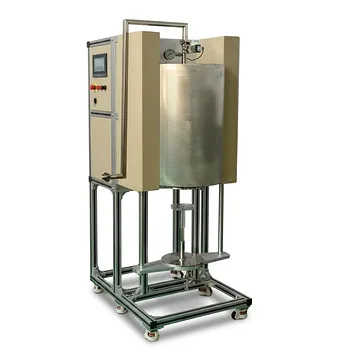
1200°C Atmosphere Controlled Automatic Bottom Loading Furnace with 6 Inch Quartz Tube
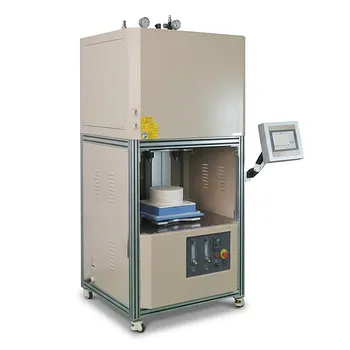
High Temperature Vertical Atmosphere Controlled Furnace 1700C Automatic Bottom Loading 13 Liter Vacuum Thermal System
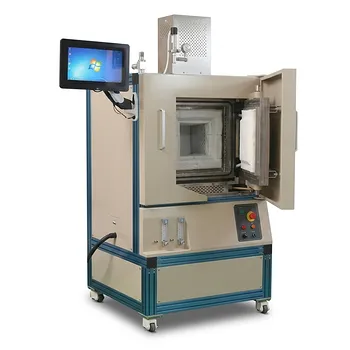
High Temperature Oxygen and Inert Atmosphere Controlled Furnace 8 Liter 1700C Sintering System for Advanced Materials RD
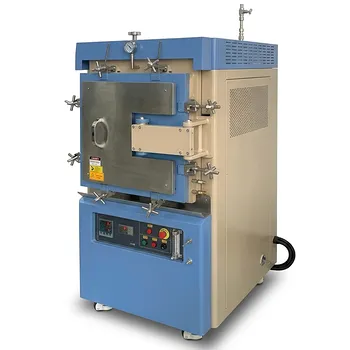
Atmosphere Controlled Muffle Furnace 1700C Maximum Temperature 80L High Capacity Vacuum Inert Gas Box Furnace
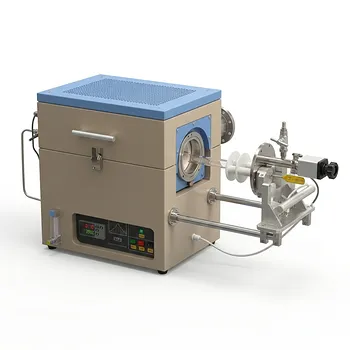
Compact Atmosphere Controlled Rapid Thermal Processing RTP Furnace with 4 Inch ID Quartz Tube 1100C
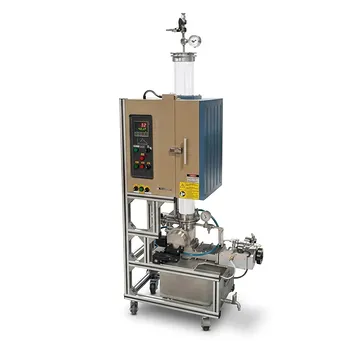
1200C High Temperature Atmosphere Controlled Vertical Quenching Tube Furnace with 4 Inch Quartz Tube
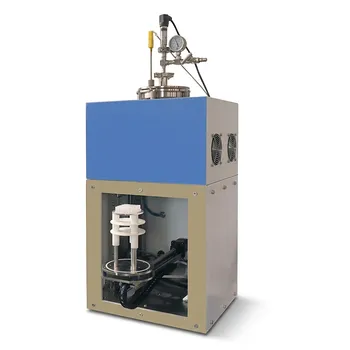
Rapid Thermal Processing RTP Atmosphere Controlled Bottom Loading Furnace 1100C High Throughput 50C per Second Heating Rate
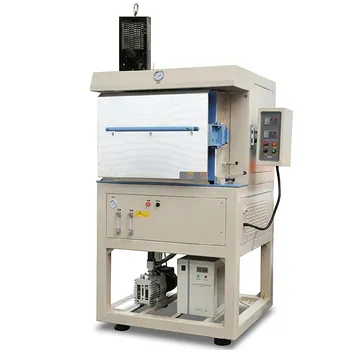
1200C Hydrogen Atmosphere Box Furnace with 5 Heated Sides and 64L Chamber
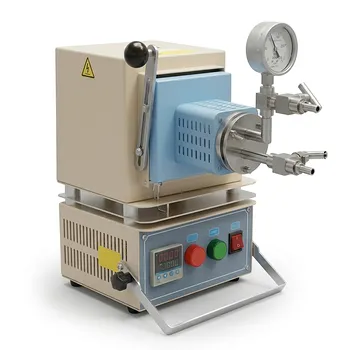
Compact Hybrid Muffle and Tube Furnace for 1000C Controlled Atmosphere Laboratory Material Sintering
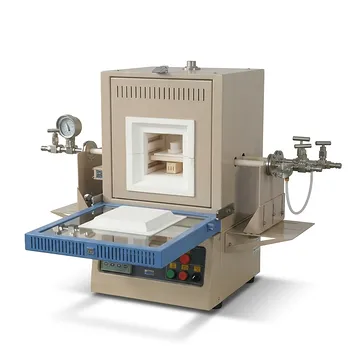
1700C Compact Hybrid Furnace with Dual Layer Box Sintering and Controlled Atmosphere Alumina Tubes

Compact Vertical Split Quartz Tube Furnace with Stainless Steel Vacuum Flanges for Rapid Thermal Quenching and Controlled Atmosphere Material Processing
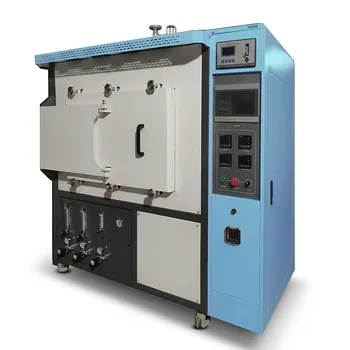
Roller Table Atmosphere Furnace 1500C High Temperature Battery Material Sintering System 112L Capacity
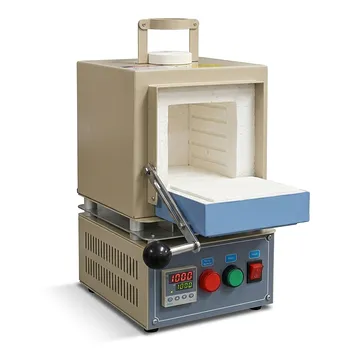
Compact 1000C Muffle Furnace with Programmable Controller and 2 Inch Top Port for Vacuum and Atmosphere Material Research
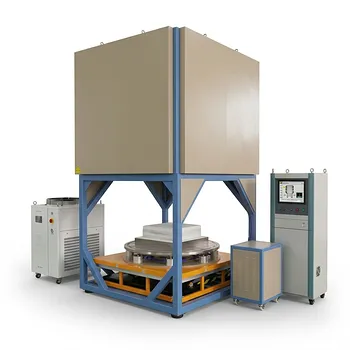
Bottom Loaded Inert Gas Atmosphere Box Furnace 1700C 1300C 216L Large Capacity Industrial Thermal Processing System
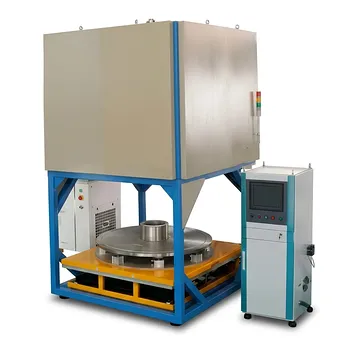
1400C Bottom Loaded Inert Gas Atmosphere Box Furnace with 125L Capacity and Precision Hydraulic Lift
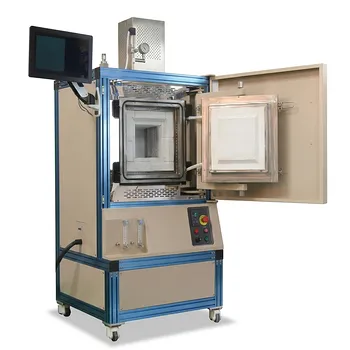
High Temperature Hydrogen Atmosphere Box Furnace 1650C Max Reducing Environment Material Synthesis System 8x8x8 Chamber
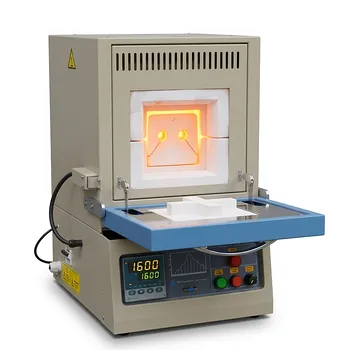
High Temperature Compact Muffle Furnace 1700 C with 30 Segment Programmable Controller and 1.7L Cubic Chamber