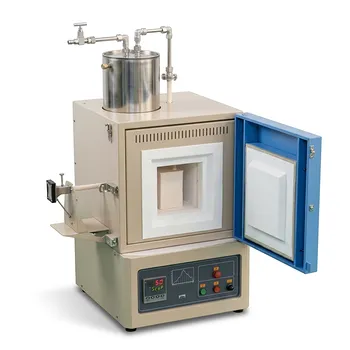
Why is a laboratory tube furnace essential for the calcination and transformation of CoFe2-MOF into CoFe2O4? Guide
Updated 5 months ago
A laboratory tube furnace is the indispensable tool for synthesizing CoFe2O4 from metal-organic frameworks (MOFs) because it provides the simultaneous, high-precision control over thermal gradients and atmospheric purity required for topological transformation. By maintaining specific heating rates and an inert environment, the furnace facilitates the oxidative decomposition of organic ligands while precisely regulating the valence states of cobalt and iron. This process ensures the formation of a spinel structure rich in active oxygen vacancies, which are critical for the material’s performance in applications like heavy metal adsorption.
Core Takeaway: The tube furnace acts as a controlled reactor that transforms CoFe2-MOF into CoFe2O4 by balancing slow-rate thermal decomposition with a sealed inert atmosphere to engineer specific lattice defects and metal valence distributions.
Precision Thermal Management for MOF Decomposition
The Role of Controlled Heating Rates
Standard heating often causes the rapid collapse of the MOF’s delicate porous structure, leading to bulk material rather than functional nanoparticles. A tube furnace allows for multi-stage programmed temperature rises, often as slow as 1°C/min to 2°C/min, which ensures a gradual "topological transformation."
Achieving High-Temperature Stability
The transformation typically requires sustained temperatures, such as 600°C, to fully decompose organic components within the MOF framework. The tube furnace provides a uniform temperature field that ensures every part of the precursor reaches the threshold for metal oxide formation simultaneously.
Preserving Precursor Morphology
By using a precise thermal ramp, the furnace enables in-situ conversion, where the metal nodes transform into CoFe2O4 nanoparticles while potentially carbonizing the organic framework into a conductive network. This prevents the sintering or agglomeration of the resulting oxides, maintaining a high surface area.
Atmospheric Control and Lattice Engineering
Regulating Valence State Distribution
The excellent sealing of a tube furnace allows for a stable argon or inert atmosphere, which is critical for managing the transition between Co2+/Co3+ and Fe2+/Fe3+. Without this vacuum-tight environment, unintended "deep oxidation" would occur, altering the chemical properties of the resulting spinel.
Generating Oxygen Vacancies
The use of high-purity argon during calcination promotes the generation of oxygen vacancies (Ov) on the oxide surface. These lattice defects serve as high-energy active sites that significantly enhance the material's ability to adsorb heavy metal ions like lead, copper, and mercury.
Preventing Uncontrolled Oxidation
Unlike open-air furnaces, the quartz tube structure provides a pure reaction environment that excludes atmospheric oxygen and moisture. This isolation is vital for ensuring that the cobalt and iron elements form the specific glaserite-type or spinel-type layered crystal structures required for electrochemical performance.
Understanding the Trade-offs
Equipment Complexity vs. Result Quality
While a tube furnace offers superior control, it requires a more complex setup involving gas cylinders, flow meters, and vacuum seals compared to a standard muffle furnace. However, using a muffle furnace for MOF derivatives often results in uncontrolled oxidation and the loss of the specific defect structures that make the material effective.
Throughput Limitations
Tube furnaces generally have smaller internal volumes than industrial muffle furnaces, meaning they are optimized for high-quality, small-batch synthesis rather than bulk production. The focus is on the precision of the chemical environment rather than the volume of the output.
How to Optimize Your Calcination Process
Choosing the Right Parameters for Your Goal
To achieve the best results with CoFe2-MOF precursors, your approach should be dictated by the desired properties of the final CoFe2O4:
- If your primary focus is heavy metal adsorption: Use a slow heating rate (2°C/min) and a strict Argon flow to maximize the concentration of oxygen vacancies and active surface sites.
- If your primary focus is phase purity: Ensure the furnace is pre-purged with inert gas to remove all traces of oxygen, preventing the formation of competing iron or cobalt oxide phases.
- If your primary focus is structural morphology: Optimize the final calcination temperature (around 600°C) to ensure the organic ligands are fully removed without causing the spinel nanoparticles to fuse together.
The laboratory tube furnace is not merely a heater, but a sophisticated chemical reactor that defines the final atomic architecture of CoFe2O4.
Summary Table:
| Feature | Role in MOF Calcination | Material Benefit |
|---|---|---|
| Programmed Heating | Controlled 1-2°C/min ramp | Preserves porous morphology and prevents sintering |
| Atmosphere Control | Inert Argon environment | Regulates metal valence and creates oxygen vacancies |
| Uniform Temp Field | Consistent 600°C exposure | Ensures complete transformation across precursor |
| Quartz Tube Design | Sealed reaction chamber | Prevents contamination and uncontrolled oxidation |
Advanced Thermal Solutions for Material Synthesis
Precision is the difference between a successful transformation and a failed sample. THERMUNITS is a leading manufacturer of high-temperature laboratory equipment, specialized in supporting researchers in material science and industrial R&D. Our high-performance Tube Furnaces, Vacuum and Atmosphere Furnaces, and CVD/PECVD systems are engineered to deliver the exact heating rates and atmospheric purity required for complex MOF calcination and spinel formation.
Whether you are synthesizing CoFe2O4 for heavy metal adsorption or developing advanced battery materials, our equipment provides the stability and control your project demands. Contact THERMUNITS today to discuss your specific heat treatment requirements and discover how our comprehensive range of thermal processing solutions—including Muffle, Rotary, Hot Press furnaces, and Vacuum Induction Melting (VIM) systems—can accelerate your research breakthroughs.
References
- Jieli Guo, Hao Li. MOF Derived Cobalt Ferrite Cubic Rod‐Like Materials for Highly Efficient Electrochemical Simultaneous Detection of Multiple Heavy Metal Ions. DOI: 10.1002/chem.202404298
Mentioned Products
- 4 Inch Two Zone Rotary CVD Tube Furnace for High Temperature Battery Material Synthesis and Advanced Material Calcination
- Dual Zone Rotary Tube Furnace for Uniform Powder Calcination 1000C 2 Inch Quartz Tube
- 900°C Max Rotary Tube Furnace with 8 Inch 310S Alloy Tube and Optional Multi Zone Heating for Industrial Material Calcination
- Two Zone Rotary CVD Furnace with Automatic Feeding and Receiving System for Powder Processing
- High Temperature 1700C Vertical Tube Furnace for Powder Spherification and Material Sintering
People Also Ask
- How does a rotary tube furnace improve the processing of granular materials? Enhance Uniformity and Reaction Kinetics
- Why use a rotary tube furnace for FACS carbonization? Ensure uniform morphology and prevent sphere agglomeration.
- Why is the precise optimization of residence time essential in the catalyst calcination process? Maximize Your Yields.
- In what ways do rotary tube furnaces enhance chemical and specialty mineral processing? Drive Precision and Uniformity.
- What parameters must operators control to maintain product quality in a rotary furnace? Master Your Heat Treatment.

Tech Team · ThermUnits
Last updated on Apr 14, 2026
Related Products
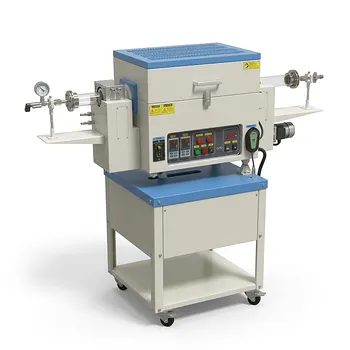
4 Inch Two Zone Rotary CVD Tube Furnace for High Temperature Battery Material Synthesis and Advanced Material Calcination
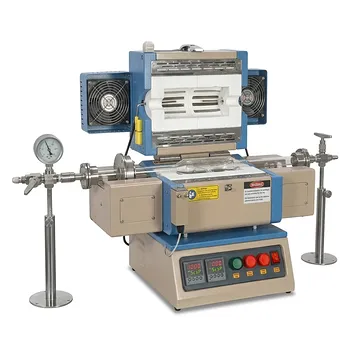
Dual Zone Rotary Tube Furnace for Uniform Powder Calcination 1000C 2 Inch Quartz Tube
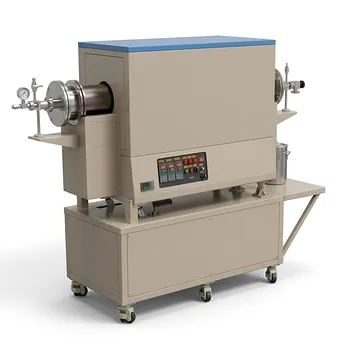
900°C Max Rotary Tube Furnace with 8 Inch 310S Alloy Tube and Optional Multi Zone Heating for Industrial Material Calcination
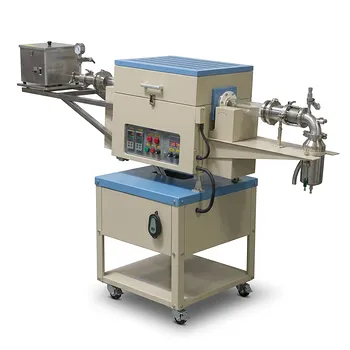
Two Zone Rotary CVD Furnace with Automatic Feeding and Receiving System for Powder Processing

High Temperature 1700C Vertical Tube Furnace for Powder Spherification and Material Sintering
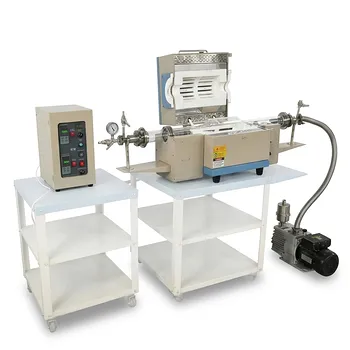
Two Zone Rotary Tube Furnace for Powder CVD Coating and Core Shell Material Synthesis 1100C
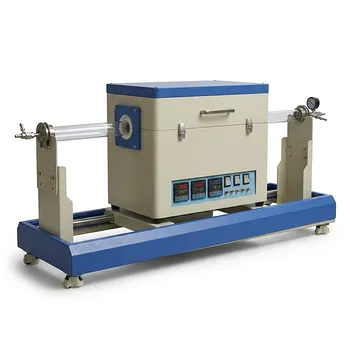
Double Temperature Zone Double Cover Tube Furnace for High Temperature CVD and Vacuum Annealing
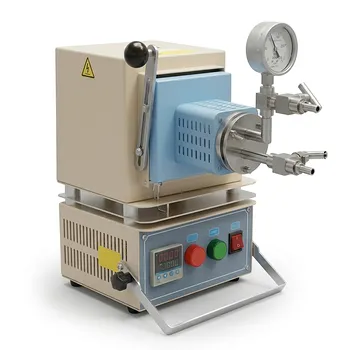
Compact Hybrid Muffle and Tube Furnace for 1000C Controlled Atmosphere Laboratory Material Sintering
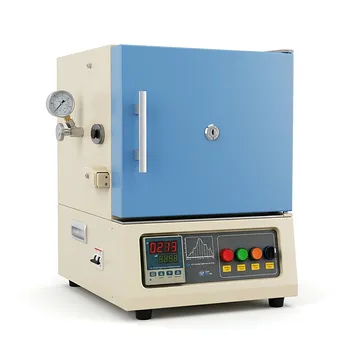
1200C Hybrid Muffle and Tube Furnace for Material Research with Dual Atmosphere Control Quartz Tubes
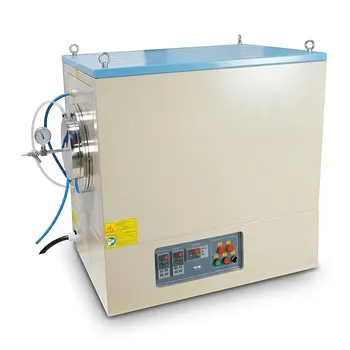
Dual Zone Tube Furnace 1100C with 11 Inch Quartz Tube and Vacuum Flanges for 8 Inch Wafer Processing

5 Inch Three Zone Rotary Tube Furnace with Integrated Gas Delivery System and 1200C Capability for Advanced Material CVD Processing
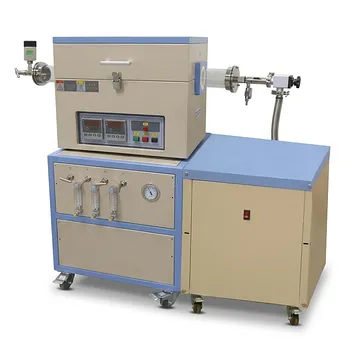
Dual Zone Quartz Tube Furnace with 80mm Diameter 1200C Max Temperature 3 Channel Gas Mixer and Vacuum Pump System

1800C High Temperature Compact Vacuum Tube Furnace with 60mm OD Alumina Tube and Kanthal MoSi2 Heating Elements
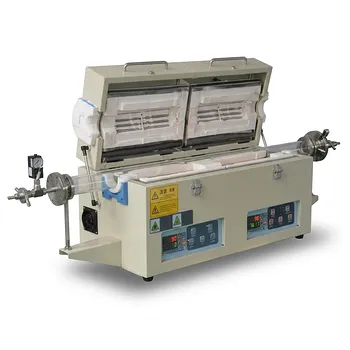
Elongated Two Temperature Zone Pipe Furnace for Industrial Heat Treatment and Material Science Research
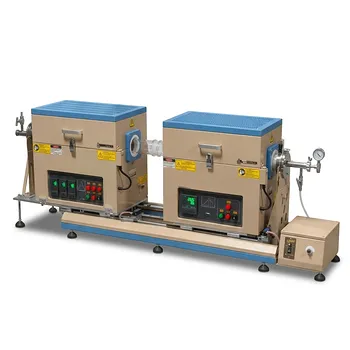
1200C Dual Temperature Zone Slidable Tube Furnace for 2D Material Growth and TCVD Synthesis
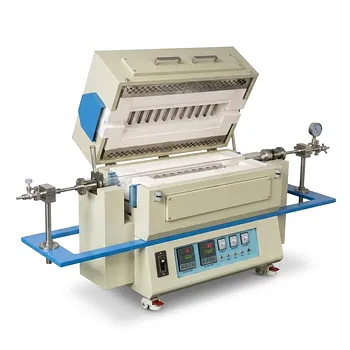
High Temperature Dual Zone Rotating Tube Furnace 1500C Silicon Carbide Heating for Advanced Material Synthesis
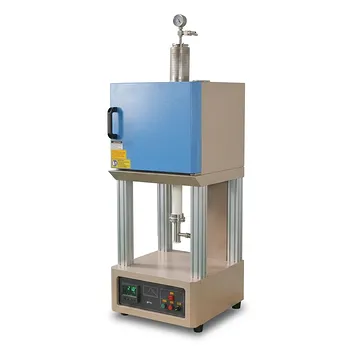
Hybrid High Temperature Tube and Box Furnace 1700C with 2 Inch Alumina Tube for Material Research
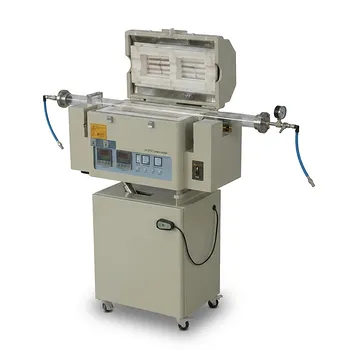
Double Temperature Revolving Tube Furnace with Precision Rotation and Adjustable Inclination for Advanced Material Research
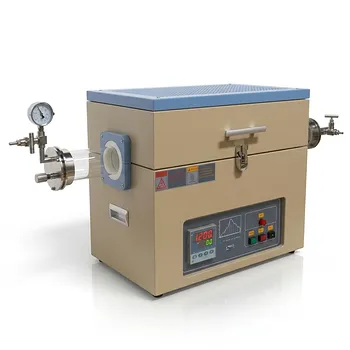
High Temperature 1200C Split Tube Furnace with Optional Quartz Tube Sizes and Vacuum Sealing Flanges for Material Science Research