Why is a large-diameter programmable tube furnace required for oil shale pyrolysis? Optimal Industrial Simulation
Updated 3 months ago
A large-diameter programmable tube furnace is essential for oil shale pyrolysis because it accommodates specialized material baskets and provides the necessary "constant temperature zone" for uniform heating. This configuration allows researchers to precisely simulate industrial retorting conditions by controlling heating rates (e.g., 5°C/min) and maintaining an oxygen-free environment, which is critical for maximizing oil yield and studying product distribution.
Core Takeaway: The combination of a large physical volume and programmable thermal control ensures that oil shale samples are heated uniformly in a stable, inert environment, allowing for accurate replication of industrial processes and precise collection of liquid and gaseous products.
The Physical Advantages of Large-Diameter Design
Accommodating Specialized Experimental Hardware
Oil shale experiments often require specifically designed material baskets to hold bulk samples or coarse particles. A large-diameter tube provides the necessary internal clearance to house these containers alongside internal sensors without obstructing the flow of carrier gases.
Ensuring Thermal Uniformity and Stability
A larger furnace typically offers a sufficiently long constant temperature zone, which is vital for oil shale due to its heterogeneous nature. This zone ensures that all particles within the sample basket experience the exact same thermal history, preventing temperature gradients that could lead to uneven pyrolysis.
Facilitating Downstream Integration
The physical dimensions of a large horizontal tube furnace allow for seamless connection to downstream devices, such as condensation units and absorption flasks. This setup is necessary to achieve a complete migration path study, ensuring that all char, tar, and gases are captured for analysis.
The Role of Programmable Thermal Management
Simulating Industrial Retorting Conditions
Programmable features allow researchers to set precise heating rates, such as 5°C/min, and specific final temperatures, like 550°C. This level of control is necessary to mimic the slow-heating environment of industrial-scale retorts, providing data that is directly applicable to commercial production.
Controlling Reaction Kinetics and Product Quality
By managing isothermal holding times, the furnace determines the degree of carbonization and the release rate of volatiles. Precise thermal management is the primary factor in determining the final pore structure of the solid residue and the chemical composition of the evolved oil.
Preventing Secondary Cracking
Precise control over the temperature and the duration of the reaction helps in suppressing secondary tar cracking. Maintaining a stable, predictable environment ensures that the primary pyrolysis products do not break down into less valuable gases, thereby improving the overall quality of the recovered shale oil.
Atmospheric Integrity and Chemical Control
Maintaining a Reducing Atmosphere
Pyrolysis must occur in an oxygen-free environment to prevent the combustion of the sample. The tube furnace facilitates the introduction of inert shielding gases, like high-purity nitrogen or argon, creating a controlled thermochemical platform for the reduction process.
Chemical Immobilization and Structural Evolution
For advanced studies, the programmable environment allows for the structural reconstruction of the mineral matrix within the shale. This is particularly important when studying how different temperature profiles influence the immobilization of heavy metals or the formation of specific carbon frameworks.
Understanding the Trade-offs
Thermal Lag in Large Volumes
While large-diameter tubes accommodate more material, they also introduce increased thermal inertia. It can be more challenging to achieve rapid cooling or heating changes because the larger mass of the furnace and the sample takes longer to reach thermal equilibrium.
Gas Consumption and Sealing Challenges
A larger internal volume requires higher flow rates of inert gases to maintain a pure atmosphere, increasing operational costs. Additionally, maintaining a strictly sealed environment becomes more technically demanding as the diameter of the tube flanges increases, requiring robust gaskets and precision fittings.
Complexity of Temperature Gradients
Even with a "constant temperature zone," the center of a large-diameter sample basket may heat slower than the exterior (the "core effect"). Researchers must carefully calibrate their programmable profiles to account for this internal lag to ensure the data remains accurate.
How to Apply This to Your Research
Making the Right Choice for Your Goal
- If your primary focus is industrial scaling: Opt for a large-diameter furnace that can accommodate larger baskets to better simulate the bulk density effects found in commercial retorts.
- If your primary focus is product purity and tar quality: Prioritize a programmable unit with high-precision (±1°C) accuracy and integrated nitrogen purging to minimize secondary reactions.
- If your primary focus is pore structure and char analysis: Ensure the furnace allows for precise isothermal holding times and rapid quenching capabilities to "freeze" the carbon structure at specific stages.
Selecting a furnace that balances physical volume with programmable precision is the only way to ensure oil shale pyrolysis data is both reproducible and industrially relevant.
Summary Table:
| Feature | Requirement for Oil Shale Pyrolysis | Key Benefit for Research |
|---|---|---|
| Large Diameter | Accommodates material baskets & bulk samples | Ensures uniform heating and prevents core effects |
| Programmability | Precise heating rates (e.g., 5°C/min) | Accurately mimics industrial scaling and retorting |
| Atmosphere Control | Integrated inert gas (N2/Ar) purging | Prevents sample combustion and maximizes oil yield |
| Temperature Zone | Sufficiently long constant temperature zone | Ensures consistent thermal history for reproducible data |
| Integration | Seamless connection to condensation units | Facilitates complete capture of tar, char, and gases |
Elevate Your Pyrolysis Research with THERMUNITS
Precision and scalability are the foundations of breakthrough material science. THERMUNITS is a leading manufacturer of high-temperature laboratory equipment specifically engineered for demanding industrial R&D and material science applications.
Whether you are conducting oil shale pyrolysis, chemical vapor deposition, or advanced metal sintering, our comprehensive range of thermal processing solutions—including Muffle, Vacuum, Atmosphere, Tube, Rotary, and Hot Press furnaces, as well as CVD/PECVD systems and VIM furnaces—are designed to deliver unmatched temperature uniformity and atmospheric integrity.
Why partner with THERMUNITS?
- Expertly Engineered: Specialized large-diameter designs for bulk sample simulation.
- Precise Control: Advanced programmable PID controllers for complex thermal profiles.
- Versatile Solutions: From dental and laboratory heat treatment to industrial-scale rotary kilns.
Ready to optimize your thermal processing workflow? Contact our expert team today to find the perfect furnace configuration for your laboratory's needs.
References
- Zeyue Wang, Fangqin Dai. Influence of packing height on the pyrolysis products of Jimsar (China) oil shale. DOI: 10.1002/ese3.1859
Mentioned Products
- Gas Pre-Heating Tube Furnace for High Temperature Pyrolysis Reactors and Material Science Research
- 1500C Three Zone Vertical Pyrolysis Furnace for Nanoparticle Synthesis and Advanced Oxide Coating
- High Temperature 1700C Vertical Tube Furnace for Powder Spherification and Material Sintering
- Compact Vertical Split Quartz Tube Furnace with Stainless Steel Vacuum Flanges for Rapid Thermal Quenching and Controlled Atmosphere Material Processing
- Compact High Temperature 1600C Tube Furnace with 50mm Alumina Tube and Vacuum Flanges for Material Sintering
People Also Ask
- What is the function of a preheated high-temperature tube furnace in the rapid pyrolysis synthesis of carbon nitride films?
- What is the role of a high-temperature tube furnace in coal powder pyrolysis benchmarking? Achieve Precise Baselines.
- Why is high-precision temperature control essential in a pyrolysis furnace? Master Pd NPs/NO-C Catalyst Synthesis
- How does a high-temperature tube furnace facilitate the pyrolysis of PR-ZS hybrid aerogels into carbon aerogels?
- How is a laboratory tube heating furnace applied during the evaluation of denitration catalysts? Essential Guide

Tech Team · ThermUnits
Last updated on Jun 03, 2026
Related Products
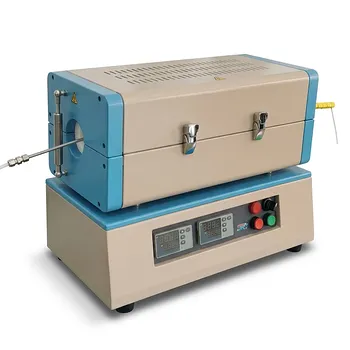
Gas Pre-Heating Tube Furnace for High Temperature Pyrolysis Reactors and Material Science Research
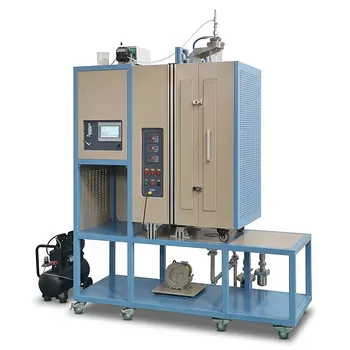
1500C Three Zone Vertical Pyrolysis Furnace for Nanoparticle Synthesis and Advanced Oxide Coating

High Temperature 1700C Vertical Tube Furnace for Powder Spherification and Material Sintering

Compact Vertical Split Quartz Tube Furnace with Stainless Steel Vacuum Flanges for Rapid Thermal Quenching and Controlled Atmosphere Material Processing

Compact High Temperature 1600C Tube Furnace with 50mm Alumina Tube and Vacuum Flanges for Material Sintering
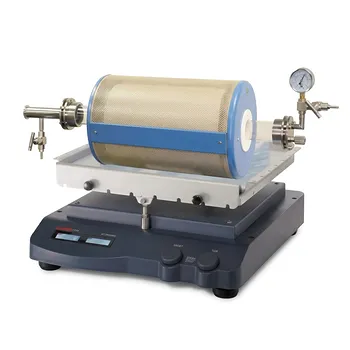
High Temperature Rocking Tube Furnace with Quartz Tube and Vacuum Flange for Materials Synthesis
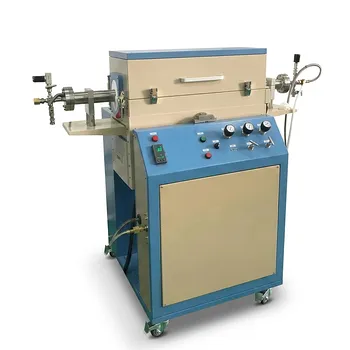
High Temperature Rocking Tube Furnace 1700°C Alumina Processing Tube with Precision Oscillation for Material Synthesis
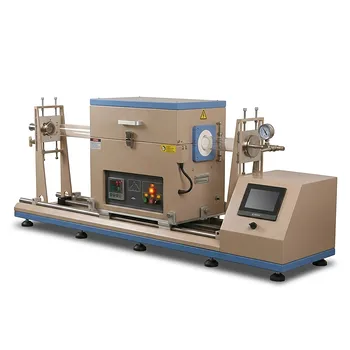
1200C Sliding Tube Furnace for Rapid Thermal Processing and CVD Graphene Growth with 100mm OD Capacity
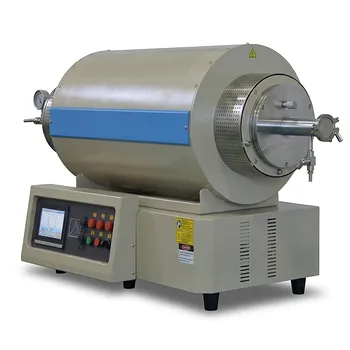
1200C Max Three Zone Tube Furnace 6 Inch OD Max with Tube and Flange
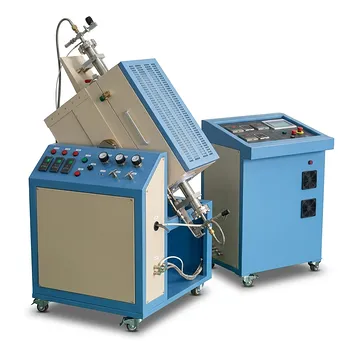
1100C High Pressure Rocking Tube Furnace with 2 Inch Super Alloy Processing Tube for Material Synthesis
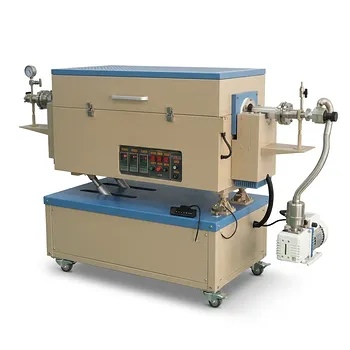
Three Zone Rotary Tube Furnace for High Temperature Powder Processing and Material Research
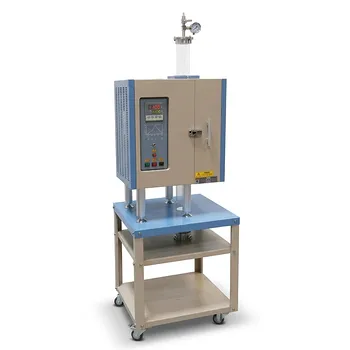
1100°C Split Vertical Tube Furnace with 80mm Quartz Tube and Stainless Steel Vacuum Flanges
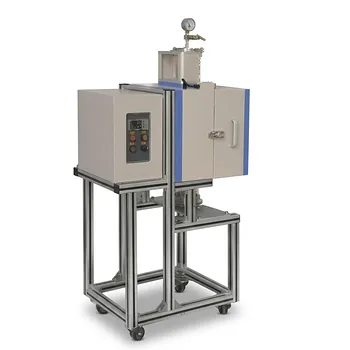
1200°C 5 Inch Vertical Quartz Tube Furnace with Stainless Steel Vacuum Flanges

High Temperature Automated 5 Inch Tube Furnace for Autonomous Material Research and Advanced Laboratory R&D

High Temperature 1700C Benchtop Tube Furnace with 5 Inch Heating Zone High Purity Alumina Tube and Vacuum Sealing Flanges

1800C High Temperature Compact Vacuum Tube Furnace with 60mm OD Alumina Tube and Kanthal MoSi2 Heating Elements

Vertical 1700C Vacuum and Atmosphere Tube Furnace with 80mm Alumina Tube
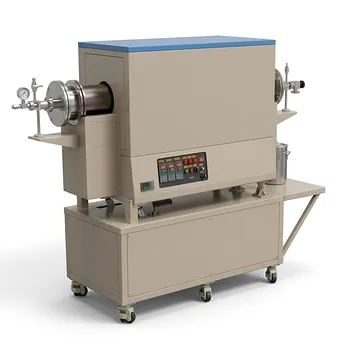
900°C Max Rotary Tube Furnace with 8 Inch 310S Alloy Tube and Optional Multi Zone Heating for Industrial Material Calcination
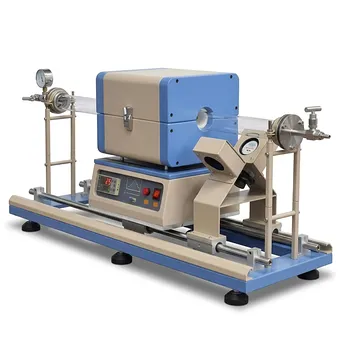
Automated Sliding Tube Furnace for Fast Heating and Cooling 2 Inch OD 1100C Max
