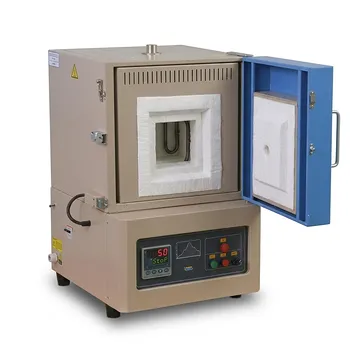
Why is a long-duration heat treatment at 150°C required after gas sensor preparation? Ensure Stability and Precision
Updated 3 months ago
The 150°C heat treatment is a critical stabilization phase in gas sensor fabrication. Specifically, this 300-minute soak ensures the complete removal of processing solvents like anhydrous ethanol while facilitating "sample aging" of the sensing material. This process transforms a freshly coated material into a stable, predictable sensing layer capable of maintaining accuracy in high-temperature environments.
Prolonged heat treatment at 150°C is necessary to stabilize the sensor's microstructure and eliminate residual stresses from the coating process. By forcing these physical and chemical changes to occur in a controlled furnace, the manufacturer ensures long-term signal reliability and prevents sensor drift during field operation.
Driving Physical and Chemical Stability
Complete Solvent Removal
During the preparation process, sensing materials are often mixed with solvents like anhydrous ethanol to create a paste. If any trace of these solvents remains trapped within the layer, they can cause unpredictable signal fluctuations or "poison" the sensor once it begins detecting gases.
Induced Sample Aging
Heating the sensor for 300 minutes acts as an accelerated aging process. By subjecting the sensing material to heat before it reaches the end-user, the material reaches a state of chemical equilibrium, ensuring its properties do not change significantly during its actual service life.
Structural Integrity and Stress Relief
Eliminating Residual Stress
The process of applying a sensing film to a ceramic substrate introduces mechanical stress due to differences in material density and drying rates. The 150°C treatment allows these internal stresses to relax in a controlled manner, preventing the film from cracking or delaminating during use.
Microstructure Stabilization
For a gas sensor to be accurate, its microscopic landscape—the way atoms and grains are arranged—must remain constant. Long-duration heating settles the microstructure of the sensing material, which is essential for achieving a repeatable electrical response to target gases.
Performance in Hostile Environments
Preparation for High-Temperature Detection
Many industrial gas sensors are designed to operate in environments reaching 175°C or higher. Pre-treating the sensor at 150°C ensures that the device is "thermally seasoned," meaning it won't undergo sudden baseline shifts or structural failures when moved from a room-temperature storage state to a hot operating environment.
Ensuring Long-Term Signal Consistency
Without this specific thermal stabilization, a sensor's response would likely drift over time. The 300-minute furnace duration provides the necessary time-at-temperature to ensure that the "zero point" (the baseline signal in clean air) remains steady for the duration of the sensor's lifespan.
Understanding the Trade-offs
Time vs. Reliability
The primary trade-off is the manufacturing lead time; 300 minutes is a significant duration in a production cycle. However, shortcutting this process typically leads to "burn-in" failures, where the sensor requires weeks of calibration in the field before it becomes stable enough to trust.
Temperature Limitations
While 150°C is ideal for aging and solvent removal, it is often not high enough to achieve mechanical sintering. For materials like CuO/WO3, a secondary, much higher temperature treatment (around 500°C) is often required to ensure the sensitive layer physically adheres to the gold electrodes and ceramic substrate.
How to Apply This to Your Sensor Workflow
Before deploying or finalizing a gas sensor production line, consider the following recommendations based on your operational goals:
- If your primary focus is baseline stability: Adhere strictly to the 300-minute duration at 150°C to ensure all residual stresses are fully evacuated.
- If your primary focus is mechanical durability in vibration-heavy areas: Ensure that you have performed a high-temperature annealing step (e.g., 500°C) prior to the 150°C aging process to secure the bond between the substrate and electrodes.
- If your primary focus is rapid prototyping: You may shorten the duration for initial tests, but be aware that your data will likely show significant "drift" as the material continues to age during the experiment.
By meticulously controlling the thermal history of the sensor, you transition the device from a sensitive but unstable chemical film into a reliable industrial instrument.
Summary Table:
| Process Objective | Temperature / Duration | Key Benefit to Gas Sensor |
|---|---|---|
| Solvent Removal | 150°C / 300 Min | Eliminates residual ethanol; prevents signal poisoning. |
| Sample Aging | 150°C / 300 Min | Reaches chemical equilibrium; prevents long-term signal drift. |
| Stress Relief | 150°C / 300 Min | Relaxes mechanical stress; prevents film cracking/delamination. |
| Microstructure Stabilization | 150°C / 300 Min | Settles grain arrangement for repeatable electrical response. |
| Mechanical Sintering | ~500°C | Ensures film adhesion to gold electrodes and ceramic substrate. |
Optimize Your Sensor Production with THERMUNITS
Precision thermal history is the key to transforming sensitive films into reliable industrial instruments. THERMUNITS is a leading manufacturer of high-temperature laboratory equipment for material science and industrial R&D. We provide a comprehensive range of thermal processing solutions tailored for gas sensor fabrication and material aging, including:
- Muffle & Tube Furnaces for precise aging and sintering.
- Vacuum & Atmosphere Furnaces for controlled environment processing.
- CVD/PECVD Systems for advanced material coating.
- Specialized Solutions: Including Rotary kilns, Vacuum Induction Melting (VIM), and Hot Press furnaces.
Whether you are performing 150°C stabilization or 500°C mechanical sintering, our equipment delivers the uniformity and control required for high-performance R&D.
Ready to enhance your lab's thermal processing capabilities? Contact us today to discuss your requirements!
References
- Yuwei Qu, Jun Zhang. Bimetallic Co–Mn catalysts for synergistic enhancement of VOC gas-sensing performance of ZnO hierarchical nanostructures. DOI: 10.1039/d4ra00553h
Mentioned Products
- High Temperature 1600C Split Tube Furnace Vacuum Flanges Valves Optional 60mm 80mm Alumina Tube
- High Vacuum Compact Tube Furnace 1200C with Integrated Turbo Pump System and 8 Inch Heating Zone
- Vertical 1700C Vacuum and Atmosphere Tube Furnace with 80mm Alumina Tube
- High Temperature Benchtop Muffle Furnace 1500C with 3.6L Chamber and Quartz Observation Window
- High Temperature Three Zone Tube Furnace 1700C with Alumina Tube and Water Cooled Flanges
People Also Ask
- What is the primary function of a high-temperature split tube furnace in nitrogen metastable particle research? Expert Guide
- How are high-temperature tube furnaces utilized to repair etching damage? Precision Lattice Restoration Solutions
- What impact does the heating rate of a tube furnace have on biochar microstructure? Optimize Your Material R&D.
- What is the role of a high-temperature tube furnace in the calcination process of ZnO/In2O3 nanocomposites?
- Why is a high-temperature tube furnace essential for Ba0.5Ca0.5La2(MoO4)4 phosphors? Enhance Luminous Performance

Tech Team · ThermUnits
Last updated on Jun 02, 2026
Related Products
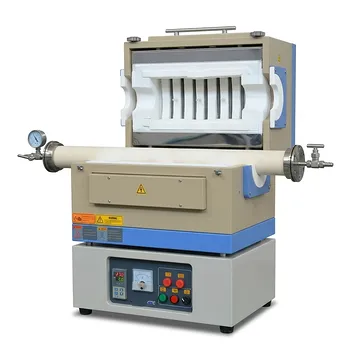
High Temperature 1600C Split Tube Furnace Vacuum Flanges Valves Optional 60mm 80mm Alumina Tube
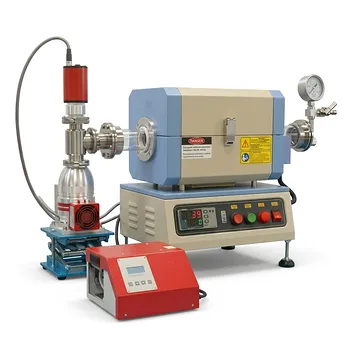
High Vacuum Compact Tube Furnace 1200C with Integrated Turbo Pump System and 8 Inch Heating Zone

Vertical 1700C Vacuum and Atmosphere Tube Furnace with 80mm Alumina Tube
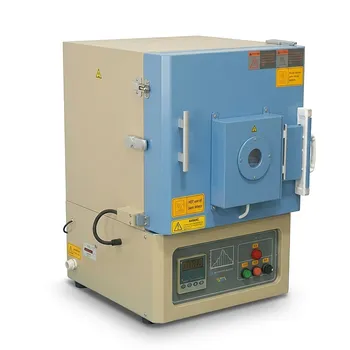
High Temperature Benchtop Muffle Furnace 1500C with 3.6L Chamber and Quartz Observation Window
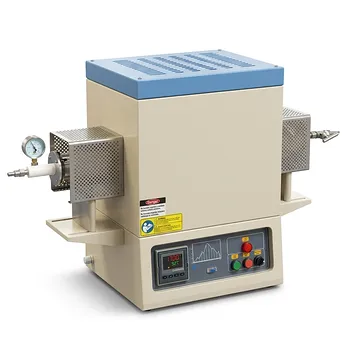
High Temperature Three Zone Tube Furnace 1700C with Alumina Tube and Water Cooled Flanges
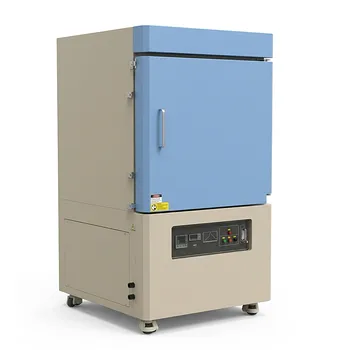
Industrial Large Box Furnace 1700C 216L High Temp Muffle Sintering System
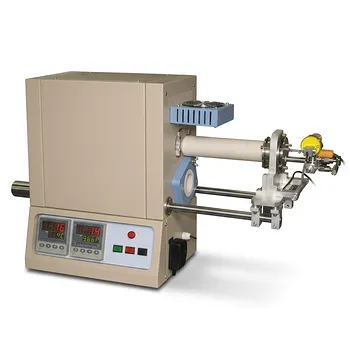
High Temperature Tube Furnace 1500C with Sliding Flanges and 50mm OD for Rapid Thermal Processing Fast Heating and Cooling

High Temperature 1700C Tube Furnace with High Vacuum Turbomolecular Pump System and Multi Channel Mass Flow Controller Gas Mixer
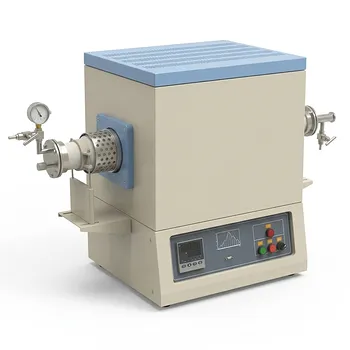
1750°C High Temperature Benchtop Vacuum Atmosphere Tube Furnace with Kanthal Super 1800 Heating Elements and 60mm Alumina Processing Tube
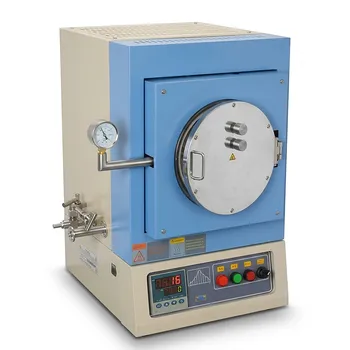
1100°C High Temperature Quartz Chamber Furnace 8 Inch OD with 7.6 Liter Capacity and Vacuum Atmosphere Capability
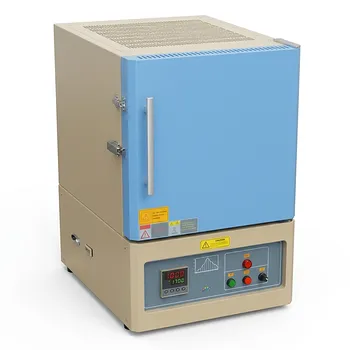
Large Bench Top 1700C High Temperature Muffle Furnace with 19L Chamber for Advanced Material Sintering and Annealing
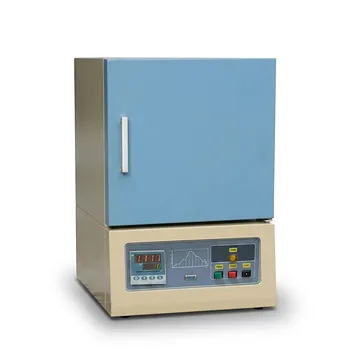
Ultra High Temperature Bench Top Muffle Furnace 1750C Sintering System with Kanthal Super Heating Elements and Precision Digital Control
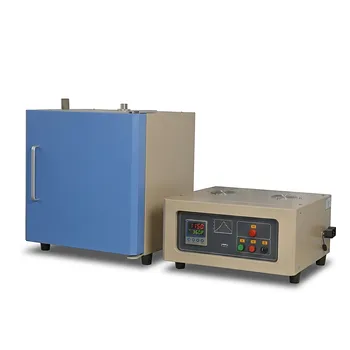
High Temperature Muffle Furnace with Alloy Chamber for Debinding and Sintering Applications
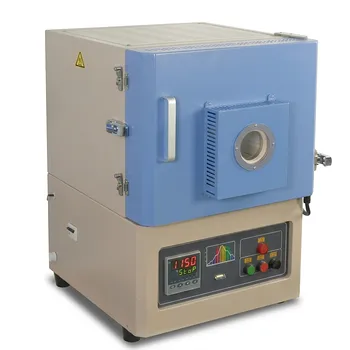
High Temperature Benchtop Muffle Furnace with Quartz Observation Window for Thermal Imaging and Material Analysis
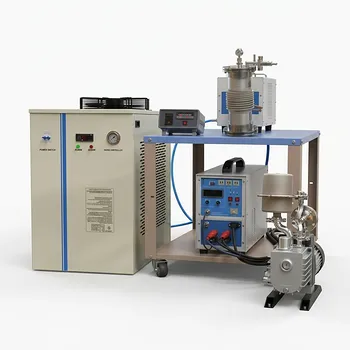
Induction Heating System with Temperature Control for High Temperature Vacuum Sintering and Melting
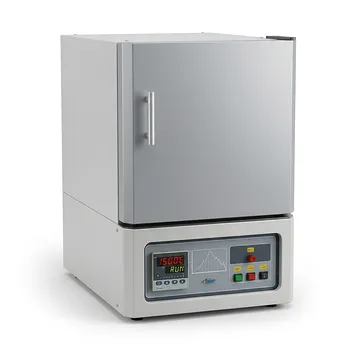
High Temperature 1500C Benchtop Muffle Furnace 3.6L Alumina Fiber Chamber Programmable Controller Sintering Annealing Carbonization Thermal Processing System
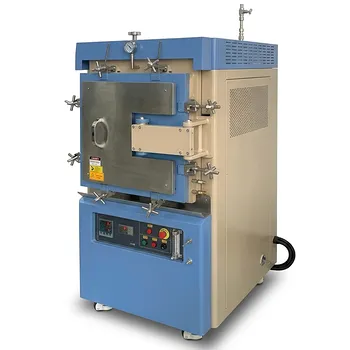
Atmosphere Controlled Muffle Furnace 1700C Maximum Temperature 80L High Capacity Vacuum Inert Gas Box Furnace
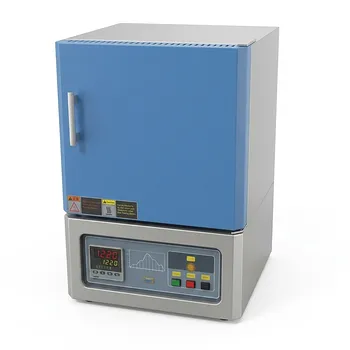
High Temperature Benchtop Muffle Furnace 1700C 10L Chamber Alumina Fiber Insulation MoSi2 Heating Elements
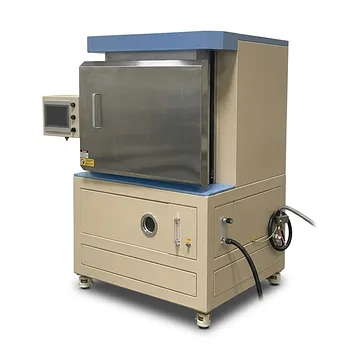
1650C High Temperature Atmosphere Controlled Box Furnace with 65L Chamber for Advanced Material Sintering and Industrial Heat Treatment