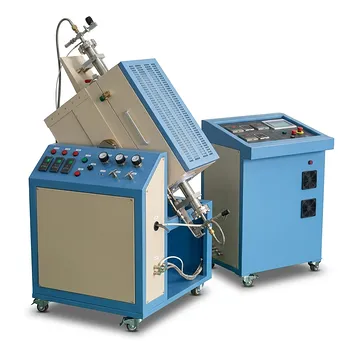
What are the primary functions of a high-temperature tube furnace in the synthesis of MXene@CoS/FeS2 heterojunctions?
Updated 3 months ago
In the synthesis of MXene@CoS/FeS2 heterojunctions, the high-temperature tube furnace serves as the definitive reaction environment for precise etching and phase transformation. It provides the necessary thermal stability at 750 °C under an Argon (Ar) atmosphere to prevent MXene oxidation and facilitates in-situ sulfidation at 350 °C by regulating thiourea vapor flow. These functions ensure the uniform conversion of metal precursors into high-performance sulfide heterojunctions.
The high-temperature tube furnace is the indispensable catalyst for structural integrity, providing a sealed, inert, and thermally regulated space that allows for the complex chemical transitions required to form stable MXene-based composites.
Atmospheric Integrity and Oxidation Prevention
The Critical Role of Argon Shielding
At the high temperature of 750 °C, MXenes are highly susceptible to oxidation, which can degrade their metallic conductivity and structural properties. The tube furnace maintains a strictly controlled Argon (Ar) inert atmosphere, effectively displacing oxygen and moisture that would otherwise compromise the material.
Preserving MXene Structural Properties
The furnace acts as a protective shield during the etching process, ensuring that the two-dimensional structure of the MXene remains intact. By preventing the formation of unwanted oxides, the equipment ensures the final heterojunction retains its intended electrochemical characteristics and high strength.
Precise Thermochemical Control for Heterojunction Formation
Regulating Thiourea Vapor for In-Situ Sulfidation
During the 350 °C sulfidation stage, the tube furnace manages the flow of thiourea vapor, which is essential for the chemical conversion of the precursors. This controlled delivery of sulfur sources allows for the in-situ transformation of metal alloy nanoparticles into their respective sulfides within the MXene framework.
Facilitating Uniform Phase Transformation
The furnace's ability to provide uniform heating throughout the reaction zone is critical for achieving high crystallinity and consistent morphology. This consistency ensures that the CoS and FeS2 components are evenly distributed, forming a stable heterojunction rather than a disorganized mixture of phases.
Multi-Stage Temperature Programming
The synthesis process often requires specific heating rates and dwell times to achieve the desired phase purity. The tube furnace allows researchers to implement multi-stage programming, preventing thermal shock and ensuring that chemical reactions proceed at a kinetically favorable pace.
Understanding the Trade-offs and Technical Pitfalls
Thermal Gradients and Sample Placement
While tube furnaces offer precise control, internal thermal gradients can exist where the temperature at the center of the tube differs from the ends. Incorrect sample placement outside the "constant temperature zone" can lead to incomplete sulfidation or non-uniform heterojunction formation.
Gas Flow Dynamics and Contamination
The rate of gas flow (Ar or thiourea vapor) significantly impacts the reaction kinetics and the removal of gaseous byproducts. If the flow rate is too low, byproducts may linger and contaminate the sample; if it is too high, it may cool the sample surface prematurely or sweep away reactants before they can interact.
How to Optimize Your Synthesis Process
To achieve the best results when using a high-temperature tube furnace for MXene-based heterojunctions, consider the following recommendations:
- If your primary focus is oxidation prevention: Ensure the furnace seals are checked for vacuum integrity and utilize high-purity (99.999%) Argon gas to flush the tube for at least 30 minutes before heating.
- If your primary focus is phase purity and crystallinity: Use a slow heating rate (e.g., 2–5 °C/min) and verify that your precursors are placed exactly within the furnace's calibrated uniform heating zone.
- If your primary focus is uniform sulfidation: Position the sulfur source (thiourea) upstream of the sample to allow the carrier gas to transport the vapor consistently across the entire surface of the precursor.
By mastering the atmospheric and thermal variables of the tube furnace, you can ensure the successful synthesis of highly conductive and chemically stable MXene@CoS/FeS2 heterojunctions.
Summary Table:
| Function | Process / Purpose | Key Parameter |
|---|---|---|
| Oxidation Prevention | Maintains Ar inert atmosphere to protect MXene structure | 750 °C |
| In-Situ Sulfidation | Regulates thiourea vapor flow for precursor conversion | 350 °C |
| Phase Transformation | Ensures uniform heating for consistent heterojunction morphology | Multi-stage heating |
| Structural Integrity | Prevents thermal shock and ensures high crystallinity | Controlled cooling/dwell |
Optimize Your Advanced Material Synthesis with THERMUNITS
Achieving the perfect MXene@CoS/FeS2 heterojunction requires absolute precision. THERMUNITS is a leading manufacturer of high-temperature laboratory equipment for material science and industrial R&D. We empower researchers with high-performance thermal processing solutions designed for consistency and durability.
Our extensive product range includes:
- Tube Furnaces (ideal for CVD and atmosphere-controlled synthesis)
- Muffle, Vacuum, and Atmosphere Furnaces
- Rotary and Hot Press Furnaces
- CVD/PECVD Systems & Dental Furnaces
- Vacuum Induction Melting (VIM) & Electric Rotary Kilns
Ensure superior phase purity and structural integrity in your next project. Contact THERMUNITS today to discuss your laboratory heat treatment requirements!
References
- Zuliang Zhang, Xiaojun Zeng. Synergistically coupling CoS/FeS<sub>2</sub> heterojunction nanosheets on a MXene <i>via</i> a dual molten salt etching strategy for efficient oxygen evolution reaction. DOI: 10.1039/d4ta01999g
Mentioned Products
- High Temperature Tube Furnace 1500C with Sliding Flanges and 50mm OD for Rapid Thermal Processing Fast Heating and Cooling
- High Temperature 1700C Tube Furnace with High Vacuum Turbomolecular Pump System and Multi Channel Mass Flow Controller Gas Mixer
- 1750°C High Temperature Benchtop Vacuum Atmosphere Tube Furnace with Kanthal Super 1800 Heating Elements and 60mm Alumina Processing Tube
- High Temperature 1700C Benchtop Tube Furnace with 5 Inch Heating Zone High Purity Alumina Tube and Vacuum Sealing Flanges
- High Temperature Split Tube Furnace 1500C for Material Research Vacuum and Atmosphere Thermal Processing
People Also Ask
- How are high-temperature tube furnaces utilized to repair etching damage? Precision Lattice Restoration Solutions
- What core conditions does a high-temperature tube furnace provide for rGO aerogels? Mastering Precision Synthesis.
- What role does a high-temperature tube furnace play in CVD synthesis of silicon nanowires? Master VLS Growth Precision.
- How does precision tube furnace control influence CoFe nanoparticle formation? Master Your Bimetallic Synthesis.
- What role does a high-temperature tube furnace play in the sulfidation heat treatment of CoS@C/MXene nanocomposites? Guide

Tech Team · ThermUnits
Last updated on Jun 02, 2026
Related Products
High Temperature Tube Furnace 1500C with Sliding Flanges and 50mm OD for Rapid Thermal Processing Fast Heating and Cooling

High Temperature 1700C Tube Furnace with High Vacuum Turbomolecular Pump System and Multi Channel Mass Flow Controller Gas Mixer
1750°C High Temperature Benchtop Vacuum Atmosphere Tube Furnace with Kanthal Super 1800 Heating Elements and 60mm Alumina Processing Tube

High Temperature 1700C Benchtop Tube Furnace with 5 Inch Heating Zone High Purity Alumina Tube and Vacuum Sealing Flanges
High Temperature Split Tube Furnace 1500C for Material Research Vacuum and Atmosphere Thermal Processing
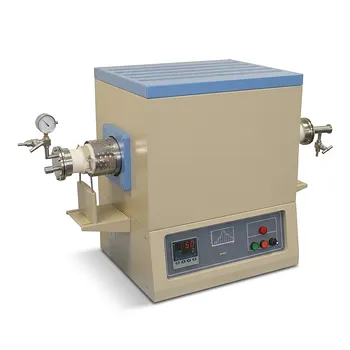
1700C High Temperature Alumina Tube Furnace with 18 Inch Heated Zone and Vacuum Sealing Flanges

1800C High Temperature Compact Vacuum Tube Furnace with 60mm OD Alumina Tube and Kanthal MoSi2 Heating Elements

Compact High Temperature 1600C Tube Furnace with 50mm Alumina Tube and Vacuum Flanges for Material Sintering
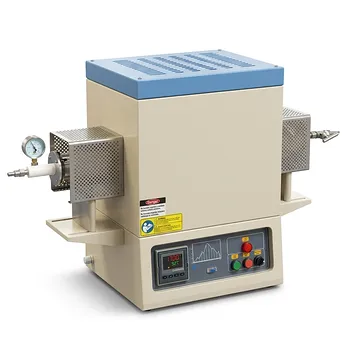
High Temperature Three Zone Tube Furnace 1700C with Alumina Tube and Water Cooled Flanges
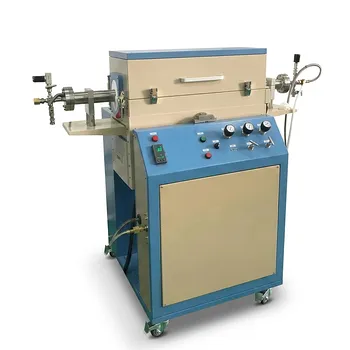
High Temperature Rocking Tube Furnace 1700°C Alumina Processing Tube with Precision Oscillation for Material Synthesis
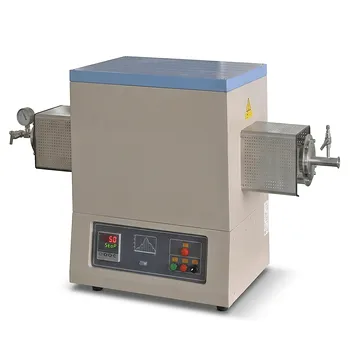
High Temperature 1700C Tube Furnace with 4 Inch OD Alumina Tube and Vacuum Sealing Flanges

High Temperature 1700C Vertical Tube Furnace for Powder Spherification and Material Sintering
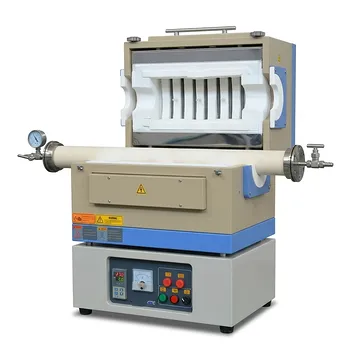
High Temperature 1600C Split Tube Furnace Vacuum Flanges Valves Optional 60mm 80mm Alumina Tube

High Temperature Automated 5 Inch Tube Furnace for Autonomous Material Research and Advanced Laboratory R&D
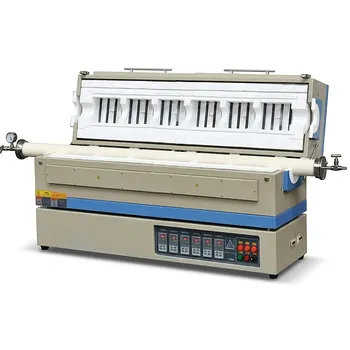
High Temperature 1700C Six Zone Split Tube Furnace with Alumina Tube and Water Cooled Flanges
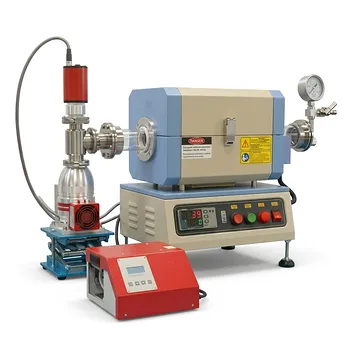
High Vacuum Compact Tube Furnace 1200C with Integrated Turbo Pump System and 8 Inch Heating Zone
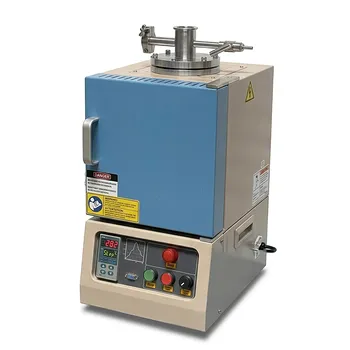
High Temperature Hybrid Muffle and Tube Furnace with Vacuum Capability and PID Control
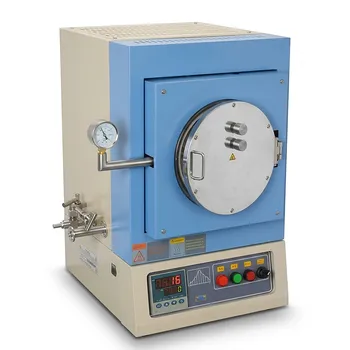
1100°C High Temperature Quartz Chamber Furnace 8 Inch OD with 7.6 Liter Capacity and Vacuum Atmosphere Capability

1100C Tube Furnace with Vacuum Flange and Programmable Temperature Controller for Material Science and Industrial Heat Treatment