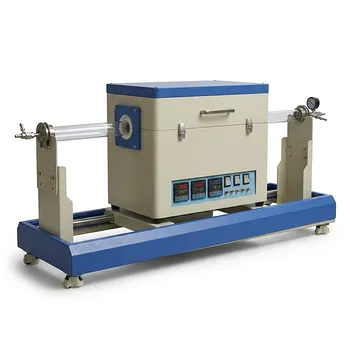
Why is a precision atmosphere tube furnace necessary for Cu–CuO–Cu2O/GLC catalysts? Optimize S-Scheme Heterojunctions
Updated 3 months ago
The synthesis of Cu–CuO–Cu2O/GLC catalysts requires a precision atmosphere tube furnace to create a strictly controlled local redox environment that prevents biomass combustion while facilitating the formation of a complex S-scheme heterojunction. By maintaining a constant flow of inert gas at specific temperatures, the furnace allows the carbon carrier to selectively reduce copper species into a precise tri-phase architecture.
A precision atmosphere tube furnace provides the simultaneous thermal stability and oxygen exclusion necessary to carbonize biomass without ignition. This environment enables the carbon carrier to act as a reducing agent, transforming copper precursors into a specific Cu, CuO, and Cu2O heterojunction essential for catalytic activity.
The Role of Atmosphere Control in Catalyst Integrity
Preventing Oxidative Combustion of the Biomass Carrier
The "GLC" component of the catalyst is a biomass-derived carbon carrier that is highly susceptible to oxygen at high temperatures. Without a precision furnace to exclude oxygen, the carrier would undergo oxidative combustion during the 550 °C carbonization process.
A continuous, stable flow of nitrogen or argon displaces oxygen, ensuring the organic framework decomposes into a stable carbon support rather than burning away. This preservation is critical for maintaining the pore structure and surface area required for active site anchoring.
Establishing a Precise Local Redox Microenvironment
The furnace does more than just protect the carrier; it facilitates a specific chemical reaction at the interface of the copper and the carbon. The atmosphere control allows the carbon carrier to exert a controlled reduction effect on the copper species.
By regulating the gas environment, the furnace maintains a local redox atmosphere where the copper is not fully reduced to a metallic state nor fully oxidized. This delicate balance is what allows the three distinct phases—metallic Cu, CuO, and Cu2O—to coexist in a single structure.
Engineering the Cu–CuO–Cu2O S-Scheme Heterojunction
Precision Phase Transformation at 550 °C
The formation of an S-scheme heterojunction depends entirely on the precise coordination of temperature and gas flow. At 550 °C, the furnace provides the thermal energy necessary for phase migration while the nitrogen flow ensures no external oxygen interferes with the stoichiometry.
This temperature-driven process allows for the thermodynamic anchoring of copper atoms onto the carbon matrix. The result is a multiphase interface that optimizes electron transfer, which is the "S-scheme" mechanism responsible for the catalyst's high performance.
Maintaining Dispersion and Preventing Sintering
Copper nanoparticles are notoriously susceptible to sintering and aggregation at elevated temperatures, which reduces the available catalytic surface area. A precision tube furnace regulates the partial pressure and flow of gases to prevent the uncontrolled growth of these particles.
By maintaining a stable environment, the furnace ensures that the copper species remain highly dispersed across the carbon substrate. This prevents the formation of large, inactive copper clusters and maintains the consistency of the chemical composition.
Understanding the Trade-offs
Flow Rate Sensitivity vs. Atmosphere Stability
While high flow rates ensure the complete exclusion of oxygen, they can also cause temperature fluctuations or "cold spots" within the tube. If the flow control is not precise, the uneven cooling can lead to an inconsistent phase distribution across the sample batch.
Inert Gas Purity and Contamination Risks
Using anything less than high-purity (99.99%+) nitrogen or argon can introduce trace amounts of oxygen or moisture. Even parts-per-million levels of oxygen can shift the Cu/CuO/Cu2O ratio, potentially destroying the S-scheme heterojunction and significantly lowering the catalyst's efficiency.
How to Apply This to Your Synthesis Project
When selecting or operating a furnace for Cu–CuO–Cu2O/GLC synthesis, your focus should align with your specific material requirements:
- If your primary focus is phase purity: Ensure your furnace supports a high-precision mass flow controller (MFC) to maintain a rock-steady nitrogen environment, preventing unwanted oxidation states.
- If your primary focus is structural porosity: Prioritize a furnace with a programmable multi-stage ramp rate to carbonize the biomass carrier slowly, preventing the collapse of the pore structure.
- If your primary focus is scalability: Use a tube furnace with a large "constant temperature zone" to ensure that the entire batch of catalyst undergoes identical redox conditions.
Mastering the interplay between thermal energy and gas flow is the only way to successfully engineer the complex multiphase interfaces required for modern catalysts.
Summary Table:
| Key Feature | Role in Cu–CuO–Cu2O/GLC Synthesis | Impact on Catalyst Performance |
|---|---|---|
| Inert Atmosphere | Prevents oxidative combustion of biomass (GLC) | Preserves pore structure & surface area |
| Flow Control | Regulates local redox microenvironment | Enables coexistence of Cu, CuO, and Cu2O phases |
| Thermal Stability | Provides precise energy at 550 °C | Facilitates S-scheme heterojunction formation |
| Gas Purity | Excludes trace oxygen and moisture | Prevents unwanted phase shifts and sintering |
Elevate Your Catalyst Research with THERMUNITS
Precise control over the redox environment is the difference between a high-performance S-scheme heterojunction and a failed synthesis. THERMUNITS is a leading manufacturer of high-temperature laboratory equipment, providing the accuracy and reliability required for advanced material science and industrial R&D.
Whether you are carbonizing biomass or engineering complex tri-phase architectures, our comprehensive range of thermal solutions—including Atmosphere Tube Furnaces, Vacuum Furnaces, CVD/PECVD systems, and Rotary Kilns—ensures your materials achieve peak performance without the risk of sintering or oxidative combustion.
Ready to optimize your thermal processing? Contact our experts today to find the perfect furnace for your lab.
References
- Zahra Kohansal Nalkyashree, Farzad Seidi. Synergistic atom co-sharing and S-scheme heterojunction: constructing Cu/CuO/Cu<sub>2</sub>O with ultrathin graphene-like carbon derived from basil seeds for enhanced photo-oxidation of benzyl alcohols to aldehydes. DOI: 10.1039/d4na00283k
Mentioned Products
- 1750°C High Temperature Benchtop Vacuum Atmosphere Tube Furnace with Kanthal Super 1800 Heating Elements and 60mm Alumina Processing Tube
- Vertical 1700C Vacuum and Atmosphere Tube Furnace with 80mm Alumina Tube
- 1200°C Atmosphere Controlled Automatic Bottom Loading Furnace with 6 Inch Quartz Tube
- Compact Vertical Split Quartz Tube Furnace with Stainless Steel Vacuum Flanges for Rapid Thermal Quenching and Controlled Atmosphere Material Processing
- Three Zone Tube Furnace with 11 Inch or 15 Inch Quartz Tube and Hinged Flanges for Vacuum Atmosphere Heat Treatment
People Also Ask
- What core functions does a high-temperature vacuum tube furnace provide? Optimize np-CuSn Sintering & Joint Integrity
- What is the role of a high-temperature tube furnace in the calcination process of ZnO/In2O3 nanocomposites?
- Function of tube furnaces in cellulose aerogel carbonization? Achieve High-Performance Materials
- What role does a high-temperature tube furnace play in executing nitrogen absorption kinetic experiments? Expert Insights
- How does a high-temperature tube furnace contribute to MoS2/CNT photocathode formation? Optimizing Phase & Interface

Tech Team · ThermUnits
Last updated on Jun 03, 2026
Related Products
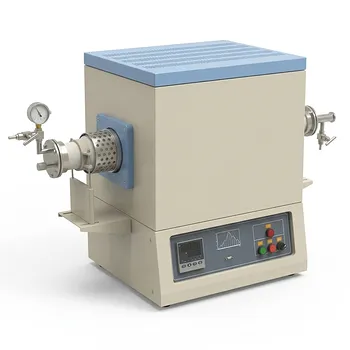
1750°C High Temperature Benchtop Vacuum Atmosphere Tube Furnace with Kanthal Super 1800 Heating Elements and 60mm Alumina Processing Tube

Vertical 1700C Vacuum and Atmosphere Tube Furnace with 80mm Alumina Tube
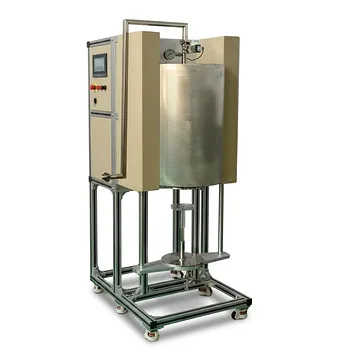
1200°C Atmosphere Controlled Automatic Bottom Loading Furnace with 6 Inch Quartz Tube

Compact Vertical Split Quartz Tube Furnace with Stainless Steel Vacuum Flanges for Rapid Thermal Quenching and Controlled Atmosphere Material Processing

Three Zone Tube Furnace with 11 Inch or 15 Inch Quartz Tube and Hinged Flanges for Vacuum Atmosphere Heat Treatment
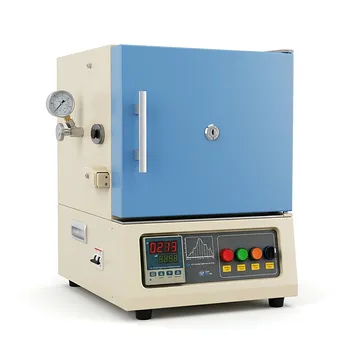
1200C Hybrid Muffle and Tube Furnace for Material Research with Dual Atmosphere Control Quartz Tubes
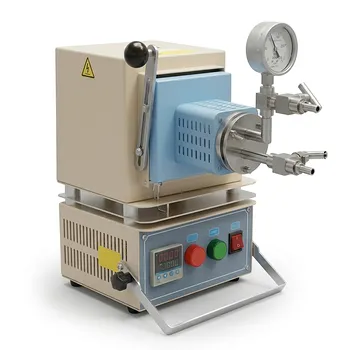
Compact Hybrid Muffle and Tube Furnace for 1000C Controlled Atmosphere Laboratory Material Sintering
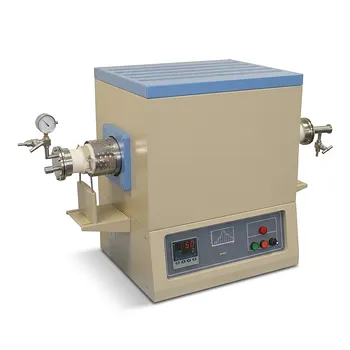
1700C High Temperature Alumina Tube Furnace with 18 Inch Heated Zone and Vacuum Sealing Flanges
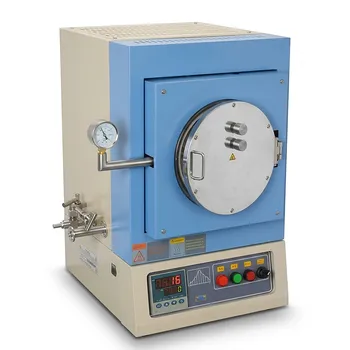
1100°C High Temperature Quartz Chamber Furnace 8 Inch OD with 7.6 Liter Capacity and Vacuum Atmosphere Capability

High Temperature 1700C Vertical Tube Furnace for Powder Spherification and Material Sintering

Compact High Temperature 1600C Tube Furnace with 50mm Alumina Tube and Vacuum Flanges for Material Sintering
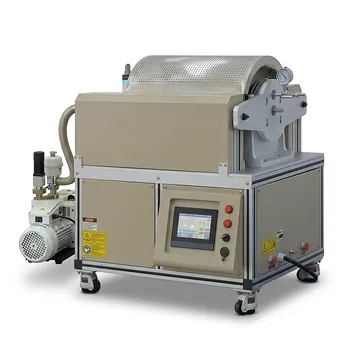
Automated 1200 C Tube Furnace for AI Material Research with 6 Inch OD and Sliding Flange

High Temperature Automated 5 Inch Tube Furnace for Autonomous Material Research and Advanced Laboratory R&D

1200°C 5 Inch Vertical Quartz Tube Furnace with Stainless Steel Vacuum Flanges

High Temperature 1700C Six Zone Split Tube Furnace with Alumina Tube and Water Cooled Flanges
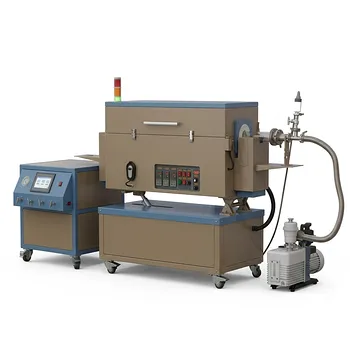
5 Inch Three Zone Rotary Tube Furnace with Integrated Gas Delivery System and 1200C Capability for Advanced Material CVD Processing

1200C High Throughput Multi Channel Tube Furnace with 50mm Quartz Tubes for Annealing and Material Phase Diagram Research
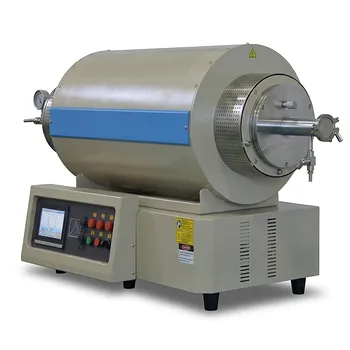
1200C Max Three Zone Tube Furnace 6 Inch OD Max with Tube and Flange

1800C High Temperature Compact Vacuum Tube Furnace with 60mm OD Alumina Tube and Kanthal MoSi2 Heating Elements