Why is a sealed tube reactor necessary during the pre-carbonization of pitch-plastic? Key to Superior Graphitization
Updated 3 months ago
The use of a sealed tube reactor is essential for capturing and utilizing hydrogen-rich volatiles. At the 600 °C pre-carbonization stage, plastic components release gases that would otherwise escape an open system. The sealed environment forces these volatiles to remain in contact with the pitch, facilitating critical chemical reactions that define the final material's structure.
The sealed reactor traps hydrogen-rich gases to stabilize pitch-based radicals and maintain mesophase fluidity. This process, known as chemical incremental enhancement, is the primary driver for achieving superior graphitization quality in the final composite.
The Mechanism of Volatile Capture
Retaining Hydrogen-Rich Gases
During the heating process, plastic components within the composite undergo thermal decomposition. This breakdown releases hydrogen-rich volatiles that are vital to the chemical transformation of the pitch.
In a conventional open furnace, these gases would be vented away immediately. The sealed tube reactor creates a closed loop, ensuring these reactive gases stay within the reaction zone to perform their intended function.
Preventing Material Loss
By sealing the reactor, you prevent the loss of carbon-forming elements that would otherwise be carried away as gas. This ensures that the chemical potential of the plastic additives is fully realized within the composite matrix.
Chemical Stabilization and Fluidity
Reacting with Pitch Radicals
As pitch is heated to 600 °C, it generates highly reactive and unstable pitch-based radicals. Without intervention, these radicals can react haphazardly, leading to a disorganized carbon structure.
The trapped hydrogen-rich volatiles provide a source of hydrogen that reacts with and stabilizes these radicals. This controlled reaction prevents premature "coking" and allows for a more orderly molecular arrangement.
Maintaining Mesophase Fluidity
The stabilization of radicals directly impacts the physical state of the material by maintaining mesophase fluidity. The mesophase is the liquid-crystalline state that allows carbon molecules to align themselves.
Extended fluidity gives the molecules more time to organize into parallel layers. This molecular alignment is the fundamental requirement for creating a high-quality graphitic structure during later heat treatment.
Understanding the Trade-offs
Equipment Complexity and Safety
The primary challenge of using a sealed reactor is the significant internal pressure build-up caused by the released gases. This requires specialized, high-strength reactors capable of withstanding both high temperatures and high pressures simultaneously.
Scalability Constraints
While highly effective for quality control, sealed reactors are often more difficult to scale than continuous-flow systems. The batch nature of sealed tube reactions can lead to longer cycle times and higher operational costs per unit of material.
How to Apply This to Your Project
Understanding when to utilize a sealed environment depends on your final material requirements and available infrastructure.
- If your primary focus is maximizing graphitization quality: You must use a sealed reactor during the 600 °C stage to ensure pitch radicals are properly stabilized by hydrogen-rich volatiles.
- If your primary focus is chemical incremental enhancement: Ensure the reactor seal is maintained throughout the entire pre-carbonization phase to prevent the premature escape of reactive plastic derivatives.
- If your primary focus is mesophase development: Prioritize the sealed environment to extend the duration of the fluid state, allowing for superior molecular orientation.
By precisely controlling the containment of volatile gases, you transform the plastic component from a simple filler into a powerful chemical agent for material enhancement.
Summary Table:
| Feature | Function of Sealed Reactor | Impact on Material Quality |
|---|---|---|
| Volatile Management | Captures hydrogen-rich gases from plastic | Prevents material loss and enables chemical reactions |
| Radical Control | Traps hydrogen to stabilize pitch-based radicals | Prevents premature coking and disorganized carbon |
| Phase Duration | Maintains mesophase fluidity at 600 °C | Allows for superior molecular alignment and layering |
| Final Structure | Facilitates chemical incremental enhancement | Achieves high-quality, orderly graphitic structures |
Elevate Your Material R&D with THERMUNITS
Achieving the precise conditions required for mesophase development and volatile capture demands reliable, high-performance thermal equipment. THERMUNITS is a leading manufacturer of high-temperature laboratory equipment specifically designed for material science and industrial R&D.
Whether you are focusing on pre-carbonization, graphitization, or advanced composite synthesis, our comprehensive range of thermal solutions ensures consistent results:
- Advanced Tube & Atmosphere Furnaces: Perfect for sealed reactions and volatile management.
- Comprehensive Thermal Systems: Including Muffle, Vacuum, Rotary, and Hot Press furnaces.
- Specialized R&D Tools: CVD/PECVD systems, Dental Furnaces, Electric Rotary Kilns, and Vacuum Induction Melting (VIM) furnaces.
- Precision Components: High-quality Thermal Elements and laboratory heat treatment accessories.
Don't let volatile loss compromise your material quality. Contact THERMUNITS today to find the perfect furnace for your laboratory and discover how our expertise can enhance your heat treatment processes.
References
- Akshay Gharpure, Randy L. Vander Wal. Optimizing Aromaticity for Graphitization. DOI: 10.1021/acsomega.4c02607
Mentioned Products
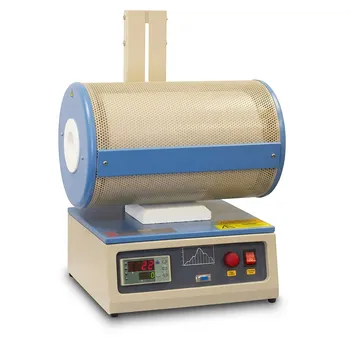
- High Temperature 1700C Benchtop Tube Furnace with 5 Inch Heating Zone High Purity Alumina Tube and Vacuum Sealing Flanges
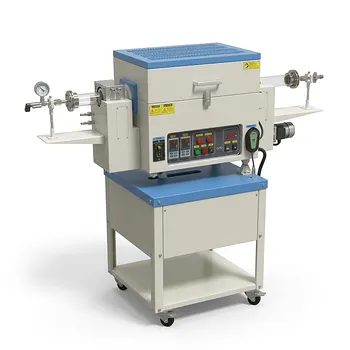
- Multi Position Tube Furnace 1100C for Laboratory Material Research and Advanced Industrial Thermal Processing
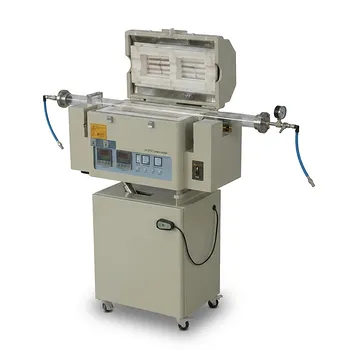
- 4 Inch Two Zone Rotary CVD Tube Furnace for High Temperature Battery Material Synthesis and Advanced Material Calcination
- Double Temperature Revolving Tube Furnace with Precision Rotation and Adjustable Inclination for Advanced Material Research
- 1200C Dual Sliding Tube Furnace with Dual Tubes and Flanges for PECVD Processes
People Also Ask
- How are high-temperature tube furnaces utilized to repair etching damage? Precision Lattice Restoration Solutions
- What is the function of a high-temperature tube furnace in the synthesis of g-C3N4? Optimize Thermal Polycondensation
- What is the role of a high-temperature tube furnace in the calcination process of ZnO/In2O3 nanocomposites?
- What impact does the heating rate of a tube furnace have on biochar microstructure? Optimize Your Material R&D.
- Conditions for nZVI Synthesis in Tube Furnaces? Learn to Optimize Thermal and Atmospheric Control for High Purity.

Tech Team · ThermUnits
Last updated on Jun 02, 2026
Related Products

High Temperature 1700C Benchtop Tube Furnace with 5 Inch Heating Zone High Purity Alumina Tube and Vacuum Sealing Flanges
Multi Position Tube Furnace 1100C for Laboratory Material Research and Advanced Industrial Thermal Processing
4 Inch Two Zone Rotary CVD Tube Furnace for High Temperature Battery Material Synthesis and Advanced Material Calcination
Double Temperature Revolving Tube Furnace with Precision Rotation and Adjustable Inclination for Advanced Material Research
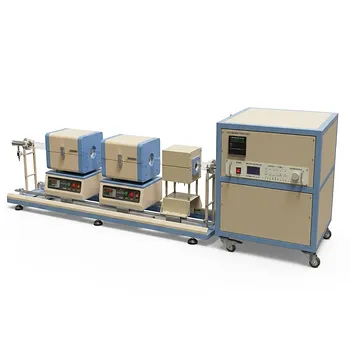
1200C Dual Sliding Tube Furnace with Dual Tubes and Flanges for PECVD Processes
1100C Hydrogen Gas Atmosphere Tube Furnace with 5 Inch Fused Quartz Tube and Integrated Safety Monitoring System
1100°C Vertical Laboratory Furnace for DIY Tubular Reactors with PID Temperature Controller
Two Zone Rotary CVD Furnace with Automatic Feeding and Receiving System for Powder Processing
1500C Compact Hydrogen Gas Tube Furnace with 2 Inch Alumina Tube and Hydrogen Detector
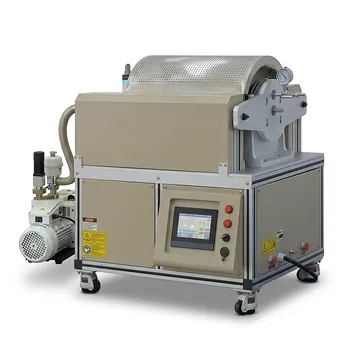
Automated 1200 C Tube Furnace for AI Material Research with 6 Inch OD and Sliding Flange
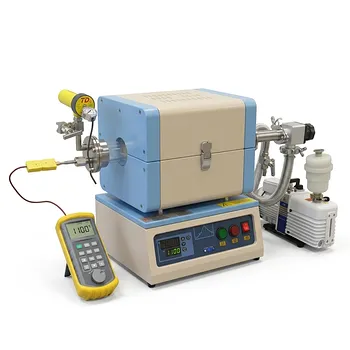
Compact Split Tube Furnace with Insertable Temperature Calibrator and Integrated Vacuum System
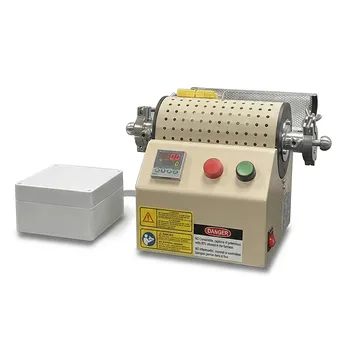
1000C Mini Tube Furnace with 20mm Quartz Tube and Vacuum Flanges for Material Science Research and Controlled Atmosphere Small Sample Processing
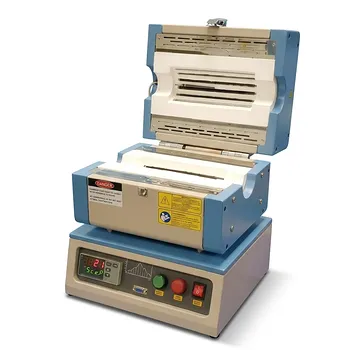
1250C Compact Split Tube Furnace with 8 Inch Heating Zone and Programmable Controller

Compact Vertical Split Quartz Tube Furnace with Stainless Steel Vacuum Flanges for Rapid Thermal Quenching and Controlled Atmosphere Material Processing
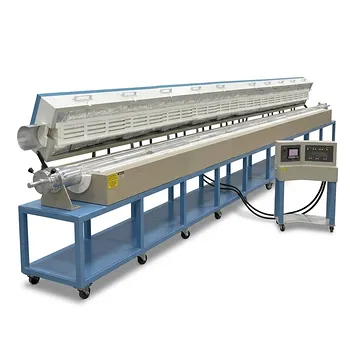
12 Zone Ultra Long Split Tube Furnace with 20 Foot Quartz Tube and 1100C Max Temperature

High Temperature 1700C Vertical Tube Furnace for Powder Spherification and Material Sintering

High Temperature Tube Furnace 1500C with Sliding Flanges and 50mm OD for Rapid Thermal Processing Fast Heating and Cooling
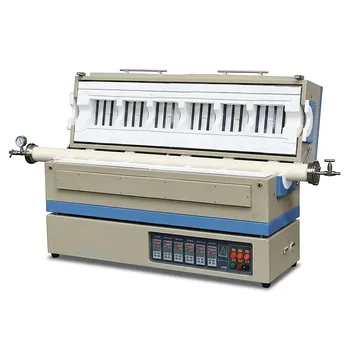
Six Zone Split Tube Furnace with Alumina Tube and Vacuum Flanges for 1500C High Temperature Thermal Processing and CVD

1200°C 5 Inch Vertical Quartz Tube Furnace with Stainless Steel Vacuum Flanges
