Why is a tube atmosphere furnace necessary during the thermal imidization of polyimide membranes? Ensure Purity
Updated 3 months ago
The necessity of a tube atmosphere furnace lies in its ability to provide a strictly controlled, high-temperature, and oxygen-free environment essential for the chemical conversion of polyamic acid into polyimide. Without this specialized equipment, the membrane would suffer from irreversible oxidative degradation, structural defects, and incomplete chemical transformation.
Core Takeaway: A tube atmosphere furnace ensures the successful thermal imidization of polyimide membranes by integrating precise multi-stage temperature gradients with an inert or vacuum environment. This combination is critical to trigger the dehydration cyclization reaction while preventing oxidation and removing residual solvents.
Eliminating Oxygen and Preventing Oxidative Degradation
Shielding via Inert Atmosphere
At the high temperatures required for imidization (often exceeding 300°C), polyimide precursors are highly susceptible to oxidative degradation. The tube furnace's superior sealing performance allows for a continuous flow of high-purity nitrogen or argon.
Maintaining Chemical Purity
By excluding oxygen and moisture, the furnace ensures the chemical purity of the resulting polyimide. This is vital for maintaining the intended pi-conjugated systems and bandgap structures in specialized materials like polyheptazine imide.
Removal of Gaseous By-products
During the thermal rearrangement process, reaction by-products such as carbon dioxide must be efficiently removed. The stable gas flow within the tube furnace carries these by-products away, ensuring they do not interfere with the formation of the high free volume structure.
Precision Thermal Management for Chemical Conversion
Executing Multi-stage Temperature Gradients
Thermal imidization is not a single-step heating process but requires precise temperature curves, such as gradual heating from 100°C to 350°C. Programmable tube furnaces execute these gradients strictly, ensuring the polyamic acid (PAA) chains complete dehydration and ring-closure.
Achieving Thermal Field Uniformity
Membranes are sensitive to temperature fluctuations, which can cause localized inconsistencies in the polymer matrix. The tube furnace provides a uniform thermal field, which is critical for the complete and even ring-closure of molecular chains across the entire membrane surface.
Triggering Dehydration Cyclization
The stable high-temperature environment provides the necessary energy to trigger the dehydration cyclization of PAA into polyimide (PI). This transformation is what grants the final material its hallmark thermal and chemical resistance.
Management of Solvents and Structural Integrity
Removal of High-Boiling Point Solvents
Polyimide precursors are typically dissolved in solvents like NMP or DMF, which have high boiling points. A vacuum-capable tube furnace assists in the complete removal of residual solvents, preventing them from becoming trapped as the polymer hardens.
Preventing Structural Defects
If solvents or moisture are not removed under controlled conditions, they can cause bubbles or stress cracks at elevated temperatures. The controlled heating ramp of the furnace allows these volatiles to escape slowly, preserving the mechanical integrity of the membrane.
Stress Reduction and Crack Prevention
Rapid or uneven heating can lead to significant internal stress within the thin membrane. The furnace's ability to provide gradient heating prevents the formation of stress cracks, ensuring the membrane exhibits superior electrochemical stability.
Understanding the Trade-offs and Pitfalls
The Risk of Improper Heating Ramps
If the heating rate is too aggressive (e.g., exceeding 5°C/min without validation), the rapid escape of volatiles can lead to macro-voids and pinholes. Conversely, a rate that is too slow may lead to excessive processing times and potential thermal aging of the polymer.
Gas Flow and Pressure Balance
Maintaining a micro-positive pressure of inert gas is essential to keep oxygen out, but excessive flow rates can cool the sample unevenly. Achieving the right balance is necessary to ensure both a pure atmosphere and a uniform thermal field.
Limitations of Atmosphere Sealing
While tube furnaces offer excellent sealing, any leak in the gaskets or fittings at high temperatures can introduce trace oxygen. Even minimal oxygen exposure at 400°C can darken the membrane and significantly reduce its gas separation performance or mechanical strength.
How to Apply This to Your Project
Making the Right Choice for Your Goal
- If your primary focus is gas separation performance: Utilize a furnace capable of maintaining a stable nitrogen flow at 350°C to 450°C to facilitate thermal rearrangement into a high-free-volume PBO structure.
- If your primary focus is membrane structural integrity: Prioritize a furnace with high-precision programmable controllers to execute a slow, multi-stage gradient (e.g., starting at 70°C) to prevent stress cracks.
- If your primary focus is chemical purity and crystallinity: Opt for a vacuum-capable tube furnace to ensure the complete removal of high-boiling point solvents and to prevent any oxidative interference during the growth phase.
By mastering the atmospheric and thermal variables within a tube furnace, you ensure the transition from a fragile precursor to a high-performance, stable polyimide membrane.
Summary Table:
| Requirement | Role of Tube Atmosphere Furnace | Resulting Benefit |
|---|---|---|
| Oxygen-Free Environment | Continuous inert gas flow (N2/Argon) | Prevents oxidative degradation & maintains purity |
| Thermal Management | Multi-stage programmable heating ramps | Ensures complete dehydration cyclization & conversion |
| Solvent Removal | Vacuum capability & stable gas flow | Eliminates residual solvents (NMP/DMF) & bubbles |
| Structural Control | Uniform thermal field distribution | Reduces internal stress and prevents surface cracks |
Optimize Your Thermal Imidization Process with THERMUNITS
Are you looking to achieve superior mechanical strength and chemical purity in your polyimide membranes? THERMUNITS is a leading manufacturer of high-temperature laboratory equipment specifically designed for material science and industrial R&D.
We provide precision-engineered solutions tailored for advanced heat treatment, including:
- Tube & Atmosphere Furnaces: Perfect for providing the inert or vacuum environments essential for oxidative-sensitive processes.
- Comprehensive Range: Vacuum, Muffle, Rotary, and Hot Press furnaces, alongside CVD/PECVD systems and Thermal Elements.
- Expertise: Our equipment ensures uniform thermal fields and precise multi-stage gradient control needed for complex dehydration cyclization.
Don't let oxidative defects or structural stress compromise your research outcomes. Contact our technical experts today to find the ideal thermal processing solution for your laboratory.
References
- Qunsheng Li, Peiyong Qin. The thermal behavior and pyrolysis mechanism of a polyimide gas separation membrane. DOI: 10.1039/d4su00489b
Mentioned Products
- 1750°C High Temperature Benchtop Vacuum Atmosphere Tube Furnace with Kanthal Super 1800 Heating Elements and 60mm Alumina Processing Tube
- Vertical 1700C Vacuum and Atmosphere Tube Furnace with 80mm Alumina Tube
- 1200C Hybrid Muffle and Tube Furnace for Material Research with Dual Atmosphere Control Quartz Tubes
- Compact Hybrid Muffle and Tube Furnace for 1000C Controlled Atmosphere Laboratory Material Sintering
- Compact Vertical Split Quartz Tube Furnace with Stainless Steel Vacuum Flanges for Rapid Thermal Quenching and Controlled Atmosphere Material Processing
People Also Ask
- What core functions does a high-temperature vacuum tube furnace provide? Optimize np-CuSn Sintering & Joint Integrity
- What is the role of a high-temperature tube furnace in the calcination process of ZnO/In2O3 nanocomposites?
- What role does a high-temperature tube furnace play in the sulfidation heat treatment of CoS@C/MXene nanocomposites? Guide
- Why is a high-temperature tube furnace required for CuAlO2 heat treatment? Master Phase Transformation Today
- What role does a high-temperature tube furnace play in executing nitrogen absorption kinetic experiments? Expert Insights

Tech Team · ThermUnits
Last updated on Jun 02, 2026
Related Products
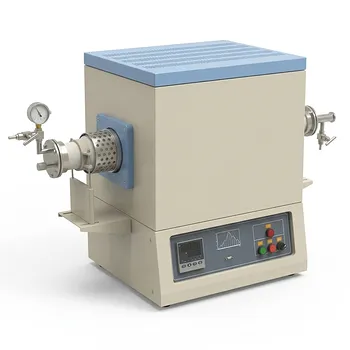
1750°C High Temperature Benchtop Vacuum Atmosphere Tube Furnace with Kanthal Super 1800 Heating Elements and 60mm Alumina Processing Tube

Vertical 1700C Vacuum and Atmosphere Tube Furnace with 80mm Alumina Tube
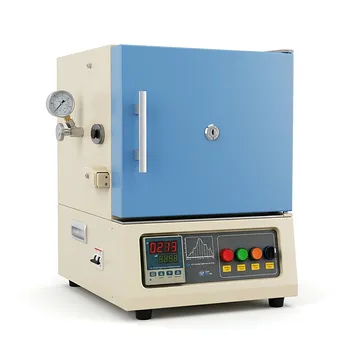
1200C Hybrid Muffle and Tube Furnace for Material Research with Dual Atmosphere Control Quartz Tubes
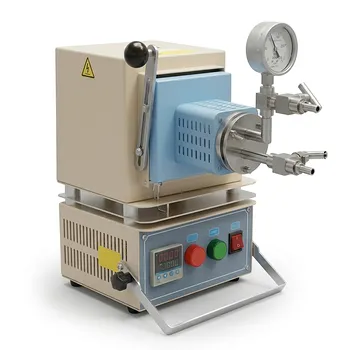
Compact Hybrid Muffle and Tube Furnace for 1000C Controlled Atmosphere Laboratory Material Sintering
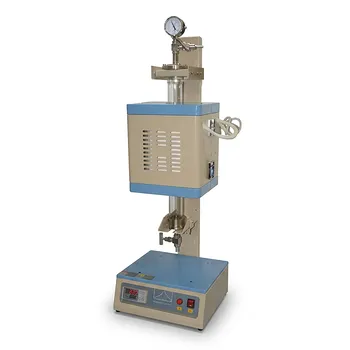
Compact Vertical Split Quartz Tube Furnace with Stainless Steel Vacuum Flanges for Rapid Thermal Quenching and Controlled Atmosphere Material Processing
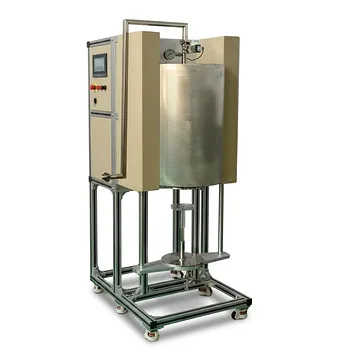
1200°C Atmosphere Controlled Automatic Bottom Loading Furnace with 6 Inch Quartz Tube
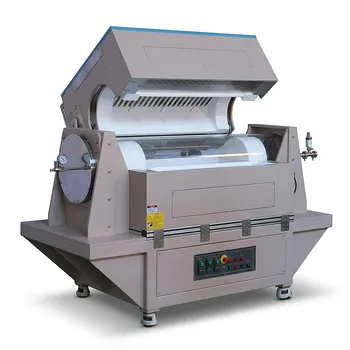
Three Zone Tube Furnace with 11 Inch or 15 Inch Quartz Tube and Hinged Flanges for Vacuum Atmosphere Heat Treatment
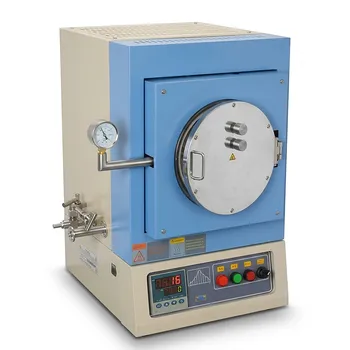
1100°C High Temperature Quartz Chamber Furnace 8 Inch OD with 7.6 Liter Capacity and Vacuum Atmosphere Capability
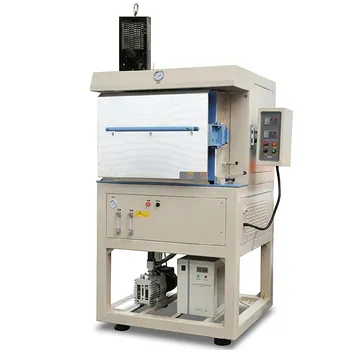
1200C Hydrogen Atmosphere Box Furnace with 5 Heated Sides and 64L Chamber
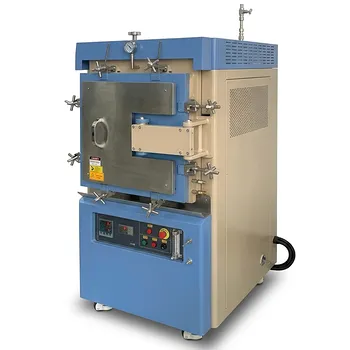
Atmosphere Controlled Muffle Furnace 1700C Maximum Temperature 80L High Capacity Vacuum Inert Gas Box Furnace
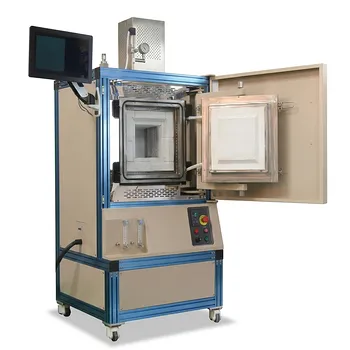
High Temperature Hydrogen Atmosphere Box Furnace 1650C Max Reducing Environment Material Synthesis System 8x8x8 Chamber

High Temperature 1700C Vertical Tube Furnace for Powder Spherification and Material Sintering
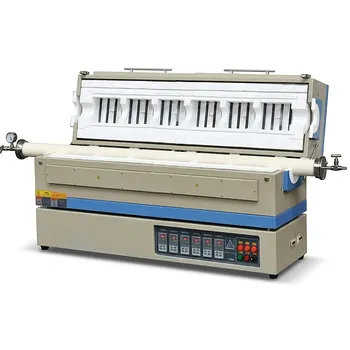
High Temperature 1700C Six Zone Split Tube Furnace with Alumina Tube and Water Cooled Flanges
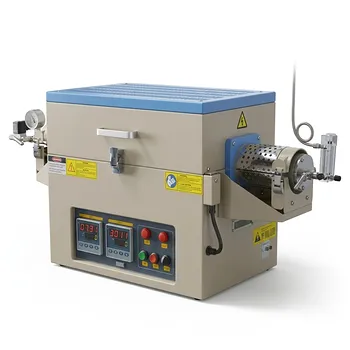
1100C Dual Zone Hydrogen Gas Tube Furnace with Quartz Tube and Integrated H2 Leak Detection System

High Temperature 1700C Tube Furnace with High Vacuum Turbomolecular Pump System and Multi Channel Mass Flow Controller Gas Mixer

1800C High Temperature Compact Vacuum Tube Furnace with 60mm OD Alumina Tube and Kanthal MoSi2 Heating Elements
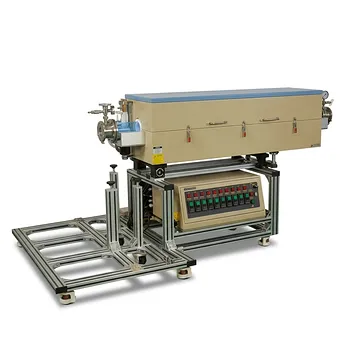
Ten Zone Multi Orientation Laboratory Tube Furnace for 1200C High Temperature Gradient Thermal Processing
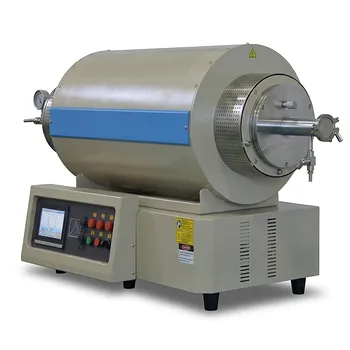
1200C Max Three Zone Tube Furnace 6 Inch OD Max with Tube and Flange

High Temperature Automated 5 Inch Tube Furnace for Autonomous Material Research and Advanced Laboratory R&D
