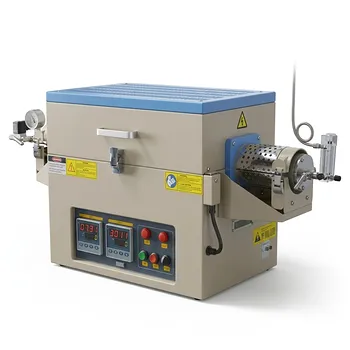
Why is a nitrogen-protected tube furnace essential for carbon activation? Achieve High Yield and Precise Pore Structure
Updated 3 months ago
The high-temperature activation of carbon materials requires a precise environment to facilitate pore development without destroying the carbon skeleton. A tube furnace equipped with high-purity nitrogen protection is essential because it creates an inert atmosphere that prevents oxidative combustion, ensures high carbon yield, and allows for the removal of volatile impurities. This setup enables chemical activators to react efficiently with the carbon substrate, resulting in the complex microporous and mesoporous structures necessary for high-performance applications.
Core Takeaway: Nitrogen protection in a tube furnace converts a high-heat environment from a destructive combustion chamber into a controlled reaction vessel. By displacing oxygen, the system allows for the precise "etching" of carbon pores while preserving the material's structural integrity and maximizing final yield.
Preventing Oxidative Destruction and Material Loss
The Critical Role of Oxygen Displacement
At temperatures ranging from 400°C to 1000°C, carbon materials are highly susceptible to non-selective oxidation or direct combustion in the presence of air. High-purity nitrogen acts as a protective shield by continuously purging the furnace chamber and displacing oxygen.
Preservation of the Carbon Framework
Maintaining an oxygen-free environment ensures that the organic matter undergoes pyrolysis—the thermal decomposition of materials in the absence of oxygen—rather than burning. This process is vital for the proper reconstruction of the carbon framework and prevents the material from turning into ash.
Protecting Delicate Micro-Architectures
Advanced carbon materials, such as one-dimensional hollow tubes or two-dimensional nanosheets, are highly sensitive to thermal erosion. Nitrogen protection ensures these delicate structures remain intact during activation, preserving the specific geometry required for their intended technical use.
Optimizing Pore Development and Chemical Efficiency
Removal of Volatile Impurities
The continuous flow of nitrogen within the tube furnace serves a dual purpose: it maintains the inert atmosphere and physically carries away volatile byproducts. Removing these impurities prevents them from redepositing on the carbon surface, which would otherwise clog newly formed pores.
Facilitating Efficient Chemical Activation
Activation often involves a vigorous chemical reaction between carbonized material and agents like KOH or NaOH. The stable, controlled environment of a tube furnace allows these agents to ablate the carbon surface and clear pores uniformly at preset temperatures.
Enhancing Adsorption and Conductivity
Precise atmospheric control allows for the thermal rearrangement of atoms, which can include the graphitization of the structure or the successful doping of nitrogen. These structural refinements significantly enhance both the electrical conductivity and the adsorption performance of the final activated carbon.
Understanding the Trade-offs and Technical Requirements
The Necessity of High-Purity Gas
Using low-purity nitrogen can introduce trace amounts of oxygen or moisture, leading to partial oxidation. This unintended reaction can decrease the specific surface area and weaken the mechanical strength of the carbon material, undermining the entire activation process.
Managing Gas Flow Rates
While nitrogen is essential, the flow rate must be carefully calibrated. If the flow is too low, volatile impurities may linger; if it is too high, it may cause temperature fluctuations within the furnace tube or result in excessive gas consumption costs.
Temperature Uniformity Challenges
A tube furnace provides excellent precision, but users must ensure the sample is placed within the constant temperature zone. Failure to do so can result in uneven activation, where some material is over-processed while other parts remain under-activated.
How to Apply This to Your Project
When selecting your activation parameters, consider the specific requirements of your precursor material and your target performance metrics.
- If your primary focus is Maximum Carbon Yield: Ensure a rigorous nitrogen purge before heating begins to remove all residual oxygen, preventing any loss to combustion during the ramp-up phase.
- If your primary focus is High Specific Surface Area: Focus on maintaining a steady nitrogen flow rate to effectively remove reaction byproducts that could block pore development.
- If your primary focus is Structural Integrity of Nanosheets: Use lower heating rates within the nitrogen-protected environment to avoid thermal shock and erosion of delicate geometries.
By mastering the balance between temperature precision and atmospheric purity, you can reliably produce carbon materials with the exact porous characteristics required for your application.
Summary Table:
| Feature | Role in Carbon Activation | Key Benefit |
|---|---|---|
| Oxygen Displacement | Creates an inert pyrolysis environment | Prevents combustion and preserves carbon skeleton |
| Volatile Purging | Removes reaction byproducts | Prevents pore clogging and ensures high surface area |
| Atmospheric Control | Facilitates stable chemical etching | Optimizes electrical conductivity and adsorption |
| Thermal Uniformity | Precise heat distribution | Ensures consistent activation across the entire sample |
Elevate Your Material Research with THERMUNITS
Precision is non-negotiable in high-temperature carbon activation. THERMUNITS is a leading manufacturer of high-temperature laboratory equipment dedicated to empowering material science and industrial R&D. Our specialized Tube Furnaces with precise atmospheric control are specifically engineered to meet the rigorous demands of carbonization and activation processes.
Beyond tube furnaces, we offer a comprehensive range of thermal solutions tailored for advanced research:
- Muffle, Vacuum, and Atmosphere Furnaces
- Rotary and Hot Press Furnaces
- CVD/PECVD Systems
- Vacuum Induction Melting (VIM) Furnaces
- Dental Furnaces and Thermal Elements
Partner with us to achieve superior heat treatment results and maximize your material performance. Contact our technical experts today to find the ideal equipment for your laboratory.
References
- Shibo Liu, Shaojun Yuan. Nitrogen-Doped Porous Carbons Derived from Peanut Shells as Efficient Electrodes for High-Performance Supercapacitors. DOI: 10.3390/ijms25147583
Mentioned Products
- High Temperature Dual Zone Rotating Tube Furnace 1500C Silicon Carbide Heating for Advanced Material Synthesis
- High Temperature 1700C Vertical Tube Furnace for Powder Spherification and Material Sintering
- Electric Rotary Kiln Small Rotary Furnace for Activated Carbon Regeneration
- Compact Hybrid Muffle and Tube Furnace for 1000C Controlled Atmosphere Laboratory Material Sintering
- 5 Inch Three Zone Rotary Tube Furnace with Integrated Gas Delivery System and 1200C Capability for Advanced Material CVD Processing
People Also Ask
- What is the function of CVD furnaces in graphene prep? Enhancing Photodetector Charge Transport
- Why use CVD and a tube furnace for Pd3P0.95/NC catalyst phosphidation? Ensure high phase purity and performance.
- CVD Tube Furnace Advantages for Pd-P Catalyst Durability: Precision Control for 40,000+ Cycles
- How does a rotary tube furnace improve the processing of granular materials? Enhance Uniformity and Reaction Kinetics
- How does a Chemical Vapor Deposition (CVD) tube furnace facilitate synchronized nitridation? Precision Nano-Engineering.

Tech Team · ThermUnits
Last updated on Jun 03, 2026
Related Products
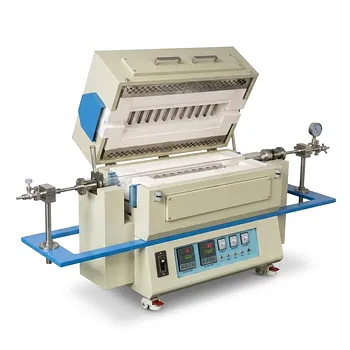
High Temperature Dual Zone Rotating Tube Furnace 1500C Silicon Carbide Heating for Advanced Material Synthesis

High Temperature 1700C Vertical Tube Furnace for Powder Spherification and Material Sintering
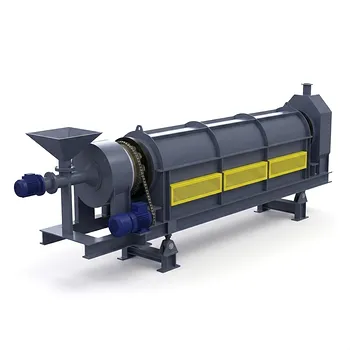
Electric Rotary Kiln Small Rotary Furnace for Activated Carbon Regeneration
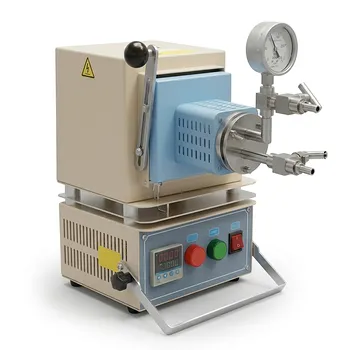
Compact Hybrid Muffle and Tube Furnace for 1000C Controlled Atmosphere Laboratory Material Sintering
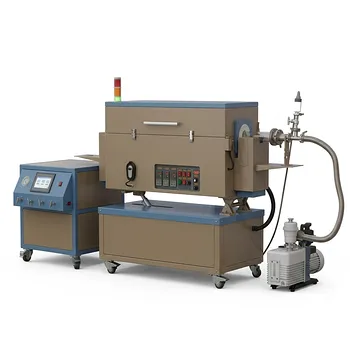
5 Inch Three Zone Rotary Tube Furnace with Integrated Gas Delivery System and 1200C Capability for Advanced Material CVD Processing

Compact Vertical Split Quartz Tube Furnace with Stainless Steel Vacuum Flanges for Rapid Thermal Quenching and Controlled Atmosphere Material Processing
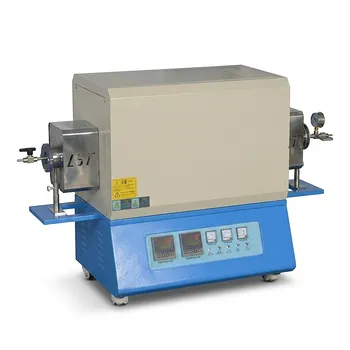
High Temperature Dual Zone Vacuum Tube Furnace for Material Research and CVD Processing

Compact High Temperature 1600C Tube Furnace with 50mm Alumina Tube and Vacuum Flanges for Material Sintering

High Temperature Automated 5 Inch Tube Furnace for Autonomous Material Research and Advanced Laboratory R&D
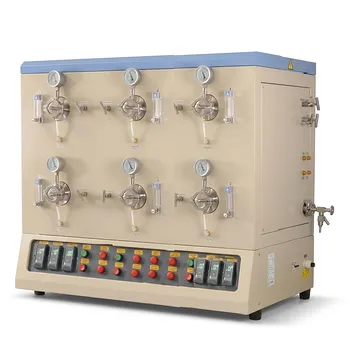
1200C High Throughput Multi Channel Tube Furnace with 50mm Quartz Tubes for Annealing and Material Phase Diagram Research

1100C Tube Furnace with Vacuum Flange and Programmable Temperature Controller for Material Science and Industrial Heat Treatment
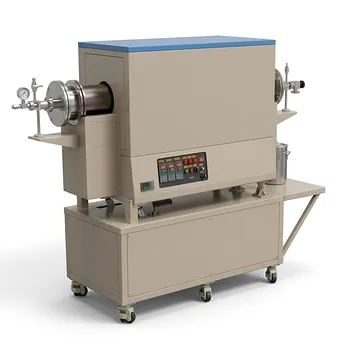
900°C Max Rotary Tube Furnace with 8 Inch 310S Alloy Tube and Optional Multi Zone Heating for Industrial Material Calcination
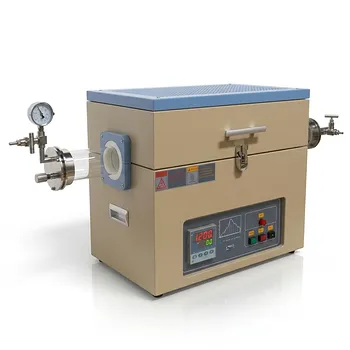
High Temperature 1200C Split Tube Furnace with Optional Quartz Tube Sizes and Vacuum Sealing Flanges for Material Science Research
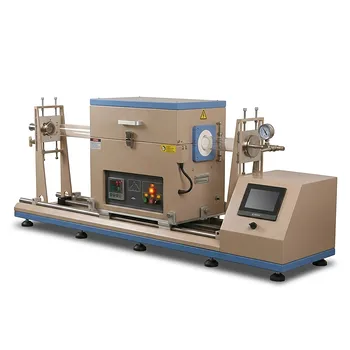
1200C Sliding Tube Furnace for Rapid Thermal Processing and CVD Graphene Growth with 100mm OD Capacity
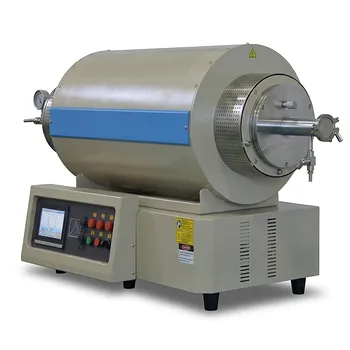
1200C Max Three Zone Tube Furnace 6 Inch OD Max with Tube and Flange
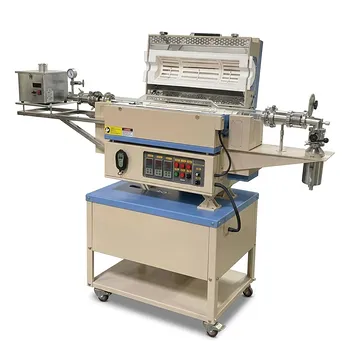
5 Inch Rotary Tube Furnace with Automatic Feeding and Receiving System 1200C Three Zone CVD Powder Processing

Vertical 1700C Vacuum and Atmosphere Tube Furnace with 80mm Alumina Tube

1200°C 5 Inch Vertical Quartz Tube Furnace with Stainless Steel Vacuum Flanges
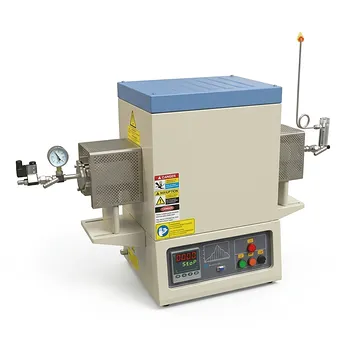
1700C Hydrogen Gas Tube Furnace with 60mm Alumina Process Tube and Integrated Hydrogen Safety Detector