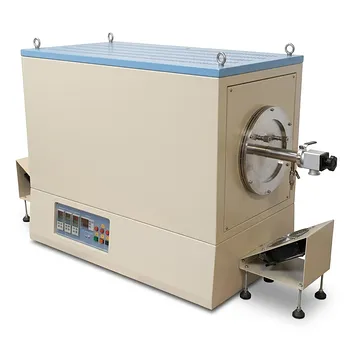
How does a Chemical Vapor Deposition (CVD) tube furnace facilitate synchronized nitridation? Precision Nano-Engineering.
Updated 3 months ago
The synchronized nitridation and carbonization of nanocrystals are made possible by the CVD tube furnace's ability to provide multi-step programmable temperature profiles and precise atmosphere switching. By utilizing high-precision mass flow controllers to regulate gases such as ammonia and nitrogen, the furnace creates a stable, sealed environment where metal ions undergo nitridation while organic precursors simultaneously carbonize into hierarchical hollow structures.
Core Takeaway: A CVD tube furnace acts as a highly controlled "chemical reactor" that uses segmented heating and precise gas regulation to drive two distinct chemical transformations—nitridation and carbonization—within a single, continuous process.
Precise Thermal Management for Phase Transitions
Multi-Step Programmable Temperature Profiles
The furnace allows researchers to set segmented heating phases, such as holding at 400°C before ramping to 700°C. This is critical because the activation energy required for the carbonization of organic precursors often differs from that of the nitridation of metal ions.
Uniform Heat Distribution
The horizontal layout of the tube furnace ensures a stable heat field across the reaction zone. This uniformity is essential for providing the energy needed for carbon atoms to rearrange into tubular or sheet-like structures without creating structural defects.
Controlled Thermal Decomposition
High-temperature environments, often reaching up to 1000°C, facilitate the pyrolytic fragmentation of precursors. This ensures that carbon source gases (like acetylene or cyclohexane) decompose efficiently on the surface of nanocatalysts.
Atmospheric Control and Gas Dynamics
High-Precision Mass Flow Controllers (MFCs)
MFCs allow for the exact regulation of gas ratios, which is the "software" of the chemical reaction. By introducing ammonia ($NH_3$), the system provides the nitrogen source required for nitridation, while inert gases like nitrogen ($N_2$) or argon maintain a stable pressure.
Atmosphere Switching Capabilities
The ability to switch gases mid-cycle allows for the sequential or simultaneous introduction of precursors. This capability is what enables the synchronized growth of different material phases, ensuring that the nitridation of the metal core and the carbonization of the shell happen in a coordinated fashion.
Sealed Reaction Environments
The vacuum-tight sealing of the quartz or ceramic tube prevents atmospheric oxygen from entering the system. This oxygen-free environment is vital to prevent the unwanted oxidation of metal nanocrystals and the premature combustion of organic carbon sources.
Engineering Hierarchical Nanostructures
Formation of Active Catalytic Centers
By controlling the rate of gas flow and temperature, the furnace facilitates the formation of active catalytic centers within the nanocrystal. These centers are responsible for the directional growth of complex structures like carbon nanocoils or high-aspect-ratio nanotubes.
0D to 2D Material Transformation
The furnace can drive the re-coalescence of zero-dimensional carbon dots into two-dimensional sheet-like structures. This transformation is strictly governed by the pyrolytic conditions and the nitrogen bonding states developed during the nitridation process.
Structural Controllability
Precision in the CVD process determines the number of layers, defect density, and morphology of the resulting nanomaterial. The tube furnace provides the physical foundation for controlling the crystalline quality and thickness uniformity of these films.
Understanding the Trade-offs
Temperature Gradients and Uniformity
While tube furnaces provide stable heat zones, a common pitfall is the thermal gradient near the ends of the tube. If the substrate is placed outside the "sweet spot" or isothermal zone, the resulting nanocrystals may exhibit non-uniform carbonization or incomplete nitridation.
Gas Flow Dynamics and Turbulence
At high flow rates, gas turbulence within the tube can lead to uneven precursor deposition. Maintaining a laminar flow is essential, but this often requires a delicate balance between gas velocity and the furnace’s internal pressure.
Precursor Contamination
Since the tube is reused across multiple experiments, cross-contamination is a significant risk. Residual carbon or nitrogen species from previous runs can alter the stoichiometry of the current reaction, requiring rigorous cleaning or dedicated tubes for specific processes.
How to Apply This to Your Project
To successfully synchronize nitridation and carbonization, your approach should vary based on your specific material requirements:
- If your primary focus is structural hierarchy: Prioritize multi-step heating programs to allow organic precursors to stabilize before high-temperature nitridation begins.
- If your primary focus is catalytic activity: Focus on the precision of the ammonia flow via MFCs to maximize the density of active nitrogen-metal bonding sites.
- If your primary focus is material purity: Ensure the furnace has high-vacuum sealing capabilities and utilize a quartz tube dedicated strictly to nitrogen-carbon reactions to avoid cross-contamination.
The CVD tube furnace is the indispensable foundation for transforming simple precursors into complex, functional nanocrystals through the masterful control of heat and chemistry.
Summary Table:
| Feature | Function in Process | Impact on Nanocrystals |
|---|---|---|
| Multi-step Heating | Manages distinct activation energies | Enables hierarchical hollow structures |
| MFC Gas Control | Regulates precise NH3 and N2 ratios | Ensures uniform nitrogen-metal bonding |
| Vacuum Sealing | Creates oxygen-free atmosphere | Prevents oxidation and precursor combustion |
| Horizontal Layout | Maintains stable isothermal zone | Guarantees structural uniformity and low defects |
Elevate Your Nanomaterial R&D with THERMUNITS
As a leading manufacturer of high-temperature laboratory equipment, THERMUNITS provides the precision technology required for complex material science workflows. Our advanced CVD/PECVD systems and Tube furnaces are engineered to deliver the exact atmosphere and thermal profiles needed for synchronized nitridation and carbonization.
Whether your project involves Muffle, Vacuum, Atmosphere, or Rotary furnaces, our comprehensive thermal processing solutions ensure maximum structural controllability and material purity.
Ready to optimize your heat treatment results?
Contact our engineering experts today to find the perfect solution for your laboratory or industrial R&D needs.
References
- Hyung Wook Choi, Ho Seok Park. Trifunctional robust electrocatalysts based on 3D Fe/N‐doped carbon nanocubes encapsulating Co<sub>4</sub>N nanoparticles for efficient battery‐powered water electrolyzers. DOI: 10.1002/cey2.505
Mentioned Products
- Split Chamber CVD Tube Furnace with Vacuum Station Chemical Vapor Deposition System Machine
- 5 Inch Rotary Tube Furnace with Automatic Feeding and Receiving System 1200C Three Zone CVD Powder Processing
- 1200C Max Dual Sliding Tube Furnace with 50 mm Tube Flanges for CVD
- High Temperature 1700C Tube Furnace with High Vacuum Turbomolecular Pump System and Multi Channel Mass Flow Controller Gas Mixer
- Vertical Openable Tube Furnace 0-1700c High Temperature Laboratory System for CVD and Vacuum Heat Treatment
People Also Ask
- Why is a Tube Furnace typically utilized for CVD? Achieve Precision in Graphene and 2D Material Synthesis
- What is the function of CVD furnaces in graphene prep? Enhancing Photodetector Charge Transport
- Why use CVD and a tube furnace for Pd3P0.95/NC catalyst phosphidation? Ensure high phase purity and performance.
- CVD Tube Furnace Advantages for Pd-P Catalyst Durability: Precision Control for 40,000+ Cycles
- How do CVD furnace cooling rates influence graphene-platinum residual stress? Optimize Material Quality

Tech Team · ThermUnits
Last updated on Jun 03, 2026
Related Products
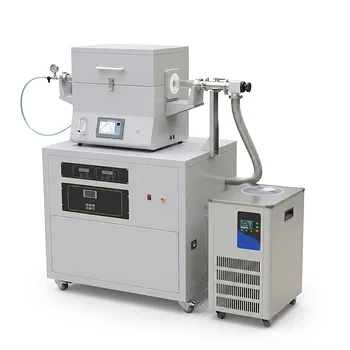
Split Chamber CVD Tube Furnace with Vacuum Station Chemical Vapor Deposition System Machine
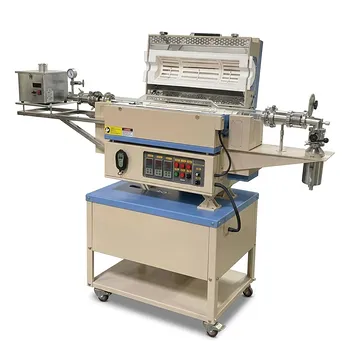
5 Inch Rotary Tube Furnace with Automatic Feeding and Receiving System 1200C Three Zone CVD Powder Processing
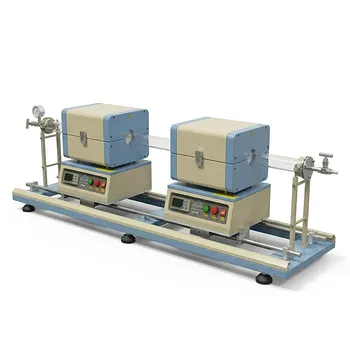
1200C Max Dual Sliding Tube Furnace with 50 mm Tube Flanges for CVD

High Temperature 1700C Tube Furnace with High Vacuum Turbomolecular Pump System and Multi Channel Mass Flow Controller Gas Mixer
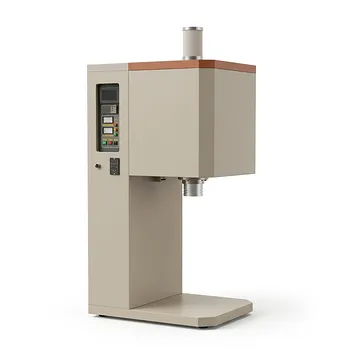
Vertical Openable Tube Furnace 0-1700c High Temperature Laboratory System for CVD and Vacuum Heat Treatment
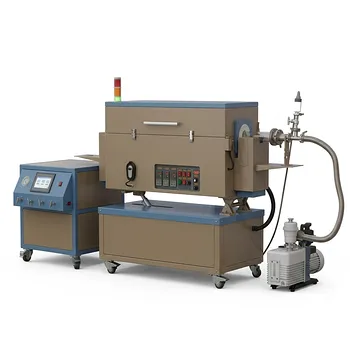
5 Inch Three Zone Rotary Tube Furnace with Integrated Gas Delivery System and 1200C Capability for Advanced Material CVD Processing
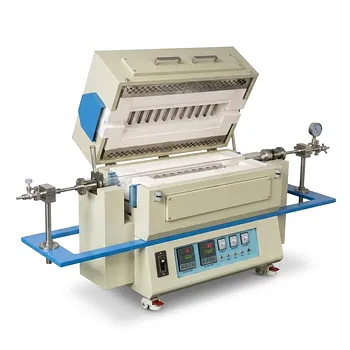
High Temperature Dual Zone Rotating Tube Furnace 1500C Silicon Carbide Heating for Advanced Material Synthesis
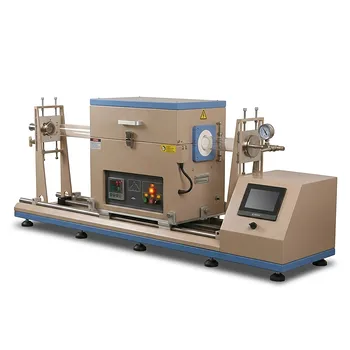
1200C Sliding Tube Furnace for Rapid Thermal Processing and CVD Graphene Growth with 100mm OD Capacity
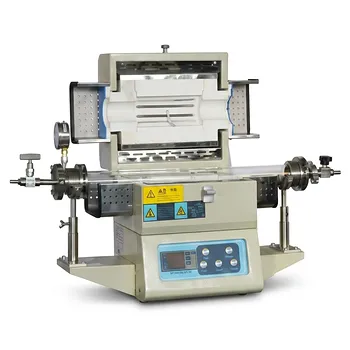
High Temperature 1200C Split Tube Furnace for CVD Research and Vacuum Atmosphere Heat Treatment
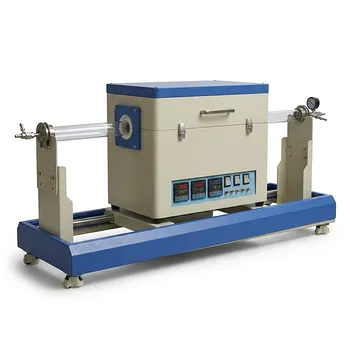
Double Temperature Zone Double Cover Tube Furnace for High Temperature CVD and Vacuum Annealing
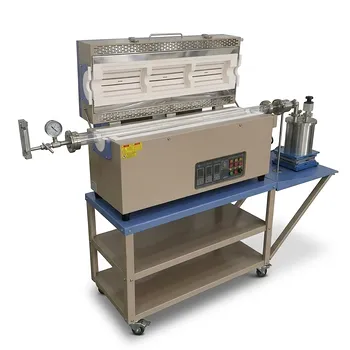
5 Inch Two Zone Rotary Tube Furnace 1100C for Powder CVD and Material Synthesis
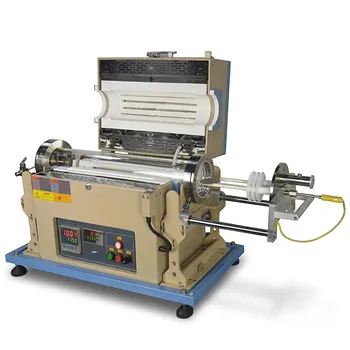
1200°C High Temperature 4 Inch Tube Furnace with Sliding Flange for CVD Systems
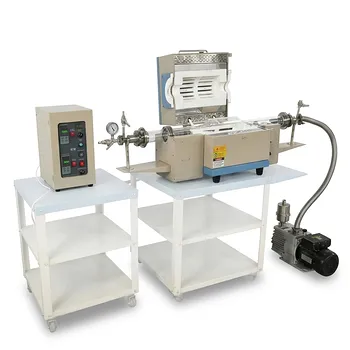
Two Zone Rotary Tube Furnace for Powder CVD Coating and Core Shell Material Synthesis 1100C
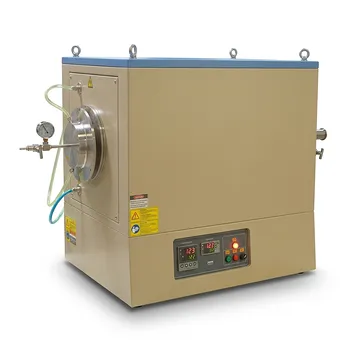
1100°C Large Diameter Quartz Tube Furnace with 24 Inch Heating Zone and Water Cooled Flanges
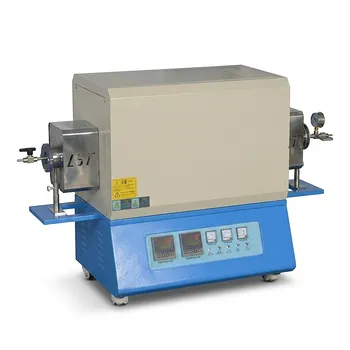
High Temperature Dual Zone Vacuum Tube Furnace for Material Research and CVD Processing
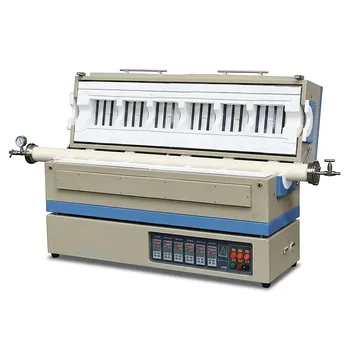
Six Zone Split Tube Furnace with Alumina Tube and Vacuum Flanges for 1500C High Temperature Thermal Processing and CVD

High Temperature 1700C Benchtop Tube Furnace with 5 Inch Heating Zone High Purity Alumina Tube and Vacuum Sealing Flanges
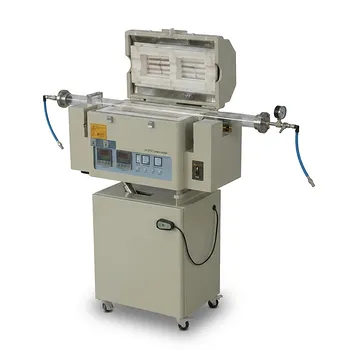
Double Temperature Revolving Tube Furnace with Precision Rotation and Adjustable Inclination for Advanced Material Research
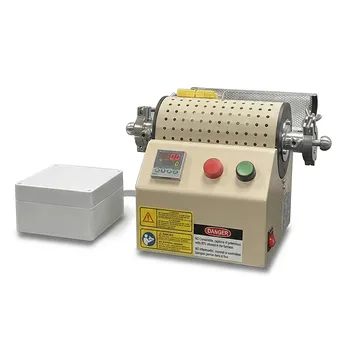
1000C Mini Tube Furnace with 20mm Quartz Tube and Vacuum Flanges for Material Science Research and Controlled Atmosphere Small Sample Processing