Why is a tube furnace utilized for the nitridation process? Optimize ε-Fe2N to ε-Fe2C Catalyst Synthesis
Updated 3 months ago
The utilization of tube furnaces is fundamental to achieving precise nitridation. A tube furnace provides a stable, high-temperature environment combined with a continuous flow of ammonia (NH₃) to facilitate the pyrolysis of catalyst precursors. This specific setup ensures excellent heat transfer and atmospheric sealing, which are required to synthesize the $\epsilon$-Fe₂N template necessary for the subsequent conversion into the ultra-stable $\epsilon$-Fe₂C active phase.
Core Takeaway: A tube furnace acts as a controlled chemical reactor that integrates thermal stability with strict atmospheric isolation. This combination allows for the complete nitridation of iron precursors, establishing the exact crystalline template required for high-performance catalysts.
Precision Atmospheric Control for Nitridation
Facilitating the Continuous Ammonia Flow
The nitridation process requires a constant supply of reactive nitrogen atoms derived from ammonia (NH₃). A tube furnace allows for a steady, metered flow of gas over the precursor material, ensuring that the concentration of nitrogen remains constant throughout the reaction.
Maintaining an Anaerobic Environment
Atmospheric sealing is critical to prevent the introduction of oxygen, which would cause the oxidation of metal components or the carbon carrier. By excluding oxygen, the tube furnace ensures that the chemical energy is directed toward forming Fe-N bonds rather than unwanted oxides.
Enabling Effective Atmosphere Switching
In advanced catalyst synthesis, the ability to switch between inert gases (like Nitrogen or Argon) and reactive gases (like Ammonia or Hydrogen) is vital. Tube furnaces are designed to purge the internal volume quickly, allowing for multi-stage thermal treatments without exposing the sample to ambient air.
Thermal Uniformity and Structural Integrity
Ensuring Complete Pyrolysis
The conversion of precursors into a nitrided state requires precise pyrolysis temperatures that are uniform across the entire sample. Tube furnaces provide excellent heat transfer, ensuring that every part of the catalyst precursor reaches the activation energy required for the nitridation reaction.
Establishing the ε-Fe₂N Structural Template
The $\epsilon$-Fe₂N phase serves as the structural foundation for the final $\epsilon$-Fe₂C catalyst. The stable high-temperature environment of the furnace allows the iron and nitrogen atoms to arrange themselves into the specific hexagonal close-packed lattice required for this phase.
Preventing Particle Agglomeration
Precise temperature control, often including programmable heating rates, helps in stabilizing nanoparticles. This prevents the iron particles from sintering or agglomerating, which would otherwise reduce the surface area and the overall catalytic activity of the final product.
Understanding the Trade-offs
Gas Flow Dynamics and Mass Transfer
While tube furnaces provide excellent atmosphere control, the gas velocity can create gradients across the sample bed. If the precursor powder is too thick, the NH₃ may not penetrate the lower layers effectively, leading to incomplete nitridation.
Scaling and Throughput Limitations
Tube furnaces are ideal for laboratory-scale research and high-purity synthesis but can face challenges in mass production. The batch-processing nature and the physical dimensions of the quartz or ceramic tubes limit the volume of catalyst that can be produced in a single cycle.
Pressure Constraints
Standard tube furnaces operate at near-atmospheric pressure; however, certain nitridation processes may benefit from high-pressure environments. Achieving high nitrogen solubility in some lattices requires specialized high-pressure tube furnaces, which are more complex and costly to operate.
How to Apply This to Your Catalyst Synthesis
To achieve the highest quality $\epsilon$-Fe₂N templates for your catalytic applications, consider the following technical recommendations.
- If your primary focus is Phase Purity: Ensure the furnace seals are checked for leaks and use a high-purity ammonia source to prevent the formation of competing iron oxide phases.
- If your primary focus is Active Site Density: Utilize programmable heating rates to slow the pyrolysis process, allowing for a more uniform distribution of nitrogen atoms throughout the iron matrix.
- If your primary focus is Experimental Reproducibility: Document the exact gas flow rate and the position of the sample within the furnace’s "constant temperature zone" to ensure consistent thermal exposure.
By mastering the atmospheric and thermal variables within the tube furnace, you can reliably produce the stable precursors necessary for advanced iron-carbide catalysis.
Summary Table:
| Feature | Benefit for Nitridation | Impact on Catalyst Output |
|---|---|---|
| Atmospheric Sealing | Prevents oxygen ingress/oxidation | Ensures high-purity ε-Fe₂N phase |
| Continuous NH₃ Flow | Steady reactive nitrogen supply | Uniform nitrogen distribution in lattice |
| Thermal Uniformity | Precise pyrolysis & activation energy | Prevents sintering & maintains surface area |
| Atmosphere Switching | Fast purging of inert/reactive gases | Facilitates complex multi-stage synthesis |
Elevate Your Catalyst Research with THERMUNITS
Precise thermal processing is the backbone of advanced material science. THERMUNITS is a leading manufacturer of high-temperature laboratory equipment, providing the specialized tools required for demanding R&D and industrial applications.
Our advanced Tube Furnaces and Atmosphere Furnaces are specifically engineered to provide the airtight sealing and gaseous control necessary for nitridation, carburization, and CVD/PECVD processes. Beyond tube furnaces, we offer a comprehensive suite of solutions including:
- Laboratory Furnaces: Muffle, Vacuum, and Dental Furnaces.
- Industrial R&D: Rotary Kilns, Hot Press Furnaces, and Vacuum Induction Melting (VIM) units.
- Components: High-quality Thermal Elements and heat treatment accessories.
Whether you are synthesizing $\epsilon$-Fe₂C catalysts or developing next-generation alloys, THERMUNITS delivers the reliability and precision your lab demands.
Ready to optimize your thermal processing? Contact Our Technical Experts Today
References
- Fei Qian, Xiaodong Wen. Stabilized ε-Fe2C catalyst with Mn tuning to suppress C1 byproduct selectivity for high-temperature olefin synthesis. DOI: 10.1038/s41467-024-49472-x
Mentioned Products
- High Temperature Rotary Tube Furnace with Integrated Ball Milling and Gas Flow Function for Powder Nitriding
- Compact High Temperature 1600C Tube Furnace with 50mm Alumina Tube and Vacuum Flanges for Material Sintering
- High Temperature 1700C Vertical Tube Furnace for Powder Spherification and Material Sintering
- High Temperature 1100C Compact Top Loading Vertical Vacuum Tube Furnace for High Vacuum Noble Metal Melting and Material Research
- 1200C Tube Furnace with Internal Magnetic Sample Sliding for Direct Vaporizing Deposition and Rapid Thermal Processing
People Also Ask
- How does a rotary tube furnace improve the processing of granular materials? Enhance Uniformity and Reaction Kinetics
- Why use a rotary tube furnace for FACS carbonization? Ensure uniform morphology and prevent sphere agglomeration.
- In what ways do rotary tube furnaces enhance chemical and specialty mineral processing? Drive Precision and Uniformity.
- Why is the precise optimization of residence time essential in the catalyst calcination process? Maximize Your Yields.
- What are the typical operating temperature ranges and mechanical specifications for rotary furnaces? A Complete Guide

Tech Team · ThermUnits
Last updated on Jun 03, 2026
Related Products
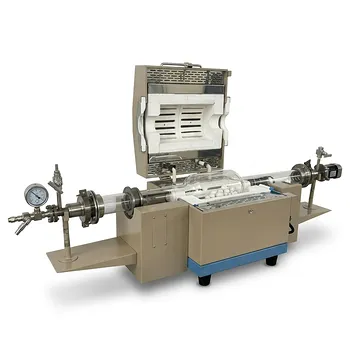
High Temperature Rotary Tube Furnace with Integrated Ball Milling and Gas Flow Function for Powder Nitriding

Compact High Temperature 1600C Tube Furnace with 50mm Alumina Tube and Vacuum Flanges for Material Sintering

High Temperature 1700C Vertical Tube Furnace for Powder Spherification and Material Sintering
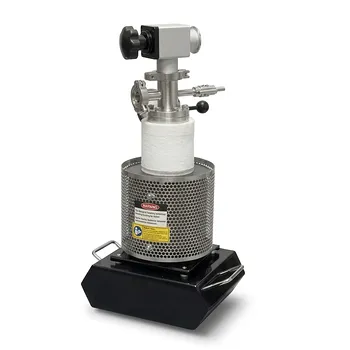
High Temperature 1100C Compact Top Loading Vertical Vacuum Tube Furnace for High Vacuum Noble Metal Melting and Material Research
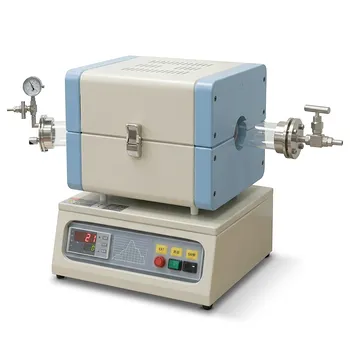
1200C Tube Furnace with Internal Magnetic Sample Sliding for Direct Vaporizing Deposition and Rapid Thermal Processing

Compact Vertical Split Quartz Tube Furnace with Stainless Steel Vacuum Flanges for Rapid Thermal Quenching and Controlled Atmosphere Material Processing
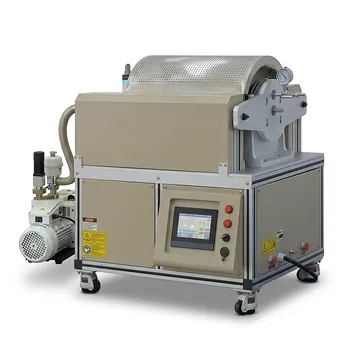
Automated 1200 C Tube Furnace for AI Material Research with 6 Inch OD and Sliding Flange

Vertical 1700C Vacuum and Atmosphere Tube Furnace with 80mm Alumina Tube
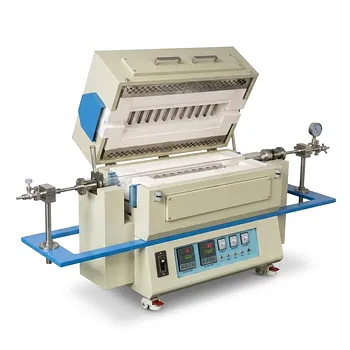
High Temperature Dual Zone Rotating Tube Furnace 1500C Silicon Carbide Heating for Advanced Material Synthesis
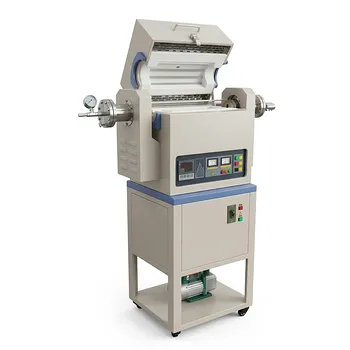
High Temperature Rotary Tilt Tubular Furnaces for Advanced Powder Sintering and Material Processing
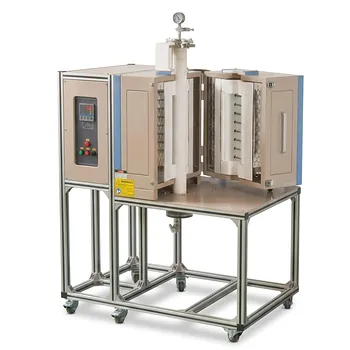
High Temperature 1700C Vertical Split Tube Furnace for Material Quenching and Single Crystal Growth
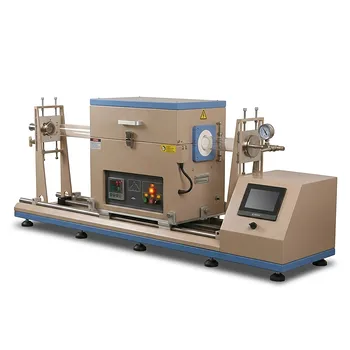
1200C Sliding Tube Furnace for Rapid Thermal Processing and CVD Graphene Growth with 100mm OD Capacity

High Temperature Automated 5 Inch Tube Furnace for Autonomous Material Research and Advanced Laboratory R&D
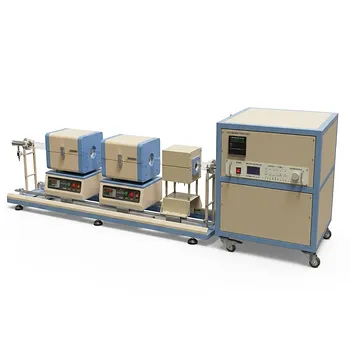
1200C Dual Sliding Tube Furnace with Dual Tubes and Flanges for PECVD Processes
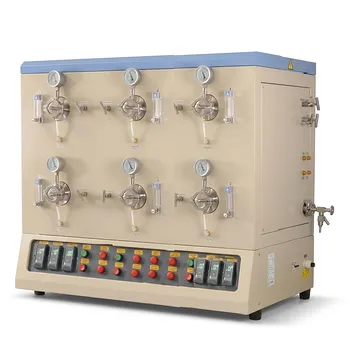
1200C High Throughput Multi Channel Tube Furnace with 50mm Quartz Tubes for Annealing and Material Phase Diagram Research
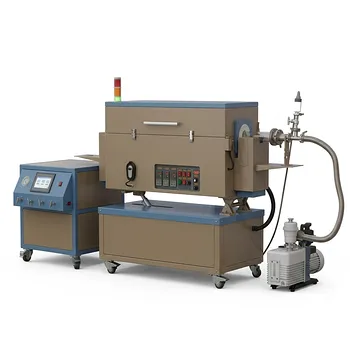
5 Inch Three Zone Rotary Tube Furnace with Integrated Gas Delivery System and 1200C Capability for Advanced Material CVD Processing
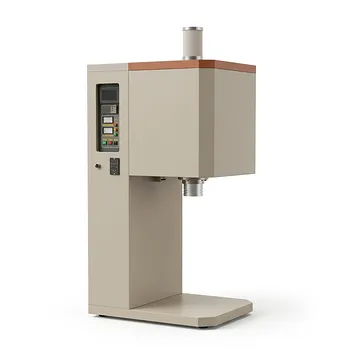
Vertical Openable Tube Furnace 0-1700c High Temperature Laboratory System for CVD and Vacuum Heat Treatment
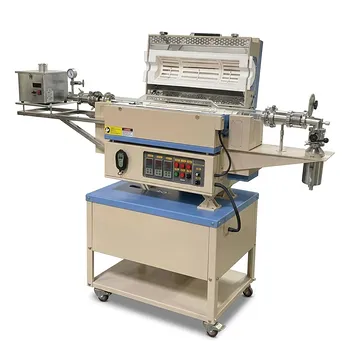
5 Inch Rotary Tube Furnace with Automatic Feeding and Receiving System 1200C Three Zone CVD Powder Processing
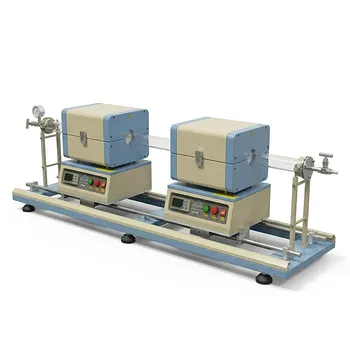
1200C Max Dual Sliding Tube Furnace with 50 mm Tube Flanges for CVD
