Why is a water-cooled copper crucible necessary for melting CrMnFeCoCu HEAs? Ensure Chemical Purity & Homogeneity
Updated 3 months ago
The necessity of a water-cooled copper crucible for CrMnFeCoCu high-entropy alloys (HEAs) stems from the dual requirement of maintaining extreme chemical purity and ensuring structural homogeneity. During the arc melting process, the water-cooled copper provides a rapid cooling rate that prevents the high-temperature melt from reacting with the crucible walls. This "cold crucible" technique effectively eliminates the risk of introducing impurities like silicon or aluminum while simultaneously preventing significant macro-scale segregation of the alloy's five primary elements.
Core Takeaway: A water-cooled copper crucible serves as a "cold wall" containment system that creates a protective, solidified layer of the alloy itself (a "skull"), ensuring the melt remains free from ceramic contamination while facilitating the rapid solidification necessary for a refined HEA microstructure.
Eliminating Chemical Contamination
The Formation of a "Self-Consuming" Liner
The primary function of the water-cooled copper crucible is to facilitate the formation of a "skull" or chilled alloy shell on the inner wall. This thin, solidified layer of the CrMnFeCoCu alloy acts as a protective barrier between the molten metal and the copper surface.
By using the alloy to contain itself, the system ensures that the melt is never in contact with foreign materials. This is a critical departure from traditional methods where the melt might leach elements from the container.
Avoiding Ceramic and Refractory Impurities
Unlike traditional corundum (alumina) or silica-based crucibles, copper crucibles do not react with the active elements in the HEA. In high-temperature environments, ceramic materials can break down, introducing impurities such as aluminum or silicon into the alloy.
For complex systems like CrMnFeCoCu, even minor contamination can drastically alter the mechanical properties and phase stability. The water-cooled copper setup maintains the strict chemical integrity required for high-performance research and industrial applications.
Ensuring Structural and Chemical Homogeneity
Preventing Macro-Scale Segregation
CrMnFeCoCu is a complex alloy with multiple elements that have varying melting points and densities. The exceptionally high cooling rate provided by the water-cooled copper prevents the elements from separating as they solidify.
Without this rapid cooling, the alloy would be prone to macro-scale segregation, where certain chemical components cluster together. Rapid solidification "locks" the elements into a more uniform, disordered solid solution, which is the defining characteristic of a high-entropy alloy.
Microstructural Refinement
The thermal gradient created by the forced water-cooling system significantly refines the alloy structure. Faster heat extraction leads to finer grain sizes and a more consistent distribution of phases.
This refined structure is essential for achieving the high strength and ductility associated with the Cantor alloy (CrMnFeCoCu). A slower cooling process in a standard crucible would likely result in coarse grains and degraded mechanical performance.
Understanding the Trade-offs
Energy Inefficiency and Thermal Loss
The most significant drawback of a water-cooled copper crucible is its extreme thermal efficiency. Because the system is designed to strip heat away rapidly to protect the copper and form the skull, a large amount of energy is lost to the cooling water.
This requires a much higher power input to keep the bulk of the alloy in a molten state compared to insulated ceramic crucibles. If the power source is insufficient, the melt may be uneven, leading to incomplete mixing of the high-melting-point elements.
Geometric and Scaling Limitations
Water-cooled crucibles are typically limited in shape and size due to the complexity of the internal water channels and the need for high-pressure flow. This can make scaling up production more difficult and expensive than traditional casting methods.
Furthermore, the rapid cooling can sometimes induce internal stresses within the ingot. If the cooling is too aggressive or uneven, the resulting material may develop micro-cracks during the initial solidification phase.
Applying This to Your Material Processing
Making the Right Choice for Your Goal
- If your primary focus is absolute chemical purity: The water-cooled copper crucible is mandatory to prevent the inclusion of ceramic-based elements like Si or Al.
- If your primary focus is microstructural control: Utilize the high cooling rates of the copper crucible to ensure a refined grain structure and prevent elemental segregation.
- If your primary focus is cost-effective mass production: Consider traditional refractory crucibles only if the specific HEA chemistry is non-reactive and minor contamination is acceptable for the end-use.
The water-cooled copper crucible remains the gold standard for melting reactive, high-performance alloys where the integrity of the chemical composition is the highest priority.
Summary Table:
| Feature | Function & Benefit | Impact on CrMnFeCoCu HEAs |
|---|---|---|
| Skull Formation | Creates a "self-consuming" alloy liner | Eliminates chemical contamination from crucible walls |
| Rapid Cooling | Facilitates extremely high heat extraction | Prevents macro-scale segregation of constituent elements |
| Cold Wall Design | Avoids reaction with ceramic/refractory materials | Prevents introduction of brittle impurities like Si or Al |
| Microstructural Control | Promotes faster solidification rates | Refines grain size for superior strength and ductility |
Elevate Your Material Research with THERMUNITS Precision Heating Solutions
Achieving the perfect high-entropy alloy requires equipment that guarantees purity and control. THERMUNITS is a leading manufacturer of high-temperature laboratory equipment dedicated to material science and industrial R&D. We provide the advanced thermal processing solutions necessary for complex metallurgy, including:
- Advanced Melting Systems: Vacuum Induction Melting (VIM) Furnaces and specialized heat treatment units.
- Comprehensive Furnace Range: Muffle, Vacuum, Atmosphere, Tube, Rotary, and Hot Press Furnaces.
- Specialized Equipment: CVD/PECVD systems, Dental Furnaces, and Electric Rotary Kilns.
- High-Quality Components: Premium Thermal Elements for consistent performance.
Whether you are developing the next generation of HEAs or refining industrial processes, our engineering expertise ensures your research is never compromised by contamination or thermal inconsistency.
Ready to optimize your lab’s thermal processing? Contact our technical team today to find the ideal furnace solution for your specific R&D needs.
References
- Lenka Oroszová, Karel Saksl. Utilizing High-Capacity Spinel-Structured High-Entropy Oxide (CrMnFeCoCu)3O4 as a Graphite Alternative in Lithium-Ion Batteries. DOI: 10.3390/cryst14030218
Mentioned Products
- Automatic 10 Crucible Induction Melting and Casting System with Stirring Function and Glovebox Integration 2000C
- 1100C Crucible Melting Furnace with Stirring Function for Glovebox and Air Sensitive Alloy Research
- 1100C High Temperature Vacuum Crucible Furnace with Quartz Chamber for Thermal Processing and Sintering
- Compact Crucible Melting Furnace 1100C Programmable Temperature Controller Metal Sintering Equipment
- Vertical Crucible Furnace 1000C High Temperature Laboratory Equipment 4.7 Inch Diameter Chamber SS316 Anti Corrosive Enclosure
People Also Ask
- Why must high-purity argon gas be used as a protective atmosphere during high-temperature reduction smelting experiments?
- How should the choice between a Quartz crucible and an Alumina crucible be made for La2O2S? Optimize Material Purity
- How does Vacuum Induction Melting mitigate hydrogen embrittlement? Ensure Structural Integrity for Critical Alloys
- What role does Vacuum Induction Melting play in medical implants? Ensure High-Purity Alloys for Superior Performance
- Why is Vacuum Induction Melting preferred for manufacturing corrosion-resistant alloys? Ensure Ultra-High Purity

Tech Team · ThermUnits
Last updated on Jun 03, 2026
Related Products
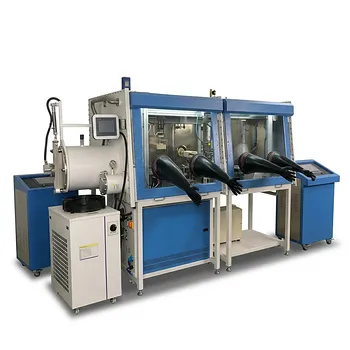
Automatic 10 Crucible Induction Melting and Casting System with Stirring Function and Glovebox Integration 2000C
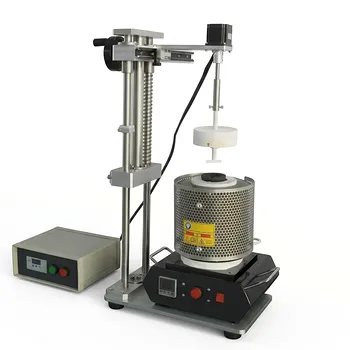
1100C Crucible Melting Furnace with Stirring Function for Glovebox and Air Sensitive Alloy Research
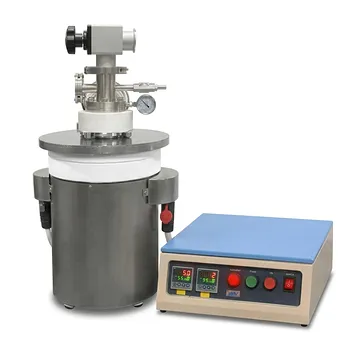
1100C High Temperature Vacuum Crucible Furnace with Quartz Chamber for Thermal Processing and Sintering
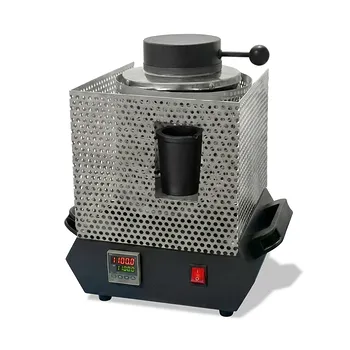
Compact Crucible Melting Furnace 1100C Programmable Temperature Controller Metal Sintering Equipment
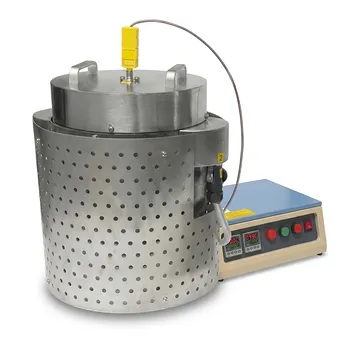
Vertical Crucible Furnace 1000C High Temperature Laboratory Equipment 4.7 Inch Diameter Chamber SS316 Anti Corrosive Enclosure
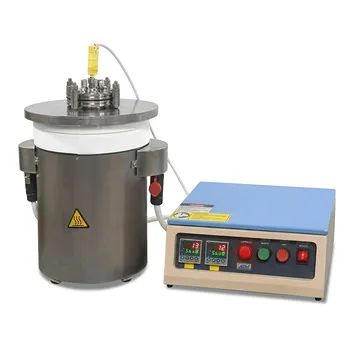
600°C Vertical Crucible Furnace with SS316 Alloy Reactor and 6 Port Vacuum Flange
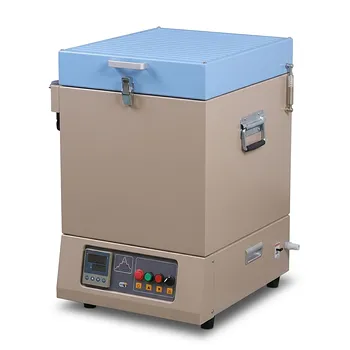
High Temperature Vertical Crucible Furnace with 22L Heating Chamber and 1200C Maximum Temperature
1100°C Large Diameter Quartz Tube Furnace with 24 Inch Heating Zone and Water Cooled Flanges