Why is an industrial-grade tube furnace used for K-PHI calcination? Master atmosphere control for material purity.
Updated 3 months ago
The utilization of an industrial-grade tube furnace for K-PHI synthesis is driven by the need for a precise thermal field and a strictly controlled chemical environment. This equipment ensures the successful reorganization of the polymer structure into a characteristic heptazine ring framework while facilitating the uniform intercalation of potassium ions. By managing the atmosphere, the furnace prevents oxidative degradation and ensures the material achieves its intended charge accumulation capacity.
Core Takeaway: Industrial-grade tube furnaces provide the thermal uniformity and inert environments necessary to transform raw precursors into high-performance K-PHI composites. They serve as the critical bridge between simple chemical mixing and the creation of a structured, functional crystal framework.
Facilitating Structural Reorganization and Framework Formation
The Importance of the Heptazine Ring
During secondary calcination, the mixture of melon and potassium thiocyanate (KSCN) must undergo a complex structural transition. The tube furnace provides the specific reaction temperatures required to facilitate the reorganization of the polymer structure.
This process is vital for the formation of the heptazine ring framework, which serves as the fundamental backbone of the K-PHI material. Without the stable, uniform heat of an industrial-grade furnace, the polymer may fail to reorganize correctly, leading to a structurally deficient product.
Achieving Uniform Thermal Field Distribution
Unlike standard ovens, an industrial-grade tube furnace maintains a uniform thermal field distribution throughout the reaction chamber. This ensures that every portion of the K-PHI composite experiences the exact same temperature profile during the heating cycle.
Uniform heating is essential to prevent localized over-processing or under-processing. This consistency is what allows for the predictable and repeatable synthesis of high-quality crystalline materials.
Precise Ion Intercalation and Charge Capacity
Managing Potassium Ion Distribution
The secondary calcination process is responsible for the intercalation of potassium ions into the material's crystal channels. The furnace allows for precise control over this movement, ensuring that ions are distributed uniformly rather than clumping.
A uniform distribution of potassium ions is not merely a structural preference; it is a functional requirement. This distribution directly influences the charge accumulation capacity, which is a primary performance metric for K-PHI composites.
Enhancing Electronic Properties
By providing a stable environment for ion intercalation, the tube furnace helps optimize the energy band structure of the composite. Controlled calcination induces specific structural defects that can enhance the separation efficiency of charge carriers.
These modifications are critical for applications involving energy storage or photocatalysis. The furnace acts as a tool for "energy band engineering," allowing researchers to fine-tune the material's electronic behavior.
The Critical Role of Atmosphere Control
Preventing Oxidative Loss
High-temperature treatments, often exceeding 500°C to 800°C, make materials highly susceptible to intense oxidation. Atmosphere control systems introduce high-purity inert gases, such as nitrogen (N2), to exclude oxygen from the reaction tube.
This anaerobic environment prevents the organic framework from undergoing oxidative burnout or combustion. Maintaining an inert atmosphere ensures that the precursors undergo only the intended dehydration and reorganization reactions.
Removal of Gaseous Byproducts
During the decomposition of ligands or precursors, various byproduct gases like CO2 or SO2 may be released. The continuous flow of gas within a tube furnace effectively sweeps these byproducts away from the material.
Removing these gases prevents unwanted side reactions and ensures the purity of the final K-PHI composite. This "purging" effect is a secondary but vital function of the atmosphere control system.
Understanding the Trade-offs
Precision vs. Throughput
While industrial-grade tube furnaces offer unparalleled precision, they are often limited by batch size. Achieving a perfectly uniform thermal field becomes increasingly difficult as the diameter of the tube increases.
Gas Flow Sensitivity
The rate of gas flow within the tube must be carefully calibrated. If the flow is too low, byproduct gases may linger and contaminate the sample; if it is too high, it may cause temperature fluctuations or lead to the loss of volatile precursors.
Operational Complexity
Operating an atmosphere-controlled furnace requires rigorous safety protocols, especially when handling high-purity gases at high temperatures. The need for evacuation and purging cycles adds time and complexity to the synthesis process compared to open-air calcination.
How to Apply This to Your Project
Industrial-grade tube furnaces are the gold standard for synthesizing sensitive carbon-based composites. To maximize your results, align your furnace settings with your specific material goals.
- If your primary focus is maximizing charge accumulation: Prioritize thermal uniformity and precise soaking times to ensure the most even distribution of potassium ions possible.
- If your primary focus is structural purity: Focus on the atmosphere control system, ensuring a high-purity nitrogen flow rate that effectively removes all gaseous byproducts during the reorganization phase.
- If your primary focus is energy band engineering: Utilize precise heating rates (e.g., 5 °C/min) and isothermal holds at critical temperature nodes to induce specific amino or cyano defects.
By masterfully controlling the thermal and chemical environment of the tube furnace, you can transform simple polymer precursors into highly functional K-PHI frameworks.
Summary Table:
| Key Feature | Benefit for K-PHI Synthesis | Impact on Material Performance |
|---|---|---|
| Atmosphere Control | Prevents oxidative loss & removes byproducts (CO2/SO2) | Ensures anaerobic environment and high structural purity. |
| Thermal Uniformity | Consistent heating of the heptazine ring framework | Prevents localized defects and ensures repeatable results. |
| Ion Intercalation | Precise management of potassium ion distribution | Directly maximizes charge accumulation capacity. |
| Band Engineering | Controlled heating rates to induce specific defects | Optimizes energy band structure and charge separation. |
Elevate Your Material Research with THERMUNITS Precision
Synthesizing high-performance K-PHI composites requires a flawless thermal and chemical environment. THERMUNITS is a leading manufacturer of high-temperature laboratory equipment specifically designed for material science and industrial R&D.
Our advanced Tube and Atmosphere furnaces provide the precise atmosphere control and uniform thermal fields necessary to prevent oxidation and ensure perfect heptazine ring formation. Whether you are focused on CVD/PECVD systems, Vacuum Induction Melting (VIM), or Rotary Kilns, our comprehensive range of thermal processing solutions—including Muffle, Vacuum, and Hot Press furnaces—is engineered to meet the rigorous demands of modern heat treatment.
Ready to optimize your calcination process? Contact us today to discover how our customized thermal solutions can enhance your laboratory's efficiency and material performance.
References
- Goichiro Seo, Kaname Kanai. Mechanism of charge accumulation in potassium poly(heptazine imide). DOI: 10.1039/d4cp02012j
Mentioned Products
- Dual Zone Rotary Tube Furnace for Uniform Powder Calcination 1000C 2 Inch Quartz Tube
- 900°C Max Rotary Tube Furnace with 8 Inch 310S Alloy Tube and Optional Multi Zone Heating for Industrial Material Calcination
- Compact High Temperature 1600C Tube Furnace with 50mm Alumina Tube and Vacuum Flanges for Material Sintering
- Compact Hybrid Muffle and Tube Furnace for 1000C Controlled Atmosphere Laboratory Material Sintering
- High Temperature 1700C Vertical Tube Furnace for Powder Spherification and Material Sintering
People Also Ask
- How does a high-precision dual-zone furnace control the structure of nickel-telluride nanoparticles during VS reactions?
- How do internal alternating plates guide particle movement in a rotary furnace? Optimize Heat Exchange & Flow Control
- How does rotational angular velocity impact rotary furnace performance? Optimize Throughput and Thermal Accuracy
- How does the baffle angle affect particle flow in a rotary calcination furnace? Master Flow & Heat Efficiency
- What is the primary function and operating principle of a rotary furnace? Maximize Thermal Processing Efficiency

Tech Team · ThermUnits
Last updated on Jun 03, 2026
Related Products
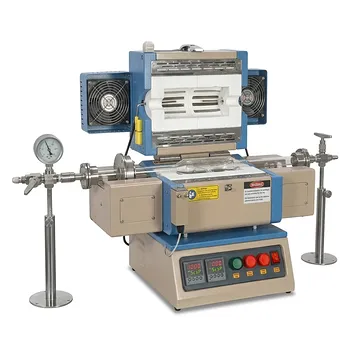
Dual Zone Rotary Tube Furnace for Uniform Powder Calcination 1000C 2 Inch Quartz Tube
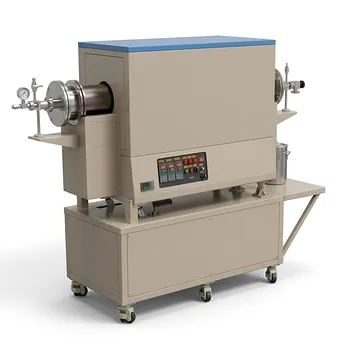
900°C Max Rotary Tube Furnace with 8 Inch 310S Alloy Tube and Optional Multi Zone Heating for Industrial Material Calcination

Compact High Temperature 1600C Tube Furnace with 50mm Alumina Tube and Vacuum Flanges for Material Sintering
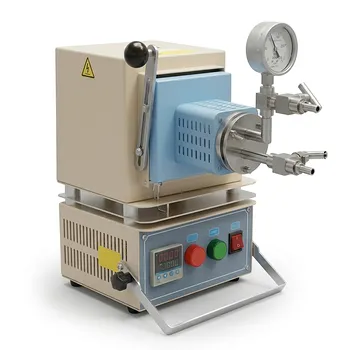
Compact Hybrid Muffle and Tube Furnace for 1000C Controlled Atmosphere Laboratory Material Sintering

High Temperature 1700C Vertical Tube Furnace for Powder Spherification and Material Sintering
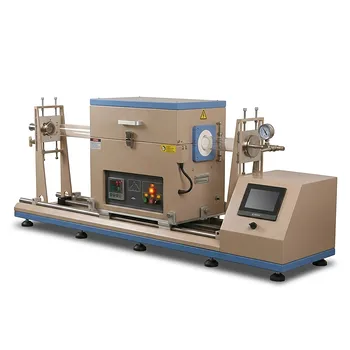
1200C Sliding Tube Furnace for Rapid Thermal Processing and CVD Graphene Growth with 100mm OD Capacity

1800C High Temperature Compact Vacuum Tube Furnace with 60mm OD Alumina Tube and Kanthal MoSi2 Heating Elements
5 Inch Three Zone Rotary Tube Furnace with Integrated Gas Delivery System and 1200C Capability for Advanced Material CVD Processing
High Temperature 1700C Vertical Split Tube Furnace for Material Quenching and Single Crystal Growth
1100°C High Temperature Quartz Chamber Furnace 8 Inch OD with 7.6 Liter Capacity and Vacuum Atmosphere Capability
1700C Compact Hybrid Furnace with Dual Layer Box Sintering and Controlled Atmosphere Alumina Tubes
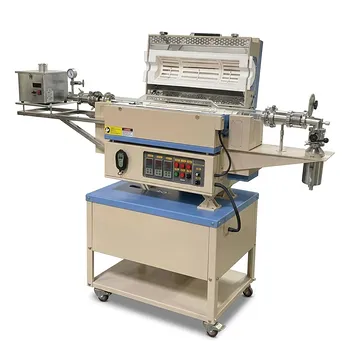
5 Inch Rotary Tube Furnace with Automatic Feeding and Receiving System 1200C Three Zone CVD Powder Processing
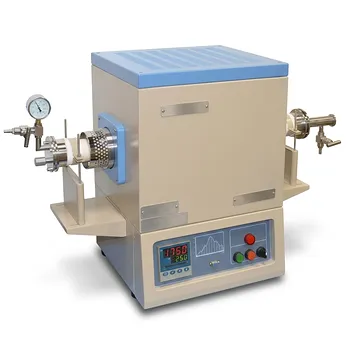
High Temperature Compact Vacuum Tube Furnace 1750C Max 60mm OD Alumina Tube
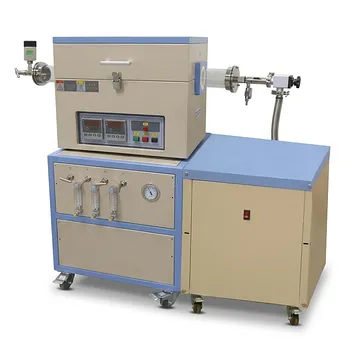
Dual Zone Quartz Tube Furnace with 80mm Diameter 1200C Max Temperature 3 Channel Gas Mixer and Vacuum Pump System

Vertical 1700C Vacuum and Atmosphere Tube Furnace with 80mm Alumina Tube
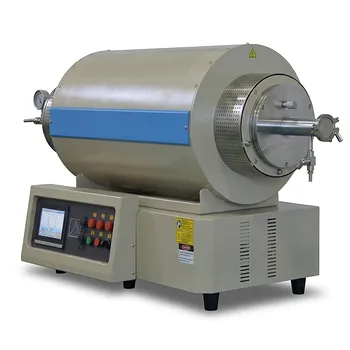
1200C Max Three Zone Tube Furnace 6 Inch OD Max with Tube and Flange

High Temperature 1700C Six Zone Split Tube Furnace with Alumina Tube and Water Cooled Flanges
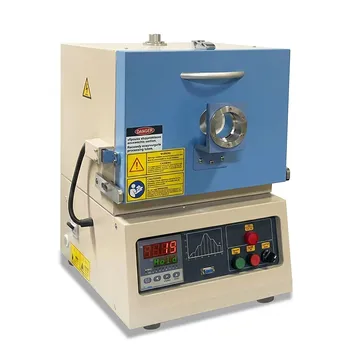
High Temperature Hybrid Muffle and Tube Furnace 1700C Programmable PID Controlled Box System with Vacuum Flange and Alumina Processing Tube

High Temperature Automated 5 Inch Tube Furnace for Autonomous Material Research and Advanced Laboratory R&D
