Why is an industrial-grade tube furnace utilized for isothermal oxidation experiments of iron powder particles? (Precision)
Updated 3 months ago
Industrial-grade tube furnaces are the preferred tool for isothermal oxidation experiments because they provide a stable thermal environment and precise control over the gaseous atmosphere. By allowing samples to be heated to a target temperature in an inert gas before rapidly switching to a reactive gas, these furnaces enable researchers to define an exact "start time" for the reaction. This precision is essential for calculating accurate kinetic data, particularly when studying the behavior of iron powder in sensitive transition zones like 600–700 °C.
The industrial-grade tube furnace acts as a controlled reactor that isolates the sample from ambient conditions, ensuring that oxidation is triggered only by a deliberate gas switch rather than a gradual temperature ramp. This capability is the cornerstone of high-fidelity kinetic modeling and phase transformation analysis.
Precise Control of Reaction Initiation
The Importance of Atmosphere Switching
In iron powder experiments, the furnace allows the material to reach a preset temperature under an inert atmosphere, such as nitrogen. Once the thermal equilibrium is reached, the atmosphere is rapidly switched to a reaction gas like synthetic air.
Defining the "Time Zero"
This rapid gas transition allows researchers to precisely define the starting time of the oxidation process. Without this control, oxidation would begin prematurely during the heating phase, contaminating the data and making it impossible to study isothermal kinetics accurately.
Relevance to Transition Zones
Accurate timing is particularly critical when investigating the 600–700 °C transition zone for iron. In this range, the kinetic behavior changes rapidly, and even minor timing errors can lead to significant misinterpretations of the oxidation mechanism.
Thermal Stability and Environment Uniformity
Exceptional Thermal Consistency
Industrial-grade furnaces are engineered to provide a highly uniform thermal field. This ensures that every iron powder particle within the sample boat experiences the exact same temperature throughout the experiment.
Minimizing Experimental Fluctuations
High-precision control systems minimize temperature fluctuations that could otherwise introduce errors in oxidation rate constants (Kp). Maintaining a constant temperature is vital for experiments that may last from several hours to 1000 hours for long-term stability tests.
Sealed Design for High Purity
The sealed furnace tube isolates the sample from oxygen and moisture in the ambient air. This prevents unintended chemical reactions and ensures that the final product's chemical stoichiometry and physical properties are a direct result of the controlled experimental parameters.
Driving Chemical Equilibrium
Managing Gaseous Byproducts
The configuration of a tube furnace facilitates a continuous and controlled flow of gas over the material. This flow is necessary to rapidly remove gaseous byproducts, such as water vapor, which can interfere with the reaction progress.
Maintaining Low Partial Pressure
By effectively removing byproducts, the furnace maintains a low partial pressure of unwanted gases in the reaction zone. This drives the chemical equilibrium toward the desired phase, whether achieving 100% iron purity during reduction or specific oxide scales during oxidation.
Understanding the Trade-offs
Potential for Mass Transfer Limitations
While the furnace provides excellent atmosphere control, the flow rate of the gas must be carefully calibrated. If the flow is too low, the reaction may become limited by the diffusion of gas to the powder surface rather than the chemical kinetics of the iron itself.
Sample Geometry Constraints
The internal diameter of the furnace tube limits the volume of powder that can be processed at once. Overloading the sample boat can lead to internal temperature gradients within the powder bed, negating the benefits of the furnace's uniform thermal field.
Equipment Sensitivity and Sealing Issues
Maintaining a vacuum-tight seal at high temperatures is technically challenging. Any leak in the tube or connectors can introduce ambient oxygen, which would compromise the inert heating phase and invalidate the "time zero" of the experiment.
How to Apply This to Your Project
Selecting the Right Approach
Choosing an industrial-grade tube furnace depends on the specific metrics you need to capture regarding iron oxidation or reduction.
- If your primary focus is kinetic modeling: Utilize a furnace with high-speed solenoid valves to ensure the fastest possible switch between inert and reactive gases.
- If your primary focus is phase purity and stoichiometry: Prioritize a furnace with a long "hot zone" and high-precision mass flow controllers to maintain a stable gas environment.
- If your primary focus is long-term material durability: Choose a system rated for continuous operation over hundreds of hours with integrated data logging for temperature stability.
The industrial-grade tube furnace remains the definitive instrument for iron powder research because it transforms a complex chemical process into a measurable, repeatable, and precisely timed event.
Summary Table:
| Feature | Benefit for Iron Powder Experiments |
|---|---|
| Atmosphere Switching | Precisely defines "Time Zero" for isothermal kinetic modeling. |
| Thermal Uniformity | Ensures consistent reaction rates across all powder particles. |
| Sealed Reactor Design | Isolates samples from ambient oxygen for high chemical purity. |
| Gas Flow Control | Removes byproducts like water vapor to drive chemical equilibrium. |
| Stable Control | Essential for studying sensitive transition zones (600–700 °C). |
Optimize your material science research with THERMUNITS’ high-performance thermal solutions. Whether you require precise atmosphere control for tube furnace experiments or specialized heat treatments for industrial R&D, our comprehensive range—including Vacuum, Atmosphere, Rotary, and Hot Press furnaces, as well as CVD/PECVD systems and VIM furnaces—is engineered for accuracy and durability. Contact our experts today to find the perfect thermal processing solution for your iron powder oxidation and kinetic modeling needs!
References
- Jonas Spielmann, Ulrike I. Kramm. Exploring the oxidation behavior of undiluted and diluted iron particles for energy storage: Mössbauer spectroscopic analysis and kinetic modeling. DOI: 10.1039/d3cp03484d
Mentioned Products
- Continuous Feeding Rotary Tube Furnace for Industrial Powder Heat Treatment and Material Research
- High Temperature 1700C Vertical Tube Furnace for Powder Spherification and Material Sintering
- Three Zone Rotary Tube Furnace for High Temperature Powder Processing and Material Research
- High Temperature Tilting Rotary Tubular Furnace for Continuous Powder Thermal Processing and Controlled Atmosphere Sintering
- High Temperature Rotary Tilt Tubular Furnaces for Advanced Powder Sintering and Material Processing
People Also Ask
- How does a rotary tube furnace improve the processing of granular materials? Enhance Uniformity and Reaction Kinetics
- Why use a rotary tube furnace for FACS carbonization? Ensure uniform morphology and prevent sphere agglomeration.
- In what ways do rotary tube furnaces enhance chemical and specialty mineral processing? Drive Precision and Uniformity.
- Why is the precise optimization of residence time essential in the catalyst calcination process? Maximize Your Yields.
- What are the primary types of industrial rotary furnaces and functions? Expert Guide to Rotary Kiln & Hearth Systems

Tech Team · ThermUnits
Last updated on Jun 02, 2026
Related Products
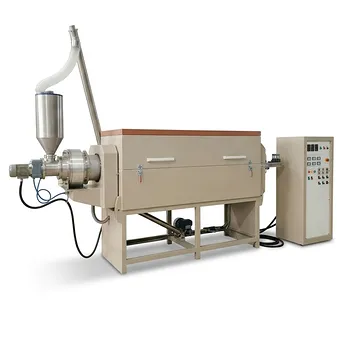
Continuous Feeding Rotary Tube Furnace for Industrial Powder Heat Treatment and Material Research

High Temperature 1700C Vertical Tube Furnace for Powder Spherification and Material Sintering
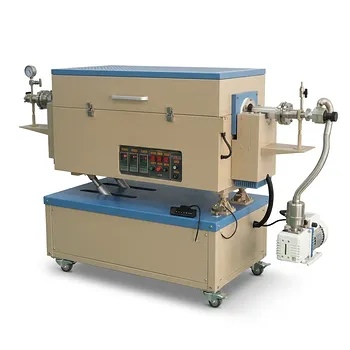
Three Zone Rotary Tube Furnace for High Temperature Powder Processing and Material Research
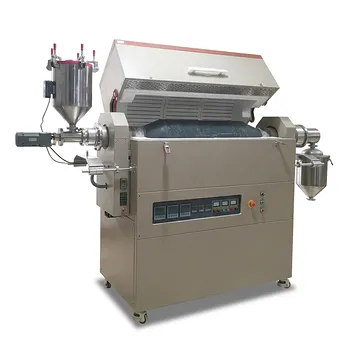
High Temperature Tilting Rotary Tubular Furnace for Continuous Powder Thermal Processing and Controlled Atmosphere Sintering
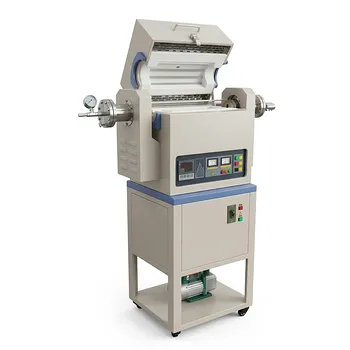
High Temperature Rotary Tilt Tubular Furnaces for Advanced Powder Sintering and Material Processing
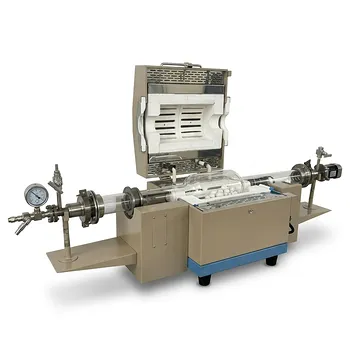
High Temperature Rotary Tube Furnace with Integrated Ball Milling and Gas Flow Function for Powder Nitriding
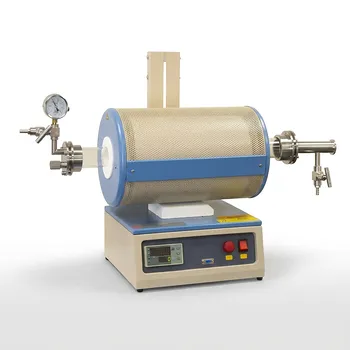
1100C Tube Furnace with Vacuum Flange and Programmable Temperature Controller for Material Science and Industrial Heat Treatment
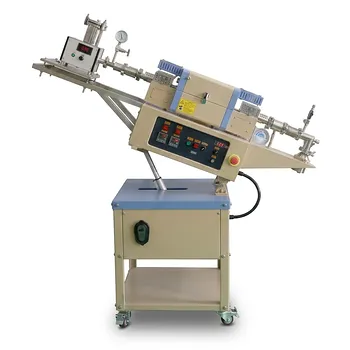
1100°C Dual Zone Rotary Tube Furnace with Automatic Feeding and Collection System for Continuous Powder Processing
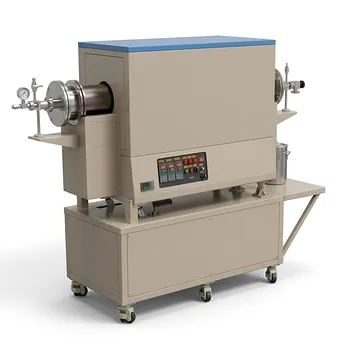
900°C Max Rotary Tube Furnace with 8 Inch 310S Alloy Tube and Optional Multi Zone Heating for Industrial Material Calcination
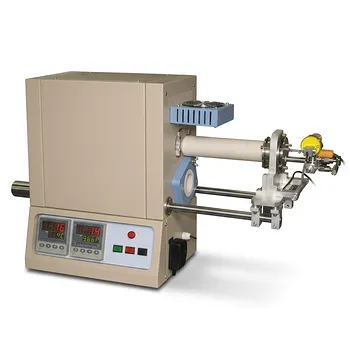
High Temperature Tube Furnace 1500C with Sliding Flanges and 50mm OD for Rapid Thermal Processing Fast Heating and Cooling

Compact High Temperature 1600C Tube Furnace with 50mm Alumina Tube and Vacuum Flanges for Material Sintering
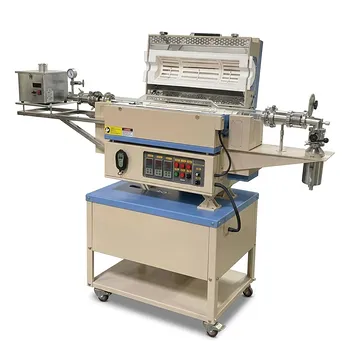
5 Inch Rotary Tube Furnace with Automatic Feeding and Receiving System 1200C Three Zone CVD Powder Processing
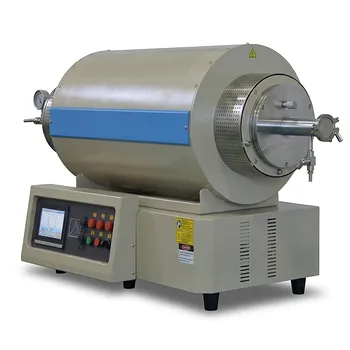
1200C Max Three Zone Tube Furnace 6 Inch OD Max with Tube and Flange
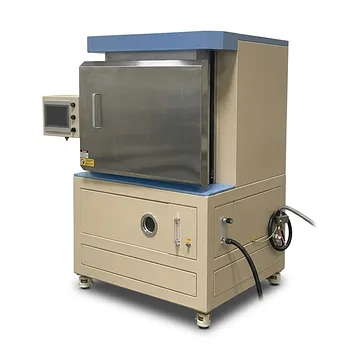
1650C High Temperature Atmosphere Controlled Box Furnace with 65L Chamber for Advanced Material Sintering and Industrial Heat Treatment

High Temperature Automated 5 Inch Tube Furnace for Autonomous Material Research and Advanced Laboratory R&D
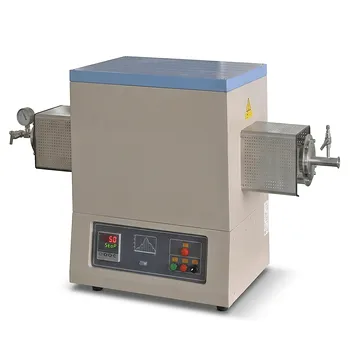
High Temperature 1700C Tube Furnace with 4 Inch OD Alumina Tube and Vacuum Sealing Flanges
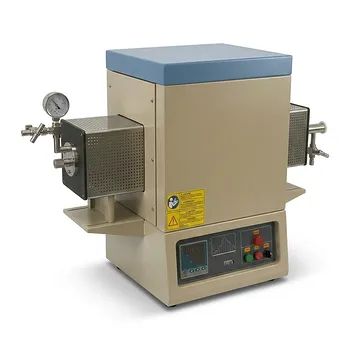
High Temperature 1700C Benchtop Tube Furnace with 5 Inch Heating Zone High Purity Alumina Tube and Vacuum Sealing Flanges

1200°C 5 Inch Vertical Quartz Tube Furnace with Stainless Steel Vacuum Flanges
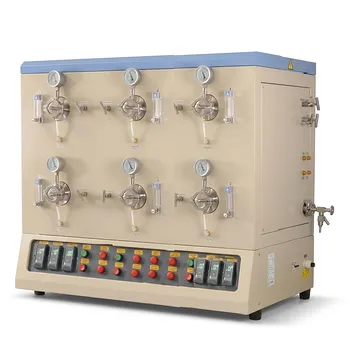
1200C High Throughput Multi Channel Tube Furnace with 50mm Quartz Tubes for Annealing and Material Phase Diagram Research
