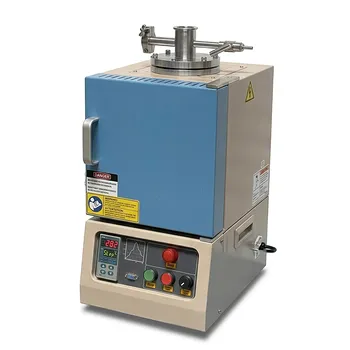
What role does an industrial high-temperature tube furnace play in spray pyrolysis? Master Layered Oxide Synthesis.
Updated 3 months ago
An industrial high-temperature tube furnace acts as the primary thermochemical reactor in spray pyrolysis, transforming liquid precursor droplets into solid layered oxide particles. It provides the necessary thermal energy (typically 600–1000 °C) to drive rapid solvent evaporation, solute precipitation, and the critical chemical reactions required to achieve specific crystal phases and morphologies.
Core Takeaway: The tube furnace is the engine of the spray pyrolysis process, where precise control over the axial temperature profile and internal atmosphere dictates whether the final material achieves the desired layered crystal structure or a specific particle density.
The Furnace as a Controlled Thermochemical Zone
Driving Thermal Decomposition and Redox Reactions
As aerosol droplets pass through the furnace, the high-temperature environment triggers intense thermal decomposition. The heat breaks down chemical precursors, such as nitrates or acetates, into their constituent oxides. Simultaneously, the furnace facilitates redox reactions necessary to ensure metal ions reach their intended valence states.
Facilitating Crystal Phase Transformations
The furnace is responsible for the transition between different structural states, such as the shift from a spinel phase to a layered phase. This transformation is highly temperature-dependent; without the precise thermal field of the tube furnace, the material may remain in an intermediate or undesirable phase.
Maintaining Atmospheric Integrity
Beyond heat, the sealed nature of the tube furnace allows for a controlled atmosphere, often using inert gases like Argon or Nitrogen. This environment is vital for preventing the unintended oxidation of sensitive elements (like chromium or iron), ensuring they integrate correctly into the crystal lattice to form stable layered structures.
Precision Control of Particle Morphology
Managing the Parabolic Temperature Distribution
Industrial tube furnaces exhibit a parabolic axial temperature distribution, meaning the temperature varies along the length of the tube. This gradient is a critical design tool; it influences the rate of solvent removal and how the solid shell forms around the shrinking droplet.
Defining Dense vs. Hollow Structures
The rate of heating provided by the furnace determines the final particle morphology. Rapid heating may cause "flash" evaporation, leading to hollow spherical shells, while more controlled, uniform heating profiles generally promote the development of dense, solid particles.
Ensuring Uniformity through Thermal Stability
A high-precision furnace minimizes temperature fluctuations that could lead to inconsistent product batches. By providing a uniform thermal field, the furnace ensures that every particle experiences the same "thermal history," resulting in a powder with consistent magnetic, electrochemical, or structural properties.
Understanding the Trade-offs
Temperature Gradients vs. Throughput
Increasing the furnace temperature can speed up the pyrolysis process and increase throughput, but it risks over-sintering the particles. If the temperature is too high, the surface area of the layered oxides may decrease significantly, negatively impacting their performance in applications like battery electrodes.
Residence Time vs. Phase Purity
The length of the furnace tube dictates the residence time—how long the particles are exposed to heat. While longer tubes ensure complete phase transformation, they also increase the footprint of the industrial setup and can lead to excessive grain growth, which may be undesirable for nanomaterial synthesis.
Atmosphere Flow vs. Temperature Uniformity
High flow rates of carrier gases (like Argon) are necessary to transport the aerosol, but they can create cold spots within the furnace. This necessitates a sophisticated heating system that can compensate for the cooling effect of the gas flow to maintain a stable reaction environment.
How to Apply This to Your Project
Optimizing Furnace Parameters for Material Goals
Selecting the right furnace settings requires balancing the chemistry of your precursor with the physical requirements of your target application.
- If your primary focus is high-capacity battery cathodes: Prioritize precise temperature control between 800–1000 °C and an inert atmosphere to ensure a pure layered phase and prevent transition metal oxidation.
- If your primary focus is catalyst surface area: Utilize a shorter residence time or lower temperature range (600–700 °C) to prevent particle densification and maintain a porous or hollow morphology.
- If your primary focus is structural uniformity: Invest in a multi-zone tube furnace that allows you to "shape" the axial temperature profile, providing a more gradual heating and cooling curve.
The industrial tube furnace is not merely a heat source; it is the precision instrument that defines the chemical identity and physical structure of spray-pyrolyzed layered oxides.
Summary Table:
| Function | Impact on Material | Critical Parameter |
|---|---|---|
| Thermal Decomposition | Breaks precursors into oxides | Temperature (600–1000 °C) |
| Phase Transformation | Ensures layered crystal structure | Axial Temperature Profile |
| Atmosphere Control | Prevents unintended oxidation | Inert Gas Flow (Ar/N2) |
| Morphology Control | Defines dense vs. hollow particles | Heating Rate & Residence Time |
Elevate Your Material Research with THERMUNITS Precision
As a leading manufacturer of high-temperature laboratory equipment, THERMUNITS provides the advanced thermal processing solutions required for cutting-edge material science and industrial R&D. Whether you are developing high-capacity battery cathodes or specialized catalysts, our comprehensive range of Tube, Vacuum, Atmosphere, and CVD/PECVD furnaces ensures the precise temperature control and atmospheric integrity your spray pyrolysis process demands.
Why Industry Leaders Choose THERMUNITS:
- Expertise: Specialized heat treatment equipment tailored for layered oxide synthesis.
- Versatility: Solutions ranging from Rotary Kilns to Vacuum Induction Melting (VIM) furnaces.
- Consistency: Reliable systems designed to achieve uniform crystal phases and optimized particle morphologies.
Ready to optimize your production and achieve superior material performance? Contact THERMUNITS today to find your ideal thermal solution!
References
- Manar Almazrouei, Adam Boies. Synthesis Pathway of Layered-Oxide Cathode Materials for Lithium-Ion Batteries by Spray Pyrolysis. DOI: 10.1021/acsami.4c06503
Mentioned Products
- 1100C Tube Furnace with Vacuum Flange and Programmable Temperature Controller for Material Science and Industrial Heat Treatment
- High Temperature Tube Furnace 1500C with Sliding Flanges and 50mm OD for Rapid Thermal Processing Fast Heating and Cooling
- High Temperature 1700C Tube Furnace with High Vacuum Turbomolecular Pump System and Multi Channel Mass Flow Controller Gas Mixer
- Multi Position Tube Furnace 1100C for Laboratory Material Research and Advanced Industrial Thermal Processing
- Compact High Temperature 1600C Tube Furnace with 50mm Alumina Tube and Vacuum Flanges for Material Sintering
People Also Ask
- What are the advantages of 1100°C tube furnaces for ORR catalysts? Boost Conductivity and Structural Stability.
- What role does a tube furnace play in PS template removal? Ensure ZnO/SiO2 Structural Integrity & High Performance.
- What core functions does a high-temperature vacuum tube furnace provide? Optimize np-CuSn Sintering & Joint Integrity
- What is the role of a high-temperature tube furnace in the calcination process of ZnO/In2O3 nanocomposites?
- What impact does the heating rate of a tube furnace have on biochar microstructure? Optimize Your Material R&D.

Tech Team · ThermUnits
Last updated on Jun 02, 2026
Related Products

1100C Tube Furnace with Vacuum Flange and Programmable Temperature Controller for Material Science and Industrial Heat Treatment
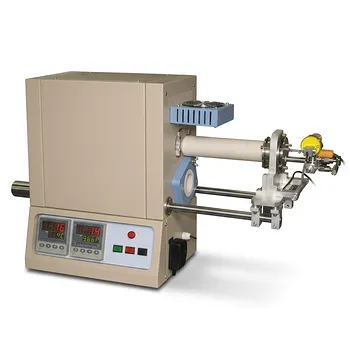
High Temperature Tube Furnace 1500C with Sliding Flanges and 50mm OD for Rapid Thermal Processing Fast Heating and Cooling

High Temperature 1700C Tube Furnace with High Vacuum Turbomolecular Pump System and Multi Channel Mass Flow Controller Gas Mixer
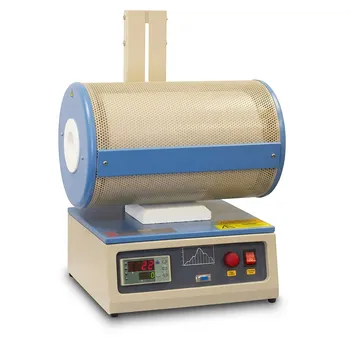
Multi Position Tube Furnace 1100C for Laboratory Material Research and Advanced Industrial Thermal Processing

Compact High Temperature 1600C Tube Furnace with 50mm Alumina Tube and Vacuum Flanges for Material Sintering

1800C High Temperature Compact Vacuum Tube Furnace with 60mm OD Alumina Tube and Kanthal MoSi2 Heating Elements
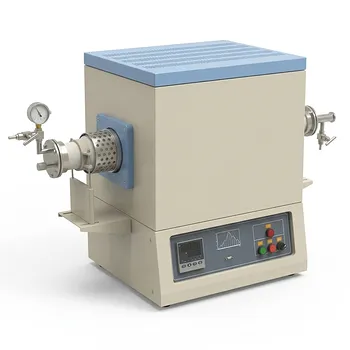
1750°C High Temperature Benchtop Vacuum Atmosphere Tube Furnace with Kanthal Super 1800 Heating Elements and 60mm Alumina Processing Tube

High Temperature 1700C Benchtop Tube Furnace with 5 Inch Heating Zone High Purity Alumina Tube and Vacuum Sealing Flanges
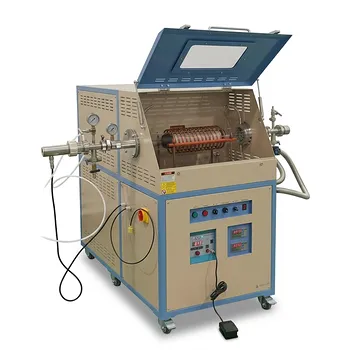
Ultra High Temperature 2300C Induction Heated Graphite Tube Furnace with Infrared Control
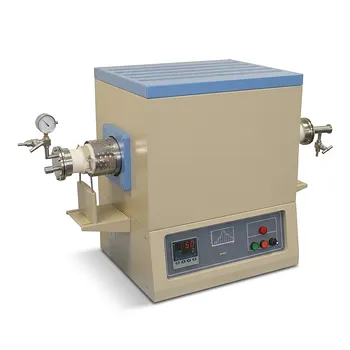
1700C High Temperature Alumina Tube Furnace with 18 Inch Heated Zone and Vacuum Sealing Flanges
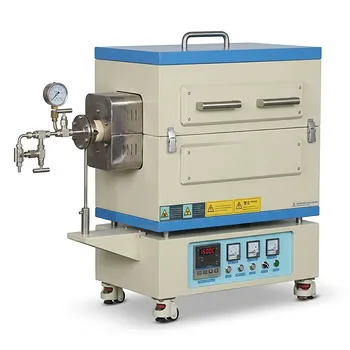
High Temperature Split Tube Furnace 1500C for Material Research Vacuum and Atmosphere Thermal Processing
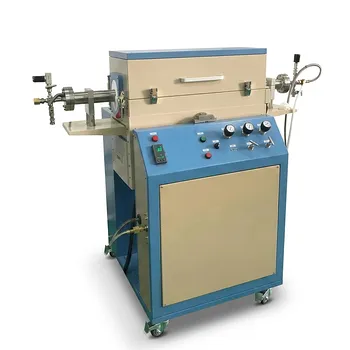
High Temperature Rocking Tube Furnace 1700°C Alumina Processing Tube with Precision Oscillation for Material Synthesis

High Temperature 1700C Vertical Tube Furnace for Powder Spherification and Material Sintering
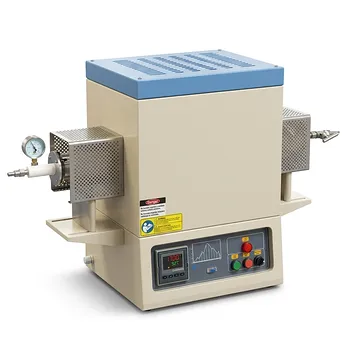
High Temperature Three Zone Tube Furnace 1700C with Alumina Tube and Water Cooled Flanges
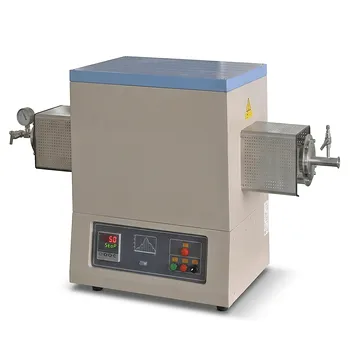
High Temperature 1700C Tube Furnace with 4 Inch OD Alumina Tube and Vacuum Sealing Flanges

High Temperature 1700C Six Zone Split Tube Furnace with Alumina Tube and Water Cooled Flanges

High Temperature Automated 5 Inch Tube Furnace for Autonomous Material Research and Advanced Laboratory R&D
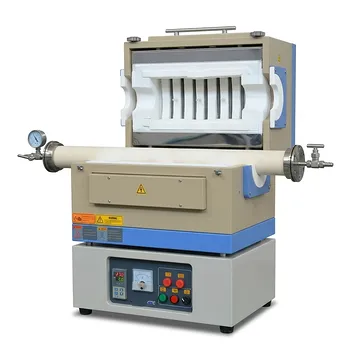
High Temperature 1600C Split Tube Furnace Vacuum Flanges Valves Optional 60mm 80mm Alumina Tube

High Vacuum Compact Tube Furnace 1200C with Integrated Turbo Pump System and 8 Inch Heating Zone