Why is high precision required for the temperature controller of a tube furnace during willemite reduction experiments?
Updated 3 months ago
Precision temperature control is the fundamental requirement for willemite reduction because the process operates on a razor-thin margin between reaction initiation and exponential volatility. High-precision automatic controllers are essential to maintain the 1100°C equilibrium point, as even minor fluctuations can disrupt the endothermic balance or misalign with the 60°C temperature shift caused by additives like calcium oxide. Without this accuracy, the sharp increase in zinc extraction rates becomes uncontrollable, rendering experimental results non-repeatable.
Core Takeaway: High precision in tube furnaces serves as the primary regulator for reaction kinetics and phase stability. By strictly maintaining the thermal threshold, researchers can isolate the effects of chemical additives and ensure that endothermic energy requirements are met without triggering secondary, undesirable phase transformations.
The Critical Role of Thermal Stability in Willemite Reduction
Managing Endothermic Thresholds and Additives
The reduction of willemite is a highly endothermic reaction, meaning it requires a consistent and specific energy input to proceed. The introduction of additives like calcium oxide (CaO) further complicates this by lowering the initiation temperature by approximately 60°C.
A high-precision controller allows researchers to capture these subtle process variations. This ensures that the furnace does not overshoot the new, lower threshold, which would lead to inconsistent kinetic data.
Controlling Zinc Extraction Rates
Zinc extraction rates are not linear; they increase sharply with temperature. At the critical 1100°C equilibrium point, even a few degrees of deviation can cause a massive spike or drop in the rate of extraction.
Precision equipment ensures the system remains exactly at the equilibrium point. This stability is the only way to produce data that is scientifically valid and repeatable across multiple experimental runs.
Broader Implications of Precision in High-Temperature Metallurgy
Achieving Phase Purity and Avoiding "Overburning"
In advanced metallurgy, such as the treatment of Ti-45Al-5Nb alloys, precision is used to navigate single-phase regions. Operating at 1360°C requires a furnace that prevents overburning, a state where excessive heat destroys the intended microstructure.
Strict temperature control allows for the complete dissolution of carbon and other microalloying elements. This creates a foundation for precipitation strengthening and uniform phase distribution during cooling.
Regulating Nucleation and Grain Growth
In chemical synthesis, such as the reduction of chloroplatinic acid into platinum, stable heating rates prevent "explosive nucleation." If the temperature rises too quickly, particles grow too large and clump together.
By using programmable precision, the furnace ensures highly dispersed nanoparticles with a high active surface area. Similarly, in perovskite growth, maintaining a temperature near the eutectic point enhances ion diffusion, reducing defects at grain boundaries.
Understanding the Trade-offs
Technical Complexity vs. Operational Reliability
High-precision systems often utilize PID (Proportional-Integral-Derivative) logic, which requires careful tuning to prevent thermal hunting. If the PID parameters are not perfectly matched to the furnace's load, the system may oscillate, defeating the purpose of high-precision hardware.
Initial Investment vs. Long-term Data Integrity
The cost of high-precision programmable controllers and high-sensitivity thermocouples (such as Type S or B) is significantly higher than standard industrial units. However, the cost of failed experiments or misinterpreted kinetic data usually far outweighs the initial equipment expenditure.
Thermal Lag and Gradient Challenges
Even the most precise controller cannot compensate for a poorly designed furnace "hot zone." If the thermal field is non-uniform, the sample may experience different temperatures than the thermocouple reports, leading to structural gradients in the final material.
How to Apply Precision Control to Your Goals
Making the Right Choice for Your Project
To achieve the best results in your high-temperature experiments, align your furnace settings with your specific material objectives.
- If your primary focus is kinetic accuracy (e.g., Willemite reduction): Utilize an automatic controller with a sensitivity of ±1°C to maintain the equilibrium point and accurately measure the impact of catalytic additives.
- If your primary focus is microstructural transformation (e.g., Ti-Al alloys or YBCO): Focus on programmable cooling curves to ensure the material spends the exact required time in critical phase-change zones.
- If your primary focus is nanoparticle synthesis: Prioritize a slow, linear ramp rate (e.g., 10°C/min) to prevent rapid particle growth and ensure high surface area dispersion.
Ultimately, high-precision temperature control is not just a feature, but the defining factor in the transition from unpredictable chemical reactions to controlled material engineering.
Summary Table:
| Key Factor | Requirement | Importance of High Precision |
|---|---|---|
| Reaction Kinetics | Equilibrium at 1100°C | Ensures repeatable zinc extraction rates and stable data. |
| Additive Management | Manage 60°C shift (CaO) | Prevents thermal overshoot when thresholds change via catalysts. |
| Phase Purity | Single-phase navigation | Avoids "overburning" and preserves intended microstructures. |
| Particle Synthesis | Linear ramp rates | Prevents explosive nucleation to ensure uniform nanoparticle size. |
Elevate Your Material Research with THERMUNITS Precision
Precision is the defining factor in transitioning from unpredictable reactions to controlled material engineering. THERMUNITS is a leading manufacturer of high-temperature laboratory equipment for material science and industrial R&D. We provide the thermal stability and accuracy required to ensure your experimental success.
Why Partner with THERMUNITS?
- Comprehensive Thermal Solutions: We offer a wide range of equipment, including Tube, Muffle, Vacuum, Atmosphere, Rotary, and Hot Press furnaces.
- Specialized Systems: Advanced CVD/PECVD systems, Dental Furnaces, vacuum induction melting furnaces (VIM), and electric rotary kilns.
- Unmatched Accuracy: Our high-precision controllers eliminate thermal hunting, protecting your samples from overburning and inconsistent phase transformations.
Whether you are conducting willemite reduction or complex metallurgy, our heat treatment solutions and thermal elements are built for reliability. Contact our experts today to find the perfect high-precision furnace for your laboratory!
References
- Vitória Silva Coimbra, Victor de Alvarenga Oliveira. Carbothermic reduction of a willemite concentrate for use in the Waelz process. DOI: 10.17159/2411-9717/2516/2023
Mentioned Products
- 1250C Split Tube Furnace with 3 Inch Mullite Tube and Vacuum Sealing Flanges for Precision Thermal Processing
- High Temperature 1700C Vertical Tube Furnace for Powder Spherification and Material Sintering
- Compact High Temperature 1600C Tube Furnace with 50mm Alumina Tube and Vacuum Flanges for Material Sintering
- Compact Vertical Split Quartz Tube Furnace with Stainless Steel Vacuum Flanges for Rapid Thermal Quenching and Controlled Atmosphere Material Processing
- 1200C High Temperature 5 Inch Sliding Tube Furnace for Rapid Thermal Processing RTP and Wafer Annealing
People Also Ask
- What is the primary engineering purpose for using a customized ventilation hood when operating a split tube furnace? RCF Safety
- What are the specific advantages and use cases for a split tube furnace? Optimize Lab Efficiency & Material Research
- How does a split tube furnace contribute to the thermal stabilization of Clignin@H-TiO2? Achieve Structural Precision
- What are the advantages of using a split tube furnace for heating a catalytic reactor? Boost Efficiency and Precision
- How does a split tube furnace facilitate debinding of ceramic green bodies? Master Precise Thermal & Atmosphere Control

Tech Team · ThermUnits
Last updated on Jun 02, 2026
Related Products
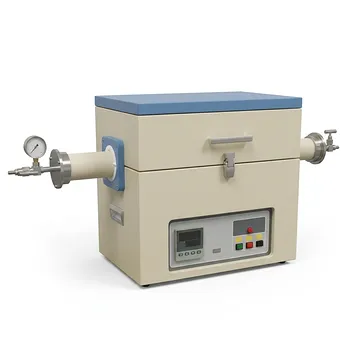
1250C Split Tube Furnace with 3 Inch Mullite Tube and Vacuum Sealing Flanges for Precision Thermal Processing

High Temperature 1700C Vertical Tube Furnace for Powder Spherification and Material Sintering

Compact High Temperature 1600C Tube Furnace with 50mm Alumina Tube and Vacuum Flanges for Material Sintering

Compact Vertical Split Quartz Tube Furnace with Stainless Steel Vacuum Flanges for Rapid Thermal Quenching and Controlled Atmosphere Material Processing
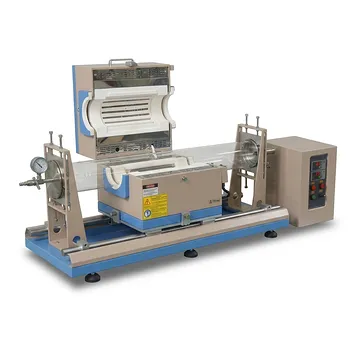
1200C High Temperature 5 Inch Sliding Tube Furnace for Rapid Thermal Processing RTP and Wafer Annealing
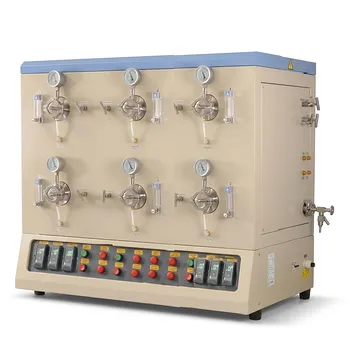
1200C High Throughput Multi Channel Tube Furnace with 50mm Quartz Tubes for Annealing and Material Phase Diagram Research
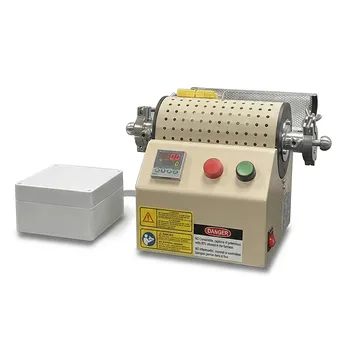
1000C Mini Tube Furnace with 20mm Quartz Tube and Vacuum Flanges for Material Science Research and Controlled Atmosphere Small Sample Processing
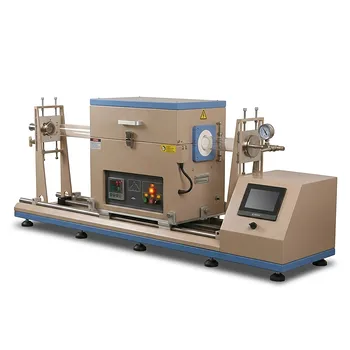
1200C Sliding Tube Furnace for Rapid Thermal Processing and CVD Graphene Growth with 100mm OD Capacity
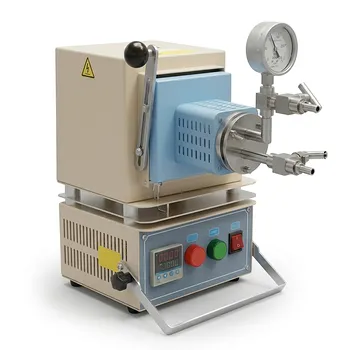
Compact Hybrid Muffle and Tube Furnace for 1000C Controlled Atmosphere Laboratory Material Sintering

High Temperature Automated 5 Inch Tube Furnace for Autonomous Material Research and Advanced Laboratory R&D
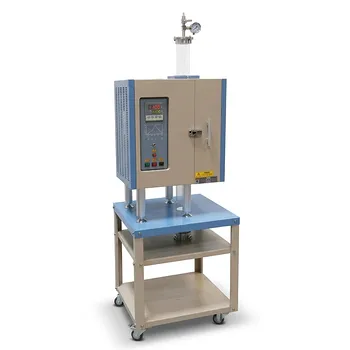
1100°C Split Vertical Tube Furnace with 80mm Quartz Tube and Stainless Steel Vacuum Flanges
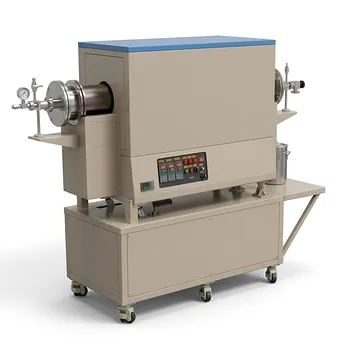
900°C Max Rotary Tube Furnace with 8 Inch 310S Alloy Tube and Optional Multi Zone Heating for Industrial Material Calcination
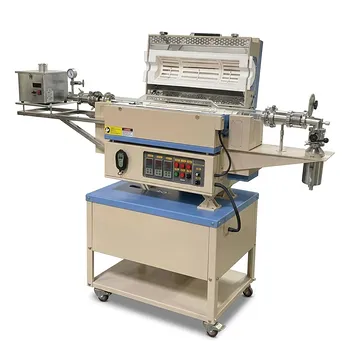
5 Inch Rotary Tube Furnace with Automatic Feeding and Receiving System 1200C Three Zone CVD Powder Processing
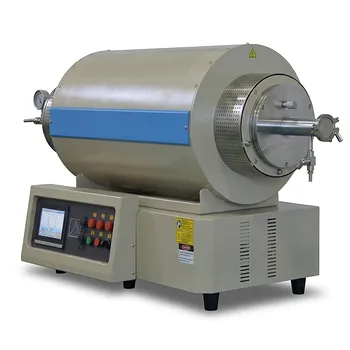
1200C Max Three Zone Tube Furnace 6 Inch OD Max with Tube and Flange

Vertical 1700C Vacuum and Atmosphere Tube Furnace with 80mm Alumina Tube

1200°C 5 Inch Vertical Quartz Tube Furnace with Stainless Steel Vacuum Flanges

1800C High Temperature Compact Vacuum Tube Furnace with 60mm OD Alumina Tube and Kanthal MoSi2 Heating Elements
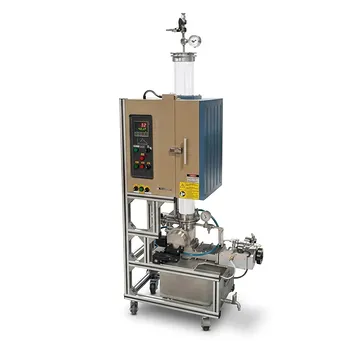
1200C High Temperature Atmosphere Controlled Vertical Quenching Tube Furnace with 4 Inch Quartz Tube
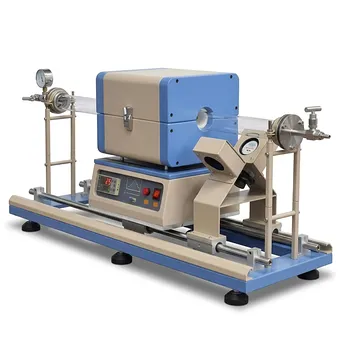
Automated Sliding Tube Furnace for Fast Heating and Cooling 2 Inch OD 1100C Max