Why is it necessary to encapsulate an alumina crucible within a quartz tube with argon? Protect Your Furnace & Purity
Updated 3 months ago
The necessity of encapsulating an alumina crucible within an argon-filled quartz tube is driven by a multi-layered protection strategy. This configuration acts as a secondary containment system that shields sensitive furnace hardware from corrosive vapors while simultaneously creating an inert micro-environment. It is critical for maintaining chemical purity, preventing the rapid oxidation of reactive elements, and ensuring the stability of the melt composition during long growth cycles.
This dual-layered containment strategy ensures the structural integrity of the furnace and the chemical stability of the melt by isolating reactive components from both the external atmosphere and the heating elements.
Protecting Laboratory Infrastructure
Extending Furnace Service Life
The quartz tube acts as a secondary containment system that isolates the external heating elements from the growth environment. This prevents the buildup of deposits that can lead to premature furnace failure.
Isolation of Corrosive Vapors
During high-temperature solution growth, melts often release corrosive vapors. By trapping these within the quartz tube, you ensure that the furnace's internal components are not degraded by chemical attack.
Maintaining Chemical and Structural Integrity
Prevention of Rapid Oxidation
The circulating argon gas inside the tube provides a high-purity inert environment. This is essential for preventing growth failure caused by the rapid oxidation of active elements, such as calcium, which would otherwise react with ambient air.
Suppressing Flux Evaporation
Sealing the alumina crucible (often with ceramic sealant) creates a closed micro-environment. This is vital for suppressing the evaporation of fluxes, such as Copper Oxide (CuO) at 1350°C, ensuring the melt composition remains constant over multi-day cycles.
Improving Nucleation and Crystal Quality
By maintaining a constant melt composition, the system ensures consistent crystal dimensions and higher nucleation quality. This stability is the foundation for growing high-quality single crystals with predictable properties.
Mitigating Chemical Contamination
Preventing Quartz-Melt Reactions
Active metals like dysprosium (Dy) and gallium (Ga) can react directly with quartz at high temperatures. Using an alumina crucible as the primary vessel leverages its chemical inertness at temperatures up to 1100°C to keep these metals contained.
Eliminating Silicon Impurities
Direct contact between the melt and the quartz tube can lead to silicon (Si) contamination of the final product. The alumina barrier ensures the purity of sensitive materials, such as Dy4T1-xGa12, remains untainted by the silica container.
Understanding the Trade-offs
Thermal Lag and Gradient Challenges
Adding layers of alumina and quartz creates thermal resistance between the heating elements and the melt. This can result in a significant temperature difference (lag) and may complicate the precise control of the thermal gradients required for optimal growth.
Material Temperature Limits
While alumina is chemically inert, its effectiveness as a barrier has limits; for instance, its inertness is specifically noted up to 1100°C in certain reactive contexts. Exceeding these limits can lead to structural failure of the crucible or unexpected reactions with the quartz envelope.
How to Apply This to Your Project
Recommendations for Implementation
- If your primary focus is furnace longevity: Prioritize the quartz tube seal to ensure no corrosive vapors escape into the heating chamber.
- If your primary focus is stoichiometric precision: Focus on the airtight sealing of the alumina crucible to prevent flux loss and maintain a constant melt ratio.
- If your primary focus is reactive metal synthesis: Use the argon-filled quartz tube specifically to prevent the oxidation of elements like calcium or dysprosium.
By masterfully balancing these containment layers, you transform a volatile chemical process into a controlled environment for high-precision crystal engineering.
Summary Table:
| Feature/Layer | Function in Solution Growth | Key Benefit |
|---|---|---|
| Alumina Crucible | Primary vessel for reactive melts | Prevents Silicon (Si) contamination and quartz reactions up to 1100°C. |
| Quartz Tube | Secondary containment system | Isolates heating elements from corrosive vapors; extends furnace service life. |
| Argon Atmosphere | High-purity inert environment | Prevents rapid oxidation of reactive elements like Calcium (Ca) and Dysprosium (Dy). |
| Sealed Micro-environment | Suppression of flux evaporation | Maintains constant melt composition (e.g., CuO) for high-quality nucleation. |
Optimize Your Crystal Growth with THERMUNITS Thermal Solutions
Achieving high-purity single crystals requires precise thermal control and advanced containment strategies. THERMUNITS is a leading manufacturer of high-temperature laboratory equipment, providing the specialized systems needed for rigorous material science and industrial R&D.
From high-precision Tube Furnaces ideal for quartz encapsulation to Vacuum, Atmosphere, and CVD/PECVD systems, our comprehensive range of thermal processing solutions—including Muffle and Rotary furnaces—is designed to protect your laboratory infrastructure and ensure stoichiometric precision.
Ready to elevate your heat treatment process? Contact THERMUNITS today for expert guidance and custom equipment solutions!
References
- W. Luo, H. Springer. Metallurgical Synthesis Methods for Mg-Al-Ca Scientific Model Materials. DOI: 10.1007/s11661-024-07655-7
Mentioned Products
- Hybrid High Temperature Tube and Box Furnace 1700C with 2 Inch Alumina Tube for Material Research
- 1700C Hydrogen Gas Tube Furnace with 60mm Alumina Process Tube and Integrated Hydrogen Safety Detector
- Compact High Temperature 1600C Tube Furnace with 50mm Alumina Tube and Vacuum Flanges for Material Sintering
- 1800C High Temperature Compact Vacuum Tube Furnace with 60mm OD Alumina Tube and Kanthal MoSi2 Heating Elements
- 1100C High Temperature Vacuum Crucible Furnace with Quartz Chamber for Thermal Processing and Sintering
People Also Ask
- What is the role of a high-temperature box furnace in the solid-state synthesis of Europium-doped M3MgSi2O8 phosphors?
- What is the role of a high-temperature box furnace in Na3MnZr(PO4)3 synthesis? Engineering High-Performance NASICON.
- Why is a high-temperature box furnace required for 1250°C ferrite calcination? Ensure Precise Phase Transformation.
- How does a high-temp box furnace aid rare-earth oxysulfide phosphor synthesis? Enhance Purity & Luminescence
- What role does an industrial-grade high-temperature furnace play in C2F sintering? Achieve Pure Phase and High Strength

Tech Team · ThermUnits
Last updated on Jun 03, 2026
Related Products
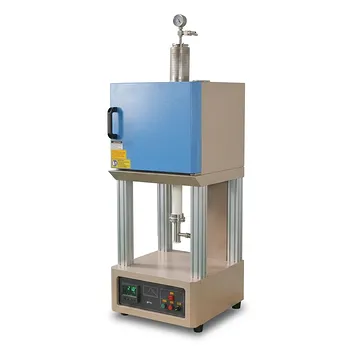
Hybrid High Temperature Tube and Box Furnace 1700C with 2 Inch Alumina Tube for Material Research

1700C Hydrogen Gas Tube Furnace with 60mm Alumina Process Tube and Integrated Hydrogen Safety Detector

Compact High Temperature 1600C Tube Furnace with 50mm Alumina Tube and Vacuum Flanges for Material Sintering

1800C High Temperature Compact Vacuum Tube Furnace with 60mm OD Alumina Tube and Kanthal MoSi2 Heating Elements
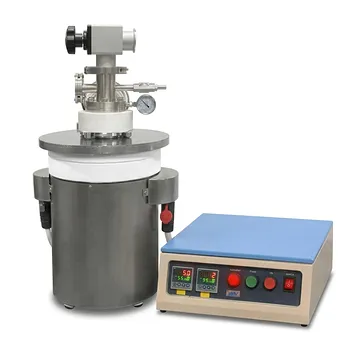
1100C High Temperature Vacuum Crucible Furnace with Quartz Chamber for Thermal Processing and Sintering
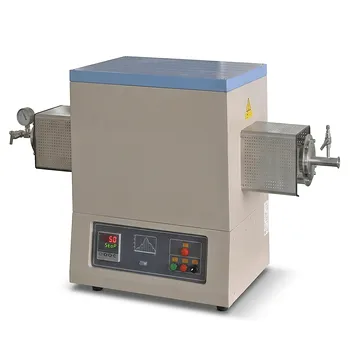
High Temperature 1700C Tube Furnace with 4 Inch OD Alumina Tube and Vacuum Sealing Flanges
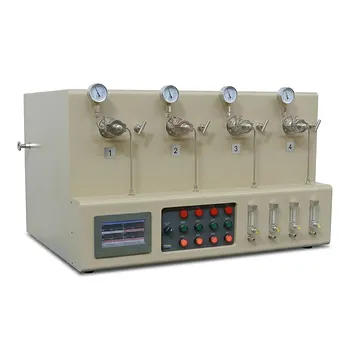
High Temperature 1700C 4 Channel Tube Furnace 1 Inch Alumina Tube for Hi-Throughput Annealing
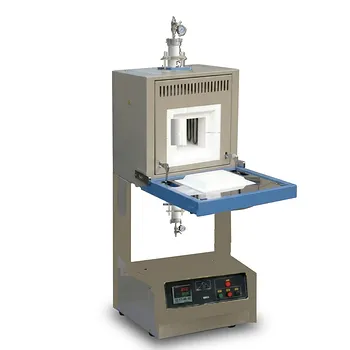
High Temperature Vertical Hybrid Furnace with Alumina Tube and SiC Heating for SOFC Coin Cell Testing and Atmosphere Processing
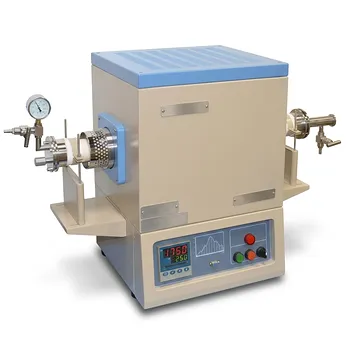
High Temperature Compact Vacuum Tube Furnace 1750C Max 60mm OD Alumina Tube
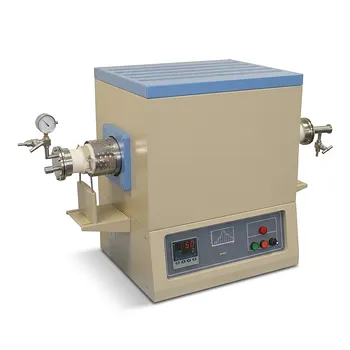
1700C High Temperature Alumina Tube Furnace with 18 Inch Heated Zone and Vacuum Sealing Flanges

High Temperature 1700C Benchtop Tube Furnace with 5 Inch Heating Zone High Purity Alumina Tube and Vacuum Sealing Flanges
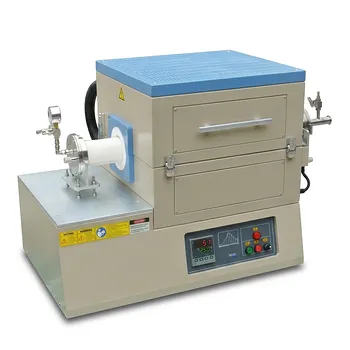
High Temperature 1700C Split Tube Furnace with Vacuum Flanges Valves and 60mm Alumina Tube
1700C Compact Hybrid Furnace with Dual Layer Box Sintering and Controlled Atmosphere Alumina Tubes
1750°C High Temperature Benchtop Vacuum Atmosphere Tube Furnace with Kanthal Super 1800 Heating Elements and 60mm Alumina Processing Tube

Compact Vertical Split Quartz Tube Furnace with Stainless Steel Vacuum Flanges for Rapid Thermal Quenching and Controlled Atmosphere Material Processing
High Temperature 1200C Split Tube Furnace with Hinged Vacuum Flanges and 4 Inch Quartz Tube for Laboratory Research
