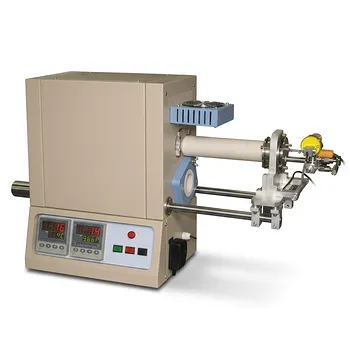
What is the function of a laboratory tube furnace in the reduction of Y2O2SO4 to Y2O2S? Precision Synthesis Guide
Updated 3 months ago
In the synthesis of advanced materials, the laboratory tube furnace serves as a precision-controlled reactor that facilitates the chemical reduction of Yttrium Oxysulfate ($Y_2O_2SO_4$) into Yttrium Oxysulfide ($Y_2O_2S$). This transformation is achieved by providing a stable high-temperature environment (typically around 600 °C) and a continuous flow of a reductive gas mixture (usually 5% $H_2$ in $N_2$). The furnace ensures that oxygen ions are efficiently stripped from the sulfate groups while protecting the resulting oxysulfide from re-oxidation during the cooling process.
The primary function of a tube furnace in this process is to provide the precise thermal and atmospheric conditions necessary to drive the deoxygenation of the sulfate precursor into a specific trigonal phase oxysulfide. By isolating the sample and controlling gas kinetics, it ensures a clean, uniform, and complete chemical conversion.
Providing a Controlled Reductive Environment
The Role of Hydrogen Gas Flow
The furnace acts as a conduit for a 5% $H_2$ / 95% $N_2$ gas mixture, which is critical for the reduction reaction. The hydrogen acts as the reducing agent, reacting with and removing oxygen ions from the sulfate ($SO_4$) groups within the yttrium precursor.
Atmospheric Isolation and Purity
By using a quartz or ceramic tube, the furnace isolates the yttrium sample from the ambient atmosphere. This prevents the introduction of moisture or external contaminants that could interfere with the solid-state reaction or degrade the purity of the final product.
Prevention of Secondary Oxidation
The furnace's ability to maintain a controlled atmosphere is vital during the cooling phase. By continuing the flow of inert or reductive gas while the temperature drops, the furnace prevents the newly formed Yttrium Oxysulfide from reacting with oxygen and reverting to an oxysulfate state.
Precision Thermal Management
Achieving Uniform Radial Heating
The cylindrical geometry of the tube furnace provides highly uniform radial heating to the sample container. This ensures that the powder is heated evenly from all sides, leading to consistent reaction kinetics throughout the entire volume of the material.
Maintaining Temperature Stability at 600 °C
The reduction of $Y_2O_2SO_4$ requires a stable thermal environment, often calibrated to 600 °C. Precise temperature compensation control prevents fluctuations that could lead to incomplete reduction or the formation of undesirable secondary phases.
Promoting Solid-State Diffusion
The furnace supplies the thermal energy required for mutual diffusion of atoms within the solid-state environment. This heat allows for the structural rearrangement of the crystal lattice into the desired trigonal phase oxysulfide.
Understanding the Trade-offs and Challenges
Gas Flow Sensitivity
If the flow rate of the $H_2/N_2$ mixture is too low, the byproducts of the reduction may not be swept away efficiently, stalling the reaction. Conversely, excessively high flow rates can create temperature gradients or lead to "channeling," where the gas bypasses the core of the powder sample.
Thermal Lag in Powder Samples
Because these reactions often involve powders in ceramic "boats," there can be a thermal lag between the furnace sensor and the center of the sample. Failure to account for this can result in the core of the sample remaining as unreacted oxysulfate.
Seal Integrity and Safety
Operating with hydrogen, even in diluted forms, requires air-tight seals at the tube ends. Any leak not only risks the introduction of oxygen—which ruins the reduction—but also presents a significant safety hazard in a high-temperature laboratory setting.
How to Apply This to Your Process
Recommendations for Successful Reduction
- If your primary focus is phase purity: Ensure the furnace is calibrated to maintain exactly 600 °C, as over-heating can lead to sintering while under-heating leaves sulfate residues.
- If your primary focus is large batch consistency: Use a shallow, elongated boat for the sample to maximize the surface-area-to-volume ratio, ensuring the gas makes thorough contact with all powder particles.
- If your primary focus is preventing contamination: Use high-purity quartz tubes and verify the integrity of the gas seals before every run to maintain a strictly controlled anaerobic environment.
By mastering the balance between gas kinetics and thermal stability, the tube furnace becomes an indispensable tool for achieving high-quality Yttrium Oxysulfide.
Summary Table:
| Key Feature | Role in Y2O2SO4 Reduction | Impact on Final Product (Y2O2S) |
|---|---|---|
| Precise Temp Control | Maintains stable 600 °C for solid-state diffusion | Ensures complete conversion & phase purity |
| Atmosphere Control | Delivers 5% H2 / 95% N2 reductive gas flow | Efficiently removes oxygen ions from sulfate |
| Atmospheric Isolation | Uses quartz/ceramic tubes to block moisture/O2 | Prevents contamination & secondary oxidation |
| Radial Heating | Provides uniform heat distribution | Consistent reaction kinetics throughout powder |
| Gas Kinetics | Sweeps away reaction byproducts | Prevents reaction stalling and ensures clean phase |
Elevate Your Advanced Material Synthesis with THERMUNITS
Achieving the perfect trigonal phase in Yttrium Oxysulfide requires more than just heat; it requires absolute precision. THERMUNITS is a leading manufacturer of high-temperature laboratory equipment designed specifically for material science and industrial R&D. We empower researchers with the tools needed for complex thermal processing.
Our comprehensive range includes high-precision Tube Furnaces, Atmosphere Furnaces, and Vacuum Furnaces, as well as specialized CVD/PECVD systems, Hot Press furnaces, and Vacuum Induction Melting (VIM) furnaces. Whether you are working on chemical reduction, sintering, or heat treatment, our equipment—including Muffle furnaces, Rotary kilns, and Dental furnaces—is engineered for reliability and accuracy.
Ready to optimize your thermal processes? Contact THERMUNITS today to consult with our experts and find the perfect solution for your laboratory!
References
- Maharram Jabrayilov, James A. Dorman. Impact of Structural Changes on Energy Transfer in the Anion-Engineered Re<sup>3+</sup>:Y<sub>2</sub>O<sub>3</sub> Through Low-Temperature Synthesis Approach. DOI: 10.1021/acs.jpcc.3c07132
Mentioned Products
- Multi Position Tube Furnace 1100C for Laboratory Material Research and Advanced Industrial Thermal Processing
- Ten Zone Multi Orientation Laboratory Tube Furnace for 1200C High Temperature Gradient Thermal Processing
- High Temperature 1200C Split Tube Furnace with Hinged Vacuum Flanges and 4 Inch Quartz Tube for Laboratory Research
- High Temperature Automated 5 Inch Tube Furnace for Autonomous Material Research and Advanced Laboratory R&D
- 1800C High Temperature Compact Vacuum Tube Furnace with 60mm OD Alumina Tube and Kanthal MoSi2 Heating Elements
People Also Ask
- Why use a tube furnace for oxygen annealing LaCrO3/LaMnO3? Optimize Phase Transition & Magnetic Performance.
- What key role does a laboratory high-temperature tube furnace play in the production of carbon nanofibers? Guide
- How is a laboratory high-temperature tube furnace utilized to research the products of aluminothermic reduction? Advanced Metallurgical Solutions
- What is the role of a laboratory tube furnace in the carbonization process of porous carbon foam (PCF)? Master 3D Synthesis
- What role does a laboratory tube furnace play in the pyrolysis and carbonization of biomass? Optimize Thermal Research.

Tech Team · ThermUnits
Last updated on Jun 03, 2026
Related Products
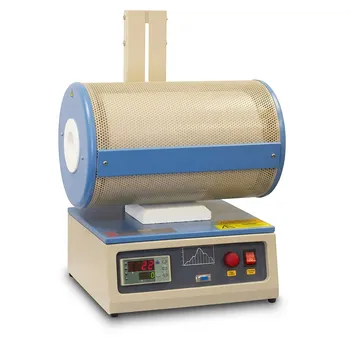
Multi Position Tube Furnace 1100C for Laboratory Material Research and Advanced Industrial Thermal Processing
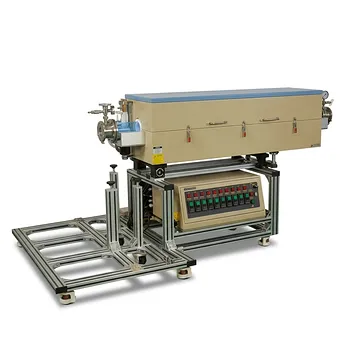
Ten Zone Multi Orientation Laboratory Tube Furnace for 1200C High Temperature Gradient Thermal Processing
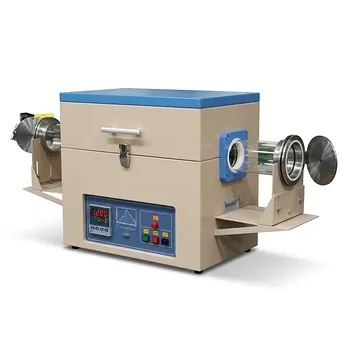
High Temperature 1200C Split Tube Furnace with Hinged Vacuum Flanges and 4 Inch Quartz Tube for Laboratory Research

High Temperature Automated 5 Inch Tube Furnace for Autonomous Material Research and Advanced Laboratory R&D

1800C High Temperature Compact Vacuum Tube Furnace with 60mm OD Alumina Tube and Kanthal MoSi2 Heating Elements
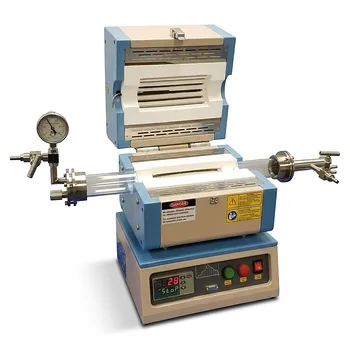
Compact Split Tube Furnace with Integrated Vacuum System and Precision Temperature Calibrator
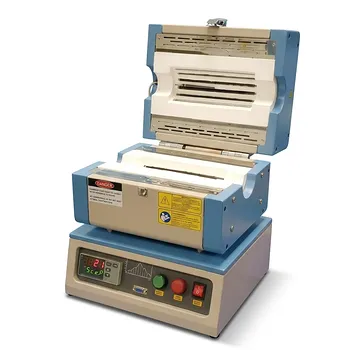
1250C Compact Split Tube Furnace with 8 Inch Heating Zone and Programmable Controller
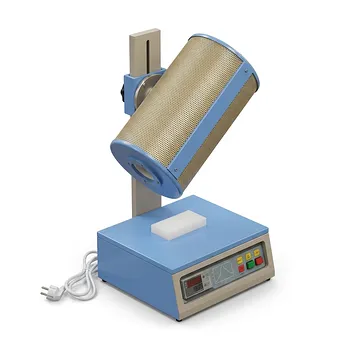
1100°C Vertical Laboratory Furnace for DIY Tubular Reactors with PID Temperature Controller
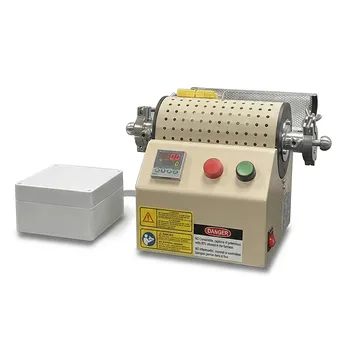
1000C Mini Tube Furnace with 20mm Quartz Tube and Vacuum Flanges for Material Science Research and Controlled Atmosphere Small Sample Processing
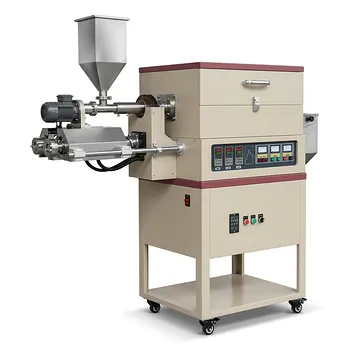
Laboratory Tilting Rotary Tubular Furnaces for Material Science and Industrial Heat Treatment
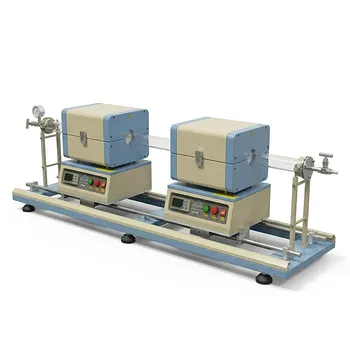
1200C Max Dual Sliding Tube Furnace with 50 mm Tube Flanges for CVD
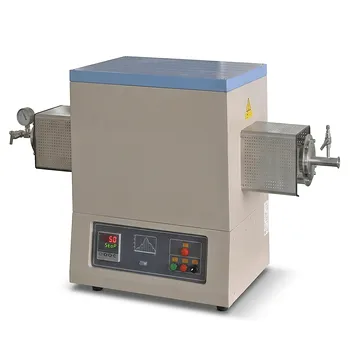
High Temperature 1700C Tube Furnace with 4 Inch OD Alumina Tube and Vacuum Sealing Flanges
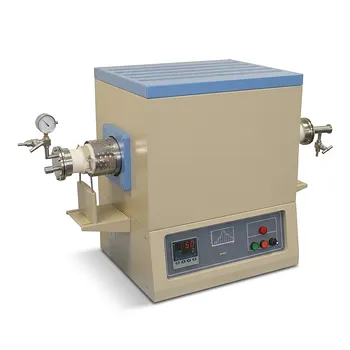
1700C High Temperature Alumina Tube Furnace with 18 Inch Heated Zone and Vacuum Sealing Flanges
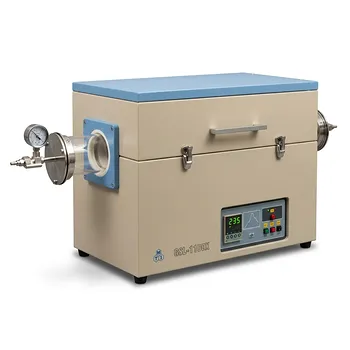
Single Zone Tube Furnace 5 Inch Quartz Tube 36 Inch Heating Zone Vacuum Flanges
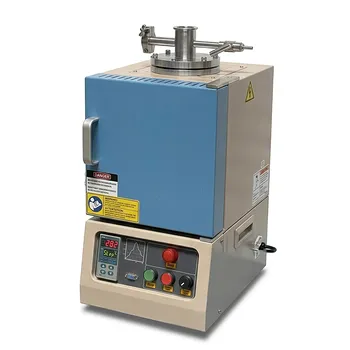
High Temperature Hybrid Muffle and Tube Furnace with Vacuum Capability and PID Control
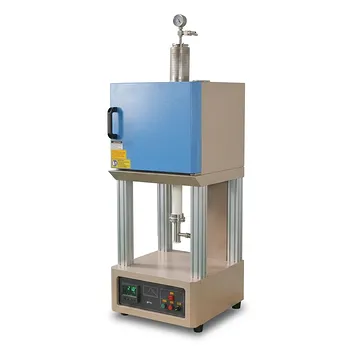
Hybrid High Temperature Tube and Box Furnace 1700C with 2 Inch Alumina Tube for Material Research
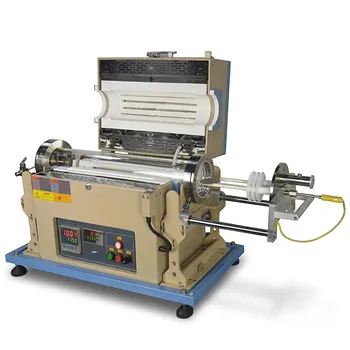
1200°C High Temperature 4 Inch Tube Furnace with Sliding Flange for CVD Systems

1200C High Throughput Multi Channel Tube Furnace with 50mm Quartz Tubes for Annealing and Material Phase Diagram Research

High Temperature 1700C Vertical Tube Furnace for Powder Spherification and Material Sintering