Why use a tube furnace with argon for Ni-Co-P phosphidation? Essential for high-purity nanosheet synthesis.
Updated 5 months ago
The use of a tube furnace with an argon atmosphere is essential to prevent the spontaneous oxidation of nickel and cobalt components while ensuring the precise chemical integration of phosphorus into the metallic lattice. At the elevated temperatures required for phosphidation—typically starting around 300°C—nickel and cobalt are highly reactive with atmospheric oxygen. The argon atmosphere provides a chemically inert shield that isolates the nanosheets, allowing the phosphorus vapor to replace oxygen or react with the metal precursors to form a high-purity phosphide phase.
Core Takeaway: A tube furnace with an argon atmosphere provides the dual-control of thermal precision and chemical isolation necessary to transform metallic precursors into pure Ni-Co-P nanosheets without the interference of oxygen-driven degradation or impurity formation.
Preventing Oxidation and Material Degradation
Maintaining Metallic Purity
At high temperatures, metallic components like nickel and cobalt are highly susceptible to oxidation when exposed to air. Using high-purity argon displaces oxygen from the furnace chamber, ensuring the final product remains a metal phosphide rather than a metal oxide. This is critical for maintaining the intended electrochemical properties of the Ni-Co-P nanosheets.
Preserving Nanoscale Morphology
The inert environment prevents the material ablation or "burning off" that can occur if reactive gases are present at high temperatures. By maintaining an oxygen-free environment, the delicate microscopic morphology and pore structure of the nanosheets are preserved. This structural integrity is vital for applications requiring high surface area, such as catalysis or energy storage.
Stabilizing Chemical States
Precise atmosphere control ensures that the metallic elements remain in their required states for bonding with phosphorus. Without the argon shield, uncontrolled secondary oxidation reactions could occur, introducing impurities that disrupt the crystal framework. This stability is the foundation for achieving the theoretical specific capacity and activity of the material.
Precision Control of the Phosphidation Reaction
Programmed Thermal Decomposition
The tube furnace allows for precise programmed temperature control, which is necessary to decompose the phosphorus source, such as sodium hypophosphite ($NaH_2PO_2$). This decomposition must be timed perfectly with the reactivity of the Ni-Co precursors. Controlled heating ensures that phosphorus vapor is generated at a rate that the metal lattice can effectively absorb.
Facilitating Phosphorus Diffusion
The transition to a phosphide phase requires the diffusion of phosphorus atoms into the nickel-cobalt lattice. A tube furnace provides a stable thermal environment that promotes this solid-gas reaction consistently across the material. This results in a uniform chemical transition from crystalline oxides or metals to the desired nanocrystalline phosphide.
Uniform Vapor Transport
The geometry of a tube furnace, combined with controlled gas flow, ensures that phosphorus vapor reaches all surfaces of the nanosheets equally. This uniformity is essential for creating a consistent phase across the entire batch of material. Without this control, the phosphidation would be incomplete or non-uniform, leading to a mixture of phases.
Understanding the Trade-offs
Gas Purity and Flow Rate Risks
While argon is inert, its effectiveness depends entirely on its purity and flow rate. If the flow is too low, residual oxygen may not be fully displaced; if it is too high, it may cool the sample unevenly or sweep the phosphorus vapor away before it can react. Achieving the correct balance is a technical challenge that requires careful calibration.
Precursor Management
Using a phosphorus source like sodium hypophosphite inside a tube furnace creates corrosive and toxic byproducts. These vapors can damage the internal heating elements or the quartz tube over time if not managed with proper filtration or exhaust systems. Users must weigh the benefits of precise phosphidation against the accelerated wear on the laboratory equipment.
How to Apply This to Your Project
Making the Right Choice for Your Goal
To achieve the best results in your phosphidation process, tailor your furnace settings to your specific material requirements.
- If your primary focus is Phase Purity: Ensure you are using ultra-high-purity (99.999%) argon and perform multiple vacuum-purge cycles before heating to eliminate all traces of oxygen.
- If your primary focus is Morphology Retention: Prioritize a slow ramp rate in the tube furnace to prevent thermal shock and ensure that the phosphorus diffusion is gradual and uniform.
- If your primary focus is Scaling Production: Optimize the gas flow rate to ensure that the phosphorus vapor is distributed evenly across a larger volume of precursor material within the tube's "hot zone."
The success of Ni-Co-P synthesis hinges on your ability to master the delicate balance between thermal energy and atmospheric isolation.
Summary Table:
| Feature | Function in Phosphidation | Impact on Ni-Co-P Nanosheets |
|---|---|---|
| Argon Atmosphere | Displaces oxygen and reactive gases | Prevents oxidation; ensures metallic purity |
| Tube Geometry | Directs controlled gas/vapor flow | Enables uniform phosphorus diffusion |
| Thermal Control | Programmed ramp and soak rates | Synchronizes precursor decay with lattice absorption |
| Inert Shielding | Protects delicate nanostructures | Preserves morphology and surface area |
Elevate Your Material Research with THERMUNITS
Achieving precision in phosphidation requires rigorous atmospheric control and thermal stability. THERMUNITS is a leading manufacturer of high-temperature laboratory equipment designed for the demanding needs of material science and industrial R&D.
Our advanced Tube Furnaces and Atmosphere Furnaces provide the exact inert environments necessary to synthesize high-purity Ni-Co-P nanosheets without the risk of oxidation. Beyond phosphidation, we offer a comprehensive range of thermal solutions, including:
- Muffle, Vacuum, and Rotary Furnaces
- CVD/PECVD Systems for thin-film deposition
- Hot Press & Vacuum Induction Melting (VIM) Furnaces
- Dental Furnaces and High-Quality Thermal Elements
Don't let impurities compromise your results. Contact our technical experts today to find the perfect thermal processing solution for your laboratory.
References
- Zhiyuan Wang, Yu-Chen Tsai. Enhancing Electrochemical Non-Enzymatic Dopamine Sensing Based on Bimetallic Nickel/Cobalt Phosphide Nanosheets. DOI: 10.3390/mi15010105
Mentioned Products
- Vertical 1700C Vacuum and Atmosphere Tube Furnace with 80mm Alumina Tube
- 1200C High Temperature Atmosphere Controlled Vertical Quenching Tube Furnace with 4 Inch Quartz Tube
- 1700C Compact Hybrid Furnace with Dual Layer Box Sintering and Controlled Atmosphere Alumina Tubes
- High Temperature 1700C Vertical Tube Furnace for Powder Spherification and Material Sintering
- High Temperature Automated 5 Inch Tube Furnace for Autonomous Material Research and Advanced Laboratory R&D
People Also Ask
- How is an industrial-grade vertical tube furnace utilized in smelting leaching residues? Enhance Metal Recovery Efficiency
- What is the function of a laboratory-grade vertical tube furnace in fast pyrolysis? Optimize Composite Research.
- How does a vertical tube furnace facilitate thermoelectric alloy melting? Precision synthesis for material homogeneity.
- Why is a thermocouple sensor indispensable for monitoring the vertical tube furnace during gallium oxide nanowire production? Optimize VLS Growth
- What are the advantages of using a vertical tube furnace for crucible experiments simulating steel-slag interactions?

Tech Team · ThermUnits
Last updated on Apr 14, 2026
Related Products

Vertical 1700C Vacuum and Atmosphere Tube Furnace with 80mm Alumina Tube
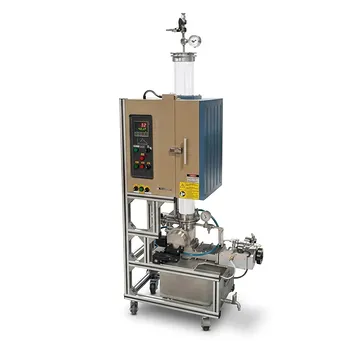
1200C High Temperature Atmosphere Controlled Vertical Quenching Tube Furnace with 4 Inch Quartz Tube
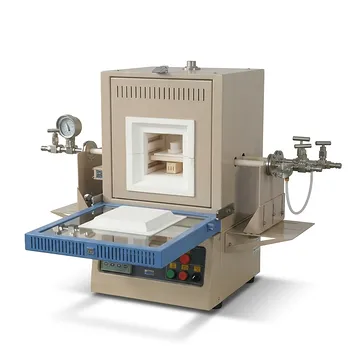
1700C Compact Hybrid Furnace with Dual Layer Box Sintering and Controlled Atmosphere Alumina Tubes

High Temperature 1700C Vertical Tube Furnace for Powder Spherification and Material Sintering

High Temperature Automated 5 Inch Tube Furnace for Autonomous Material Research and Advanced Laboratory R&D

Compact High Temperature 1600C Tube Furnace with 50mm Alumina Tube and Vacuum Flanges for Material Sintering
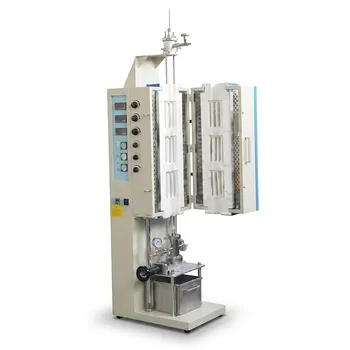
High Temperature Dual Zone Tube Furnace for Material Science Research and Professional Thermal Processing
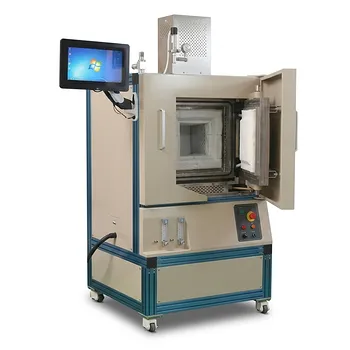
High Temperature Oxygen and Inert Atmosphere Controlled Furnace 8 Liter 1700C Sintering System for Advanced Materials RD
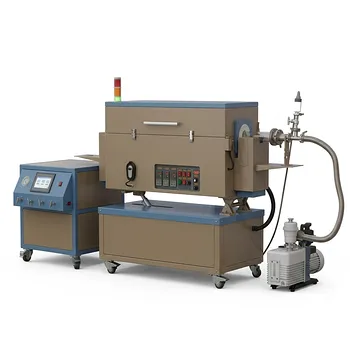
5 Inch Three Zone Rotary Tube Furnace with Integrated Gas Delivery System and 1200C Capability for Advanced Material CVD Processing
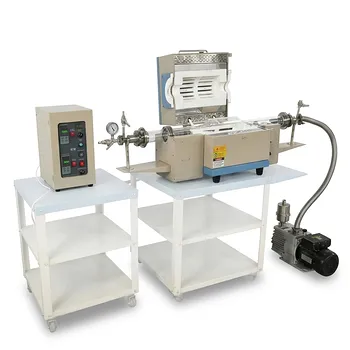
Two Zone Rotary Tube Furnace for Powder CVD Coating and Core Shell Material Synthesis 1100C
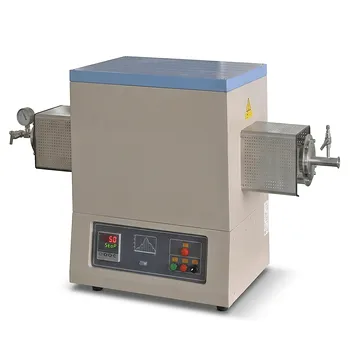
High Temperature 1700C Tube Furnace with 4 Inch OD Alumina Tube and Vacuum Sealing Flanges
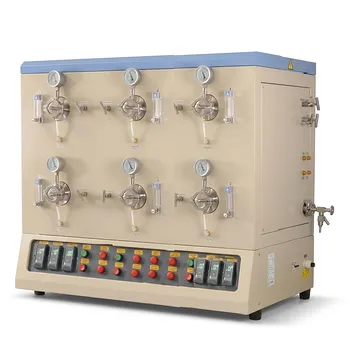
1200C High Throughput Multi Channel Tube Furnace with 50mm Quartz Tubes for Annealing and Material Phase Diagram Research

1200°C 5 Inch Vertical Quartz Tube Furnace with Stainless Steel Vacuum Flanges
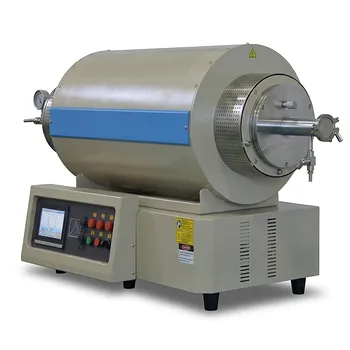
1200C Max Three Zone Tube Furnace 6 Inch OD Max with Tube and Flange
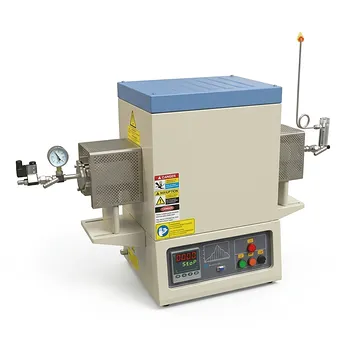
1700C Hydrogen Gas Tube Furnace with 60mm Alumina Process Tube and Integrated Hydrogen Safety Detector
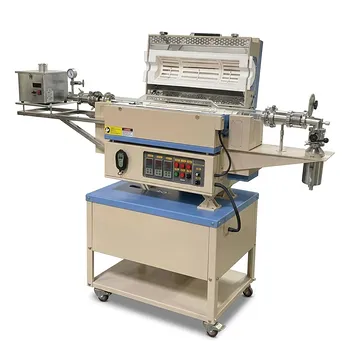
5 Inch Rotary Tube Furnace with Automatic Feeding and Receiving System 1200C Three Zone CVD Powder Processing
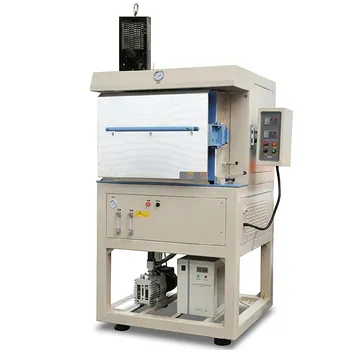
1200C Hydrogen Atmosphere Box Furnace with 5 Heated Sides and 64L Chamber
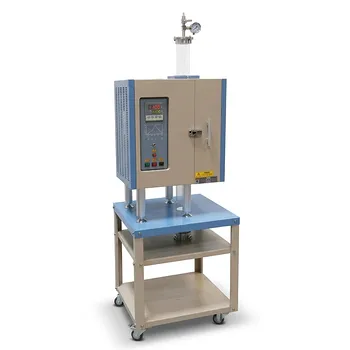
1100°C Split Vertical Tube Furnace with 80mm Quartz Tube and Stainless Steel Vacuum Flanges
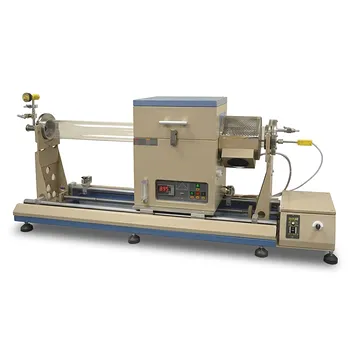
900 ºC Max Sliding RTP Tube Furnace with Rapid IR Heating and 4 Inch OD Quartz Tube
