Why is maintaining a high vacuum environment crucial for La2O2S sintering? Unlock Purity & Infrared Transparency
Updated 5 months ago
Maintaining a high vacuum is essential for Lanthanum oxysulfide ($La_2O_2S$) to prevent oxidative degradation and ensure the material retains its precise chemical composition. At sintering temperatures, typically exceeding 1200°C, the presence of even trace oxygen or moisture can trigger unwanted reactions that destroy the oxysulfide structure. By operating at pressures below $7 \times 10^{-3}$ Pa, manufacturers can eliminate impurity gases, maximize material density, and achieve the high optical transmittance required for infrared applications.
Core Takeaway: A high vacuum environment serves as a dual-purpose safeguard: it protects the chemical integrity of $La_2O_2S$ from oxidation while simultaneously removing trapped gases to create a pore-free, dense ceramic capable of transmitting light.
Protecting Chemical Integrity and Stoichiometry
Prevention of Oxidative Degradation
At the high temperatures required for sintering, $La_2O_2S$ is highly susceptible to reacting with ambient oxygen. A high vacuum environment effectively removes these reactive molecules, preventing the oxysulfide from breaking down into oxides or other non-functional compounds.
Maintaining Precise Stoichiometry
The balance between Lanthanum, Oxygen, and Sulfur is critical to the material's performance. The vacuum ensures that no external gases interfere with the solid-state reaction or the stability of the $La_2O_2S$ lattice, keeping the stoichiometric ratio exact.
Exclusion of Impurity Gases
Impurity gases present in a standard atmosphere can become trapped within the material's molecular structure. Using a high vacuum excludes these contaminants, which is decisive for producing high-purity precursor powders and final ceramic bodies.
Enhancing Physical Density and Optical Performance
Elimination of Internal Porosity
To achieve high-quality ceramics, air trapped between powder particles must be removed before the material seals. The vacuum drives the removal of these air bubbles, allowing for a uniform microstructure and preventing defects that could lead to cracking or chipping.
Achieving Infrared Transparency
For $La_2O_2S$ to be used in optical applications, its relative density must often exceed 99%. A vacuum environment promotes atomic diffusion and particle rearrangement, which are physical prerequisites for eliminating the residual pores that scatter light and reduce transparency.
Synergy with High Pressure
In processes like vacuum hot press sintering, the vacuum works alongside high mechanical pressure (often around 120 MPa). This combination forces plastic flow and eliminates internal voids more effectively than natural sintering, resulting in a material dense enough for infrared transparency.
Understanding the Trade-offs and Challenges
The Risk of Volatilization
While a vacuum prevents oxidation, extremely low pressures at high temperatures can sometimes cause certain elements—particularly sulfur—to sublimate or "boil off" from the sample. This requires a precise balance between the vacuum level and the sintering temperature to avoid shifting the material's chemistry.
Equipment Complexity and Cost
Maintaining a consistent vacuum below $7 \times 10^{-3}$ Pa requires sophisticated multi-stage pumping systems and high-integrity seals. This increases the operational cost and technical complexity of the sintering process compared to inert atmosphere sintering.
Thermal Transfer Limitations
In a deep vacuum, heat cannot be transferred via convection; it relies entirely on radiation and conduction through the sample holder. This can lead to thermal gradients within the material if the furnace is not meticulously calibrated, potentially causing uneven densification.
How to Apply This to Your Project
Recommendations Based on Your Objectives
- If your primary focus is maximum optical clarity: Prioritize a vacuum hot press furnace to ensure density exceeds 99% while maintaining the vacuum below $7 \times 10^{-3}$ Pa to prevent scattering-inducing impurities.
- If your primary focus is material purity for research: Utilize a high-vacuum tube furnace for the initial solid-state reaction between $La_2S_3$ and $La_2O_3$ to ensure the precursor powder is free of atmospheric contaminants.
- If your primary focus is cost-effective production: Evaluate if a controlled reducing atmosphere (such as Hydrogen-Argon) can supplement a moderate vacuum to prevent oxidation without the expense of ultra-high vacuum systems.
Achieving the delicate balance of high vacuum and controlled temperature is the definitive factor in transforming raw Lanthanum oxysulfide into a high-performance, transparent ceramic.
Summary Table:
| Feature | Impact on La2O2S Processing | Target Outcome |
|---|---|---|
| High Vacuum (<7x10⁻³ Pa) | Prevents oxidative degradation & breakdown | Chemical Integrity |
| Pore Elimination | Removes trapped air between particles | >99% Relative Density |
| Contaminant Exclusion | Eliminates atmospheric impurity gases | High Material Purity |
| Vacuum Hot Pressing | Synergizes pressure & vacuum for density | Infrared Transparency |
Master Advanced Material Sintering with THERMUNITS
Achieving 99% density and optical clarity in advanced ceramics like Lanthanum oxysulfide (La2O2S) requires more than just heat—it demands a perfectly controlled thermal environment. THERMUNITS is a leading manufacturer of high-temperature laboratory equipment dedicated to supporting material science and industrial R&D.
We provide the high-performance solutions necessary to prevent oxidation and ensure precise stoichiometry, including:
- Vacuum & Hot Press Furnaces: Essential for achieving the density required for infrared applications.
- Tube, Atmosphere, & Muffle Furnaces: For versatile heat treatment and synthesis.
- Specialized Systems: Including CVD/PECVD, Rotary Kilns, Vacuum Induction Melting (VIM), and Dental Furnaces.
Whether you are refining precursor powders or producing final ceramic bodies, our equipment delivers the reliability and precision your research demands. Contact our technical experts today to discuss your specific sintering requirements and discover how THERMUNITS can elevate your lab's performance.
References
- Yuqi Chen, Kun Yeun Han. Rapid Synthesis and Sintering of La2O2S and Its Physical, Optical, and Mechanical Properties. DOI: 10.3390/coatings14091120
Mentioned Products
- High Pressure 600T Vacuum Induction Hot Press Furnace for Advanced Material Heat Treatment and Sintering
- High Vacuum Pressure Chamber Furnace 800C 3.5 Bar Sintering System for Superconducting Materials
- High Temperature 1000C Vacuum Furnace with 8 Inch ID Chamber for Material Sintering and Research Annealing
- Industrial High Temperature Vacuum Hot Press Furnace and Heated Vacuum Press Machine for Material Science Sintering
- High Temperature Cold Wall Vacuum Furnace for Advanced Material Sintering and Annealing 1600C Heating Area 200x200x300mm
People Also Ask
- What is a Vacuum Hot Press Furnace and what are its primary industrial applications? Achieve Maximum Material Density
- What are the structural features of the furnace body and chamber in a Vacuum Hot Press Furnace? Master Material Density
- What types of heating systems and insulation are used in Vacuum Hot Press Furnaces? Optimize Your Thermal Processing
- Why is graphite the preferred material for dies and heating elements in Vacuum Hot Press Furnaces? High-Temp Solutions
- What are the primary operational components and mechanisms of a vacuum hot press furnace? A Technical Breakdown

Tech Team · ThermUnits
Last updated on Apr 14, 2026
Related Products
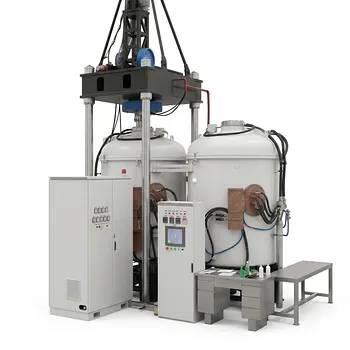
High Pressure 600T Vacuum Induction Hot Press Furnace for Advanced Material Heat Treatment and Sintering
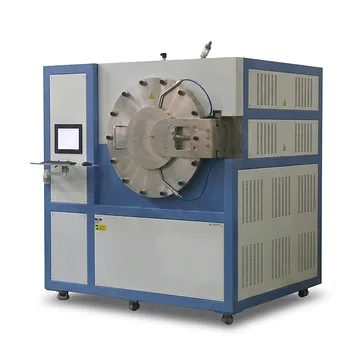
High Vacuum Pressure Chamber Furnace 800C 3.5 Bar Sintering System for Superconducting Materials
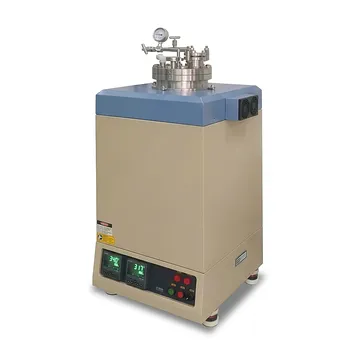
High Temperature 1000C Vacuum Furnace with 8 Inch ID Chamber for Material Sintering and Research Annealing
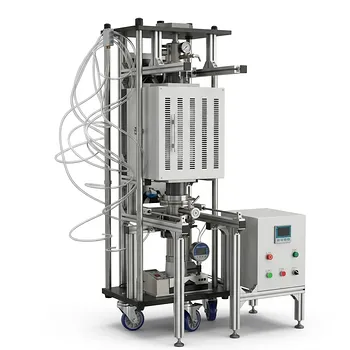
Industrial High Temperature Vacuum Hot Press Furnace and Heated Vacuum Press Machine for Material Science Sintering
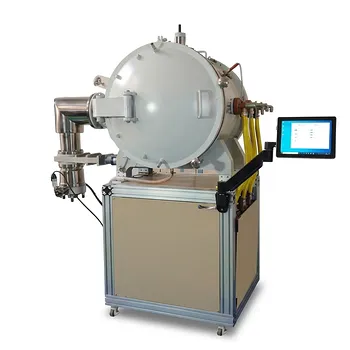
High Temperature Cold Wall Vacuum Furnace for Advanced Material Sintering and Annealing 1600C Heating Area 200x200x300mm

High Temperature 1700C Vertical Tube Furnace for Powder Spherification and Material Sintering
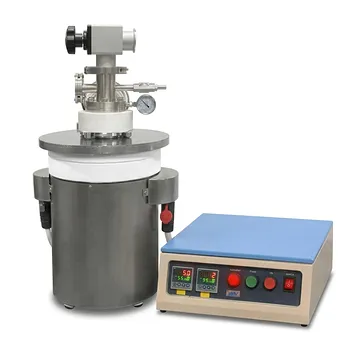
1100C High Temperature Vacuum Crucible Furnace with Quartz Chamber for Thermal Processing and Sintering

Compact High Temperature 1600C Tube Furnace with 50mm Alumina Tube and Vacuum Flanges for Material Sintering
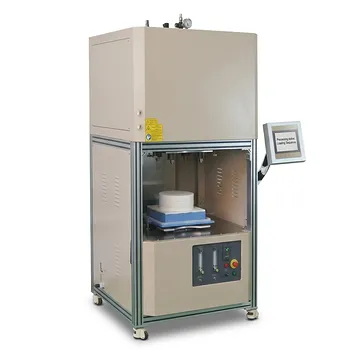
High Temperature Vertical Atmosphere Controlled Furnace with Automatic Bottom Loading and 1700°C Capacity for Advanced Material Research
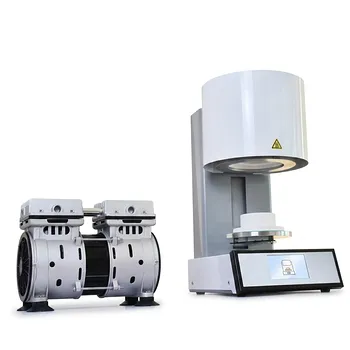
Vacuum Dental Porcelain Sintering Furnace for High Precision Ceramic Restorations
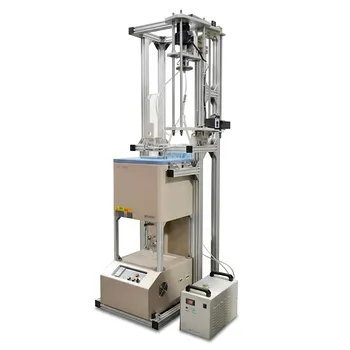
500C Vacuum Vertical Tube Furnace 84mm OD Sample Rotation Lifting System
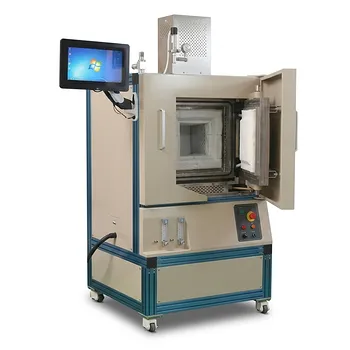
High Temperature Oxygen and Inert Atmosphere Controlled Furnace 8 Liter 1700C Sintering System for Advanced Materials RD
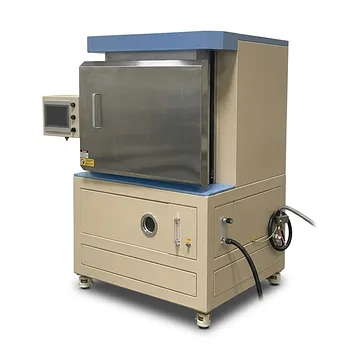
1650C High Temperature Atmosphere Controlled Box Furnace with 65L Chamber for Advanced Material Sintering and Industrial Heat Treatment
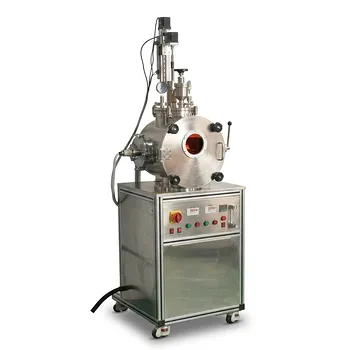
High Vacuum Melting Casting Furnace with Mechanical Stirring and Secondary Charge for Metallic Alloy Research
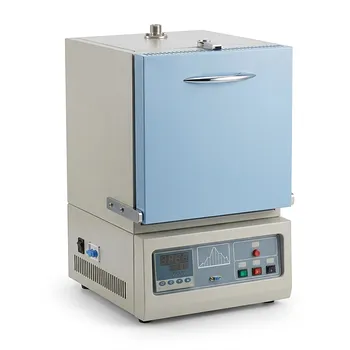
1750C Compact Muffle Furnace 1.7L Ultra High Temperature Laboratory Sintering System for Advanced Ceramics and Material Science Research
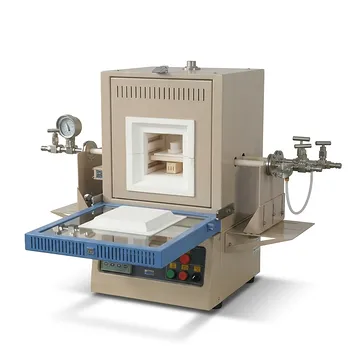
1700C Compact Hybrid Furnace with Dual Layer Box Sintering and Controlled Atmosphere Alumina Tubes

1800C High Temperature Compact Vacuum Tube Furnace with 60mm OD Alumina Tube and Kanthal MoSi2 Heating Elements
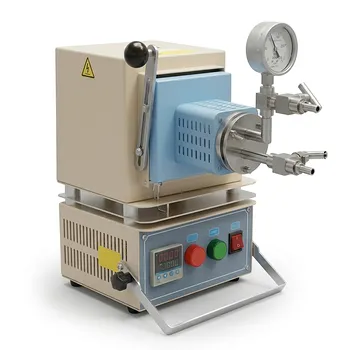
Compact Hybrid Muffle and Tube Furnace for 1000C Controlled Atmosphere Laboratory Material Sintering
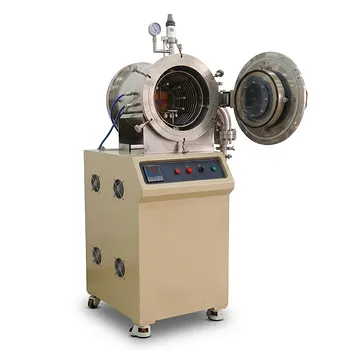
High Temperature Cold Wall High Vacuum Chamber Furnace 1400C for Advanced Material Processing