Why is vacuum sealing in quartz tubes necessary for the high-temperature thermal processing of PdCoO2? Expert Insights.
Updated 5 months ago
Vacuum sealing in quartz tubes is the critical safeguard for $PdCoO_2$ synthesis. It isolates the reaction from atmospheric oxygen and moisture while simultaneously trapping volatile chemical intermediates. This dual-purpose containment ensures the material reaches its intended thermodynamic state without degrading or losing essential components to the environment.
Vacuum sealing creates a high-purity micro-environment that prevents the oxidation of raw materials and the loss of volatile gas-phase reactants. By maintaining internal pressure balance, it enables the complex metathesis reactions required to produce high-purity $PdCoO_2$ crystals.
Eliminating Atmospheric Contamination
Prevention of Metal Oxidation
At high processing temperatures, the raw materials used to synthesize $PdCoO_2$ are highly susceptible to oxidation. Exposure to air would cause palladium or cobalt components to react with oxygen, forming unwanted oxide impurities rather than the desired delafossite structure.
Exclusion of Moisture and Impurities
Vacuum levels—often reaching pressures lower than $10^{-3}$ Pa—are necessary to remove trace moisture. This ultra-pure environment is essential for preserving the intrinsic transport properties of the material, which is highly sensitive to defects.
Maintenance of Chemical Purity
By sealing the reactants in an evacuated quartz tube, the system remains entirely isolated from the external environment. This prevents surface oxidation and ensures that the final product reaches a state of thermodynamic equilibrium without interference from atmospheric gases.
Managing Volatile Components and Pressure
Retention of Gas-Phase Reactants
The synthesis of $PdCoO_2$ often involves metathesis reactions that generate gas-phase substances, such as chloride vapors. Vacuum sealing ensures these vapors remain within the reaction zone rather than escaping into the furnace.
Balancing Vapor Pressure
Maintaining a controlled vapor pressure inside the tube is vital for the reaction to proceed fully. If volatile components were lost, the stoichiometry of the $PdCoO_2$ would shift, resulting in a failed or low-quality synthesis.
Support for Multi-Phase Reactions
$PdCoO_2$ synthesis requires interactions between solid, liquid, and gas phases. The closed system of the quartz tube forces these phases to interact continuously, which is necessary to produce high-purity metallic delafossite products.
Understanding the Trade-offs and Risks
Internal Pressure Limitations
While trapping vapors is necessary, excessive vapor pressure at high temperatures can exceed the structural integrity of the quartz. This creates a risk of tube explosion if the initial chemical quantities or temperature ramps are not precisely calculated.
Thermal Constraints of Quartz
Quartz is chosen for its chemical inertness and high melting point, but it has a functional ceiling near 1200°C. Exceeding these temperatures can cause the tube to soften or devitrify, compromising the vacuum seal and contaminating the sample.
Seal Integrity and Failure
The quality of the vacuum seal is a single point of failure. A microscopic leak or a poor torch seal will lead to the rapid depletion of volatile elements or the introduction of oxygen, which fundamentally alters the material's final microstructure.
How to Apply This to Your Synthesis
Recommendations for Successful Processing
The use of vacuum-sealed quartz tubes should be tailored to the specific thermal requirements of your delafossite project.
- If your primary focus is phase purity: Ensure the vacuum level is better than $10^{-3}$ Pa to prevent even trace oxide formation during the long annealing process.
- If your primary focus is stoichiometric control: Precisely calculate the internal volume of the quartz tube to manage the vapor pressure of volatile chlorides or dopants.
- If your primary focus is microstructural uniformity: Use high-purity quartz and a slow cooling rate to ensure the sealed environment remains stable as the material transitions phases.
By strictly controlling the micro-environment within a sealed quartz vessel, you ensure the chemical integrity and high performance of the resulting $PdCoO_2$.
Summary Table:
| Key Requirement | Role in PdCoO2 Synthesis | Impact on Material Quality |
|---|---|---|
| Oxidation Prevention | Isolates reactants from atmospheric O2 | Prevents unwanted oxide impurity formation |
| Volatile Retention | Traps gas-phase intermediates (e.g., chlorides) | Maintains precise stoichiometry |
| Vacuum Integrity | Removes moisture and trace gases | Preserves intrinsic transport properties |
| Vapor Balancing | Manages internal micro-environment pressure | Supports critical multi-phase reactions |
| Quartz Selection | Provides chemical inertness up to 1200°C | Ensures a high-purity, stable reaction zone |
Elevate Your Material Synthesis with THERMUNITS
Achieving the perfect thermodynamic state for advanced materials like $PdCoO_2$ requires uncompromising thermal precision. THERMUNITS is a leading manufacturer of high-temperature laboratory equipment specifically designed for material science and industrial R&D.
Whether you require high-vacuum Tube Furnaces for quartz tube sealing applications, or specialized Muffle, Atmosphere, CVD/PECVD, and Vacuum Induction Melting (VIM) systems, our solutions provide the stability and control your research demands.
Why partner with THERMUNITS?
- Precision Engineering: Reliable heating for sensitive delafossite and multi-phase reactions.
- Comprehensive Solutions: From dental and rotary furnaces to advanced hot press systems.
- Expert Support: We help you select the right thermal elements and equipment to ensure stoichiometric control and high-purity results.
Ready to optimize your heat treatment process? Contact us today to discuss your project requirements!
References
- Yi Zhang, Chris Leighton. Crystal-chemical origins of the ultrahigh conductivity of metallic delafossites. DOI: 10.1038/s41467-024-45239-6
Mentioned Products
- 1100°C Dual Zone Split Vertical Tube Furnace with 4 Inch Quartz Tube and Vacuum Sealing Flanges
- Compact Vertical Split Quartz Tube Furnace with Stainless Steel Vacuum Flanges for Rapid Thermal Quenching and Controlled Atmosphere Material Processing
- 1000C Mini Tube Furnace with 20mm Quartz Tube and Vacuum Flanges for Material Science Research and Controlled Atmosphere Small Sample Processing
- Three Zone Quartz Tube Furnace with 3 Channel Gas Mixer Vacuum Pump and Anti Corrosive Vacuum Gauge
- High Temperature 1200C Split Tube Furnace with Hinged Vacuum Flanges and 4 Inch Quartz Tube for Laboratory Research
People Also Ask
- How do dual-zone quartz tube furnaces achieve controllable material preparation? Optimize Perovskite VD Processes
- Why integrate a vertical split tube furnace with hydraulic loading for HSECC? Essential for In-Situ Fire Simulation.
- What is the role of a split vertical tube furnace during flash sintering of 8YSZ and 20SDC? Master Ultra-Fast R&D
- What are the advantages of using a dual-zone tube furnace for growing Ag8SiS6 single crystals? Achieve Precision Growth
- Why is a Tube Furnace typically utilized for CVD? Achieve Precision in Graphene and 2D Material Synthesis

Tech Team · ThermUnits
Last updated on Apr 14, 2026
Related Products
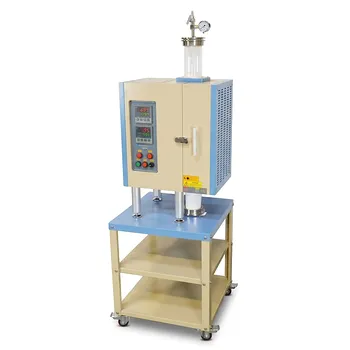
1100°C Dual Zone Split Vertical Tube Furnace with 4 Inch Quartz Tube and Vacuum Sealing Flanges

Compact Vertical Split Quartz Tube Furnace with Stainless Steel Vacuum Flanges for Rapid Thermal Quenching and Controlled Atmosphere Material Processing
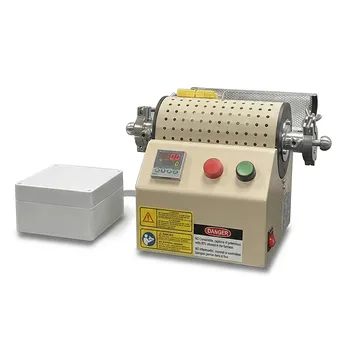
1000C Mini Tube Furnace with 20mm Quartz Tube and Vacuum Flanges for Material Science Research and Controlled Atmosphere Small Sample Processing
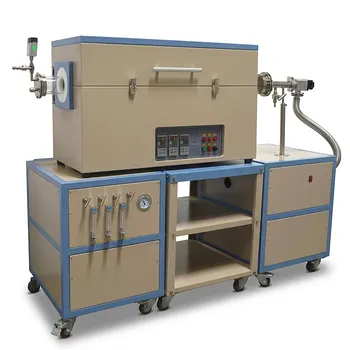
Three Zone Quartz Tube Furnace with 3 Channel Gas Mixer Vacuum Pump and Anti Corrosive Vacuum Gauge
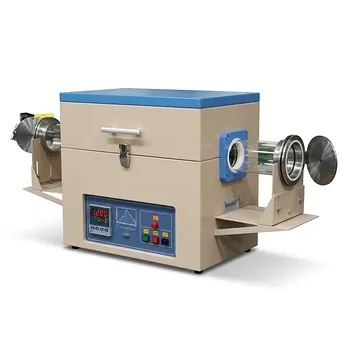
High Temperature 1200C Split Tube Furnace with Hinged Vacuum Flanges and 4 Inch Quartz Tube for Laboratory Research
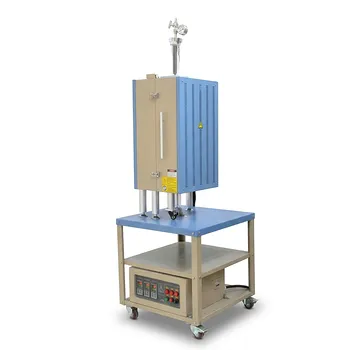
1200C Three Zone Vertical Tube Furnace with 2 Inch Quartz Tube and Vacuum Flanges
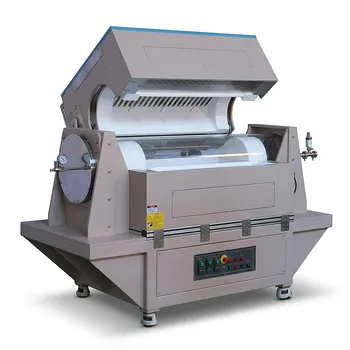
Three Zone Tube Furnace with 11 Inch or 15 Inch Quartz Tube and Hinged Flanges for Vacuum Atmosphere Heat Treatment
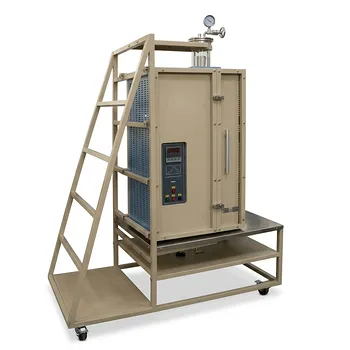
Split Vertical Tube Furnace with 1200C Quartz Tube and Stainless Steel Vacuum Flanges for Rapid Thermal Processing

1200°C 5 Inch Vertical Quartz Tube Furnace with Stainless Steel Vacuum Flanges
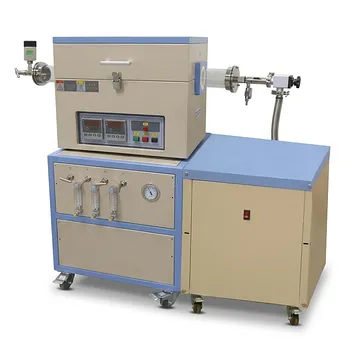
Dual Zone Quartz Tube Furnace with 80mm Diameter 1200C Max Temperature 3 Channel Gas Mixer and Vacuum Pump System
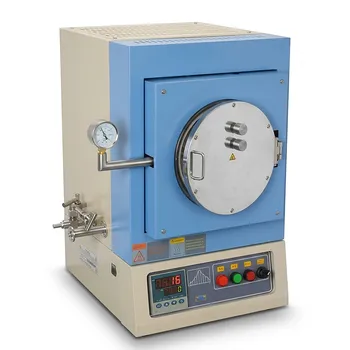
1100°C High Temperature Quartz Chamber Furnace 8 Inch OD with 7.6 Liter Capacity and Vacuum Atmosphere Capability

High Temperature Automated 5 Inch Tube Furnace for Autonomous Material Research and Advanced Laboratory R&D
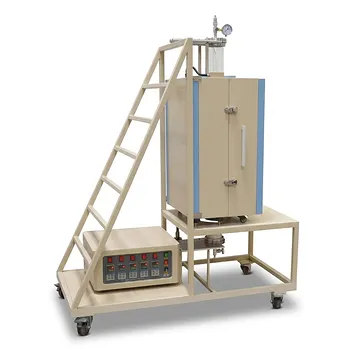
Five Zone Split Vertical Tube Furnace 1200C Max with 4 Inch Quartz Tube and Stainless Steel Vacuum Flanges
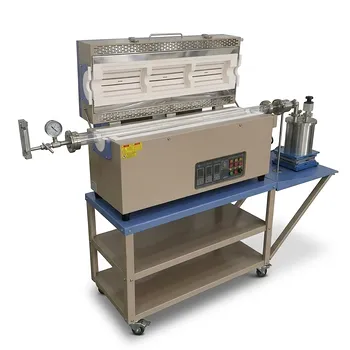
5 Inch Two Zone Rotary Tube Furnace 1100C for Powder CVD and Material Synthesis
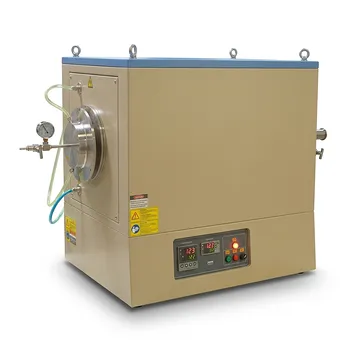
1100°C Large Diameter Quartz Tube Furnace with 24 Inch Heating Zone and Water Cooled Flanges
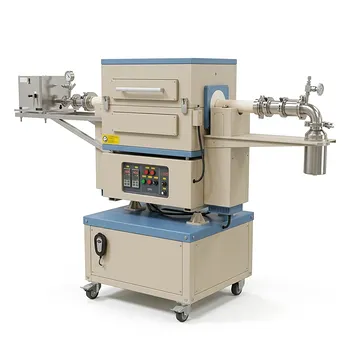
1500C Max Dual Zone Rotary Tube Furnace with 60 mm OD Alumina Tube for High Temperature Material Synthesis

High Temperature 1700C Vertical Tube Furnace for Powder Spherification and Material Sintering
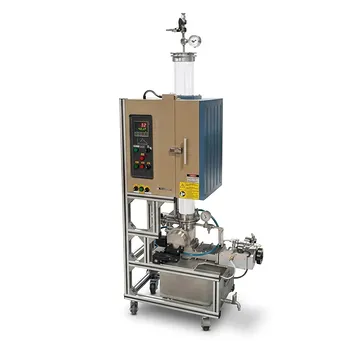
1200C High Temperature Atmosphere Controlled Vertical Quenching Tube Furnace with 4 Inch Quartz Tube
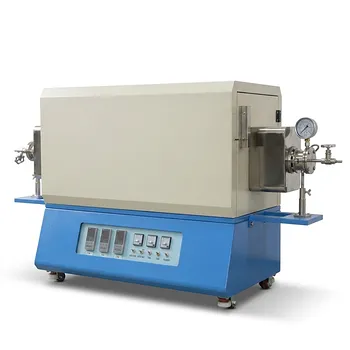
Three Temperature Zone High Temperature Vacuum Tube Furnace for CVD and Material Sintering