How do dual-zone quartz tube furnaces achieve controllable material preparation? Optimize Perovskite VD Processes
Updated 3 months ago
Dual-zone quartz tube furnaces achieve controllable material preparation by decoupling the thermal environments for precursor sublimation and film deposition. In this setup, a high-temperature zone (typically ~600°C) provides the energy required to vaporize inorganic precursors like CsBr or PbI2, while a secondary low-temperature zone (around ~150°C) regulates the substrate's environment. This spatial separation allows researchers to independently tune the vapor pressure of the source materials and the crystallization rate on the substrate, ensuring high-quality, large-area thin films without damaging sensitive underlying layers.
Core Takeaway: The dual-zone configuration enables "independent thermal field management," which allows for the precise control of precursor evaporation rates and substrate growth kinetics. This decoupling is essential for maintaining the stoichiometric ratio of the perovskite and protecting thermally sensitive substrates like TFT arrays.
Managing the Thermodynamics of Precursor Sublimation
Handling Disparate Saturated Vapor Pressures
All-inorganic perovskite precursors, such as CsBr and PbI2, often possess significantly different volatilities. A dual-zone furnace allows the upstream zone to be set at a higher temperature to force the sublimation of less volatile components while preventing the premature degradation of more sensitive materials.
Achieving Stoichiometric Precision
By adjusting the temperature of the evaporation zone independently, the concentration of each precursor in the vapor phase can be finely tuned. This ensures that the gaseous reaction zone reaches the ideal ratio required for the formation of pure-phase perovskite microcrystals or films.
Preventing Premature Condensation
The temperature gradient between the two zones is carefully managed to ensure that precursors remain in a gaseous state until they reach the substrate. This prevents the "clogging" of the quartz tube or the formation of unintended particles before the vapor reaches the target growth area.
Optimizing Deposition and Film Growth
Controlling Nucleation and Grain Size
The lower-temperature zone (the growth zone) directly influences the adsorption and nucleation process on the substrate. By maintaining a precise, lower temperature (e.g., 150°C), the furnace allows for controlled "island growth," which leads to higher uniformity and larger grain sizes in the final heterojunction.
Protecting Thermally Sensitive Substrates
Many modern applications, such as TFT arrays, cannot withstand the high temperatures required for inorganic precursor sublimation. The dual-zone design allows the reaction to occur in a high-heat environment while keeping the substrate at a safe, functional temperature.
Facilitating Large-Area Epitaxial Growth
Continuous deposition over large areas requires a stable and uniform vapor flux. The dual-zone system creates a steady-state environment where the carrier gas can transport a consistent mix of precursors across the entire substrate surface.
Understanding the Trade-offs
Thermal Lag and Gradient Stability
Maintaining a sharp temperature gradient over a short distance within a single quartz tube can be difficult due to thermal radiation. If the zones are too close, heat from the 600°C zone may "bleed" into the 150°C zone, potentially damaging the substrate or altering growth kinetics.
Precursor Exhaustion Rates
Because precursors are heated to high temperatures to ensure sublimation, they can be consumed rapidly. This requires precise timing and calibration to ensure the deposition process is completed before the source material is exhausted, which is critical for maintaining film thickness uniformity.
Cross-Contamination Risks
In a closed quartz tube system, residual vapors from previous runs can settle in cooler parts of the tube. This necessitates rigorous cleaning or the use of dedicated tubes for specific material combinations to avoid contaminating the all-inorganic heterojunction.
How to Apply This to Your Project
If your primary focus is Phase Purity: Ensure the upstream zone temperature is calibrated specifically to the least volatile precursor to maintain a steady stoichiometric vapor flux.
If your primary focus is Substrate Integrity: Maximize the physical distance between the two heating zones and utilize a high-flow carrier gas to "carry" heat away from the sensitive substrate area.
If your primary focus is Large-Area Uniformity: Focus on the stability of the carrier gas flow rate and ensure the substrate is placed in a "thermal sweet spot" where the temperature is perfectly uniform across the entire surface.
Mastering the dual-zone gradient is the definitive path to bridging the gap between high-temperature material synthesis and low-temperature device fabrication.
Summary Table:
| Feature | Source Zone (High Temp) | Growth Zone (Low Temp) |
|---|---|---|
| Typical Temperature | ~600°C | ~150°C |
| Primary Function | Precursor sublimation (CsBr, PbI2) | Nucleation & film deposition |
| Process Control | Stoichiometric vapor pressure | Grain size & substrate kinetics |
| Key Advantage | Prevents premature condensation | Protects sensitive layers (e.g., TFT) |
Elevate Your Research with Precision Thermal Solutions
At THERMUNITS, we understand that precise temperature control is the backbone of groundbreaking material science. As a leading manufacturer of high-temperature laboratory equipment for industrial R&D and material science, we provide the tools needed for complex processes like vapor deposition and epitaxial growth.
Our comprehensive range of thermal solutions includes:
- Advanced Furnaces: Muffle, Vacuum, Atmosphere, Tube, Rotary, and Hot Press furnaces.
- Specialized Systems: CVD/PECVD systems, Dental Furnaces, and Vacuum Induction Melting (VIM) furnaces.
- Industrial Equipment: Electric rotary kilns and high-quality Thermal Elements.
Ready to achieve superior film quality and stoichiometric precision in your lab? Contact our experts today to discuss your specific requirements and discover how THERMUNITS can empower your next innovation.
References
- Liqi Li, Deren Yang. Monolithic integration of perovskite heterojunction on TFT backplanes through vapor deposition for sensitive and stable x-ray imaging. DOI: 10.1126/sciadv.adj8659
Mentioned Products
- Dual Zone Quartz Tube Furnace with 80mm Diameter 1200C Max Temperature 3 Channel Gas Mixer and Vacuum Pump System
- Dual Zone Tube Furnace 1100C with 11 Inch Quartz Tube and Vacuum Flanges for 8 Inch Wafer Processing
- 1200C Dual Zone Split Tube Furnace with Fused Quartz Tube and Vacuum Flanges Available in 60mm 80mm and 100mm Diameters
- 1100°C Dual Zone Split Vertical Tube Furnace with 4 Inch Quartz Tube and Vacuum Sealing Flanges
- 1100C Dual Zone Hydrogen Gas Tube Furnace with Quartz Tube and Integrated H2 Leak Detection System
People Also Ask
- What are the technical advantages of using a dual-zone tube furnace for growing large PdCoO2 crystals via CVT? Expert Tips
- Purpose of the reverse gradient step in CVT growth? Master Crystal Purity with Dual-Zone Furnaces
- Why is it necessary to place MoS2 devices in a dual-zone tube furnace for annealing? Optimize Lattice Repair & Doping
- Why is a dual-zone tube furnace necessary for ReO3-doped Cu2Te CVD? Essential for precise precursor synchronization.
- What are the primary technical advantages of using a dual-zone tube furnace for MoS2? Optimize CVD Precision & Yield

Tech Team · ThermUnits
Last updated on Jun 02, 2026
Related Products
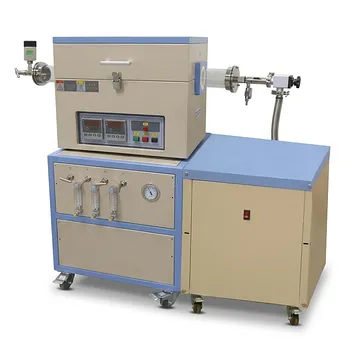
Dual Zone Quartz Tube Furnace with 80mm Diameter 1200C Max Temperature 3 Channel Gas Mixer and Vacuum Pump System
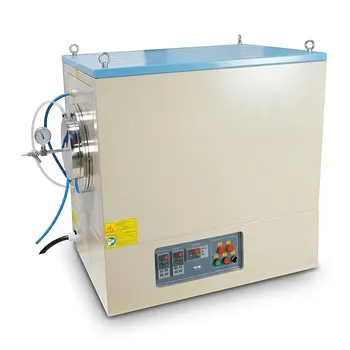
Dual Zone Tube Furnace 1100C with 11 Inch Quartz Tube and Vacuum Flanges for 8 Inch Wafer Processing
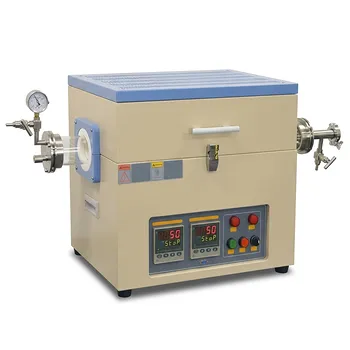
1200C Dual Zone Split Tube Furnace with Fused Quartz Tube and Vacuum Flanges Available in 60mm 80mm and 100mm Diameters
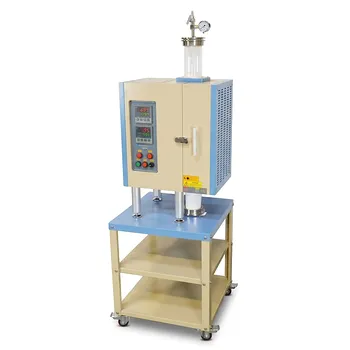
1100°C Dual Zone Split Vertical Tube Furnace with 4 Inch Quartz Tube and Vacuum Sealing Flanges
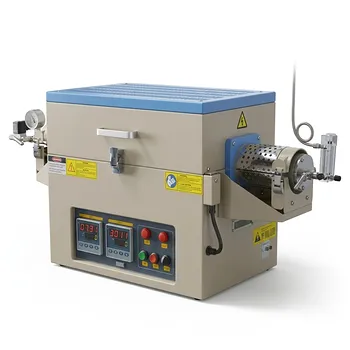
1100C Dual Zone Hydrogen Gas Tube Furnace with Quartz Tube and Integrated H2 Leak Detection System
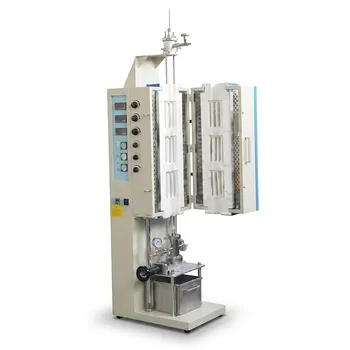
High Temperature Dual Zone Tube Furnace for Material Science Research and Professional Thermal Processing
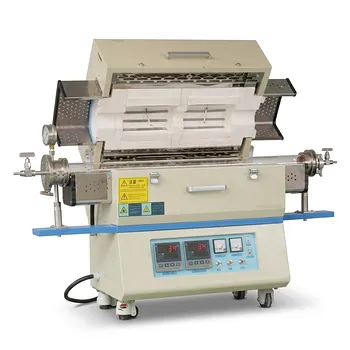
Dual Zone Split Tube Quenching Furnace with High Vacuum Atmosphere Control and Rapid Cooling
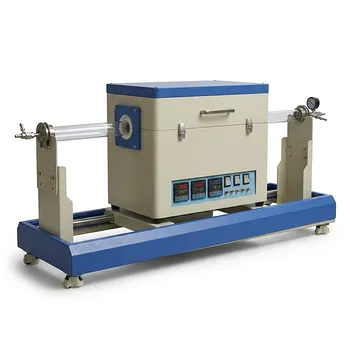
Double Temperature Zone Double Cover Tube Furnace for High Temperature CVD and Vacuum Annealing
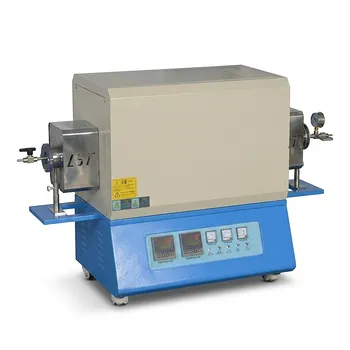
High Temperature Dual Zone Vacuum Tube Furnace for Material Research and CVD Processing
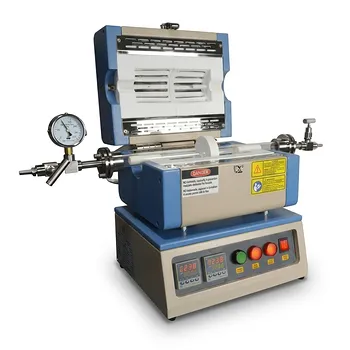
Dual Heating Zone 1200C Compact Split Tube Furnace with Optional 1" - 2" Tube and Vacuum Flanges
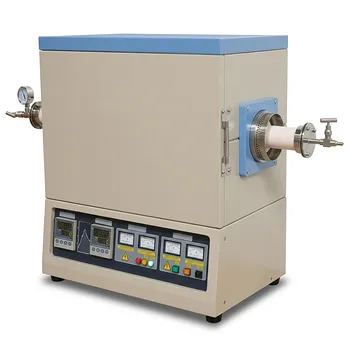
High Temperature 1700C Dual Zone Tube Furnace for Material Science and Industrial Chemical Vapor Deposition Research
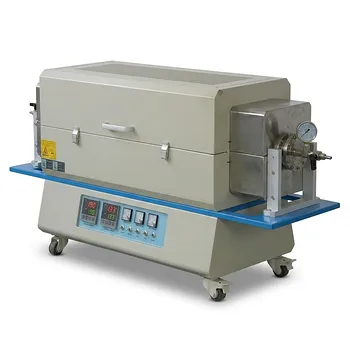
High Temperature Elongated Dual Zone Tube Furnace for Material Research and Industrial Heat Treatment
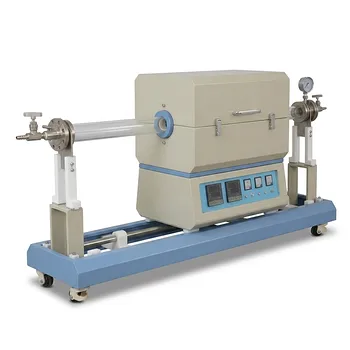
Double Zone Fast Heating Tube Furnace High Temperature Vacuum Atmosphere System
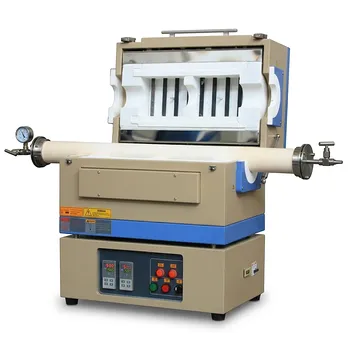
1500C Two Zone Split Tube Furnace with Vacuum Flange and 80mm Alumina Tube
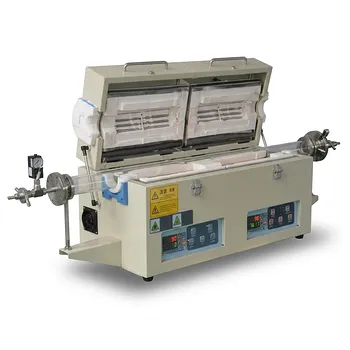
Elongated Two Temperature Zone Pipe Furnace for Industrial Heat Treatment and Material Science Research
Three Zone Tube Furnace with 11 Inch or 15 Inch Quartz Tube and Hinged Flanges for Vacuum Atmosphere Heat Treatment
High Throughput 1200C Four Channel Tube Furnace with 3 Inch Quartz Tubes for Multi Zone Annealing and Material Research
12 Zone Ultra Long Split Tube Furnace with 20 Foot Quartz Tube and 1100C Max Temperature
1200C Four Zone Split Tube Furnace with Touch Screen Control and High Purity Quartz Tube and Vacuum Sealing Flanges