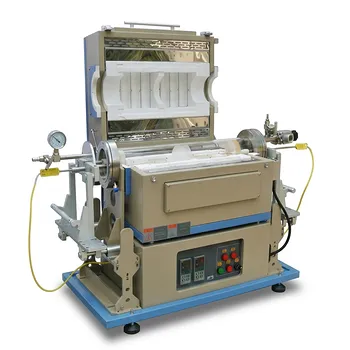
What are the advantages of using a dual-zone tube furnace for growing Ag8SiS6 single crystals? Achieve Precision Growth
Updated 3 months ago
The use of a dual-zone tube furnace is the definitive method for growing $Ag_8SiS_6$ single crystals because it allows for the precise, independent control of distinct thermal environments. By maintaining a high-temperature melting zone (1015 °C) and a lower-temperature annealing zone (640 °C), the furnace establishes a stable temperature gradient that drives directional crystallization, transforming the melt into a highly ordered single-crystal structure.
Core Takeaway: A dual-zone furnace provides the necessary thermodynamic control to bridge the gap between a chaotic melt and an ordered crystal. It serves as the primary engine for directional crystallization by establishing a stable thermal gradient that guides grain growth and ensures structural integrity.
The Mechanics of Directional Crystallization
Independent Temperature Management
A dual-zone furnace functions as two separate heating systems within a single unit. For $Ag_8SiS_6$, this allows the melting zone to stay at 1015 °C while the annealing zone is held at 640 °C.
This independence prevents thermal interference between the phases of growth. Without this separation, the temperature fluctuations in the melting zone would destabilize the delicate cooling process required for crystal formation.
Establishing the Growth Gradient
The physical gap between the two zones creates a stable temperature gradient along the quartz tube. As the material move through this gradient, it undergoes a controlled transition from liquid to solid.
This gradient acts as the "map" for the crystal. It ensures that the transition happens slowly and predictably, which is essential for the atoms to arrange themselves into the specific lattice structure of $Ag_8SiS_6$.
Enhancing Crystal Quality and Scale
Controlling Nucleation and Growth
Precision in temperature control directly determines the nucleation rate—the speed at which the first tiny crystals form. If the temperature drops too quickly, too many nuclei form, resulting in a polycrystalline mass rather than a single large crystal.
The dual-zone system allows researchers to fine-tune the cooling rate. This ensures that a single nucleus dominates the growth process, leading to larger crystal dimensions and fewer internal defects.
Thermodynamic Driving Force
In many crystal growth processes, the difference in temperature between the source and the sink provides the thermodynamic driving force. This differential moves the material (either in melt or vapor phase) toward the cooler zone where deposition occurs.
For $Ag_8SiS_6$, maintaining a precise 375 °C difference between the zones ensures the reaction proceeds at an optimal velocity. This prevents the "rushed" crystallization that often traps impurities within the crystal lattice.
Understanding the Trade-offs
Equipment Complexity and Calibration
While dual-zone furnaces offer superior control, they require rigorous calibration to ensure the "middle ground" between zones is truly stable. The overlapping heat signatures of the two zones can create "ghost gradients" if the insulation is not managed correctly.
Tube Positioning and Geometry
The physical placement of the quartz tube is critical. If the tube is not perfectly centered across the two zones, the gradient becomes asymmetrical.
This asymmetry can cause unven crystal growth or mechanical stress. Such stress often leads to cracking during the cooling phase, potentially ruining a high-quality crystal.
How to Apply This to Your Project
Making the Right Choice for Your Goal
- If your primary focus is maximizing crystal size: Utilize the dual-zone furnace to create the shallowest possible temperature gradient, allowing for extremely slow movement of the growth front.
- If your primary focus is phase purity: Use the independent controls to strictly maintain the 640 °C annealing zone, which ensures the $Ag_8SiS_6$ stabilizes in the correct polymorphic form.
- If your primary focus is high-throughput screening: A dual-zone setup allows you to test different "cool side" temperatures across multiple runs without ever altering the primary melting zone settings.
The dual-zone tube furnace is not merely a heater, but a precision instrument that dictates the structural destiny of the $Ag_8SiS_6$ crystal through mastered thermal gradients.
Summary Table:
| Feature | Benefit for Ag8SiS6 Growth | Technical Specification |
|---|---|---|
| Dual-Zone Control | Prevents thermal interference between phases | Independent 1015°C & 640°C zones |
| Thermal Gradient | Drives consistent directional crystallization | Stable 375°C temperature differential |
| Nucleation Mastery | Minimizes internal defects and maximizes size | Fine-tuned, slow cooling rates |
| Phase Stability | Ensures correct polymorphic form transition | Dedicated 640°C annealing environment |
Elevate Your Crystal Growth Precision with THERMUNITS
Achieving the perfect $Ag_8SiS_6$ single crystal requires more than just heat; it requires mastered thermal gradients. THERMUNITS is a leading manufacturer of high-temperature laboratory equipment, providing the precision tools necessary for advanced material science and industrial R&D.
Our comprehensive range of thermal solutions includes:
- Tube & Rotary Furnaces: Perfect for directional crystallization and CVD/PECVD applications.
- Specialized Systems: Vacuum, Atmosphere, Muffle, and Vacuum Induction Melting (VIM) furnaces.
- Advanced R&D Tools: Hot Press furnaces, Dental furnaces, and high-quality Thermal Elements.
Whether you are scaling up production or refining delicate laboratory processes, THERMUNITS delivers the stability and control your research demands.
Ready to optimize your heat treatment workflow?
Contact our technical experts today to find the ideal furnace solution for your specific material requirements.
References
- A.I. Pogodin, Ruslan Mariychuk. Particularities of optical behavior of Ag8SiS6 single crystal. DOI: 10.15407/spqeo27.03.280
Mentioned Products
- Dual Zone Quartz Tube Furnace with 80mm Diameter 1200C Max Temperature 3 Channel Gas Mixer and Vacuum Pump System
- Dual Zone Tube Furnace 1100C with 11 Inch Quartz Tube and Vacuum Flanges for 8 Inch Wafer Processing
- 1200C Dual Zone Split Tube Furnace with Fused Quartz Tube and Vacuum Flanges Available in 60mm 80mm and 100mm Diameters
- High Temperature Dual Zone Tube Furnace for Material Science Research and Professional Thermal Processing
- 1200C Dual Temperature Zone Slidable Tube Furnace for 2D Material Growth and TCVD Synthesis
People Also Ask
- How do dual-zone quartz tube furnaces achieve controllable material preparation? Optimize Perovskite VD Processes
- What are the technical advantages of using a dual-zone tube furnace for growing large PdCoO2 crystals via CVT? Expert Tips
- Purpose of the reverse gradient step in CVT growth? Master Crystal Purity with Dual-Zone Furnaces
- Why is it necessary to place MoS2 devices in a dual-zone tube furnace for annealing? Optimize Lattice Repair & Doping
- Why is a dual-zone tube furnace necessary for ReO3-doped Cu2Te CVD? Essential for precise precursor synchronization.

Tech Team · ThermUnits
Last updated on Jun 02, 2026
Related Products
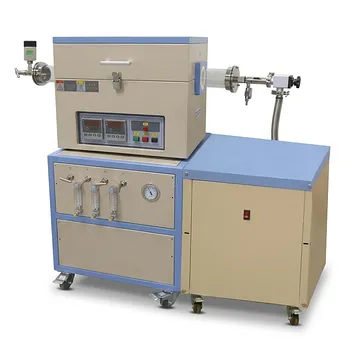
Dual Zone Quartz Tube Furnace with 80mm Diameter 1200C Max Temperature 3 Channel Gas Mixer and Vacuum Pump System
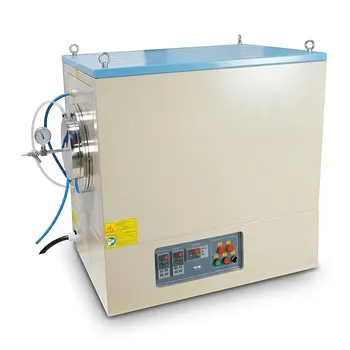
Dual Zone Tube Furnace 1100C with 11 Inch Quartz Tube and Vacuum Flanges for 8 Inch Wafer Processing
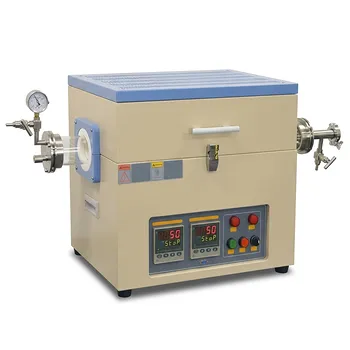
1200C Dual Zone Split Tube Furnace with Fused Quartz Tube and Vacuum Flanges Available in 60mm 80mm and 100mm Diameters
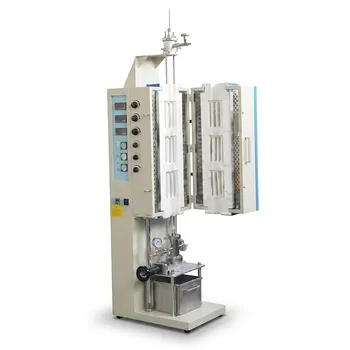
High Temperature Dual Zone Tube Furnace for Material Science Research and Professional Thermal Processing
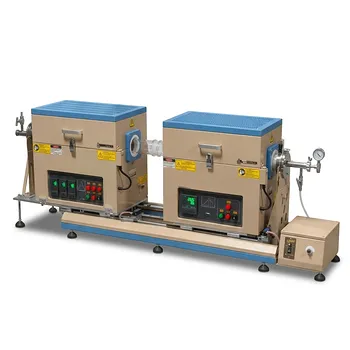
1200C Dual Temperature Zone Slidable Tube Furnace for 2D Material Growth and TCVD Synthesis
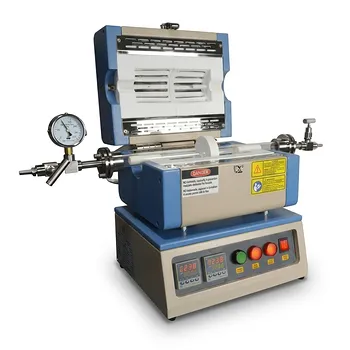
Dual Heating Zone 1200C Compact Split Tube Furnace with Optional 1" - 2" Tube and Vacuum Flanges
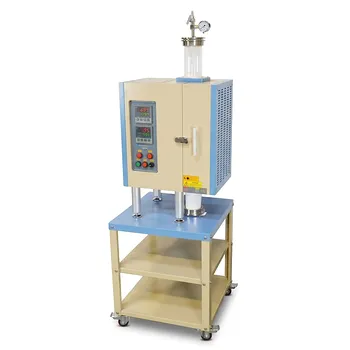
1100°C Dual Zone Split Vertical Tube Furnace with 4 Inch Quartz Tube and Vacuum Sealing Flanges
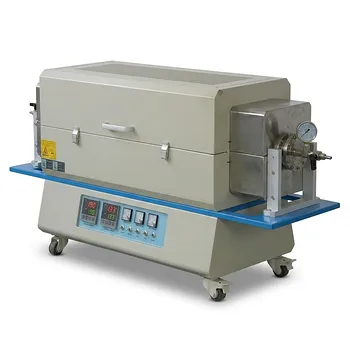
High Temperature Elongated Dual Zone Tube Furnace for Material Research and Industrial Heat Treatment
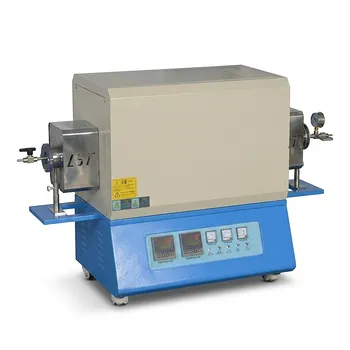
High Temperature Dual Zone Vacuum Tube Furnace for Material Research and CVD Processing
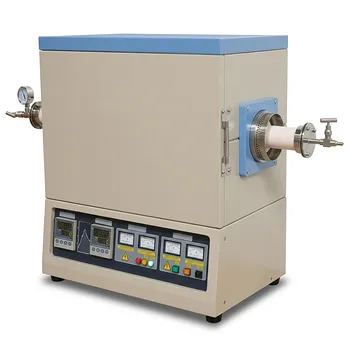
High Temperature 1700C Dual Zone Tube Furnace for Material Science and Industrial Chemical Vapor Deposition Research
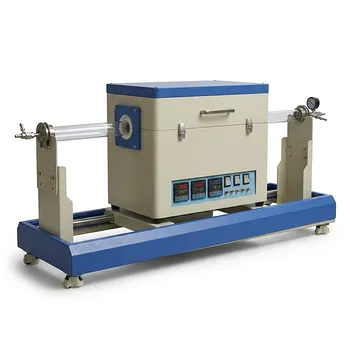
Double Temperature Zone Double Cover Tube Furnace for High Temperature CVD and Vacuum Annealing
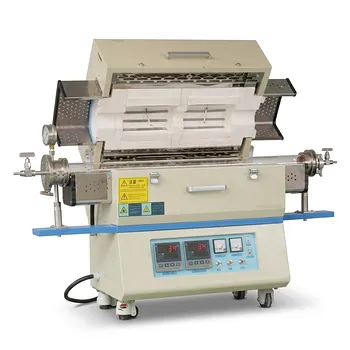
Dual Zone Split Tube Quenching Furnace with High Vacuum Atmosphere Control and Rapid Cooling
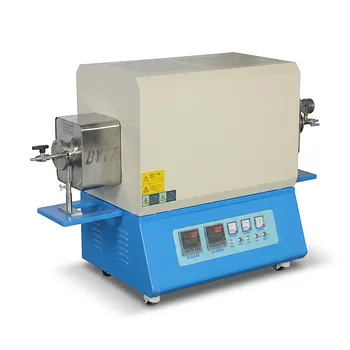
High Temperature Dual Zone Split Tube Furnace for Advanced Atmosphere Sintering and Vacuum CVD Applications
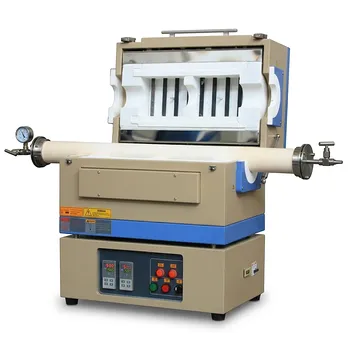
1500C Two Zone Split Tube Furnace with Vacuum Flange and 80mm Alumina Tube
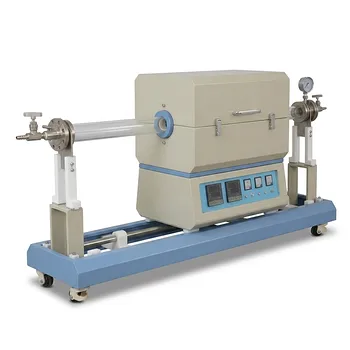
Double Zone Fast Heating Tube Furnace High Temperature Vacuum Atmosphere System
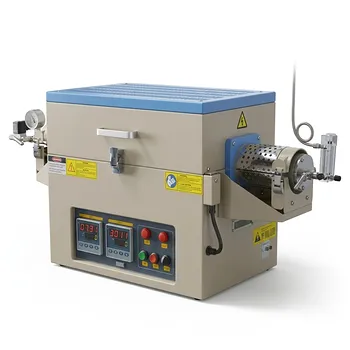
1100C Dual Zone Hydrogen Gas Tube Furnace with Quartz Tube and Integrated H2 Leak Detection System
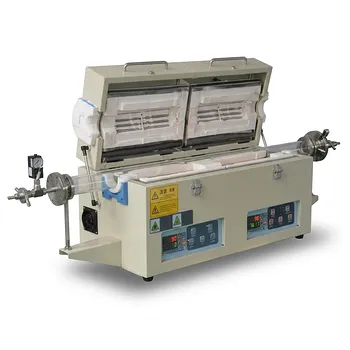
Elongated Two Temperature Zone Pipe Furnace for Industrial Heat Treatment and Material Science Research
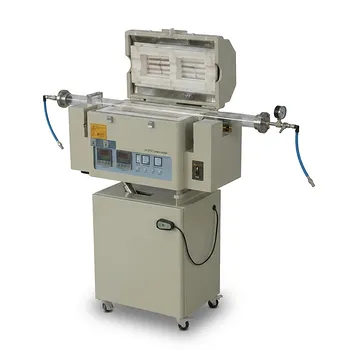
Double Temperature Revolving Tube Furnace with Precision Rotation and Adjustable Inclination for Advanced Material Research
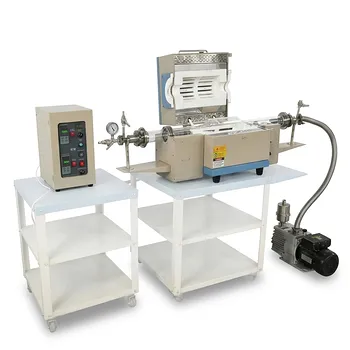
Two Zone Rotary Tube Furnace for Powder CVD Coating and Core Shell Material Synthesis 1100C