Why must high-purity alumina or quartz crucibles be used during the high-temperature synthesis of MFX:Sm2+ materials?
Updated 3 months ago
The integrity of MFX:Sm²⁺ materials depends entirely on the vessel used during synthesis. High-purity alumina or quartz crucibles are required because they possess exceptional high-temperature resistance and chemical inertness. These properties prevent the crucible from reacting with the host matrix, ensuring that no external impurities degrade the material's optical purity or its precision in temperature sensing.
To synthesize MFX:Sm²⁺ with high optical performance, the reaction vessel must remain chemically inert at extreme temperatures. High-purity alumina and quartz prevent unwanted chemical interactions and impurity leaching, which are critical for maintaining the material's delicate fluorescence properties and sensing sensitivity.
The Role of Chemical Inertness in Optical Purity
Eliminating Host-Container Reactions
During the high-temperature preparation of MFX:Sm²⁺, the host matrix is often highly reactive. High-purity alumina and quartz act as passive barriers that do not participate in the chemical transformation of the reactants.
If a standard container were used, the high heat would trigger a reaction between the MFX matrix and the vessel walls. This would fundamentally alter the chemical composition of the material, rendering it useless for precise optical applications.
Protecting the Sm²⁺ Doping Environment
The performance of MFX:Sm²⁺ relies on the specific electronic environment of the Samarium ions. Even trace amounts of leached impurities from a low-quality crucible can quench fluorescence or shift emission peaks.
By using high-purity materials, researchers ensure that the doping concentration remains exact. This precision is what allows the final material to maintain its characteristic optical signature without interference from external elements.
Thermal Stability and Structural Integrity
Resistance to Thermal Degradation
Synthesis temperatures for these materials often exceed levels where common laboratory glassware would soften or fail. High-purity alumina, for instance, maintains its structural strength at temperatures well above 1350°C and even up to 1700 K.
This thermal resilience ensures the crucible does not deform or crack during long thermal cycles. A stable vessel prevents atmospheric contamination from entering the reaction zone through structural failures.
Prevention of Elemental Infiltration
At high temperatures, elements from a container can migrate into the sample through diffusion. High-purity alumina is specifically chosen for its ability to resist erosion and infiltration by molten components or reactive precursors.
This "barrier" effect is vital for ensuring that the diffusion interface of the material remains clean. Without this protection, the resulting product would contain metallic or non-metallic "debris" that ruins its structural homogeneity.
Impact on Material Performance
Maintaining Temperature Sensing Sensitivity
MFX:Sm²⁺ materials are frequently used for advanced temperature sensing based on fluorescence. The accuracy of these sensors depends on a very specific relationship between temperature and light emission.
The introduction of even minor impurities during synthesis can distort this relationship. High-purity crucibles ensure that the temperature-dependent response remains predictable and highly sensitive.
Ensuring Compositional Accuracy
Technical applications require the material to have a very specific phase composition. Using inert vessels prevents the formation of unwanted secondary phases that could occur if the container material were to react with the precursors.
This ensures that the final product is compositionally pure, matching the theoretical models required for its intended industrial or scientific use.
Understanding the Trade-offs
The Risk of Thermal Shock
While alumina and quartz are chemically superior, they are susceptible to thermal shock. Rapid heating or cooling can cause these materials to crack, potentially ruining a synthesis run and wasting expensive precursors.
Cost vs. Contamination
High-purity crucibles are significantly more expensive than standard ceramic versions. However, attempting to save costs by using lower-grade materials almost always results in optical quenching, which necessitates re-synthesizing the entire batch.
How to Apply This to Your Project
- If your primary focus is maximum optical brightness: Use high-purity alumina to ensure zero quenching from transition metal impurities.
- If your primary focus is cost-effective prototyping at lower temperatures: Quartz may be a viable alternative, provided the synthesis temperature does not exceed its softening point.
- If your primary focus is long-term sensing stability: Prioritize high-purity alumina to prevent the slow migration of container elements into the crystal lattice over multiple heating cycles.
Choosing the correct high-purity vessel is not merely a preference, but a technical necessity for achieving the precision required in modern fluorescent materials.
Summary Table:
| Crucible Material | Key Advantage | Best Use Case | Temperature Resistance |
|---|---|---|---|
| High-Purity Alumina | Maximum chemical inertness; prevents quenching | High-brightness optical materials & long-term stability | Very High (up to 1700K+) |
| Quartz | Cost-effective; high purity | Prototyping and lower-temperature synthesis | Moderate (up to softening point) |
| Standard Ceramic | Low cost | General heating (Not recommended for MFX:Sm²⁺) | Variable (Risk of contamination) |
Elevate Your Material Research with THERMUNITS
Precision in high-temperature synthesis requires more than just the right crucible—it requires a perfectly controlled thermal environment. THERMUNITS is a leading manufacturer of high-performance laboratory equipment dedicated to material science and industrial R&D.
Whether you are synthesizing sensitive MFX:Sm²⁺ materials or developing next-generation ceramics, our comprehensive range of thermal solutions—including Muffle, Vacuum, Atmosphere, Tube, and Rotary Furnaces, as well as CVD/PECVD systems and Vacuum Induction Melting (VIM) furnaces—provides the stability and accuracy your project demands.
Why partner with THERMUNITS?
- Unmatched Precision: Maintain exact doping environments for sensitive optical materials.
- Versatile Solutions: From dental and hot press furnaces to specialized thermal elements.
- Expert Support: Our equipment is designed to meet the rigorous standards of modern heat treatment.
Ready to enhance your lab's efficiency and ensure compositional purity? Contact our technical team today to find the ideal furnace solution for your R&D needs!
References
- L. Cui, Andries Meijerink. High-sensitivity luminescent temperature sensors: MFX:1%Sm <sup>2+</sup> (M = Sr, Ba, X = Cl, Br). DOI: 10.1126/sciadv.ado7737
Mentioned Products
- High Temperature 1700C Benchtop Tube Furnace with 5 Inch Heating Zone High Purity Alumina Tube and Vacuum Sealing Flanges
- 600°C Vertical Crucible Furnace with SS316 Alloy Reactor and 6 Port Vacuum Flange
- 1100C High Temperature Vacuum Crucible Furnace with Quartz Chamber for Thermal Processing and Sintering
- High Temperature Vertical Crucible Furnace with 22L Heating Chamber and 1200C Maximum Temperature
- Vertical Crucible Furnace 1000C High Temperature Laboratory Equipment 4.7 Inch Diameter Chamber SS316 Anti Corrosive Enclosure
People Also Ask
- How are high-temperature tube furnaces utilized to repair etching damage? Precision Lattice Restoration Solutions
- What is the function of a high-temperature tube furnace in the synthesis of g-C3N4? Optimize Thermal Polycondensation
- What impact does the heating rate of a tube furnace have on biochar microstructure? Optimize Your Material R&D.
- What is the role of a high-temperature tube furnace in the calcination process of ZnO/In2O3 nanocomposites?
- Conditions for nZVI Synthesis in Tube Furnaces? Learn to Optimize Thermal and Atmospheric Control for High Purity.

Tech Team · ThermUnits
Last updated on Jun 03, 2026
Related Products

High Temperature 1700C Benchtop Tube Furnace with 5 Inch Heating Zone High Purity Alumina Tube and Vacuum Sealing Flanges
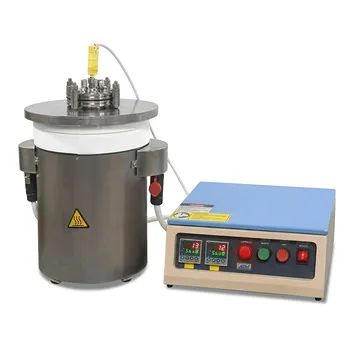
600°C Vertical Crucible Furnace with SS316 Alloy Reactor and 6 Port Vacuum Flange
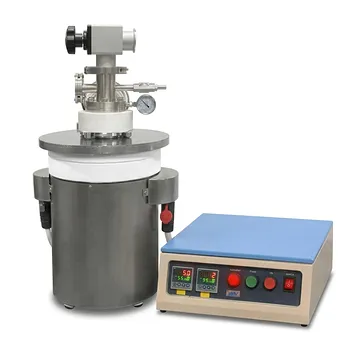
1100C High Temperature Vacuum Crucible Furnace with Quartz Chamber for Thermal Processing and Sintering
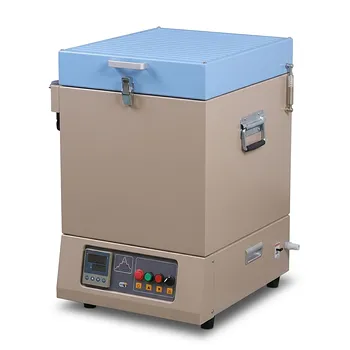
High Temperature Vertical Crucible Furnace with 22L Heating Chamber and 1200C Maximum Temperature
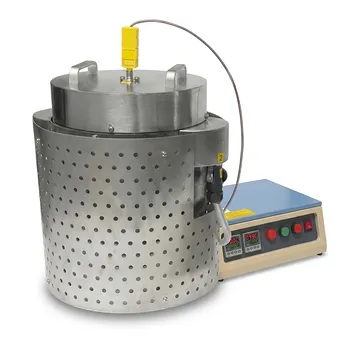
Vertical Crucible Furnace 1000C High Temperature Laboratory Equipment 4.7 Inch Diameter Chamber SS316 Anti Corrosive Enclosure
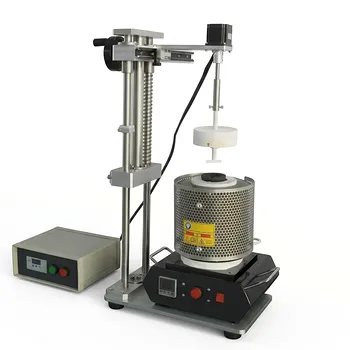
1100C Crucible Melting Furnace with Stirring Function for Glovebox and Air Sensitive Alloy Research
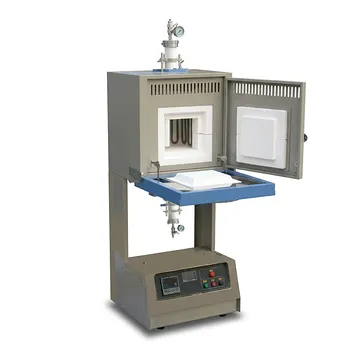
Vertical Hybrid High Temperature Furnace 1500C Alumina Tube SOFC Fuel Cell Testing Laboratory Heat Treatment Research Equipment
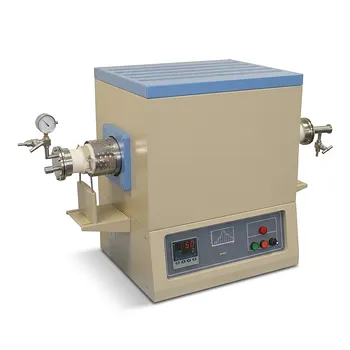
1700C High Temperature Alumina Tube Furnace with 18 Inch Heated Zone and Vacuum Sealing Flanges
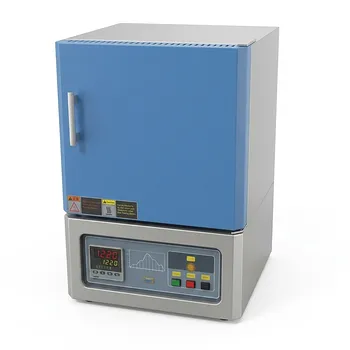
High Temperature Benchtop Muffle Furnace 1700C 10L Chamber Alumina Fiber Insulation MoSi2 Heating Elements
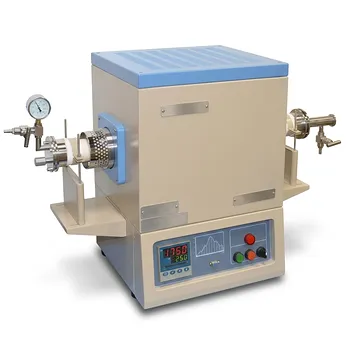
High Temperature Compact Vacuum Tube Furnace 1750C Max 60mm OD Alumina Tube
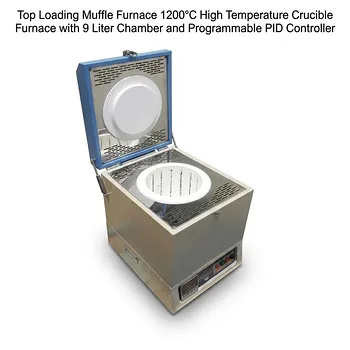
Top Loading Muffle Furnace 1200°C High Temperature Crucible Furnace with 9 Liter Chamber and Programmable PID Controller
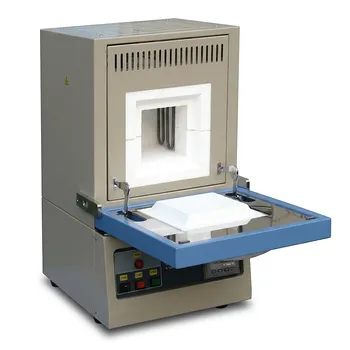
High Temperature 1800C Compact Muffle Furnace with Kanthal Super 1900 Heating Elements and 1.7L Alumina Chamber

Compact High Temperature 1600C Tube Furnace with 50mm Alumina Tube and Vacuum Flanges for Material Sintering

1800C High Temperature Compact Vacuum Tube Furnace with 60mm OD Alumina Tube and Kanthal MoSi2 Heating Elements
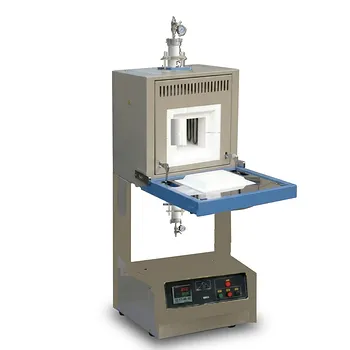
High Temperature Vertical Hybrid Furnace with Alumina Tube and SiC Heating for SOFC Coin Cell Testing and Atmosphere Processing
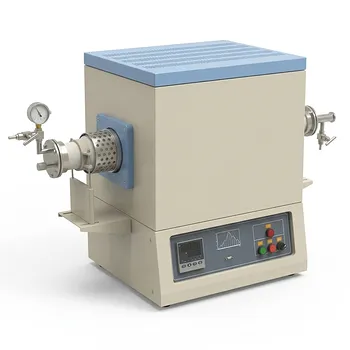
1750°C High Temperature Benchtop Vacuum Atmosphere Tube Furnace with Kanthal Super 1800 Heating Elements and 60mm Alumina Processing Tube
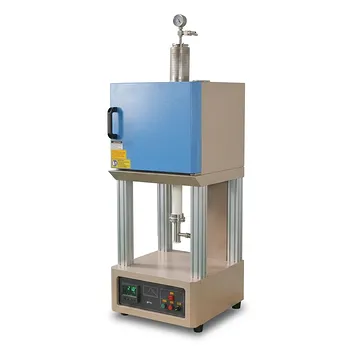
Hybrid High Temperature Tube and Box Furnace 1700C with 2 Inch Alumina Tube for Material Research
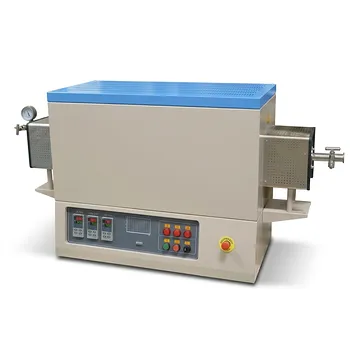
Three Zone Alumina Tube Furnace with Vacuum Flanges High Temperature 1700C Thermal Gradient CVD System
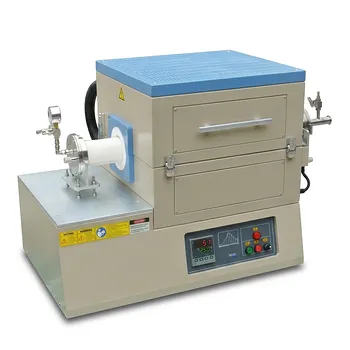
High Temperature 1700C Split Tube Furnace with Vacuum Flanges Valves and 60mm Alumina Tube