Controlled Chaos: The Engineering Logic of Ammonia Nitridation
May 14, 2026
The Precision of Small Gains
In material science, success is rarely a matter of luck. It is a matter of control. To transform a carbonized cobalt framework into a high-performance catalyst, one must navigate a tightrope of chemical and thermal variables.
The goal is simple but difficult: convert residual cobalt metal into cobalt nitride ($\text{Co}_4\text{N}$). This phase transformation is the "secret sauce" for electrochemical activity.
Yet, achieving this requires more than just heat. It requires a specific, reductive, and active environment that only a closed-flow tube furnace can provide.
The Dual Identity of Ammonia
Most gases do one thing. Ammonia ($\text{NH}_3$) is different. In the context of a tube furnace, it performs two distinct roles simultaneously.
The Reducing Agent
At temperatures around 300 °C, ammonia acts as a chemical cleaner. It manages the oxidation state of the cobalt, stripping away unwanted oxygen to prepare the metal for its next phase.
The Nitrogen Source
As it acts, it also delivers. It provides the active nitrogen necessary for the in-situ transition of the metal into nanoparticles.
This is not a peripheral reaction. It is a fundamental metamorphosis. By embedding the nitrogen exactly where the metal resides, the framework gains a level of catalytic power that surface-level treatments cannot match.
Engineering the Ideal Environment
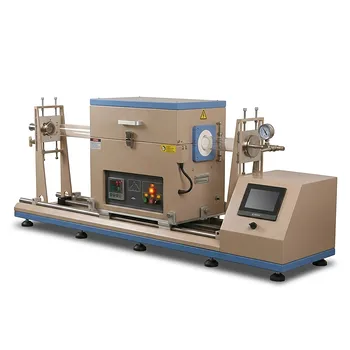
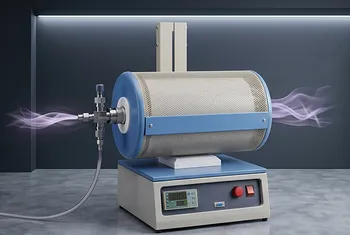
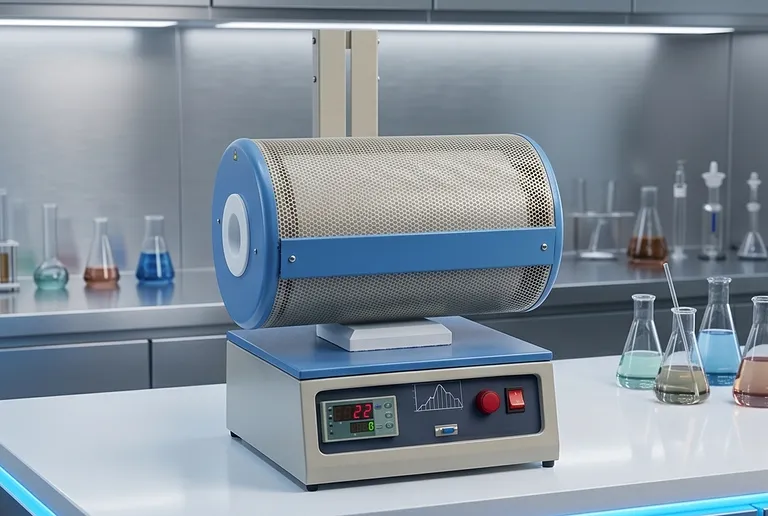
A tube furnace is not just a heater; it is a reactor. Its design addresses the three fundamental frictions of high-temperature chemistry:
- Uniformity: The sealed-flow design ensures that every millimeter of the carbon framework is exposed to the same concentration of ammonia.
- Stability: Precision controllers maintain heating rates (like 10 °C/min) with robotic accuracy. This protects the microscopic pore structure of the framework.
- Purity: The continuous sweep of gas removes volatile impurities—by-products that would otherwise "choke" the reaction interface.
The Psychology of the Trade-off
In engineering, every advantage comes with a price. Using ammonia is an exercise in risk management.
Ammonia is corrosive and toxic. It requires specialized exhaust scrubbing and uncompromising seal integrity. In a low-quality furnace, a single leak doesn't just ruin the sample via oxidative combustion; it compromises the safety of the entire laboratory.
Furthermore, there is the "Temperature Window." Heat the sample too high, and the nitride phase decomposes. Heat it too low, and the reaction stalls. The difference between a world-class catalyst and industrial waste is often a margin of just a few degrees.
Comparison of Process Dynamics
| Process Factor | Requirement | Impact on Final Material |
|---|---|---|
| Atmosphere Seal | Absolute (Quartz Tube) | Prevents oxidation of the carbon matrix |
| Flow Dynamics | Continuous & Controlled | Ensures uniform $\text{Co}_4\text{N}$ distribution |
| Thermal Gradient | Static & Programmable | Preserves the integrity of the micro-pores |
| By-product Removal | Active Gas Displacement | Maintains a clean reaction interface |
The Infrastructure of Discovery
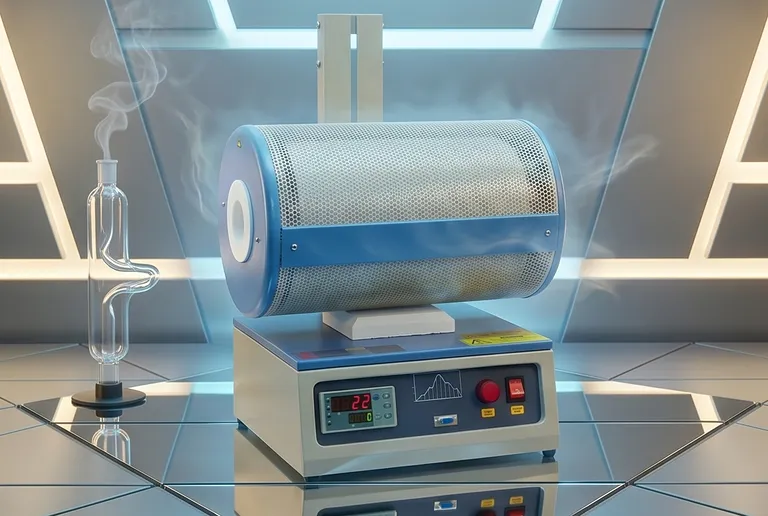
At THERMUNITS, we understand that the tools shouldn't be the bottleneck of your research.
Our tube and atmosphere furnaces are designed for the "Engineer's Ideal"—equipment that maintains perfect atmospheric integrity while offering the ruggedness to handle corrosive gases like ammonia.
From Muffle and Vacuum furnaces to advanced Rotary kilns and CVD systems, we provide the thermal processing infrastructure required for the world’s most demanding R&D environments. We don't just build furnaces; we build the controlled environments where the next generation of materials is born.
Is your current setup capable of the precision required for high-activity nitridation?
Quick Links
Suggested Products
Vertical 1700C Vacuum and Atmosphere Tube Furnace with 80mm Alumina Tube Compact High Temperature 1600C Tube Furnace with 50mm Alumina Tube and Vacuum Flanges for Material Sintering 900°C Max Rotary Tube Furnace with 8 Inch 310S Alloy Tube and Optional Multi Zone Heating for Industrial Material Calcination Split Vertical Tube Furnace with 1200C Quartz Tube and Stainless Steel Vacuum Flanges for Rapid Thermal Processing High Temperature 1700C Tube Furnace with High Vacuum Turbomolecular Pump System and Multi Channel Mass Flow Controller Gas MixerFurther Reading
The Silent Guardian of Kinetics: The Engineering Logic Behind Stable Molten Salt Environments The Architecture of Isolation: Why Atmosphere Defines Material Destiny The Invisible Architect: Precision Thermal Oxidation in NiO@Ni Synthesis The Architecture of Thrifty Precision: Why Tube Furnaces Define the R&D Continuity The Architect of Atoms: Why Precision is the Only Currency in TMD Synthesis
ThermUnits
Last updated on Apr 15, 2026
Related Products

Vertical 1700C Vacuum and Atmosphere Tube Furnace with 80mm Alumina Tube

Compact High Temperature 1600C Tube Furnace with 50mm Alumina Tube and Vacuum Flanges for Material Sintering
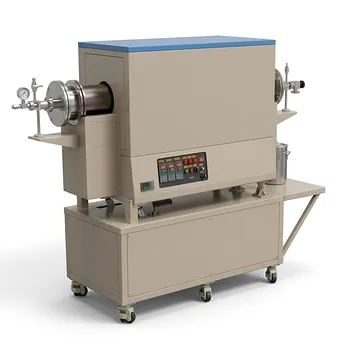
900°C Max Rotary Tube Furnace with 8 Inch 310S Alloy Tube and Optional Multi Zone Heating for Industrial Material Calcination
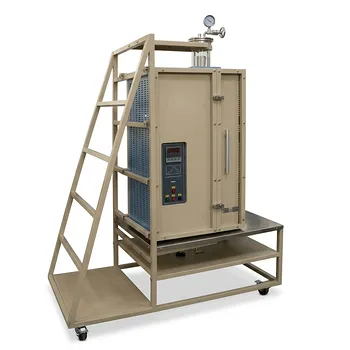
Split Vertical Tube Furnace with 1200C Quartz Tube and Stainless Steel Vacuum Flanges for Rapid Thermal Processing

High Temperature 1700C Tube Furnace with High Vacuum Turbomolecular Pump System and Multi Channel Mass Flow Controller Gas Mixer
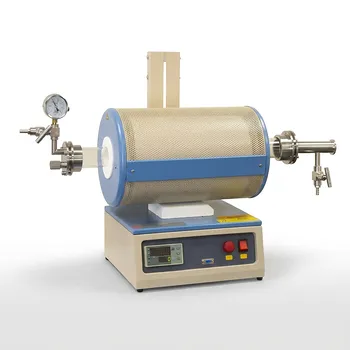
1100C Tube Furnace with Vacuum Flange and Programmable Temperature Controller for Material Science and Industrial Heat Treatment
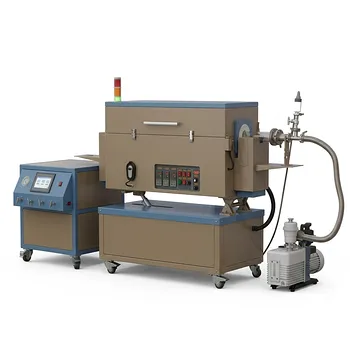
5 Inch Three Zone Rotary Tube Furnace with Integrated Gas Delivery System and 1200C Capability for Advanced Material CVD Processing

1200°C 5 Inch Vertical Quartz Tube Furnace with Stainless Steel Vacuum Flanges
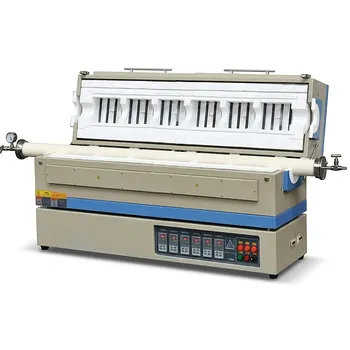
High Temperature 1700C Six Zone Split Tube Furnace with Alumina Tube and Water Cooled Flanges
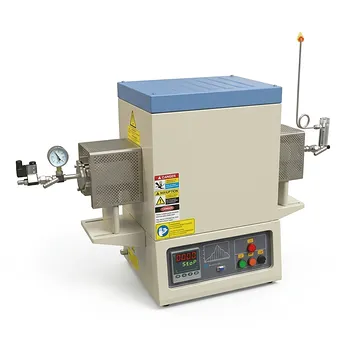
1700C Hydrogen Gas Tube Furnace with 60mm Alumina Process Tube and Integrated Hydrogen Safety Detector
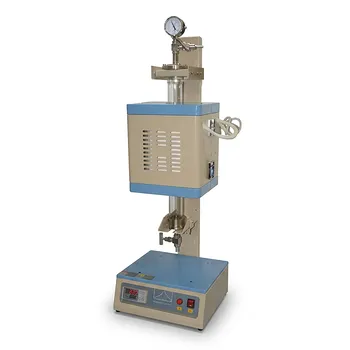
Compact Vertical Split Quartz Tube Furnace with Stainless Steel Vacuum Flanges for Rapid Thermal Quenching and Controlled Atmosphere Material Processing
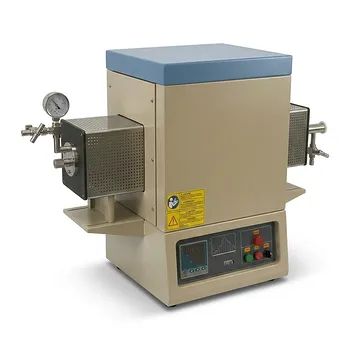
High Temperature 1700C Benchtop Tube Furnace with 5 Inch Heating Zone High Purity Alumina Tube and Vacuum Sealing Flanges
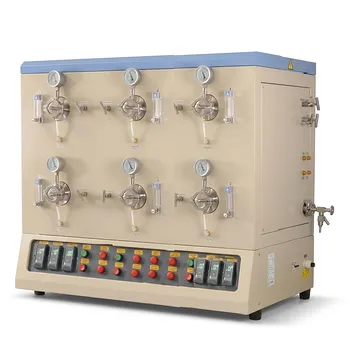
1200C High Throughput Multi Channel Tube Furnace with 50mm Quartz Tubes for Annealing and Material Phase Diagram Research

1800C High Temperature Compact Vacuum Tube Furnace with 60mm OD Alumina Tube and Kanthal MoSi2 Heating Elements
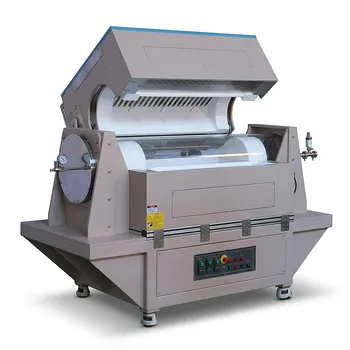
Three Zone Tube Furnace with 11 Inch or 15 Inch Quartz Tube and Hinged Flanges for Vacuum Atmosphere Heat Treatment

High Temperature 1700C Vertical Tube Furnace for Powder Spherification and Material Sintering
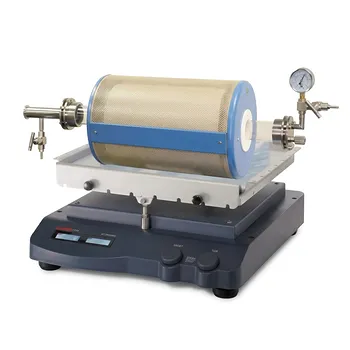
High Temperature Rocking Tube Furnace with Quartz Tube and Vacuum Flange for Materials Synthesis

High Temperature Automated 5 Inch Tube Furnace for Autonomous Material Research and Advanced Laboratory R&D
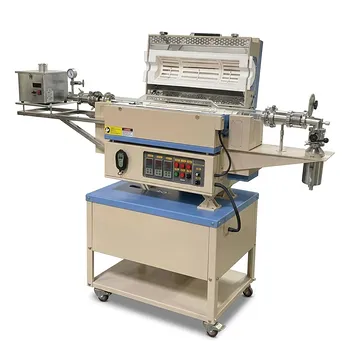
5 Inch Rotary Tube Furnace with Automatic Feeding and Receiving System 1200C Three Zone CVD Powder Processing