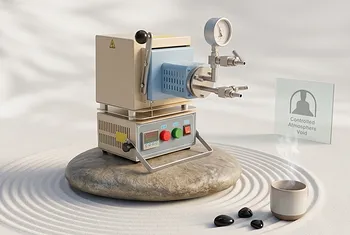
The Engineering of Silence: Why Vacuum Environments Define Biochar Performance
Apr 27, 2026
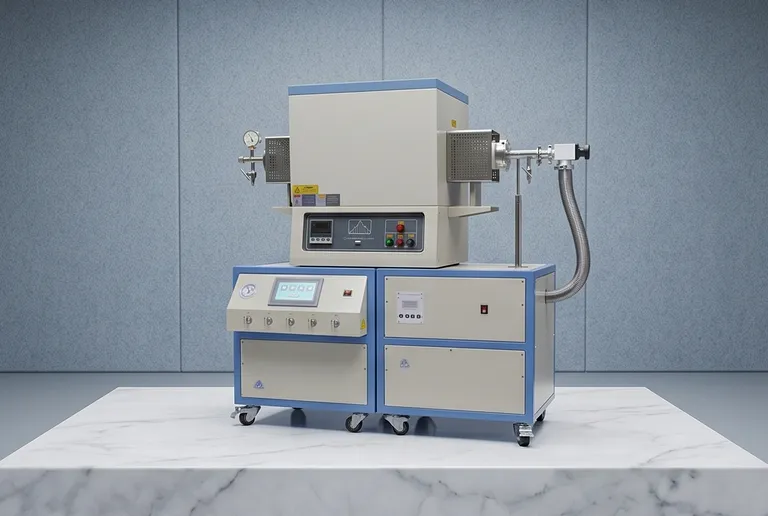
In the world of material science, we often treat heat as a blunt instrument. We assume that if we apply enough energy for long enough, the precursor will eventually submit to its final form.
But for complex precursors like garlic skin, heat is a double-edged sword. In a standard furnace, the very process of transformation can become the cause of failure.
Turning agricultural waste into high-performance biochar isn't just about burning; it is about the precise management of what leaves the material and what is allowed to stay. This is why the vacuum tube furnace has emerged not just as a tool, but as a necessity.
The Architecture of Open Space
The primary challenge in pyrolysis is internal traffic. As garlic skins break down, they release a storm of volatile gases. In a conventional atmospheric furnace, these gases linger. They collide, re-react, and eventually "precipitate" back onto the carbon skeleton.
This secondary reaction is the silent killer of surface area. It clogs the emerging pore network, turning what should have been a porous "sponge" for pollutants into a sealed, inactive brick.
Shortening the Residence Time
A vacuum environment changes the physics of the chamber. By maintaining low pressure, the furnace effectively "pulls" these volatiles away from the material surface the moment they are born.
- Result: Internal channels remain open.
- Outcome: A biochar with significantly higher adsorption activity.
The Strategy of Weak Carbonization
In engineering, we often equate "more" with "better"—higher temperatures, longer durations, more intensity. However, biochar synthesis requires the psychological restraint of Weak Carbonization.
The goal is to transform the organic precursor into a stable carbon form without destroying the inherent nitrogen (N) and oxygen (O) functional groups. These groups are the chemical "hands" of the biochar, allowing it to grab heavy metals or catalyze reactions.
Preserving the Chemistry
Standard pyrolysis often over-processes the carbon, stripping away these vital functional groups in a pursuit of pure carbon. A vacuum tube furnace allows for:
- Lower Decomposition Temperatures: Volatiles escape at lower energy thresholds.
- Inert Shielding: The ability to introduce high-purity nitrogen creates a sterile, oxygen-free environment.
- Chemical Retention: The preservation of active surface chemistry that would otherwise be lost to oxidative combustion.
Thermal Precision as a Safety System
If the vacuum manages the atmosphere, thermal control manages the soul of the material. The degradation of hemicellulose and lignin occurs at specific, narrow temperature windows.
A "hot spot" in a low-quality furnace isn't just a technical flaw; it’s a localized failure of the material's integrity. Uniformity is the difference between a high-value catalyst and a batch of charcoal.
| Technical Feature | Engineering Impact | Research Outcome |
|---|---|---|
| Vacuum Pressure | Rapid volatile evacuation | Prevents pore occlusion |
| Nitrogen Shielding | Zero-oxygen environment | Prevents oxidative loss |
| Quartz Tube Housing | Exceptional thermal uniformity | Consistent carbon skeleton |
| Controlled Ramp Rates | Managed degradation timing | Peak functional group retention |
The Trade-off of Complexity
Precision is never free. A vacuum tube furnace is a sophisticated system of seals, pumps, and thermal sensors. It requires a mindset that values repeatable quality over raw volume.
For the researcher or the R&D engineer, the complexity is a fair price for the ability to "engineer" a material from the pore-up. When you control the vacuum, you control the destiny of the surface.
Elevating Your Synthesis with THERMUNITS
At THERMUNITS, we understand that the difference between "waste" and "high-performance material" lies in the degree of control you exert over the environment. We design our thermal systems to be the silent partners in your discovery process.
Our expertise spans the entire spectrum of thermal processing:
- Vacuum & Atmosphere Tube Furnaces: Designed for the delicate pyrolysis of biomass and specialized carbonization.
- CVD/PECVD Systems: For advanced surface functionalization.
- VIM & Hot Press Furnaces: For high-integrity material melting and bonding.
Whether you are seeking to optimize the pore structure of biochar or develop the next generation of energy storage materials, our systems provide the stability and precision required for world-class R&D.
To discuss how our vacuum thermal solutions can refine your specific pyrolysis protocols, Contact Our Experts.
Quick Links
Suggested Products
1800C High Temperature Compact Vacuum Tube Furnace with 60mm OD Alumina Tube and Kanthal MoSi2 Heating Elements High Vacuum Compact Tube Furnace 1200C with Integrated Turbo Pump System and 8 Inch Heating Zone 500C Vacuum Vertical Tube Furnace 84mm OD Sample Rotation Lifting System 1750°C High Temperature Benchtop Vacuum Atmosphere Tube Furnace with Kanthal Super 1800 Heating Elements and 60mm Alumina Processing Tube 1200C High Temperature 5 Inch Split Vacuum Tube Furnace with 12 Inch Heating Zone and Separated PID ControllerFurther Reading
The Architecture of Absence: Why Atmosphere Control Defines the Fate of Mesoporous Carbon The Geometry of Heat: Engineering Magnetic Biochar Through Controlled Pyrolysis The Quiet Architect: Why the Vacuum Tube Furnace Dictates the Fate of Carbon Nanoboxes The Thermodynamic Sanctuary: Managing Atomic Migration in High-Vacuum Furnaces The Architecture of Isolation: Why Atmosphere Defines Material Destiny
ThermUnits
Last updated on Apr 15, 2026
Related Products

1800C High Temperature Compact Vacuum Tube Furnace with 60mm OD Alumina Tube and Kanthal MoSi2 Heating Elements
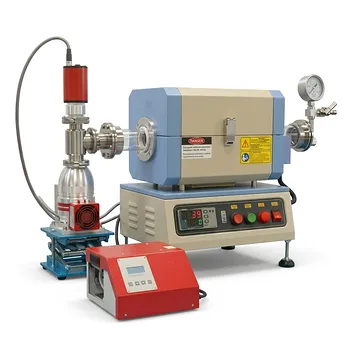
High Vacuum Compact Tube Furnace 1200C with Integrated Turbo Pump System and 8 Inch Heating Zone
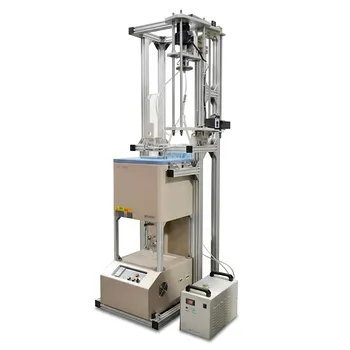
500C Vacuum Vertical Tube Furnace 84mm OD Sample Rotation Lifting System

1750°C High Temperature Benchtop Vacuum Atmosphere Tube Furnace with Kanthal Super 1800 Heating Elements and 60mm Alumina Processing Tube
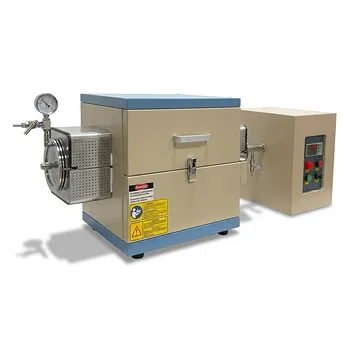
1200C High Temperature 5 Inch Split Vacuum Tube Furnace with 12 Inch Heating Zone and Separated PID Controller
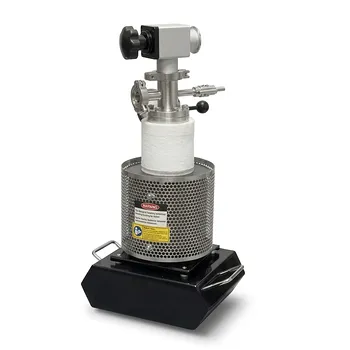
High Temperature 1100C Compact Top Loading Vertical Vacuum Tube Furnace for High Vacuum Noble Metal Melting and Material Research
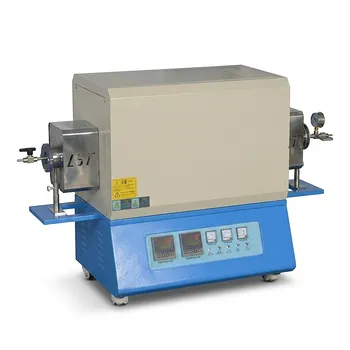
High Temperature Dual Zone Vacuum Tube Furnace for Material Research and CVD Processing

High Temperature 1700C Tube Furnace with High Vacuum Turbomolecular Pump System and Multi Channel Mass Flow Controller Gas Mixer

Vertical 1700C Vacuum and Atmosphere Tube Furnace with 80mm Alumina Tube
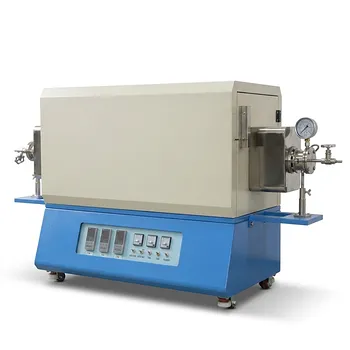
Three Temperature Zone High Temperature Vacuum Tube Furnace for CVD and Material Sintering

1100C Tube Furnace with Vacuum Flange and Programmable Temperature Controller for Material Science and Industrial Heat Treatment
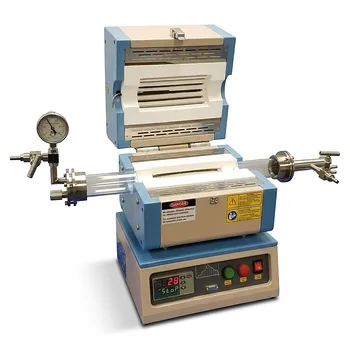
Compact Split Tube Furnace with Integrated Vacuum System and Precision Temperature Calibrator
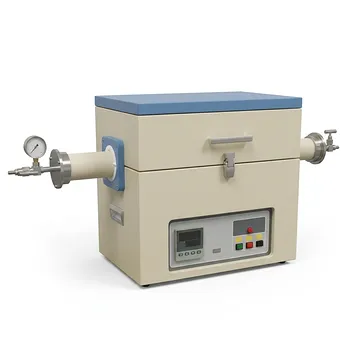
1250C Split Tube Furnace with 3 Inch Mullite Tube and Vacuum Sealing Flanges for Precision Thermal Processing
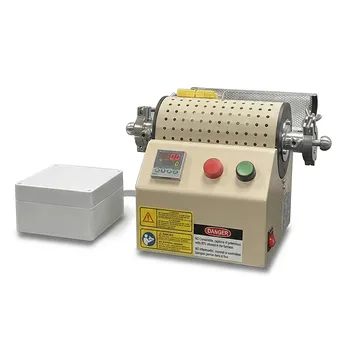
1000C Mini Tube Furnace with 20mm Quartz Tube and Vacuum Flanges for Material Science Research and Controlled Atmosphere Small Sample Processing

Compact High Temperature 1600C Tube Furnace with 50mm Alumina Tube and Vacuum Flanges for Material Sintering

Compact Vertical Split Quartz Tube Furnace with Stainless Steel Vacuum Flanges for Rapid Thermal Quenching and Controlled Atmosphere Material Processing
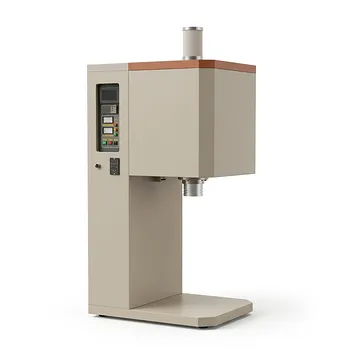
Vertical Openable Tube Furnace 0-1700c High Temperature Laboratory System for CVD and Vacuum Heat Treatment
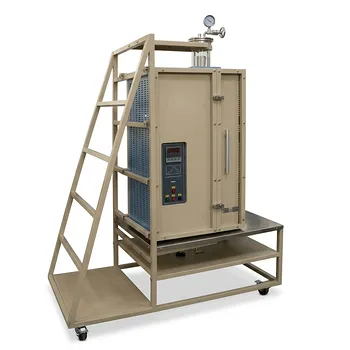
Split Vertical Tube Furnace with 1200C Quartz Tube and Stainless Steel Vacuum Flanges for Rapid Thermal Processing

High Temperature 1700C Six Zone Split Tube Furnace with Alumina Tube and Water Cooled Flanges