The Quiet Architect: Why the Vacuum Tube Furnace Dictates the Fate of Carbon Nanoboxes
May 22, 2026
The Invisible Scaffolding of the Microscopic
In material science, we often focus on the precursor—the chemical blueprint. Yet, in the synthesis of Nitrogen-functionalized Carbon Nanoboxes (NCB), the blueprint is useless without the right environment.
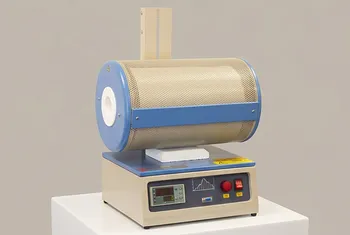
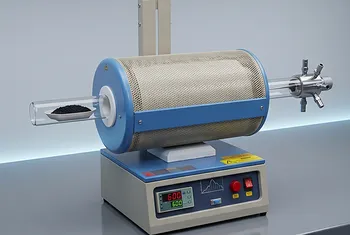
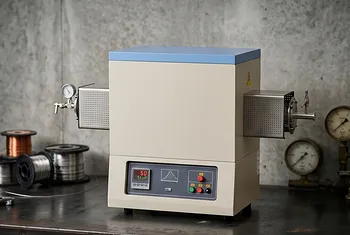
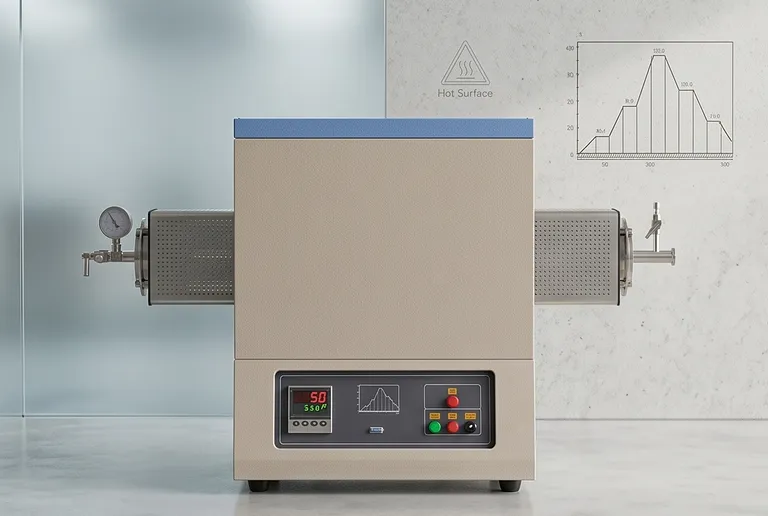
The High Vacuum Tube Furnace is more than a heater; it is the physical manifestation of control. It provides the "invisible scaffolding" where acetonitrile molecules are dismantled and reconstructed into hollow, conductive geometries.
To build at the nanoscale, we must first master the macro-scale environment: temperature, pressure, and purity.
The Threshold of Transformation: Pyrolysis at 900 °C
At 900 °C, materials behave differently. This is the specific thermal threshold required for acetonitrile to undergo pyrolysis—the chemical decomposition by heat in the absence of oxygen.
The Physics of Molecular Dismantling
- Bond Cleavage: The furnace provides the kinetic energy to break C-H and C-N bonds.
- Atomic Migration: Once broken, carbon and nitrogen atoms must remain mobile enough to "find their place" on the template.
- Energy Consistency: If the temperature dips even by 10 degrees, the decomposition is incomplete, leading to "amorphous soot" rather than structured shells.
The Margin of Error: Why Uniformity is Non-Negotiable
In complex systems, the average result is often less important than the variance. In a tube furnace, the "Hot Zone" must be remarkably stable.
If one side of your template is at 900 °C and the other is at 885 °C, the resulting nanoboxes will have varying wall thicknesses. This structural inconsistency ruins the electrical conductivity of the batch.
A high-performance furnace ensures that the temperature field is uniform, allowing the nitrogen atoms to integrate into the carbon lattice at a predictable, rhythmic rate. This is the difference between a high-order hexagonal lattice and a chaotic structural collapse.
The Battle Against Entropy: The Role of the High Vacuum
The term "High Vacuum" sounds like a technical specification, but for an engineer, it is a survival mechanism for the material.
Preventing the Combustion Event
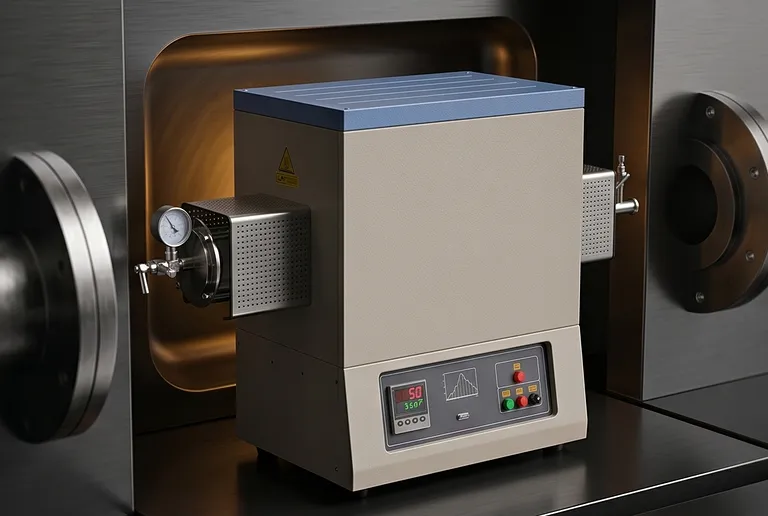
Carbon structures at 900 °C have an aggressive affinity for oxygen. A single leak in the system doesn't just "contaminate" the experiment; it causes the carbon to combust.
Purity as a Function of Seal
- Eliminating Impurities: High vacuum removes residual gases that could introduce unintended functional groups.
- Controlled Atmosphere: It allows the precise introduction of carrier gases to transport pyrolyzed atoms without interference.
- Surface Integrity: Ensuring the nitrogen-doped carbon shell forms purely on the template, not around airborne particulates.
The Technical Synthesis of Performance
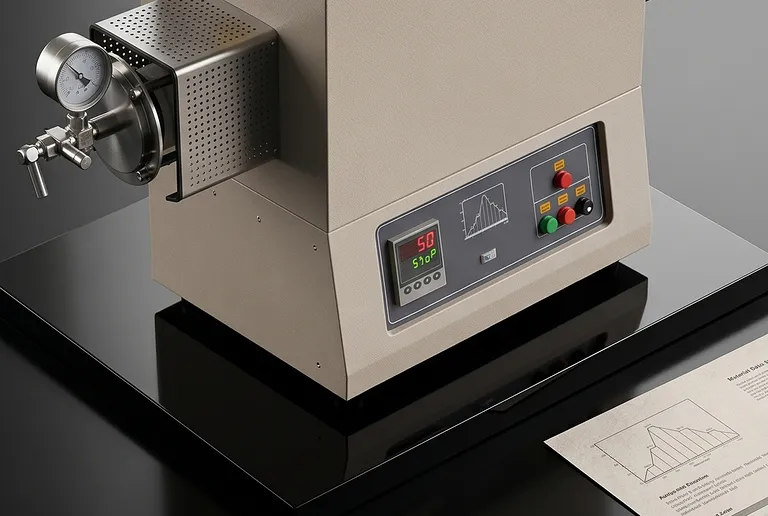
The relationship between the equipment and the output can be summarized by the trade-offs we choose to accept.
| Technical Variable | Functional Impact | Consequence of Failure |
|---|---|---|
| Thermal Stability | Promotes Graphitization | Poor Electrical Conductivity |
| Vacuum Level | Prevents Oxidation | Material Loss (Combustion) |
| Gas Flow Control | Uniform Deposition | Collapsed Nanobox Geometry |
| Cooling Rate | Minimizes Thermal Shock | Cracking of the Carbon Shell |
Mastering the Thermal Environment
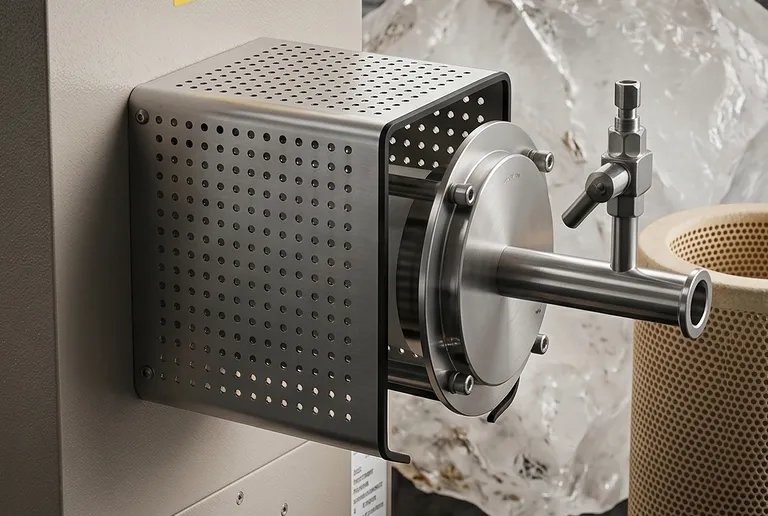
Success in NCB synthesis is fundamentally a struggle for precision. If your goal is maximum electrical conductivity, your furnace must be a master of graphitization—maintaining the heat long enough for atoms to settle into a perfect hexagonal array.
If your goal is material purity, your furnace must be a fortress—preventing even a single molecule of oxygen from entering the reaction zone.
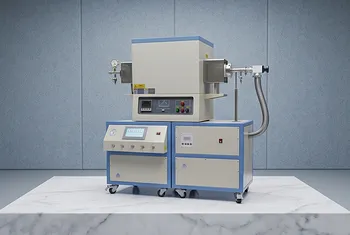
At THERMUNITS, we understand that a furnace is the heart of the R&D lab. We design our CVD/PECVD systems and High Vacuum Tube Furnaces to remove the variables that cause experiments to fail. Whether you are scaling up industrial production or refining a new material in a university lab, our systems provide the thermal stability and vacuum integrity required for the next generation of carbon nanostructures.
From Muffle and Vacuum furnaces to advanced Dental and Rotary kilns, we provide the tools that turn chemical precursors into technological breakthroughs.
Quick Links
Suggested Products
1800C High Temperature Compact Vacuum Tube Furnace with 60mm OD Alumina Tube and Kanthal MoSi2 Heating Elements High Vacuum Compact Tube Furnace 1200C with Integrated Turbo Pump System and 8 Inch Heating Zone 500C Vacuum Vertical Tube Furnace 84mm OD Sample Rotation Lifting System 1750°C High Temperature Benchtop Vacuum Atmosphere Tube Furnace with Kanthal Super 1800 Heating Elements and 60mm Alumina Processing Tube 1200C High Temperature 5 Inch Split Vacuum Tube Furnace with 12 Inch Heating Zone and Separated PID ControllerFurther Reading
The Architecture of Absence: Why Atmosphere Control Defines the Fate of Mesoporous Carbon The Geometry of Heat: Engineering Magnetic Biochar Through Controlled Pyrolysis The Engineering of Silence: Why Vacuum Environments Define Biochar Performance The Thermodynamic Sanctuary: Managing Atomic Migration in High-Vacuum Furnaces The Architecture of Isolation: Why Atmosphere Defines Material Destiny
ThermUnits
Last updated on Apr 14, 2026
Related Products

1800C High Temperature Compact Vacuum Tube Furnace with 60mm OD Alumina Tube and Kanthal MoSi2 Heating Elements
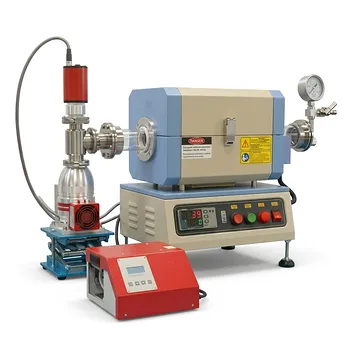
High Vacuum Compact Tube Furnace 1200C with Integrated Turbo Pump System and 8 Inch Heating Zone
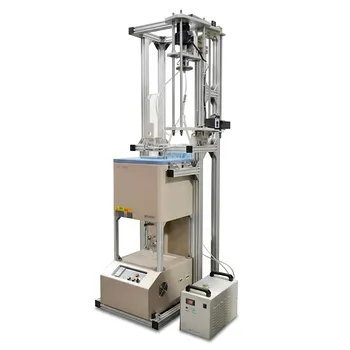
500C Vacuum Vertical Tube Furnace 84mm OD Sample Rotation Lifting System

1750°C High Temperature Benchtop Vacuum Atmosphere Tube Furnace with Kanthal Super 1800 Heating Elements and 60mm Alumina Processing Tube
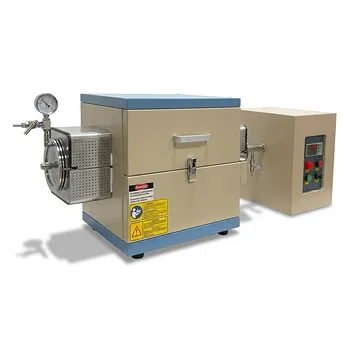
1200C High Temperature 5 Inch Split Vacuum Tube Furnace with 12 Inch Heating Zone and Separated PID Controller
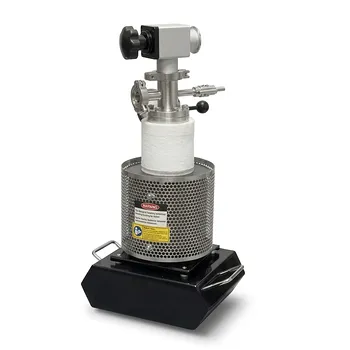
High Temperature 1100C Compact Top Loading Vertical Vacuum Tube Furnace for High Vacuum Noble Metal Melting and Material Research
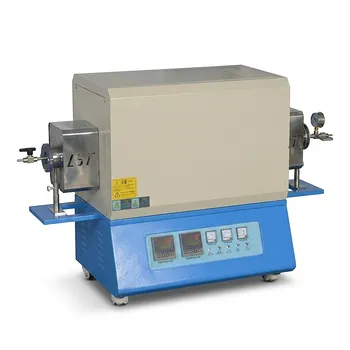
High Temperature Dual Zone Vacuum Tube Furnace for Material Research and CVD Processing

Vertical 1700C Vacuum and Atmosphere Tube Furnace with 80mm Alumina Tube

High Temperature 1700C Tube Furnace with High Vacuum Turbomolecular Pump System and Multi Channel Mass Flow Controller Gas Mixer

1100C Tube Furnace with Vacuum Flange and Programmable Temperature Controller for Material Science and Industrial Heat Treatment
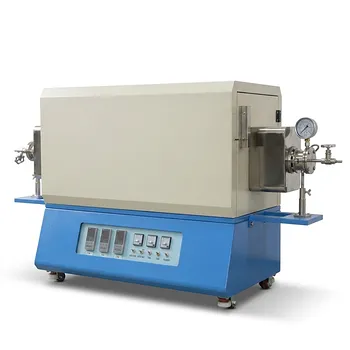
Three Temperature Zone High Temperature Vacuum Tube Furnace for CVD and Material Sintering
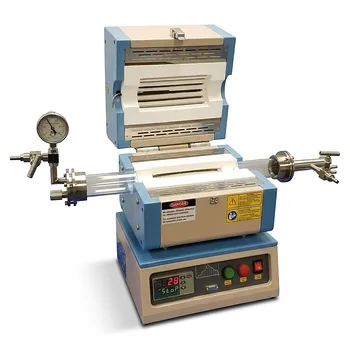
Compact Split Tube Furnace with Integrated Vacuum System and Precision Temperature Calibrator
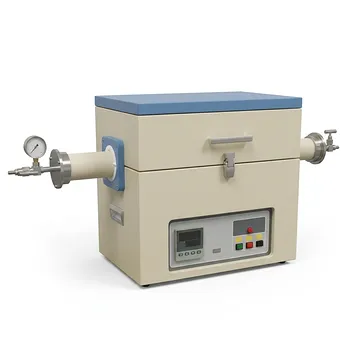
1250C Split Tube Furnace with 3 Inch Mullite Tube and Vacuum Sealing Flanges for Precision Thermal Processing
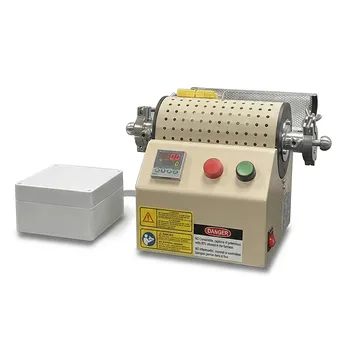
1000C Mini Tube Furnace with 20mm Quartz Tube and Vacuum Flanges for Material Science Research and Controlled Atmosphere Small Sample Processing

Compact High Temperature 1600C Tube Furnace with 50mm Alumina Tube and Vacuum Flanges for Material Sintering

Compact Vertical Split Quartz Tube Furnace with Stainless Steel Vacuum Flanges for Rapid Thermal Quenching and Controlled Atmosphere Material Processing
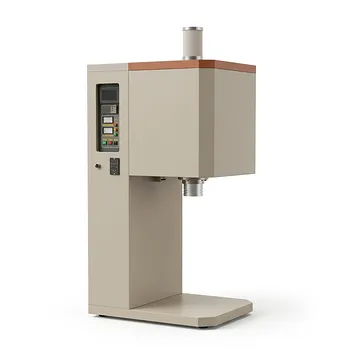
Vertical Openable Tube Furnace 0-1700c High Temperature Laboratory System for CVD and Vacuum Heat Treatment
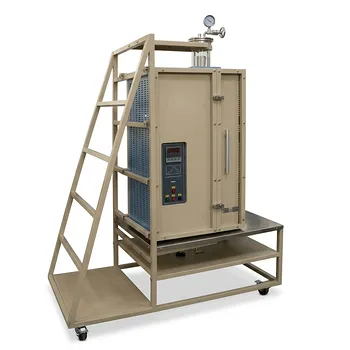
Split Vertical Tube Furnace with 1200C Quartz Tube and Stainless Steel Vacuum Flanges for Rapid Thermal Processing

High Temperature 1700C Vertical Tube Furnace for Powder Spherification and Material Sintering