The Architecture of Stability: Why Precision Aging is the Soul of Gas Sensor Reliability
Aug 14, 2026
The Psychology of a Drifting Sensor
In the world of high-precision instrumentation, a sensor that is slightly off is more dangerous than one that is completely broken. A broken sensor triggers an alarm. A drifting sensor creates a false reality.
For gas sensors, that reality is often dictated by the "memory" of the material. Freshly deposited sensing films are chaotic systems—full of internal friction, unoptimized contacts, and chemical hunger.
The process of long-term aging in a tube furnace is not merely a manufacturing step; it is the imposition of order upon this microscopic chaos. It is the transition from a volatile material to a reliable industrial tool.
The Invisible War: Neutralizing Internal Stress
When a film is deposited onto a substrate, it is rarely at peace. The atoms are often jammed together in high-energy, metastable states. Without intervention, these atoms will spend months trying to rearrange themselves.
This "settling" manifests as signal drift.
A tube furnace provides the thermal energy required to bypass this months-long wait. By maintaining a constant, elevated temperature, we allow:
- Atomic Rearrangement: Atoms move into more relaxed, stable lattice positions.
- Expansion Harmony: The film and the substrate synchronize their thermal expansions, preventing future cracking.
- Mechanical Peace: The internal "springs" of the material are released, ensuring the baseline stays where it belongs.
The Handshake: Optimizing the Interface
A sensor is only as good as its connection to the circuit. The interface between the sensing film and the electrodes is often a source of "parasitic resistance"—the electronic equivalent of a weak handshake.
Aging acts as a forge for this interface. Under the steady heat of a tube furnace, the contact points undergo a micro-sintering process.
This creates ohmic behavior, where electricity flows predictably and without noise. When you remove the resistance at the boundary, you allow the true signal of the gas to emerge.
Oxygen Equilibrium: Stopping the Chemical Drift
Gas sensors essentially "breathe." They rely on oxygen ions adsorbed on their surface to function.
If a sensor is put into the field "hungry" for oxygen, its electrical resistance will change continuously as it reacts with the environment. This is why many cheap sensors require a "warm-up" period of days or weeks.
The Tube Furnace Solution: By aging the film in a controlled atmosphere, we reach chemical equilibrium before the product ever leaves the factory. We "pre-saturate" the surface, ensuring that when the sensor arrives at the customer, it is chemically silent and ready to work.
The Technical Advantage of Geometry
Why a tube furnace specifically? In thermal processing, geometry is destiny. The tubular design offers two distinct advantages that box furnaces cannot easily replicate.
1. The Sealed Environment
The quartz tube acts as a private universe. Whether you need an inert Argon blanket, a Nitrogen flow, or a specific carrier gas, the tube furnace provides a level of purity that prevents unwanted oxidation of the film.
2. Dynamics of Flow
The linear path of a tube furnace allows for precise gas dynamics. This ensures that every millimeter of the sensing film experiences the same gas concentration and the same thermal profile, resulting in high batch-to-batch repeatability.
The Hidden Trade-offs
Precision comes at a cost. In manufacturing, the primary tension is between Throughput and Quality.
| Variable | High-Volume Muffle Furnace | Precision Tube Furnace |
|---|---|---|
| Atmospheric Purity | Moderate/Difficult to Seal | Exceptional/Vacuum Tight |
| Uniformity | Fluctuates with Load | Highly Constant |
| Throughput | High (Batch processing) | Moderate (Geometry limited) |
| Ideal Use Case | Bulk calcination | High-end R&D and Sensing |
For the engineer, the choice is clear: if the goal is a sensor that must last five years in a harsh industrial environment, the precision of the tube furnace is non-negotiable.
Managing the Descent
The most common failure in aging is not the heat—it is the cooling.
If a furnace cools too quickly, it "freezes" new stresses into the film, undoing hours of stabilization. A sophisticated thermal profile must include a controlled ramp-down. At THERMUNITS, we engineer our systems to treat the cooling curve with as much respect as the heating curve.
Designing for Equilibrium
When selecting your thermal process, consider the ultimate goal of your material:
- For Signal Repeatability: Focus on long-duration (12+ hours) soak times.
- For High-Temp Durability: Prioritize high-temperature annealing (900°C+) to stabilize the crystal lattice.
- For Chemical Sensitivity: Utilize sealed environments to prevent atmospheric poisoning.
The tube furnace is the definitive tool for transitioning experimental sensing films into industrial-grade assets. It is where the science of materials meets the requirements of the real world.
THERMUNITS provides the specialized thermal processing solutions—from Tube and Atmosphere Furnaces to CVD systems—necessary to achieve this level of microstructural stability.
Quick Links
Suggested Products
Vertical 1700C Vacuum and Atmosphere Tube Furnace with 80mm Alumina Tube Compact High Temperature 1600C Tube Furnace with 50mm Alumina Tube and Vacuum Flanges for Material Sintering 900°C Max Rotary Tube Furnace with 8 Inch 310S Alloy Tube and Optional Multi Zone Heating for Industrial Material Calcination Split Vertical Tube Furnace with 1200C Quartz Tube and Stainless Steel Vacuum Flanges for Rapid Thermal Processing High Temperature 1700C Tube Furnace with High Vacuum Turbomolecular Pump System and Multi Channel Mass Flow Controller Gas MixerFurther Reading
The Silent Guardian of Kinetics: The Engineering Logic Behind Stable Molten Salt Environments The Architecture of Isolation: Why Atmosphere Defines Material Destiny The Invisible Architect: Precision Thermal Oxidation in NiO@Ni Synthesis The Architecture of Thrifty Precision: Why Tube Furnaces Define the R&D Continuity The Architect of Atoms: Why Precision is the Only Currency in TMD Synthesis
ThermUnits
Last updated on Apr 14, 2026
Related Products

Vertical 1700C Vacuum and Atmosphere Tube Furnace with 80mm Alumina Tube

Compact High Temperature 1600C Tube Furnace with 50mm Alumina Tube and Vacuum Flanges for Material Sintering
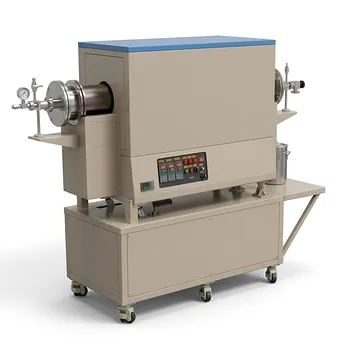
900°C Max Rotary Tube Furnace with 8 Inch 310S Alloy Tube and Optional Multi Zone Heating for Industrial Material Calcination
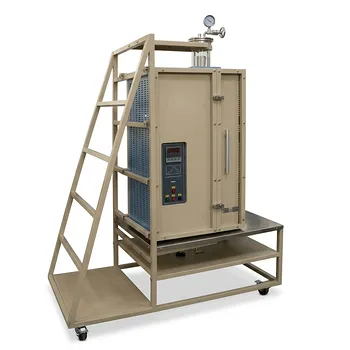
Split Vertical Tube Furnace with 1200C Quartz Tube and Stainless Steel Vacuum Flanges for Rapid Thermal Processing

High Temperature 1700C Tube Furnace with High Vacuum Turbomolecular Pump System and Multi Channel Mass Flow Controller Gas Mixer

1100C Tube Furnace with Vacuum Flange and Programmable Temperature Controller for Material Science and Industrial Heat Treatment
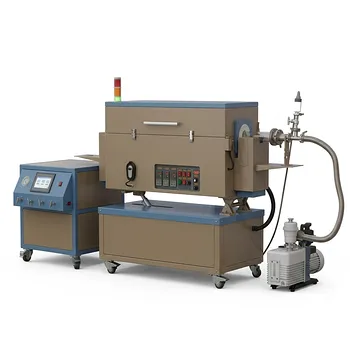
5 Inch Three Zone Rotary Tube Furnace with Integrated Gas Delivery System and 1200C Capability for Advanced Material CVD Processing
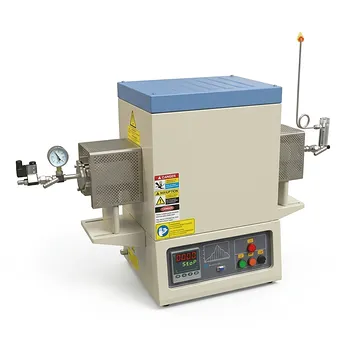
1700C Hydrogen Gas Tube Furnace with 60mm Alumina Process Tube and Integrated Hydrogen Safety Detector
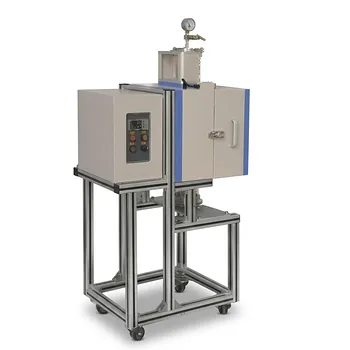
1200°C 5 Inch Vertical Quartz Tube Furnace with Stainless Steel Vacuum Flanges

High Temperature 1700C Six Zone Split Tube Furnace with Alumina Tube and Water Cooled Flanges
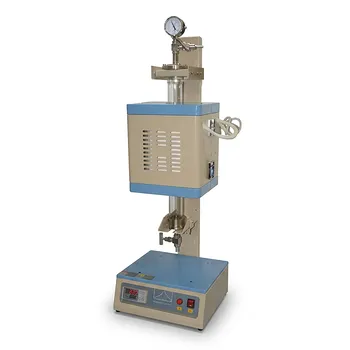
Compact Vertical Split Quartz Tube Furnace with Stainless Steel Vacuum Flanges for Rapid Thermal Quenching and Controlled Atmosphere Material Processing

High Temperature 1700C Benchtop Tube Furnace with 5 Inch Heating Zone High Purity Alumina Tube and Vacuum Sealing Flanges
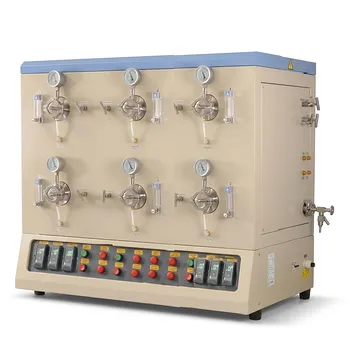
1200C High Throughput Multi Channel Tube Furnace with 50mm Quartz Tubes for Annealing and Material Phase Diagram Research
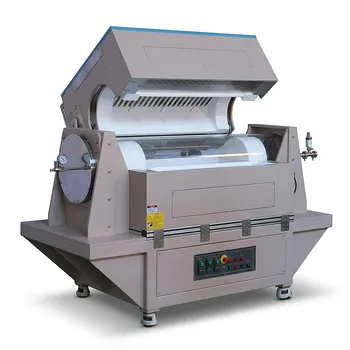
Three Zone Tube Furnace with 11 Inch or 15 Inch Quartz Tube and Hinged Flanges for Vacuum Atmosphere Heat Treatment

1800C High Temperature Compact Vacuum Tube Furnace with 60mm OD Alumina Tube and Kanthal MoSi2 Heating Elements

High Temperature 1700C Vertical Tube Furnace for Powder Spherification and Material Sintering
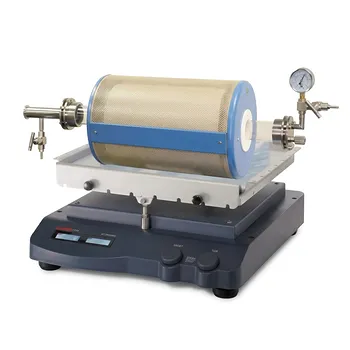
High Temperature Rocking Tube Furnace with Quartz Tube and Vacuum Flange for Materials Synthesis

High Temperature Automated 5 Inch Tube Furnace for Autonomous Material Research and Advanced Laboratory R&D
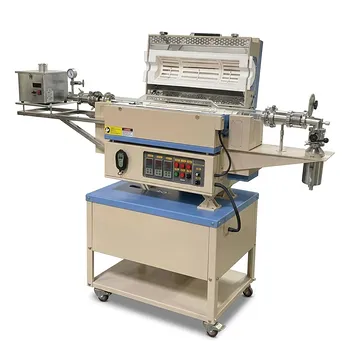
5 Inch Rotary Tube Furnace with Automatic Feeding and Receiving System 1200C Three Zone CVD Powder Processing