The Architecture of the Invisible: Mastering the Kinetic Window in Biochar Synthesis
Jul 27, 2026
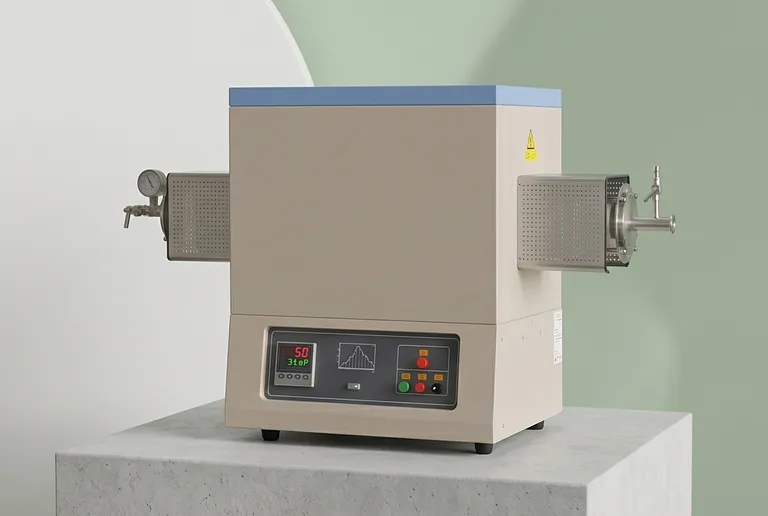
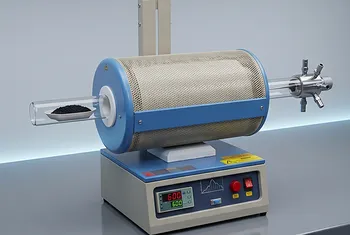
Inside the quartz tube of a furnace, a quiet, violent transformation takes place.
What appears to be a static piece of biomass is, at the molecular level, a pressurized vessel. As temperatures climb, organic polymers—cellulose, hemicellulose, and lignin—shatter into volatile gases. These gases must find an exit.
In material science, the difference between a high-performance catalyst and a pile of useless charcoal is often decided by a single variable: The Heating Rate.
The Kinetic Regulator: 5–15 °C/min
The heating rate is not merely a setting on a controller; it is the "governor" of escape velocity. Within the critical range of 5–15 °C/min, we are managing a delicate kinetic race between chemical decomposition and structural preservation.
If the rate is too high, internal gas pressure builds faster than the material’s natural porosity can vent it. The result is a microscopic explosion—a structural collapse where delicate micropores are torn open into irregular, inefficient macropores.
Preserving the Internal Landscape
The value of biochar lies in its "invisible" surface area. To maximize this, we must protect the carbon skeleton from its own internal pressure.
Preventing Structural Coarsening
At a controlled 15 °C/min, the escape of volatiles is energetic but orderly. This rate is the "Goldilocks" zone for molecular adsorption. It prevents "macropore coarsening," ensuring that the volatile release does not turn the carbon framework into a hollowed-out shell.
The Micro and Mesoporous Threshold
For applications requiring extreme surface area—such as urea adsorption—the synergy between rate and residence time is paramount. A steady climb ensures that the pores which trap molecules are not fused shut by localized overheating.
Uniformity from Surface to Core
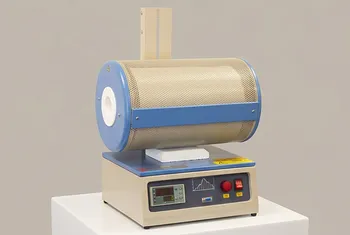
A horizontal tube furnace provides the thermal symmetry required for this process. By heating the sample uniformly at 5 °C/min, the thermal gradient between the surface of the particle and its core remains minimal. This ensures the entire batch shares the same physicochemical DNA.
The Chemistry of Order
Beyond physical holes, the heating rate dictates the "social arrangement" of carbon atoms.
Lower heating rates (closer to 5 °C/min) provide the luxury of time. This time allows for:
- Dehydrogenation: The systematic removal of hydrogen.
- Aromatization: The reorganization of carbon into stable, graphite-like rings.
- Doping Efficiency: For electrocatalysis, a slow rate allows heteroatoms like Nitrogen or Boron to find their place in the lattice without being "pushed out" by rapid gas evolution.
The Engineer’s Trade-off: Quality vs. Throughput
In the lab, as in life, there is no such thing as a free lunch. Choosing a heating rate is an exercise in managing trade-offs.
| Heating Rate | Structural Outcome | Primary Application |
|---|---|---|
| 5 °C/min | Maximum stability; complete aromatization. | Soil amendments, Metallurgy |
| 5–10 °C/min | Orderly micropore development; high doping. | Energy storage, Electrocatalysis |
| 10–15 °C/min | Optimized surface area/volume ratio. | Molecular adsorption (e.g., Urea) |
The Risk of Speed: Pushing beyond 15 °C/min increases the risk of "pore wall thinning." When internal pressure exceeds the structural strength of the carbonizing wall, the architecture collapses. You lose the very surface area you sought to create.
Precision as a Requirement
To master these kinetics, the furnace can no longer be a "black box." It must be a precision instrument.
At THERMUNITS, we design our thermal systems—from standard Tube and Muffle furnaces to complex Vacuum Induction and Rotary Kilns—with the understanding that a 5-degree deviation is the difference between a breakthrough and a failed experiment.
Our systems provide the stability required to maintain these specific kinetic windows, ensuring that your carbonization process produces the exact microstructural architecture your R&D demands.
Whether you are synthesizing biochar for soil sequestration or engineering complex CVD-coated anodes, the control of the thermal gradient remains the definitive factor.
Quick Links
Suggested Products
High Temperature 1700C Vertical Tube Furnace for Powder Spherification and Material Sintering 1100C Tube Furnace with Vacuum Flange and Programmable Temperature Controller for Material Science and Industrial Heat Treatment High Temperature 1700C Tube Furnace with High Vacuum Turbomolecular Pump System and Multi Channel Mass Flow Controller Gas Mixer Compact High Temperature 1600C Tube Furnace with 50mm Alumina Tube and Vacuum Flanges for Material Sintering Compact Split Tube Furnace with Integrated Vacuum System and Precision Temperature CalibratorFurther Reading
The Architecture of Heat: Why Verticality Defines Modern Metallurgical Simulation The Geometry of Heat: Engineering Magnetic Biochar Through Controlled Pyrolysis The Architecture of Absence: Why Atmosphere Control Defines the Fate of Mesoporous Carbon The Silent Guardian of Kinetics: The Engineering Logic Behind Stable Molten Salt Environments The Architecture of Isolation: Why Atmosphere Defines Material Destiny
ThermUnits
Last updated on Apr 14, 2026
Related Products

High Temperature 1700C Vertical Tube Furnace for Powder Spherification and Material Sintering

1100C Tube Furnace with Vacuum Flange and Programmable Temperature Controller for Material Science and Industrial Heat Treatment

High Temperature 1700C Tube Furnace with High Vacuum Turbomolecular Pump System and Multi Channel Mass Flow Controller Gas Mixer

Compact High Temperature 1600C Tube Furnace with 50mm Alumina Tube and Vacuum Flanges for Material Sintering
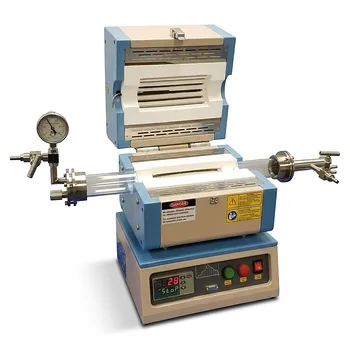
Compact Split Tube Furnace with Integrated Vacuum System and Precision Temperature Calibrator

Compact Vertical Split Quartz Tube Furnace with Stainless Steel Vacuum Flanges for Rapid Thermal Quenching and Controlled Atmosphere Material Processing

High Temperature 1700C Six Zone Split Tube Furnace with Alumina Tube and Water Cooled Flanges

Vertical 1700C Vacuum and Atmosphere Tube Furnace with 80mm Alumina Tube
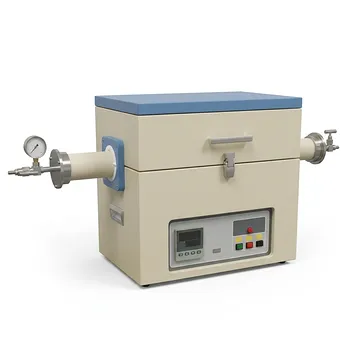
1250C Split Tube Furnace with 3 Inch Mullite Tube and Vacuum Sealing Flanges for Precision Thermal Processing

1800C High Temperature Compact Vacuum Tube Furnace with 60mm OD Alumina Tube and Kanthal MoSi2 Heating Elements

1200°C 5 Inch Vertical Quartz Tube Furnace with Stainless Steel Vacuum Flanges
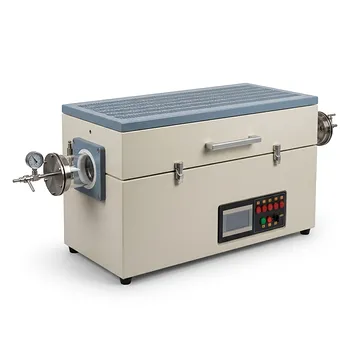
Five Zone 1200C High Temperature Split Tube Furnace with Touch Screen Controller and Multiple Quartz Tube Options
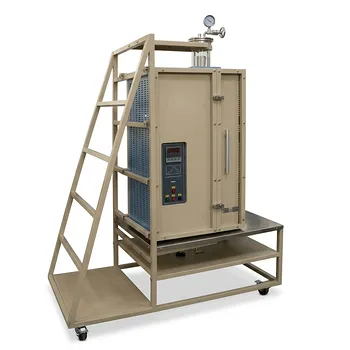
Split Vertical Tube Furnace with 1200C Quartz Tube and Stainless Steel Vacuum Flanges for Rapid Thermal Processing
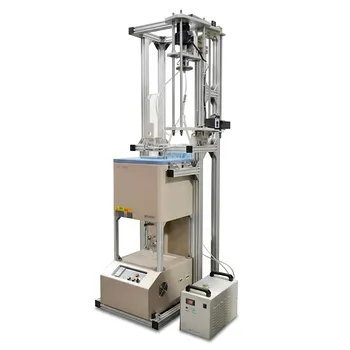
500C Vacuum Vertical Tube Furnace 84mm OD Sample Rotation Lifting System

High Temperature Automated 5 Inch Tube Furnace for Autonomous Material Research and Advanced Laboratory R&D
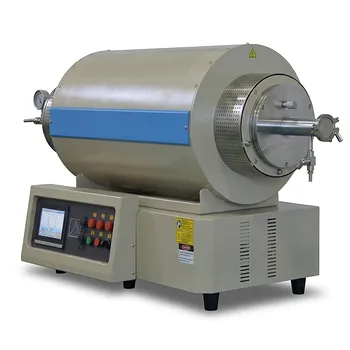
1200C Max Three Zone Tube Furnace 6 Inch OD Max with Tube and Flange

1200C High Throughput Multi Channel Tube Furnace with 50mm Quartz Tubes for Annealing and Material Phase Diagram Research
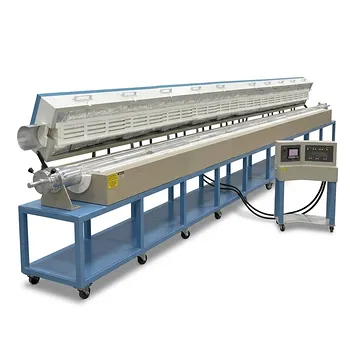
12 Zone Ultra Long Split Tube Furnace with 20 Foot Quartz Tube and 1100C Max Temperature

High Temperature 1700C Benchtop Tube Furnace with 5 Inch Heating Zone High Purity Alumina Tube and Vacuum Sealing Flanges