The Architecture of the Invisible: Why the Mass Flow Controller is the True Pilot of CNT Synthesis
May 26, 2026
The Invisible Margin of Error
In modern material science, we often focus on what we can see: the glowing heat of a furnace or the black film of a finished sample. But the most critical decisions in Carbon Nanotube (CNT) synthesis happen in the invisible realm of gas dynamics.
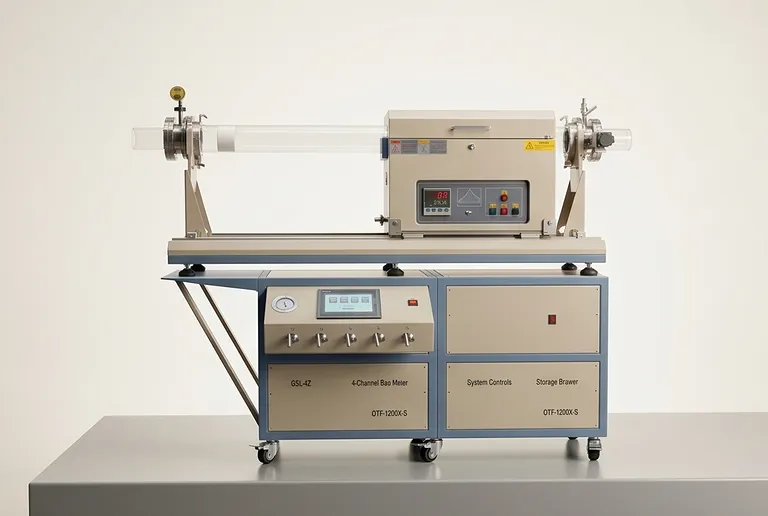
Chemical Vapor Deposition (CVD) is not merely a heating process; it is a delicate chemical choreography. At the center of this dance is the Mass Flow Controller (MFC).
If the furnace is the heart of the system, the MFC is its prefrontal cortex—the part that makes executive decisions about how much "food" the catalyst receives and how fast the environment changes. Without it, the reaction doesn't just fail; it descends into chaos.
The Hunger of the Catalyst: Managing the Carbon Gradient
A catalyst nanoparticle is a high-performance engine. It consumes carbon precursors—like methane or ethylene—and assembles them into a perfect hexagonal lattice.
But a catalyst has a "processing capacity." If you feed it too much, it chokes. If you feed it too little, it starves.
The Risk of Excess
When the carbon concentration is too high, the atoms arrive faster than the catalyst can organize them. These "homeless" atoms settle into disorganized, amorphous carbon. This is the death of a CNT:
- Soot formation: Coating the growing tubes in a layer of electrical insulation.
- Catalyst Poisoning: The catalyst becomes "buried" under a carbon crust, effectively ending the growth cycle prematurely.
The Risk of Scarcity
Conversely, insufficient flow leads to growth stagnation. The "gradient"—the difference in carbon density that drives growth—becomes too shallow to sustain the reaction.
The Hydrogen Guardian: A Balance of Etching and Building
In CVD growth, we rarely use pure carbon sources. We mix them with hydrogen ($H_2$) and inert gases like Argon ($Ar$). This is where the MFC’s role becomes psychological.
Hydrogen acts as the system’s "cleaner." It reduces the metal catalyst to its active state and "etches" away any stray amorphous carbon that tries to settle on the growing tube.
| Gas Component | Role in the System | The Result of Poor MFC Control |
|---|---|---|
| Carbon Precursor | Building Blocks | Amorphous carbon soot or total growth failure. |
| Hydrogen (H2) | Surface Cleaner | Catalyst encapsulation (too low) or tube etching (too high). |
| Inert (Ar/N2) | Carrier/Buffer | Turbulence and residence time instability. |
If the MFC fails to maintain the exact $H_2/Ar$ ratio, the catalyst deactivates. It is a razor-thin edge: too much hydrogen will actually dissolve the nanotubes you are trying to grow.
The Physics of Time: Gas Velocity and Residence Time
We often think of gas flow in terms of volume, but the catalyst experiences it as time. This is known as Residence Time.
The MFC regulates the gas flow velocity. This determines how long a precursor molecule stays in the "hot zone" before being swept away.
- Fast Flow: The molecules are "starved" for time. They pass by the catalyst so quickly they don't have time to decompose.
- Slow Flow: The reaction byproducts linger. They crowd the area, preventing fresh precursors from reaching the surface and leading to stunted growth.
By controlling this velocity, the MFC allows researchers to dictate the "height" of CNT forests and the density of the array. It is the difference between a sparse field and a dense, vertically aligned skyscraper of carbon.
The Engineer’s Romanticism: Turning Volatility into Repeatability
The primary goal of any R&D lab is repeatability. You want the result you got on Tuesday to be the same result you get in six months.
In a CVD system, temperature is relatively easy to stabilize. Vacuum levels are easy to monitor. But the mass of gas—the actual number of molecules entering the chamber—is the most volatile variable.
The MFC transforms this volatility into a constant. It ensures that the structural integrity and diameter distribution of your nanotubes are the results of your design, not the results of a random fluctuation in line pressure.
Engineering the Future of Material Growth
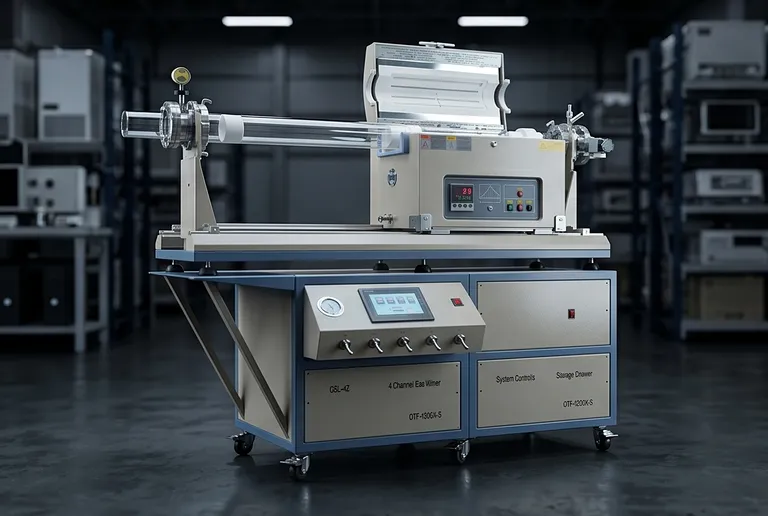
At THERMUNITS, we understand that high-performance materials require high-precision systems. We don't just build furnaces; we build integrated thermal environments where every variable—from the vacuum level to the precise gas mixing ratio—is under your command.
Our range of CVD and PECVD systems are designed with this "systemic precision" in mind. Whether you are growing vertically aligned CNT forests or exploring the next generation of 2D materials, our thermal processing solutions provide the stability your research deserves.
From Vacuum Induction Melting (VIM) for metallurgy to specialized Tube Furnaces for nanomaterials, we provide the hardware that turns complex chemical theories into tangible reality.
Quick Links
Suggested Products
High Temperature 1700C Tube Furnace with High Vacuum Turbomolecular Pump System and Multi Channel Mass Flow Controller Gas Mixer Two Zone Rotary Tube Furnace for Powder CVD Coating and Core Shell Material Synthesis 1100C Multi Heating Zones CVD Tube Furnace System for Precision Chemical Vapor Deposition and Advanced Material Synthesis 5 Inch Two Zone Rotary Tube Furnace 1100C for Powder CVD and Material Synthesis Three Zone Quartz Tube Furnace with 3 Channel Gas Mixer Vacuum Pump and Anti Corrosive Vacuum GaugeFurther Reading
The Geometry of Heat: Engineering Magnetic Biochar Through Controlled Pyrolysis The Architecture of Absence: Why Atmosphere Control Defines the Fate of Mesoporous Carbon The Geometry of Heat: Forging the Structural DNA of Dicalcium Ferrite The Architecture of Isolation: Why Atmosphere Defines Material Destiny The Invisible Architect: Precision Thermal Oxidation in NiO@Ni Synthesis
ThermUnits
Last updated on Apr 14, 2026
Related Products

High Temperature 1700C Tube Furnace with High Vacuum Turbomolecular Pump System and Multi Channel Mass Flow Controller Gas Mixer
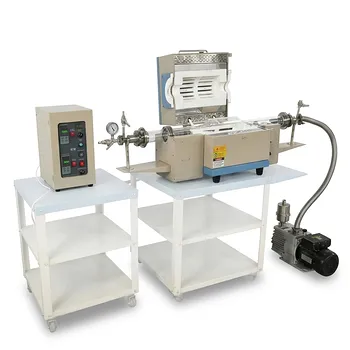
Two Zone Rotary Tube Furnace for Powder CVD Coating and Core Shell Material Synthesis 1100C
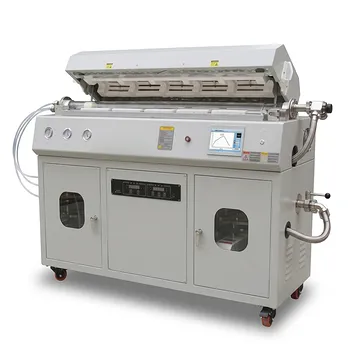
Multi Heating Zones CVD Tube Furnace System for Precision Chemical Vapor Deposition and Advanced Material Synthesis
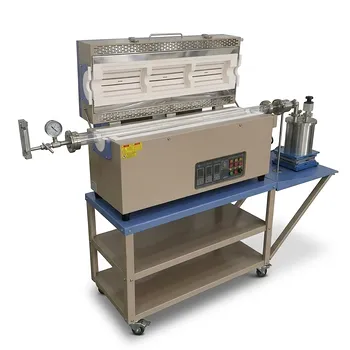
5 Inch Two Zone Rotary Tube Furnace 1100C for Powder CVD and Material Synthesis
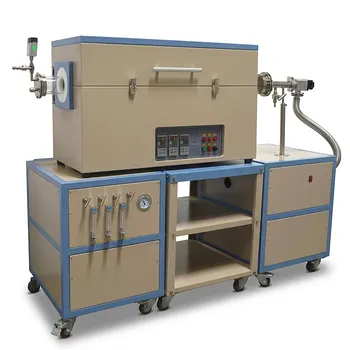
Three Zone Quartz Tube Furnace with 3 Channel Gas Mixer Vacuum Pump and Anti Corrosive Vacuum Gauge
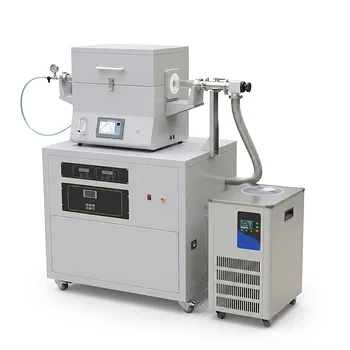
Split Chamber CVD Tube Furnace with Vacuum Station Chemical Vapor Deposition System Machine
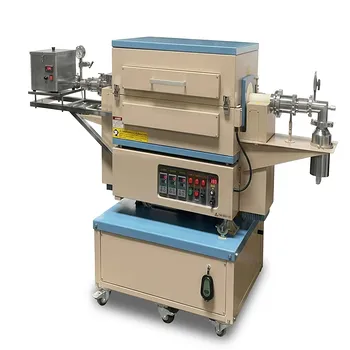
1500C 3-Zone Rotary Tube Furnace 60mm with Automatic Powder Feeding and Receiving System for Continuous Material Synthesis
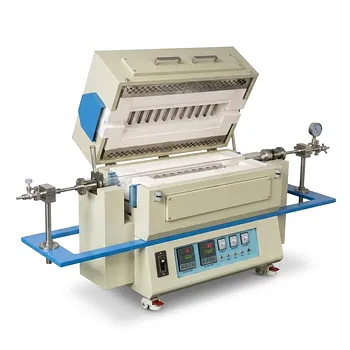
High Temperature Dual Zone Rotating Tube Furnace 1500C Silicon Carbide Heating for Advanced Material Synthesis
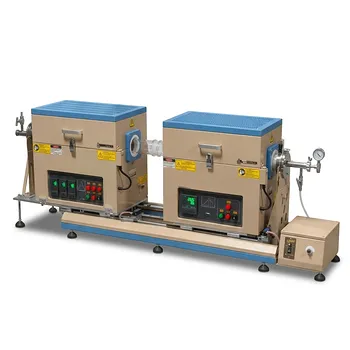
1200C Dual Temperature Zone Slidable Tube Furnace for 2D Material Growth and TCVD Synthesis
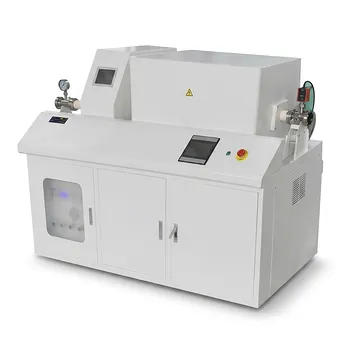
Chemical Vapor Deposition CVD System Slide PECVD Tube Furnace with Liquid Gasifier PECVD Machine
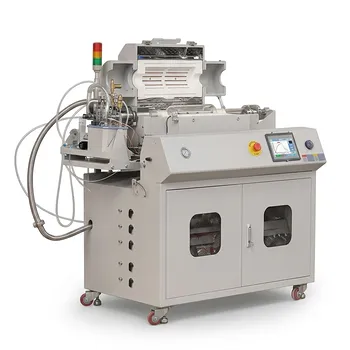
Versatile Chemical Vapor Deposition Tube Furnace System for Advanced Material Research and Industrial Coating Processes
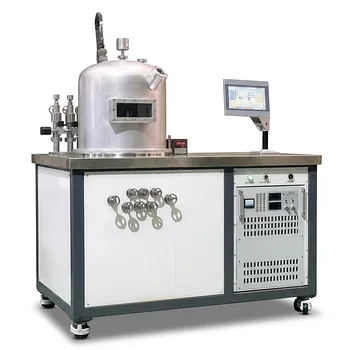
HFCVD Machine System for Nano Diamond Coating on Drawing Dies and Industrial Tools
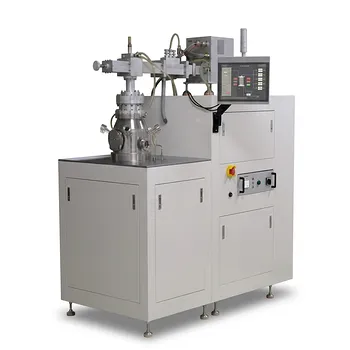
Cylindrical Resonator MPCVD Machine System for Microwave Plasma Chemical Vapor Deposition and Lab Diamond Growth
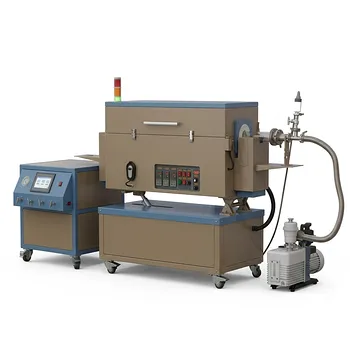
5 Inch Three Zone Rotary Tube Furnace with Integrated Gas Delivery System and 1200C Capability for Advanced Material CVD Processing
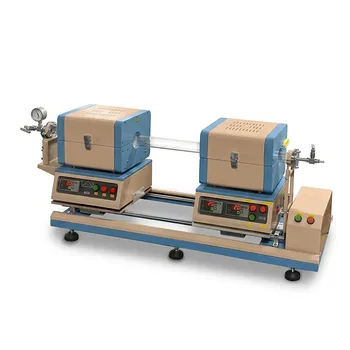
High Temperature 1200C Automatic Sliding Dual Zone Tube Furnace for 2D Transition Metal Dichalcogenides Growth and Material Sublimation Research
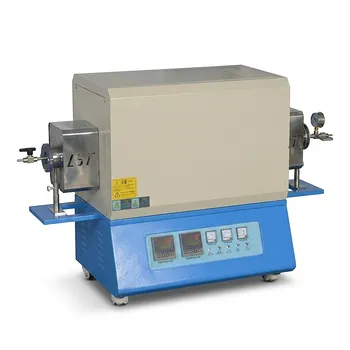
High Temperature Dual Zone Vacuum Tube Furnace for Material Research and CVD Processing
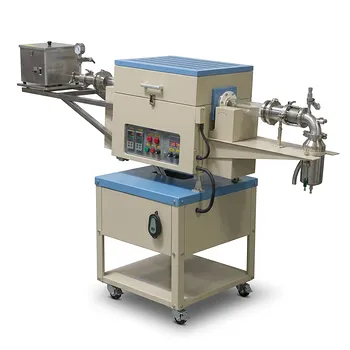
Two Zone Rotary CVD Furnace with Automatic Feeding and Receiving System for Powder Processing
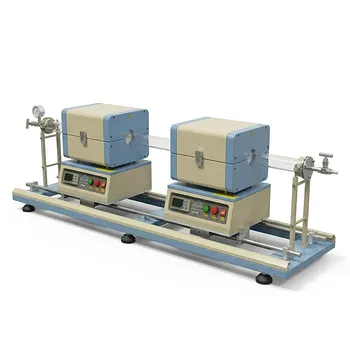
1200C Max Dual Sliding Tube Furnace with 50 mm Tube Flanges for CVD
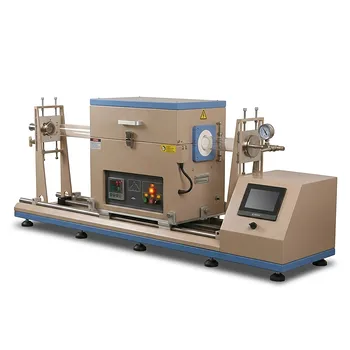
1200C Sliding Tube Furnace for Rapid Thermal Processing and CVD Graphene Growth with 100mm OD Capacity