The Architecture of Resistance: Simulating 1000°C Realities for AlCrVY(O)N Coatings
May 04, 2026
The Thin Line Between Performance and Failure
In the violent environment of high-speed machining, a few micrometers are all that stand between an industrial tool and total thermal degradation. AlCrVY(O)N coatings are designed for this edge—a sophisticated multi-element barrier engineered to survive where others melt.
However, engineering a coating is only half the battle. The other half is proving it will survive.
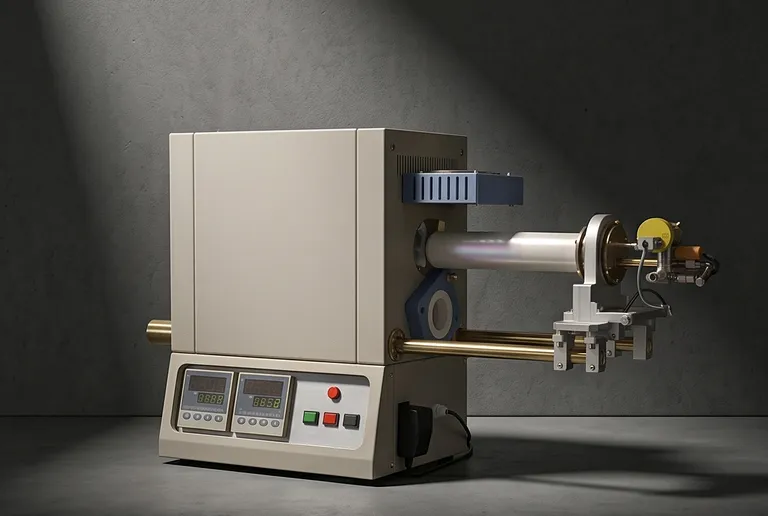
To understand the lifespan of these materials, researchers must step away from the chaotic noise of the factory floor and into the silent, controlled discipline of the laboratory tube furnace.
The Furnace as a Controlled Microcosm
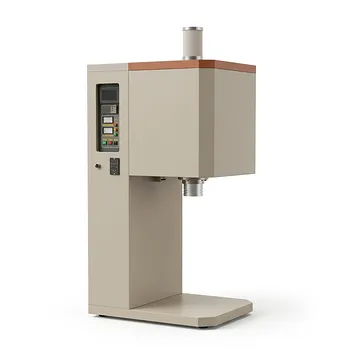
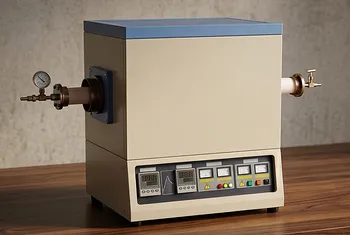
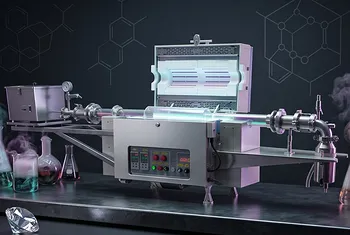
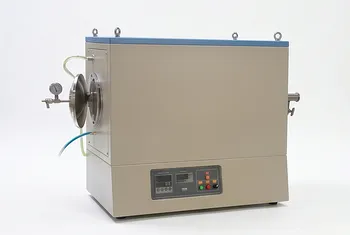
A laboratory tube furnace is not merely a heater; it is a simulator of destiny. It serves as the primary environment for evaluating how AlCrVY(O)N coatings respond to the "thermal tax" of industrial service.
By subjecting samples to temperatures often exceeding 1000 °C, the furnace forces the coating to reveal its chemical secrets. It mimics the oxidative stress of high-speed cutting, allowing for the observation of two critical survival mechanisms: element diffusion and oxide film growth.
Precision as the Antidote to Uncertainty
In material science, "close enough" is the enemy of progress. If a furnace fluctuates by 10 °C, the kinetic data for oxide growth becomes noise.
The most effective research environments utilize systems with isothermal stability within ±1 °C. This level of precision ensures that when a researcher observes a phase transition or a specific layer of Al2O3 (alumina) forming, they are seeing the material's inherent property, not a ghost of an unstable heating element.
The Mechanics of Protective Evolution
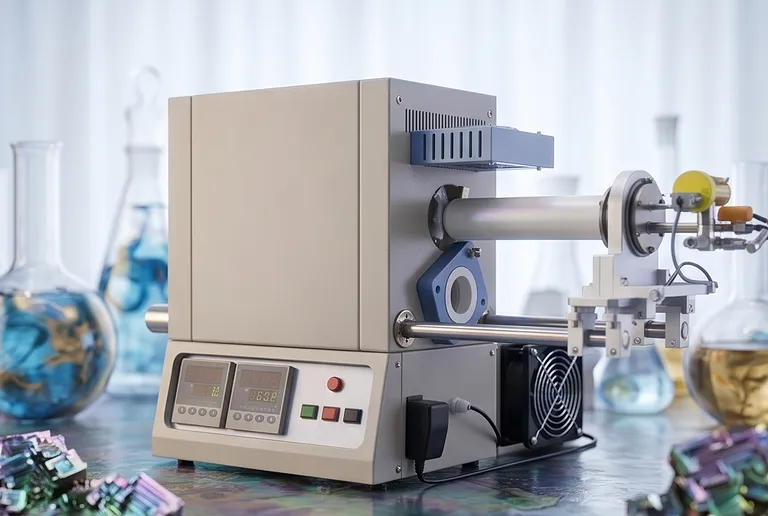
During the "soaking" period within the tube, a fascinating chemical choreography occurs. As the heat rises, the furnace provides the energy for the coating to evolve:
- Oxide Scale Formation: The furnace allows researchers to monitor the growth of protective Cr2O3 and Al2O3 scales. These are the "shields" that prevent oxygen from penetrating the substrate.
- Phase Transitions: Under sustained heat, elements migrate. The tube furnace provides the stable environment needed to track this migration (diffusion) and identify the exact moment a coating shifts from a stable state to a brittle one.
- Integrity Stress Testing: By controlling cooling and heating rates, engineers can observe physical failures—cracking, delamination, or peeling—before they happen in a million-dollar CNC machine.
Strategic Perspectives on Thermal Testing
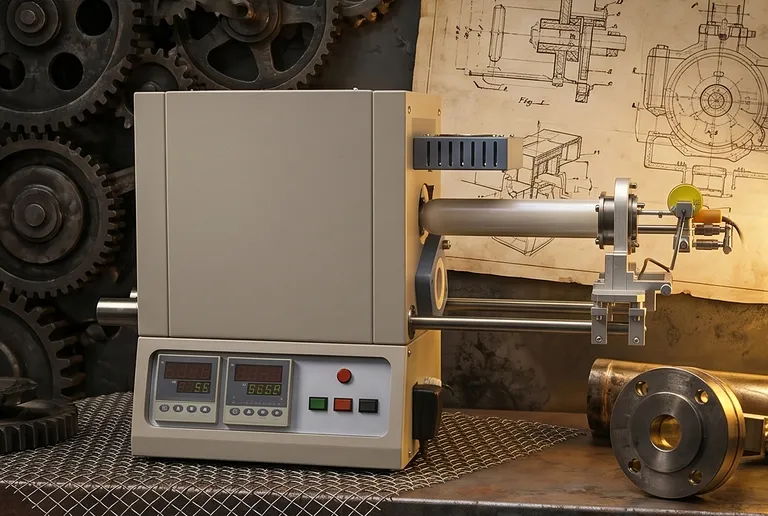
Every experiment involves a trade-off. To extract the most value from furnace testing, one must choose the right "lens" for observation.
| Feature | Research Value |
|---|---|
| Thermal Simulation | Replicates the 1000°C reality of high-speed machining. |
| Atmospheric Control | Allows for testing in Argon or Vacuum to isolate oxygen effects. |
| Kinetic Stability | Maintains ±1°C to accurately measure oxide growth rates over time. |
| Long-Duration Soaking | Reveals latent phase transformations and element depletion. |
The Psychological Edge of Stability
As Morgan Housel might suggest, the greatest risk in any system is the one you didn't account for. In coating research, the "unaccounted risk" is often an inconsistent thermal gradient.
A high-quality tube furnace removes the variable of equipment unreliability. It allows the researcher to focus entirely on the material's behavior, providing the psychological certainty that the data collected today will be repeatable tomorrow.
Engineering the Future of Material Science
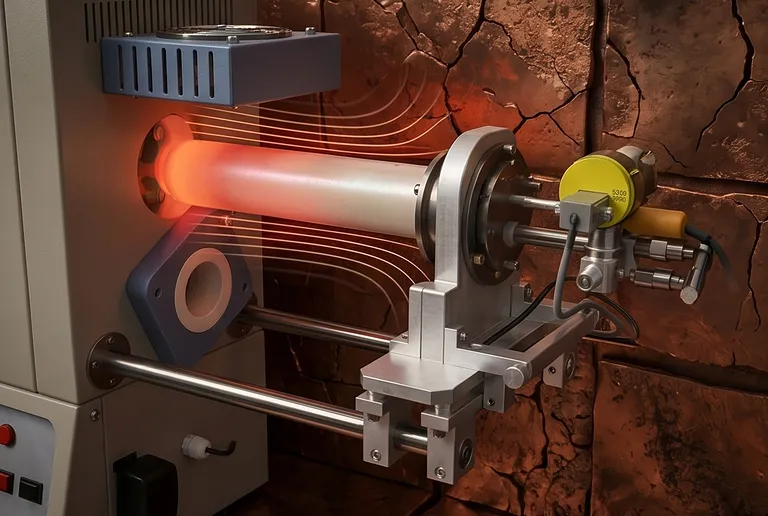
The path to more durable coatings and more efficient industrial processes is paved with precise data. Whether you are modeling the oxidation kinetics of a new AlCrVY(O)N variant or stress-testing the adhesion of a dental ceramic, the quality of your furnace determines the quality of your insight.
THERMUNITS provides the technical foundation for this research. From high-precision Tube and Muffle furnaces to complex CVD/PECVD systems and Vacuum Induction Melting (VIM) units, our equipment is designed for the rigorous demands of industrial R&D.
We don't just build furnaces; we build the environments where the next generation of materials is validated.
To find the isothermal solution that fits your specific research parameters, Contact Our Experts.
Quick Links
Suggested Products
Two Zone Rotary Tube Furnace for Powder CVD Coating and Core Shell Material Synthesis 1100C Compact High Temperature 1600C Tube Furnace with 50mm Alumina Tube and Vacuum Flanges for Material Sintering High Temperature Compact Vacuum Tube Furnace 1750C Max 60mm OD Alumina Tube High Temperature 1700C Tube Furnace with 4 Inch OD Alumina Tube and Vacuum Sealing Flanges High Temperature 1700C Benchtop Tube Furnace with 5 Inch Heating Zone High Purity Alumina Tube and Vacuum Sealing FlangesFurther Reading
The Geometry of Heat: Disciplining the Atom in Bilayer Graphene Synthesis The Alchemy of Survival: Why Gas-Phase Precision Dictates the Life of Industrial Tools The Architecture of Purity: Why Quartz Defines the Limits of MoS2 Synthesis The Geometry of Recovery: Why Tilting Rotary Furnaces Redefine Recycling Economics The Architecture of the Invisible: Mastering Atomic Precision in Tube Furnaces
ThermUnits
Last updated on Apr 15, 2026
Related Products
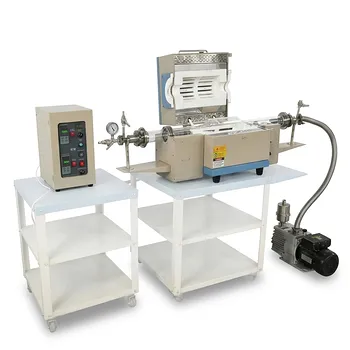
Two Zone Rotary Tube Furnace for Powder CVD Coating and Core Shell Material Synthesis 1100C

Compact High Temperature 1600C Tube Furnace with 50mm Alumina Tube and Vacuum Flanges for Material Sintering
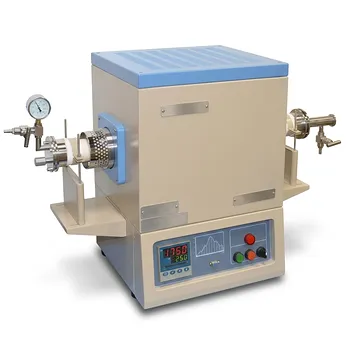
High Temperature Compact Vacuum Tube Furnace 1750C Max 60mm OD Alumina Tube

High Temperature 1700C Tube Furnace with 4 Inch OD Alumina Tube and Vacuum Sealing Flanges

High Temperature 1700C Benchtop Tube Furnace with 5 Inch Heating Zone High Purity Alumina Tube and Vacuum Sealing Flanges

1800C High Temperature Compact Vacuum Tube Furnace with 60mm OD Alumina Tube and Kanthal MoSi2 Heating Elements

High Temperature 1700C Six Zone Split Tube Furnace with Alumina Tube and Water Cooled Flanges
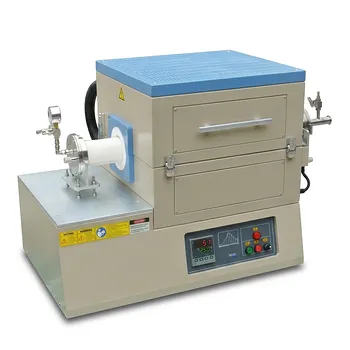
High Temperature 1700C Split Tube Furnace with Vacuum Flanges Valves and 60mm Alumina Tube

Vertical 1700C Vacuum and Atmosphere Tube Furnace with 80mm Alumina Tube

1750°C High Temperature Benchtop Vacuum Atmosphere Tube Furnace with Kanthal Super 1800 Heating Elements and 60mm Alumina Processing Tube

High Temperature 1700C Vertical Tube Furnace for Powder Spherification and Material Sintering
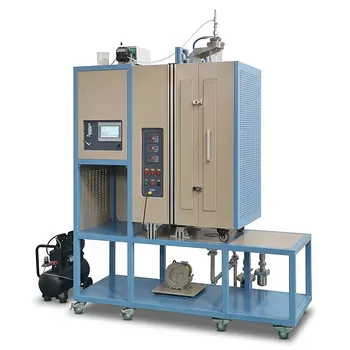
1500C Three Zone Vertical Pyrolysis Furnace for Nanoparticle Synthesis and Advanced Oxide Coating
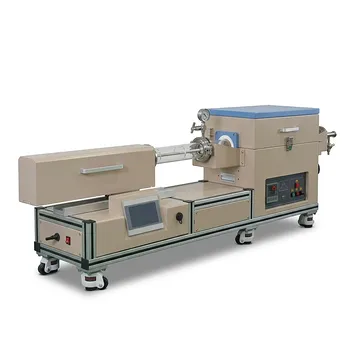
1200C Sliding Internal Crucible Tube Furnace for Controlled Atmosphere Thin Film Deposition and Material Sublimation Research
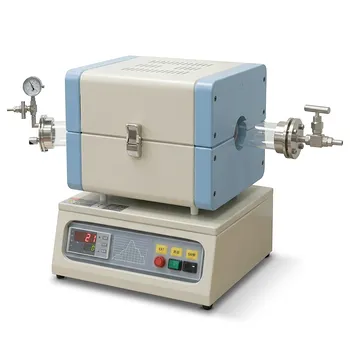
1200C Tube Furnace with Internal Magnetic Sample Sliding for Direct Vaporizing Deposition and Rapid Thermal Processing
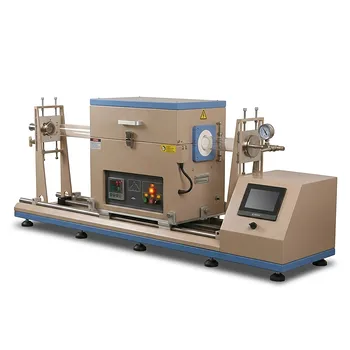
1200C Sliding Tube Furnace for Rapid Thermal Processing and CVD Graphene Growth with 100mm OD Capacity
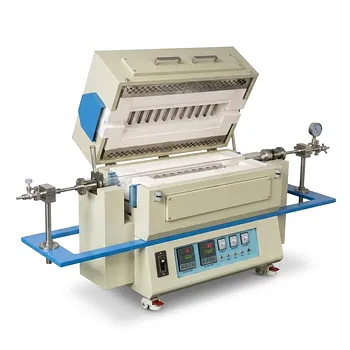
High Temperature Dual Zone Rotating Tube Furnace 1500C Silicon Carbide Heating for Advanced Material Synthesis
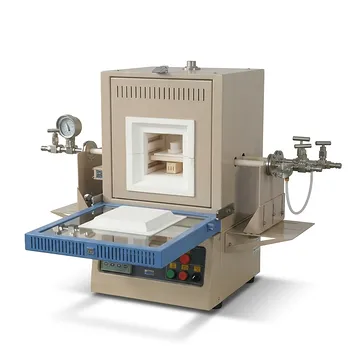
1700C Compact Hybrid Furnace with Dual Layer Box Sintering and Controlled Atmosphere Alumina Tubes
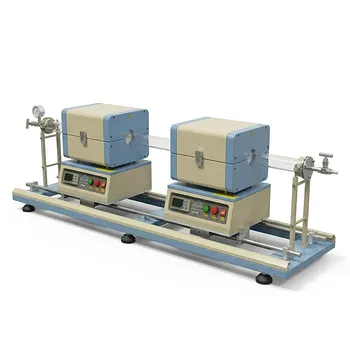
1200C Max Dual Sliding Tube Furnace with 50 mm Tube Flanges for CVD
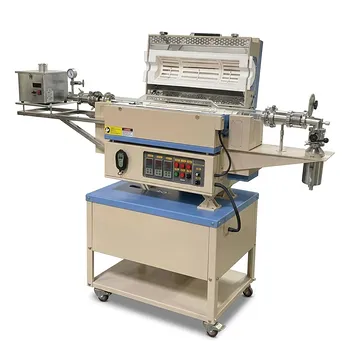
5 Inch Rotary Tube Furnace with Automatic Feeding and Receiving System 1200C Three Zone CVD Powder Processing