The Thermal Discipline of Surfaces: Why MgO Substrates Require a 1273K Reset
Jul 25, 2026
The Invisible Burden of "Raw" Materials
In the world of material science, we often treat substrates as passive stages—blank canvases upon which the real drama of catalysis unfolds. This is a mistake.
For the Pd/MgO model catalyst system, a raw MgO substrate is not a blank canvas. It is a scarred one.
Between the industrial machining that shapes the crystal and the ambient air that touches its surface, the "as-received" MgO is a chaotic landscape of mechanical strain and chemical noise. Without thermal intervention, the experiment is doomed before the first atom of Palladium is even deposited.
Erasing the Memory of Machining
Manufacturing is a violent process. Cutting, polishing, and grinding introduce internal mechanical stresses into the MgO crystal lattice.
If these stresses are not addressed, they act as hidden variables. They can cause structural failure or unpredictable electronic interactions during catalyst testing.
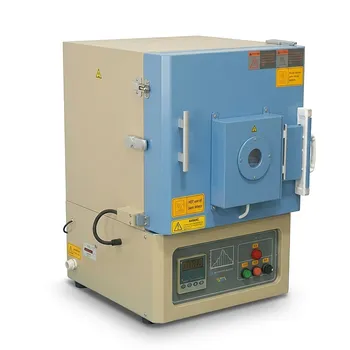
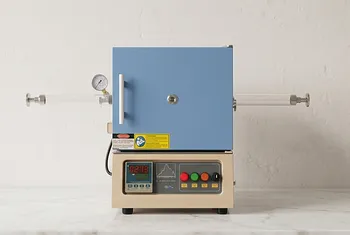
A high-temperature tube furnace provides the necessary thermal energy—specifically at the 1273 K (1000°C) threshold—to allow the lattice to relax. It is a process of metallurgical forgiveness, resetting the material to its ground state.
The Chemistry of Surface Desorption
MgO is a thirsty material. It naturally adsorbs moisture ($H_2O$) and carbon dioxide ($CO_2$) from the atmosphere.
- The Problem: These organic residues create a barrier between the substrate and the metal nanoparticles.
- The Thermal Solution: High-temperature treatment effectively "boils off" these volatile contaminants.
- The Result: A chemically pure surface where Palladium can bond directly to the oxygen sites of the MgO lattice.
The Atomic Dance: Terrace Formation
At 1000°C, a remarkable transition occurs. Surface atoms gain enough kinetic energy to move, but not so much that the crystal melts. They begin to rearrange.
The result is the formation of atomically flat terraces. These are the "perfect steps" required for heteroepitaxial growth. Without these terraces, Palladium nanoparticles would nucleate randomly, leading to a "messy" catalyst with low structural regularity.
In research, messy structures yield noisy data. Precision requires the discipline of the furnace.
Balancing the Thermal Trade-offs
Thermal treatment is not a "more is better" scenario. It is an exercise in narrow margins.
| Challenge | The Risk of Extremes | The Ideal State |
|---|---|---|
| Sintering | Excessive heat leads to grain growth and loss of surface area. | 1273 K provides reconstruction without degradation. |
| Atmospheric Purity | Trace contaminants in the gas stream can poison the MgO. | Controlled oxygen flow ensures an oxide-stable surface. |
| Cooling Rate | Rapid cooling can re-introduce thermal stress. | Slow, programmed cooling preserves the terrace structure. |
Engineering the Ideal Catalyst Template
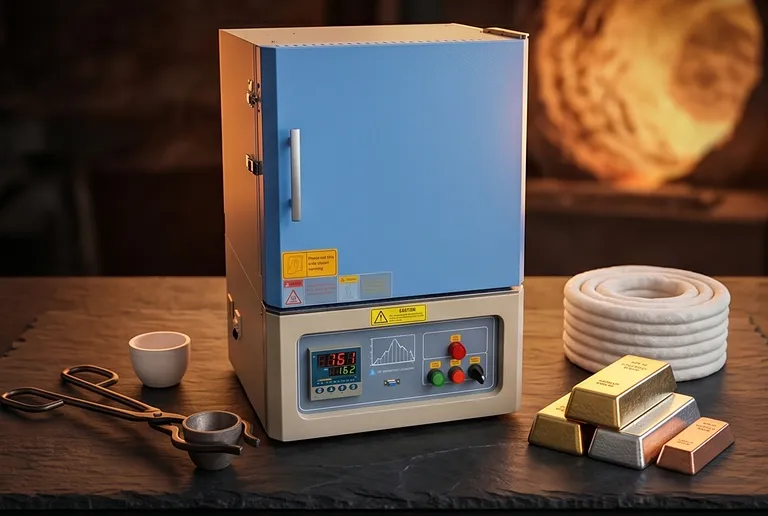
To achieve a world-class Pd/MgO system, the researcher must act as an architect of the substrate.
- Prioritize Oxygen Flow: Ensure the tube furnace maintains a flow of high-purity oxygen to stabilize the MgO surface.
- Maintain Temperature Uniformity: Even a 10-degree variance across the tube can result in non-uniform nanoparticle sizes.
- Optimize Duration: Longer annealing at slightly lower temperatures (950°C) can often be more effective for stress relief than a "flash" heat at higher temps.
The Foundation of Reproducibility
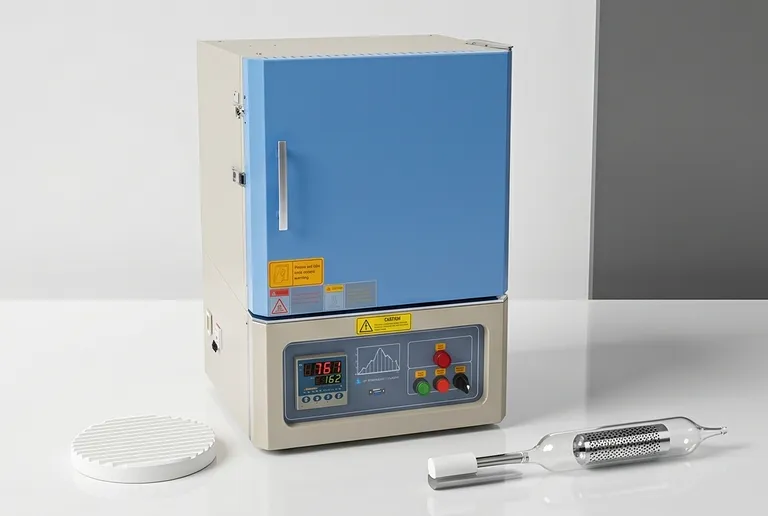
Modern R&D does not fail because the theories are wrong; it fails because the starting points are inconsistent.
By utilizing a high-precision furnace to pre-treat MgO, you eliminate the "hidden history" of the substrate. You ensure that every Palladium atom sits on a predictable, ordered, and clean foundation.
At THERMUNITS, we build the tools that provide this level of control. From high-temperature Tube Furnaces designed for substrate reconstruction to advanced CVD and Vacuum Induction Melting (VIM) systems, our equipment is the silent partner in your most demanding material breakthroughs.
Quick Links
Suggested Products
Large Bench Top 1700C High Temperature Muffle Furnace with 19L Chamber for Advanced Material Sintering and Annealing High Temperature 1500C Benchtop Muffle Furnace 3.6L Alumina Fiber Chamber Programmable Controller Sintering Annealing Carbonization Thermal Processing System 950C Rapid Thermal Processing Furnace for 12 Inch Wafer CSS Coating with Rotating Substrate Holder Five Side Heating Muffle Furnace High Purity Alumina Fiber 27L Chamber 1200C High Temperature Thermal Processing System for Sintering Annealing and Materials Research Rapid Thermal Processing Atmosphere Controlled Bottom Loading Furnace 1100C with 50C Per Second Heating Rate for Wafer AnnealingFurther Reading
The Geometry of Heat: Forging the Structural DNA of Dicalcium Ferrite The Invisible Boundary: Mastering Chemistry within the Architecture of Sintering The Architecture of Atoms: Decoding the Thermal Divide Between Sintering and Firing The Architecture of Controlled Disorder: Engineering Hard Carbon for the Sodium-Ion Era The Invisible Architecture of a Smile: Engineering Dental Ceramics at 1700°C
ThermUnits
Last updated on Apr 14, 2026
Related Products
Large Bench Top 1700C High Temperature Muffle Furnace with 19L Chamber for Advanced Material Sintering and Annealing
High Temperature 1500C Benchtop Muffle Furnace 3.6L Alumina Fiber Chamber Programmable Controller Sintering Annealing Carbonization Thermal Processing System
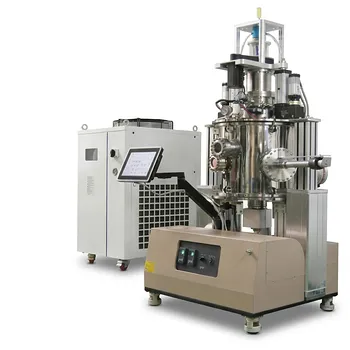
950C Rapid Thermal Processing Furnace for 12 Inch Wafer CSS Coating with Rotating Substrate Holder
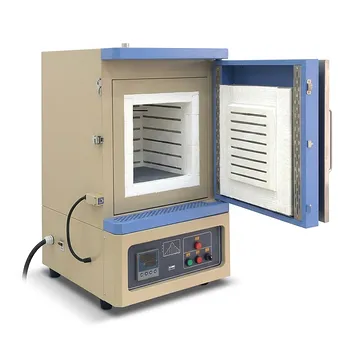
Five Side Heating Muffle Furnace High Purity Alumina Fiber 27L Chamber 1200C High Temperature Thermal Processing System for Sintering Annealing and Materials Research
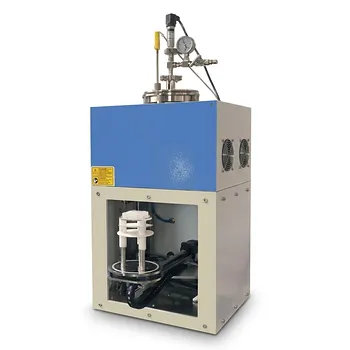
Rapid Thermal Processing Atmosphere Controlled Bottom Loading Furnace 1100C with 50C Per Second Heating Rate for Wafer Annealing
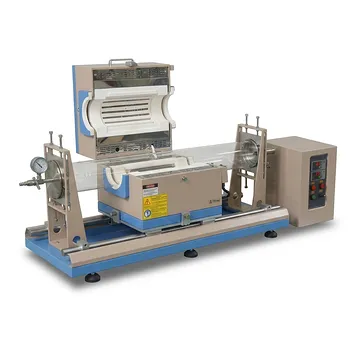
1200C High Temperature 5 Inch Sliding Tube Furnace for Rapid Thermal Processing RTP and Wafer Annealing
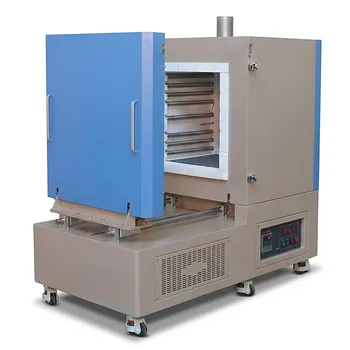
1200C Five Side Heating Muffle Furnace with Sliding Door 125L Volume High Temperature Heat Treatment System for Large Scale Sintering and Annealing
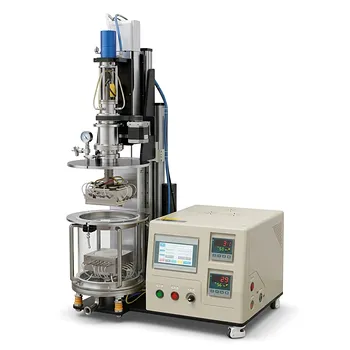
High Temperature 800C Rapid Thermal Processing Furnace with Rotating Sample Holder for Close Spaced Sublimation and Thin Film Solar Cell Research
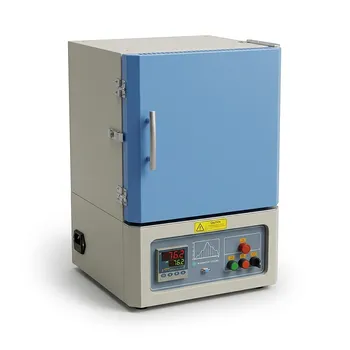
1750C Bench Top Muffle Furnace 3.6L High Grade Molybdenum Disilicide Heating Elements Laboratory Heat Treatment Equipment
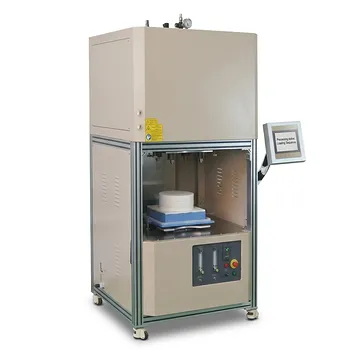
High Temperature Vertical Atmosphere Controlled Furnace with Automatic Bottom Loading and 1700°C Capacity for Advanced Material Research
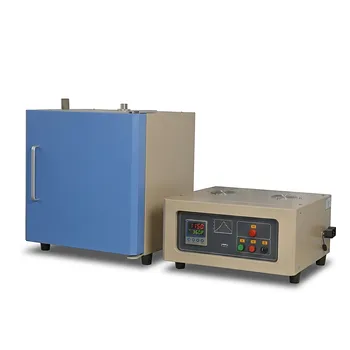
High Temperature Muffle Furnace with Alloy Chamber for Debinding and Sintering Applications
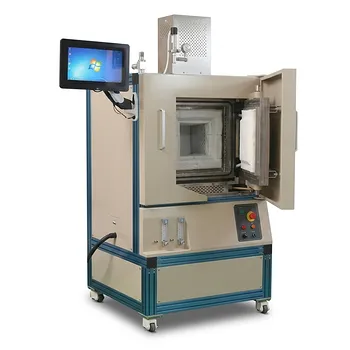
High Temperature Oxygen and Inert Atmosphere Controlled Furnace 8 Liter 1700C Sintering System for Advanced Materials RD
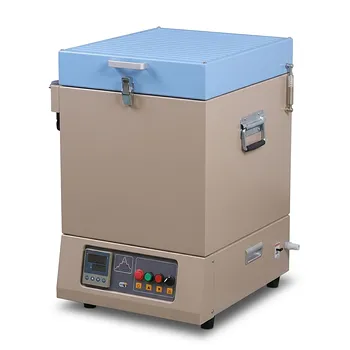
High Temperature Vertical Crucible Furnace with 22L Heating Chamber and 1200C Maximum Temperature
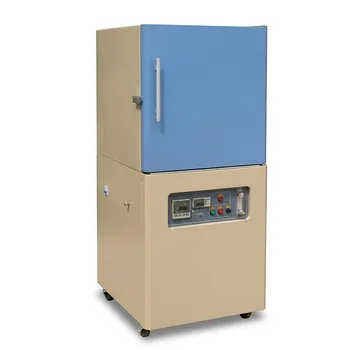
High Temperature Muffle Furnace with Dual Controllers and 36L Large Chamber 1700C Max
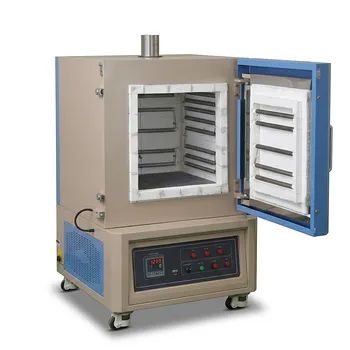
1200C High Temperature 125L Muffle Furnace 5 Side Heating for Large Batch Sintering with Optional Alloy Debinding Chamber
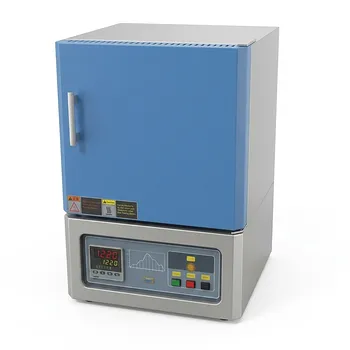
High Temperature Benchtop Muffle Furnace 1700C 10L Chamber Alumina Fiber Insulation MoSi2 Heating Elements

High Temperature Tube Furnace 1500C with Sliding Flanges and 50mm OD for Rapid Thermal Processing Fast Heating and Cooling
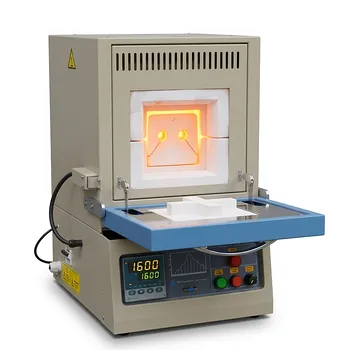
High Temperature Compact Muffle Furnace 1700 C with 30 Segment Programmable Controller and 1.7L Cubic Chamber
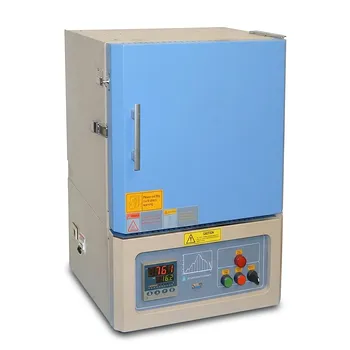
High Temperature 1700C Bench Top Muffle Furnace with Alumina Fiber Insulation and 3.6L Chamber Capacity for Precision Sintering and Heat Treatment