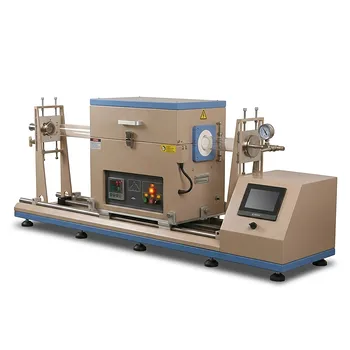
How are industrial-grade Tube Furnaces utilized for the purification of WTe2? Precise Heat Control & Crystal Perfection
Updated 3 months ago
Industrial-grade Tube Furnaces facilitate the purification and annealing of Tungsten Ditelluride (WTe2) through precise spatial temperature control. By establishing a specific thermal gradient across a vacuum-sealed quartz tube, these furnaces drive a self-vapor-transport mechanism. This process removes excess tellurium and eliminates lattice defects, resulting in high-purity single crystals suitable for advanced electronic applications.
The core utility of the tube furnace lies in its ability to create a controlled "source-to-sink" environment. This environment allows for the selective evaporation of impurities while simultaneously refining the crystalline structure of WTe2 through targeted thermal treatment.
The Mechanics of Vapor-Transport Purification
Establishing the Thermal Gradient
The furnace is configured to maintain two distinct temperature zones within a single quartz tube. The end containing the WTe2 crystals is typically held at a high-temperature zone, such as 415°C, while the opposite end is kept at a significantly lower temperature, often around 200°C.
The Self-Vapor-Transport Process
This temperature differential leverages a self-vapor-transport mechanism to refine the material. At the hotter end, excess tellurium (Te) evaporates from the surface of the WTe2 crystals and migrates through the tube.
Sequestration of Impurities
Once the tellurium vapor reaches the cooler end of the furnace, it condenses and solidifies. This physical separation effectively strips away unwanted tellurium, leaving behind a purified WTe2 bulk crystal at the source end.
Optimizing the Crystalline Structure through Annealing
Healing Lattice Defects
Beyond purification, the high-temperature environment provides a critical annealing effect. The thermal energy allows atoms within the WTe2 lattice to rearrange into their most stable, low-energy configurations.
Improving Electronic Properties
This structural refinement reduces the density of defects and dislocations within the crystal. For semi-metallic materials like WTe2, this improvement in crystalline quality is vital for achieving high carrier mobility and consistent electronic performance.
Ensuring Stoichiometric Precision
Precise temperature control prevents the over-evaporation of tellurium, which could lead to a breakdown of the WTe2 phase. Industrial-grade furnaces provide the stability necessary to maintain the delicate balance between removing excess material and preserving the crystal's chemical identity.
Engineering the Environment: Vacuum and Multi-Zone Control
The Role of Vacuum-Sealed Quartz
High-purity quartz tubes are utilized to provide a controlled, airtight environment. By evacuating oxygen and other reactive gases, the system prevents the oxidation of tungsten and tellurium, which would otherwise degrade the crystal at elevated temperatures.
Multi-Zone Independence
Industrial furnaces often employ multi-zone heating to provide independent spatial control. This allows for specific segments of the tube to be tuned for tellurium sublimation or tungsten precursor reactions, ensuring that vapor-phase reactions occur only under optimal thermodynamic conditions.
Atmospheric Integrity
In some industrial applications, high-purity Argon may be introduced to maintain an inert atmosphere. This further shields the reactive components from contamination and assists in stabilizing the internal pressure during high-temperature processing.
Understanding the Trade-offs and Risks
Temperature Sensitivity and Decomposition
If the temperature in the hot zone exceeds the stability threshold of WTe2, the crystal may begin to decompose rather than purify. Maintaining a precise window is essential to avoid losing the target material to the vapor phase.
Quartz Tube Integrity
While quartz is highly resistant to heat, extreme temperatures or rapid thermal cycling can lead to structural failure. A breach in the vacuum seal during processing introduces oxygen, which can cause an immediate and catastrophic reaction with the heated tellurium.
Gradient Consistency
Inconsistent thermal gradients can lead to uneven purification or "back-transport," where impurities fail to sequester at the cold end. This requires a furnace with high-quality insulation and sophisticated PID (Proportional-Integral-Derivative) controllers to ensure a steady state.
How to Apply This to Your Project
When utilizing industrial tube furnaces for WTe2 processing, your specific goals will dictate the furnace configuration and parameters.
- If your primary focus is Maximum Purity: Utilize a multi-zone furnace with a steep temperature gradient and a high-vacuum environment to ensure the total sequestration of excess tellurium.
- If your primary focus is Crystalline Perfection: Prioritize long-duration annealing at a stable, moderate temperature to allow for the slow healing of lattice defects without risking material decomposition.
- If your primary focus is Throughput and Scalability: Implement an inert gas flow system (such as Argon) within a vertical or large-bore furnace to manage thermal distribution across multiple quartz tubes simultaneously.
The integration of precise thermal gradients and controlled atmospheres makes the industrial tube furnace the definitive tool for refining WTe2 single crystals.
Summary Table:
| Feature | Mechanism | Benefit for WTe2 Crystals |
|---|---|---|
| Thermal Gradient | Self-vapor-transport | Sequestration of excess Tellurium impurities |
| High-Temp Annealing | Lattice atom rearrangement | Heals structural defects & boosts carrier mobility |
| Vacuum-Sealed Quartz | Airtight atmosphere control | Prevents oxidation and ensures chemical purity |
| Multi-Zone Heating | Independent spatial control | Maintains stable thermodynamic source-to-sink zones |
| PID Control Systems | Precise thermal stability | Prevents decomposition and ensures stoichiometric balance |
Elevate Your Research with THERMUNITS Thermal Solutions
High-performance materials like WTe2 demand uncompromising precision. THERMUNITS is a leading manufacturer of high-temperature laboratory equipment for material science and industrial R&D. Our advanced Tube Furnaces, Vacuum Systems, and Multi-Zone Heating solutions are engineered to provide the exact thermal gradients and atmospheric integrity needed for crystal purification and lattice healing.
Whether you require Muffle, Atmosphere, Rotary, or CVD/PECVD systems, our expert team is ready to support your most challenging heat treatment projects.
Ready to optimize your thermal processing?
Contact our experts today to find the perfect furnace for your lab.
References
- P. M. Rafailov, Vera Marinova. Polarized Raman Study of First-Order Phonons in Self-Flux Grown Single-Crystalline WTe2. DOI: 10.3390/nano14151256
Mentioned Products
- Vertical 1700C Vacuum and Atmosphere Tube Furnace with 80mm Alumina Tube
- Compact High Temperature 1600C Tube Furnace with 50mm Alumina Tube and Vacuum Flanges for Material Sintering
- 900°C Max Rotary Tube Furnace with 8 Inch 310S Alloy Tube and Optional Multi Zone Heating for Industrial Material Calcination
- Split Vertical Tube Furnace with 1200C Quartz Tube and Stainless Steel Vacuum Flanges for Rapid Thermal Processing
- High Temperature 1700C Tube Furnace with High Vacuum Turbomolecular Pump System and Multi Channel Mass Flow Controller Gas Mixer
People Also Ask
- How is an industrial-grade vertical tube furnace utilized in smelting leaching residues? Enhance Metal Recovery Efficiency
- What is the function of a laboratory-grade vertical tube furnace in fast pyrolysis? Optimize Composite Research.
- How does a vertical tube furnace facilitate thermoelectric alloy melting? Precision synthesis for material homogeneity.
- Why is a thermocouple sensor indispensable for monitoring the vertical tube furnace during gallium oxide nanowire production? Optimize VLS Growth
- What are the advantages of using a vertical tube furnace for crucible experiments simulating steel-slag interactions?

Tech Team · ThermUnits
Last updated on Jun 02, 2026
Related Products

Vertical 1700C Vacuum and Atmosphere Tube Furnace with 80mm Alumina Tube

Compact High Temperature 1600C Tube Furnace with 50mm Alumina Tube and Vacuum Flanges for Material Sintering
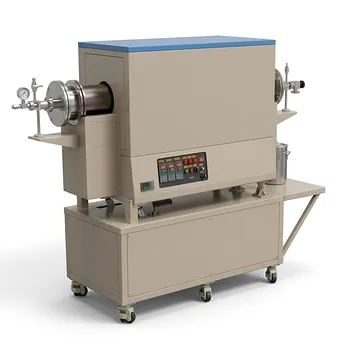
900°C Max Rotary Tube Furnace with 8 Inch 310S Alloy Tube and Optional Multi Zone Heating for Industrial Material Calcination
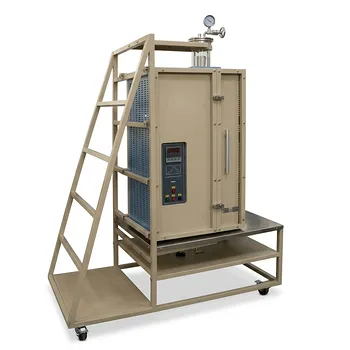
Split Vertical Tube Furnace with 1200C Quartz Tube and Stainless Steel Vacuum Flanges for Rapid Thermal Processing

High Temperature 1700C Tube Furnace with High Vacuum Turbomolecular Pump System and Multi Channel Mass Flow Controller Gas Mixer

1100C Tube Furnace with Vacuum Flange and Programmable Temperature Controller for Material Science and Industrial Heat Treatment
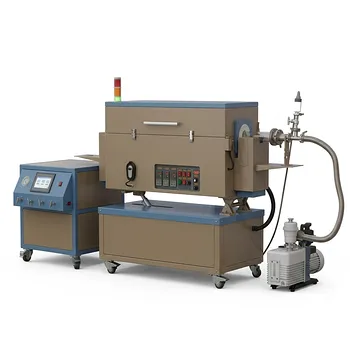
5 Inch Three Zone Rotary Tube Furnace with Integrated Gas Delivery System and 1200C Capability for Advanced Material CVD Processing
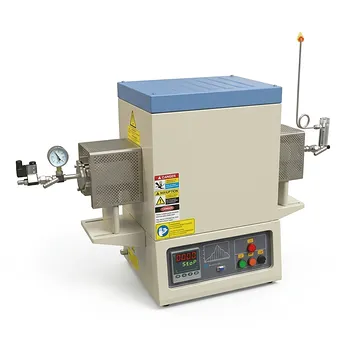
1700C Hydrogen Gas Tube Furnace with 60mm Alumina Process Tube and Integrated Hydrogen Safety Detector
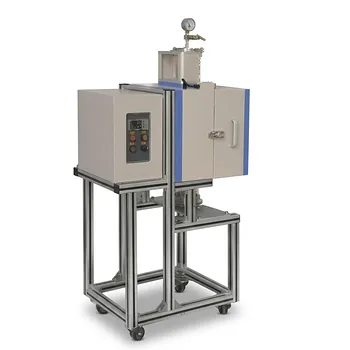
1200°C 5 Inch Vertical Quartz Tube Furnace with Stainless Steel Vacuum Flanges

High Temperature 1700C Six Zone Split Tube Furnace with Alumina Tube and Water Cooled Flanges

Compact Vertical Split Quartz Tube Furnace with Stainless Steel Vacuum Flanges for Rapid Thermal Quenching and Controlled Atmosphere Material Processing

High Temperature 1700C Benchtop Tube Furnace with 5 Inch Heating Zone High Purity Alumina Tube and Vacuum Sealing Flanges
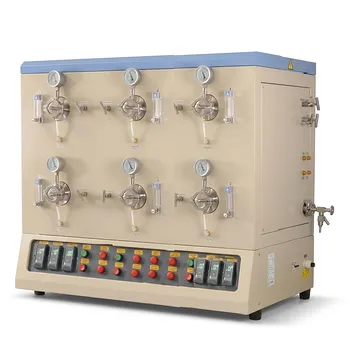
1200C High Throughput Multi Channel Tube Furnace with 50mm Quartz Tubes for Annealing and Material Phase Diagram Research
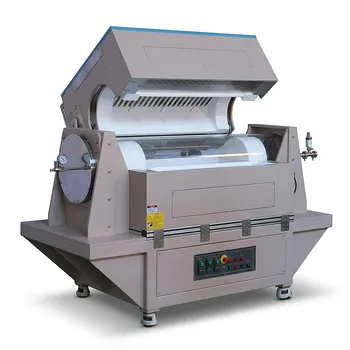
Three Zone Tube Furnace with 11 Inch or 15 Inch Quartz Tube and Hinged Flanges for Vacuum Atmosphere Heat Treatment

1800C High Temperature Compact Vacuum Tube Furnace with 60mm OD Alumina Tube and Kanthal MoSi2 Heating Elements

High Temperature 1700C Vertical Tube Furnace for Powder Spherification and Material Sintering
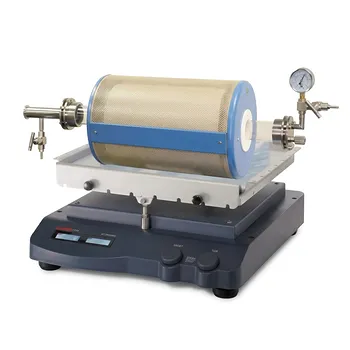
High Temperature Rocking Tube Furnace with Quartz Tube and Vacuum Flange for Materials Synthesis

High Temperature Automated 5 Inch Tube Furnace for Autonomous Material Research and Advanced Laboratory R&D
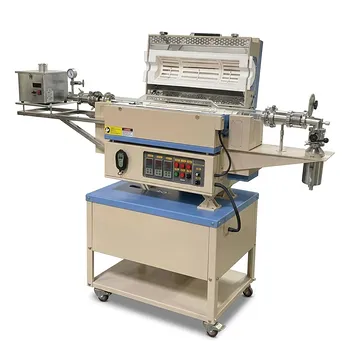
5 Inch Rotary Tube Furnace with Automatic Feeding and Receiving System 1200C Three Zone CVD Powder Processing