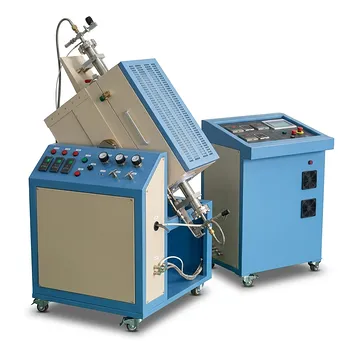
What is the function of a high-temperature tube furnace in the annealing of Ni-N-C composites? Optimize Catalyst Synthesis
Updated 3 months ago
A high-temperature tube furnace serves as the foundational reactor for synthesizing Ni-N-C composites by providing a strictly controlled thermal and chemical environment. During the annealing or pyrolysis process, it facilitates the transformation of metal-organic precursors into nitrogen-doped carbon frameworks while preventing the oxidative degradation of the material. This precise control is essential for achieving the specific porosity, conductivity, and atomic distribution required for advanced catalytic applications.
The high-temperature tube furnace acts as a precision chemical reactor that enables carbonization and pore-forming reactions under a stable, inert atmosphere. Its primary role is to convert organic ligands into a stable nitrogen-doped carbon matrix while managing the evaporation of volatile components to engineer the material's internal structure.
Facilitating Thermal Transformation and Carbonization
The Pyrolysis of Organic Precursors
The furnace provides the high thermal energy—often reaching 1000°C—required to trigger the pyrolysis of precursors such as Ni-ZIF-8. This heat causes the organic ligands to break down and reorganize into a nitrogen-doped carbon (NC) skeleton.
Carbon Chain Reorganization
Beyond simple breakdown, the stable heat environment promotes the reorganization of carbon chains and aromatization. This process transforms polymer-like structures into high-strength, electrically conductive carbon matrices that anchor the nickel components.
Precise Thermal Uniformity
The design of a tube furnace ensures a consistent temperature field along the length of the sample. This uniformity is critical for maintaining phase purity and ensuring that the final Ni-N-C composite has consistent chemical properties throughout the batch.
Atmospheric Protection and Chemical Control
Prevention of Oxidative Combustion
A primary function of the tube furnace is to maintain a stable inert atmosphere, typically using Argon (Ar) or Nitrogen (N2). By displacing oxygen, the furnace prevents the oxidative combustion of the carbon matrix, which would otherwise destroy the material at high temperatures.
Establishing Reductive Environments
In some synthesis routes, the furnace can introduce specific gases like ammonia (NH3) to facilitate reductive nitridation. This allows for the simultaneous carbonization of the substrate and the fine-tuning of the nitrogen content within the carbon lattice.
Safeguarding Structural Integrity
By maintaining stable physical and chemical parameters, the furnace prevents contamination from the external environment. This isolation is vital for protecting the structural integrity and performance indicators of the final Ni-N-C product.
Structural Engineering and Pore Development
Pore Formation via Zinc Evaporation
In materials like Ni-ZIF-8, the furnace environment causes zinc (Zn) nanoparticles to reach their boiling point and evaporate. This evaporation is a critical mechanism for creating a highly developed porous structure within the carbon substrate.
Uniform Distribution of Nickel
The high-temperature environment facilitates the embedding of nickel species as nanoclusters or single atoms within the nitrogen-doped matrix. This ensures the nickel is uniformly distributed, preventing the agglomeration that would reduce the material's catalytic surface area.
Stress Relief and Structural Ordering
Annealing at these temperatures helps eliminate mechanical stress and structural defects within the composite. This leads to a more ordered crystalline structure, which enhances the chemical stability and longevity of the material.
Understanding the Trade-offs
Temperature Precision vs. Sintering Risks
While high temperatures are necessary for carbonization and Zn evaporation, excessive heat can lead to sintering. If the temperature is too high or held too long, the nickel particles may coalesce, significantly reducing the active surface area of the catalyst.
Atmosphere Flow Dynamics
The rate of gas flow through the tube furnace must be carefully balanced. Inadequate flow may fail to remove evaporated zinc or byproduct gases effectively, while excessive flow can lead to temperature gradients that result in non-uniform material properties.
Optimizing the Annealing Process for Your Goal
How to Apply This to Your Project
To achieve the best results with a high-temperature tube furnace, you must align the furnace settings with your specific material objectives:
- If your primary focus is high surface area: Set the furnace to at least 900°C-1000°C to ensure the full evaporation of zinc or other sacrificial templates, which creates the necessary micropores.
- If your primary focus is nitrogen retention: Carefully control the ramp rate and consider using a nitrogen-rich atmosphere (like NH3) to prevent the loss of nitrogen species during the carbonization phase.
- If your primary focus is metal dispersion: Use a precise, constant temperature environment to ensure nickel atoms are securely anchored into the nitrogen-doped sites without migrating into large, inactive chunks.
By mastering the interplay between temperature, atmosphere, and time within the tube furnace, you can precisely engineer the electrochemical and structural properties of Ni-N-C composites.
Summary Table:
| Process Function | Role in Ni-N-C Synthesis | Key Technical Benefit |
|---|---|---|
| Pyrolysis | Converts organic ligands into nitrogen-doped carbon | High electrical conductivity and strength |
| Atmosphere Control | Prevents oxidative combustion via inert gases (Ar/N2) | Safeguards structural integrity and purity |
| Pore Engineering | Facilitates Zn evaporation to create micropores | Maximizes catalytic surface area |
| Thermal Uniformity | Ensures consistent Ni atomic distribution | Prevents agglomeration and sintering risks |
| Reductive Nitridation | Introduces NH3 for precise nitrogen lattice tuning | Enhanced electrochemical performance |
Elevate Your Material Research with THERMUNITS Precision Furnaces
Are you looking to master the synthesis of Ni-N-C composites or advanced catalysts? THERMUNITS is a leading manufacturer of high-temperature laboratory equipment for material science and industrial R&D. We provide the precise thermal and atmospheric control necessary for cutting-edge material engineering.
Our comprehensive range of thermal processing solutions includes:
- Tube and Atmosphere Furnaces (Perfect for Ni-N-C pyrolysis)
- Muffle, Vacuum, and Rotary Furnaces
- CVD/PECVD Systems and Hot Press Furnaces
- Vacuum Induction Melting (VIM) and Dental Furnaces
- Electric Rotary Kilns and Thermal Elements
Whether you are focusing on high surface area or metal dispersion, our equipment ensures consistent, repeatable results for your most demanding heat treatment applications. Contact us today to find your solution!
References
- Qiaoting Cheng, Hua Wang. Modification of NiSe2 Nanoparticles by ZIF-8-Derived NC for Boosting H2O2 Production from Electrochemical Oxygen Reduction in Acidic Media. DOI: 10.3390/catal14060364
Mentioned Products
- High Temperature Tube Furnace 1500C with Sliding Flanges and 50mm OD for Rapid Thermal Processing Fast Heating and Cooling
- High Temperature 1700C Tube Furnace with High Vacuum Turbomolecular Pump System and Multi Channel Mass Flow Controller Gas Mixer
- 1750°C High Temperature Benchtop Vacuum Atmosphere Tube Furnace with Kanthal Super 1800 Heating Elements and 60mm Alumina Processing Tube
- High Temperature 1700C Benchtop Tube Furnace with 5 Inch Heating Zone High Purity Alumina Tube and Vacuum Sealing Flanges
- High Temperature Split Tube Furnace 1500C for Material Research Vacuum and Atmosphere Thermal Processing
People Also Ask
- How are high-temperature tube furnaces utilized to repair etching damage? Precision Lattice Restoration Solutions
- What role does a high-temperature tube furnace play in CVD synthesis of silicon nanowires? Master VLS Growth Precision.
- What core conditions does a high-temperature tube furnace provide for rGO aerogels? Mastering Precision Synthesis.
- What role does a high-temperature tube furnace play in the sulfidation heat treatment of CoS@C/MXene nanocomposites? Guide
- How does precision tube furnace control influence CoFe nanoparticle formation? Master Your Bimetallic Synthesis.

Tech Team · ThermUnits
Last updated on Jun 02, 2026
Related Products
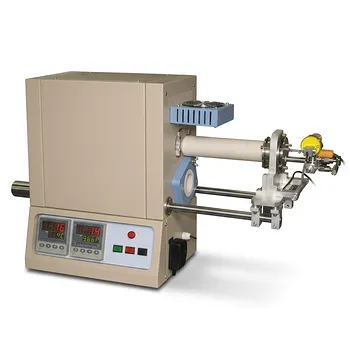
High Temperature Tube Furnace 1500C with Sliding Flanges and 50mm OD for Rapid Thermal Processing Fast Heating and Cooling

High Temperature 1700C Tube Furnace with High Vacuum Turbomolecular Pump System and Multi Channel Mass Flow Controller Gas Mixer

1750°C High Temperature Benchtop Vacuum Atmosphere Tube Furnace with Kanthal Super 1800 Heating Elements and 60mm Alumina Processing Tube

High Temperature 1700C Benchtop Tube Furnace with 5 Inch Heating Zone High Purity Alumina Tube and Vacuum Sealing Flanges
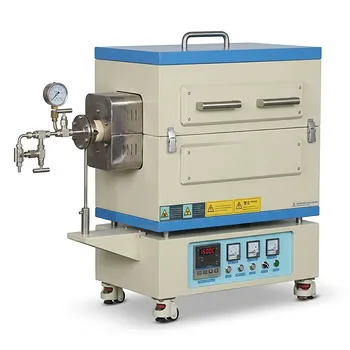
High Temperature Split Tube Furnace 1500C for Material Research Vacuum and Atmosphere Thermal Processing
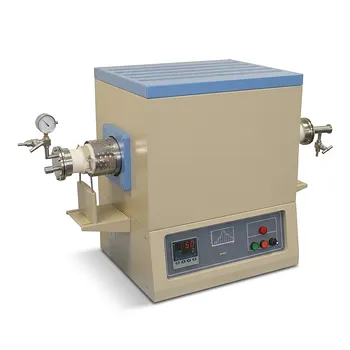
1700C High Temperature Alumina Tube Furnace with 18 Inch Heated Zone and Vacuum Sealing Flanges

1800C High Temperature Compact Vacuum Tube Furnace with 60mm OD Alumina Tube and Kanthal MoSi2 Heating Elements

Compact High Temperature 1600C Tube Furnace with 50mm Alumina Tube and Vacuum Flanges for Material Sintering
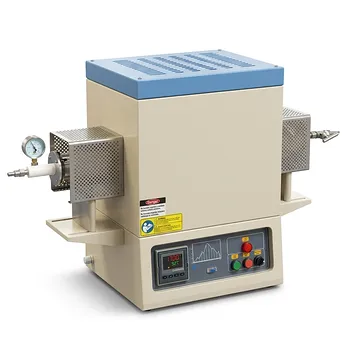
High Temperature Three Zone Tube Furnace 1700C with Alumina Tube and Water Cooled Flanges
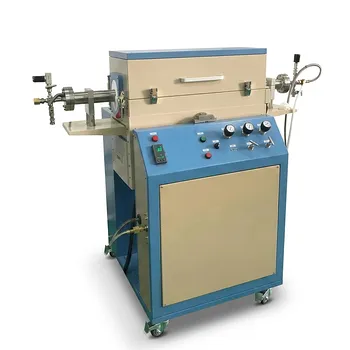
High Temperature Rocking Tube Furnace 1700°C Alumina Processing Tube with Precision Oscillation for Material Synthesis
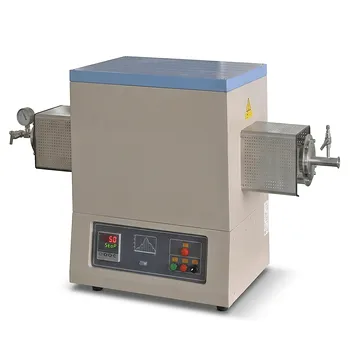
High Temperature 1700C Tube Furnace with 4 Inch OD Alumina Tube and Vacuum Sealing Flanges

High Temperature 1700C Vertical Tube Furnace for Powder Spherification and Material Sintering
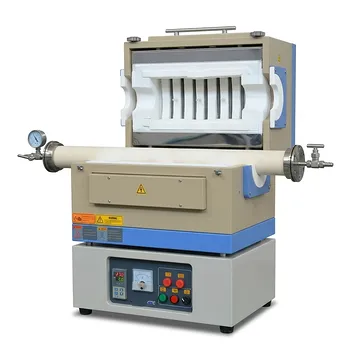
High Temperature 1600C Split Tube Furnace Vacuum Flanges Valves Optional 60mm 80mm Alumina Tube

High Temperature Automated 5 Inch Tube Furnace for Autonomous Material Research and Advanced Laboratory R&D
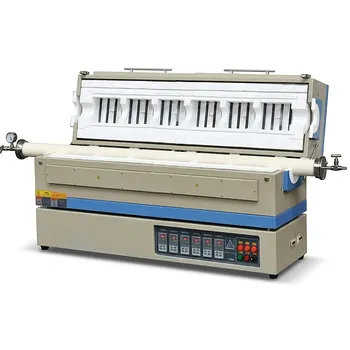
High Temperature 1700C Six Zone Split Tube Furnace with Alumina Tube and Water Cooled Flanges
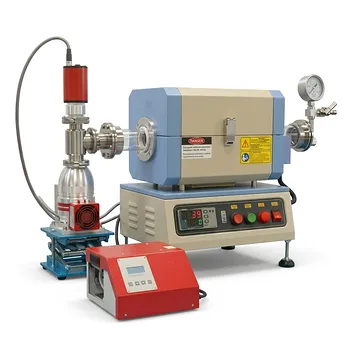
High Vacuum Compact Tube Furnace 1200C with Integrated Turbo Pump System and 8 Inch Heating Zone
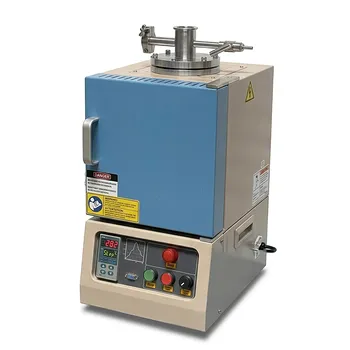
High Temperature Hybrid Muffle and Tube Furnace with Vacuum Capability and PID Control

1100°C High Temperature Quartz Chamber Furnace 8 Inch OD with 7.6 Liter Capacity and Vacuum Atmosphere Capability
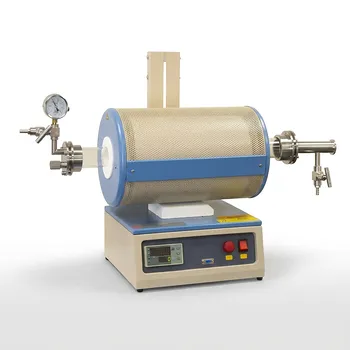
1100C Tube Furnace with Vacuum Flange and Programmable Temperature Controller for Material Science and Industrial Heat Treatment