How are tube furnaces utilized in the synthesis and characterization of advanced materials? Expert Thermal Solutions
Updated 5 months ago
Tube furnaces are the primary thermal reactors used for the precise synthesis and characterization of advanced materials. They provide a controlled, sealed environment where materials undergo chemical transformations—such as sintering, annealing, or chemical vapor deposition—under specific gas atmospheres. This precision allows researchers to manipulate crystalline structures, ensure phase purity, and maintain the exact chemical composition required for high-performance applications.
The tube furnace serves as a high-precision microenvironment where thermal uniformity and atmospheric control converge to enable repeatable material synthesis. It is the essential tool for researchers needing to drive specific chemical kinetics while preventing contamination or unintended oxidation.
Advanced Methods of Material Synthesis
Solid-State Reactions and Sintering
Tube furnaces are foundational for solid-state synthesis, where raw powder components diffuse at high temperatures to form new compounds. This process is critical for creating complex oxides, high-temperature superconductors, and functional ceramics.
The furnace provides the sustained heat necessary for sintering, which densifies "green" ceramic bodies into solid, high-strength materials. By precisely adjusting heating curves and soaking times, researchers ensure that the final product achieves high phase purity and a complete crystal structure.
Chemical Vapor Deposition (CVD) and Nanomaterials
For the production of functional nanomaterials, tube furnaces act as high-precision flow reactors. In processes like CVD, precursors are vaporized and transported through the tube, where they react or decompose on a substrate to grow thin films or nanostructures.
The ability to control residence time and gas flow rates is vital for determining the morphology and crystal phase of the resulting nanomaterial. This setup allows for the creation of layered materials and carbon nanotubes with highly specific physical properties.
Calcination and Pyrolysis
Tube furnaces are used for calcination, which involves heating materials to high temperatures in air or oxygen to remove volatile impurities or induce thermal decomposition. This is a standard step in preparing catalysts and various inorganic non-metallic materials.
In contrast, pyrolysis occurs in an inert atmosphere to decompose organic precursors into carbon-based structures. The sealed nature of the furnace tube prevents the introduction of combustion by-products, ensuring the sample remains uncontaminated during sensitive organometallic syntheses.
The Role of Environmental Control
Atmospheric Isolation and Stoichiometry
One of the most critical functions of a tube furnace is providing a precisely controlled gas environment. By introducing reducing, oxidizing, or inert gases, researchers can ensure that chemical reactions occur at specific stoichiometric ratios.
This control prevents the oxidation or hydrolysis of raw materials that would otherwise occur in open-air furnaces. It is particularly important when working with materials sensitive to oxygen and moisture, such as certain semiconductors or metal alloys.
Thermal Uniformity and Repeatability
High-precision tube furnaces feature multi-stage programmable temperature control, allowing for complex heating and cooling profiles. This ensures that the entire sample experiences an identical temperature history, which is essential for obtaining consistent crystalline structures.
The temperature field uniformity within the "hot zone" of the tube is superior to most other furnace types. This uniformity allows for the in-situ activation or regeneration of catalysts and the careful study of reaction kinetics.
Understanding the Trade-offs
Volume and Geometry Limitations
The primary limitation of a tube furnace is its physical geometry, which restricts the size and shape of samples to those that can fit within the diameter of the work tube. This makes them ideal for laboratory-scale research but less suited for high-volume industrial production of large components.
Temperature Gradients at Tube Ends
While the center of the tube offers exceptional uniformity, temperature gradients naturally occur near the ends of the furnace. Researchers must carefully place samples within the calibrated "hot zone" to avoid inconsistencies caused by these cooler regions.
Sealing and Integrity Risks
Maintaining a high-purity atmosphere requires perfect vacuum-tight seals at the ends of the tube. Any degradation in the seals or the tube material itself can introduce oxygen or moisture, potentially ruining a long-duration synthesis or characterization experiment.
Making the Right Choice for Your Goal
How to Apply This to Your Project
To achieve the best results with a tube furnace, align your technical approach with your specific material requirements:
- If your primary focus is Phase Purity: Use multi-stage programmable heating to allow for sufficient diffusion and grain growth while maintaining a strictly inert atmosphere.
- If your primary focus is Thin Film or Nanomaterial Growth: Prioritize a system with high-precision mass flow controllers to regulate the delivery of precursors during the CVD process.
- If your primary focus is Kinetic Studies: Utilize the tube furnace as a flow reactor to precisely control the residence time of gases over your sample or catalyst.
- If your primary focus is High-Temperature Superconductors: Ensure the furnace is capable of maintaining precise oxygen partial pressures to achieve the necessary stoichiometry.
By masterfully balancing temperature profiles with atmospheric chemistry, the tube furnace becomes the definitive tool for transforming raw chemical precursors into the next generation of advanced materials.
Summary Table:
| Application | Synthesis Process | Key Benefit in Tube Furnaces |
|---|---|---|
| Nanomaterials | CVD / PECVD | Precise gas flow and residence time for thin film morphology. |
| Ceramics & Oxides | Sintering | High thermal uniformity ensures phase purity and densification. |
| Catalyst Prep | Calcination | Controlled removal of volatiles in specific oxygen environments. |
| Carbon Structures | Pyrolysis | Inert atmospheres prevent contamination during thermal decomposition. |
| Superconductors | Annealing | Precise stoichiometry control through atmospheric isolation. |
Elevate Your Material Science Research with THERMUNITS
As a leading manufacturer of high-temperature laboratory equipment, THERMUNITS provides the precision and reliability essential for cutting-edge industrial R&D. Our specialized thermal processing solutions—ranging from Tube and CVD/PECVD systems to Vacuum, Atmosphere, and Hot Press furnaces—are engineered to deliver superior thermal uniformity and atmospheric integrity.
Whether you are advancing in nanotechnology, sintering functional ceramics, or vacuum induction melting (VIM), our equipment empowers you to achieve repeatable, high-purity results.
Ready to optimize your heat treatment process? Contact THERMUNITS today to discuss your project requirements!
Mentioned Products
- Vertical 1700C Vacuum and Atmosphere Tube Furnace with 80mm Alumina Tube
- Compact High Temperature 1600C Tube Furnace with 50mm Alumina Tube and Vacuum Flanges for Material Sintering
- 900°C Max Rotary Tube Furnace with 8 Inch 310S Alloy Tube and Optional Multi Zone Heating for Industrial Material Calcination
- Split Vertical Tube Furnace with 1200C Quartz Tube and Stainless Steel Vacuum Flanges for Rapid Thermal Processing
- High Temperature 1700C Tube Furnace with High Vacuum Turbomolecular Pump System and Multi Channel Mass Flow Controller Gas Mixer
People Also Ask
- How is an industrial-grade vertical tube furnace utilized in smelting leaching residues? Enhance Metal Recovery Efficiency
- What is the function of a laboratory-grade vertical tube furnace in fast pyrolysis? Optimize Composite Research.
- How does a vertical tube furnace facilitate thermoelectric alloy melting? Precision synthesis for material homogeneity.
- Why is a thermocouple sensor indispensable for monitoring the vertical tube furnace during gallium oxide nanowire production? Optimize VLS Growth
- What are the advantages of using a vertical tube furnace for crucible experiments simulating steel-slag interactions?

Tech Team · ThermUnits
Last updated on Apr 14, 2026
Related Products

Vertical 1700C Vacuum and Atmosphere Tube Furnace with 80mm Alumina Tube

Compact High Temperature 1600C Tube Furnace with 50mm Alumina Tube and Vacuum Flanges for Material Sintering
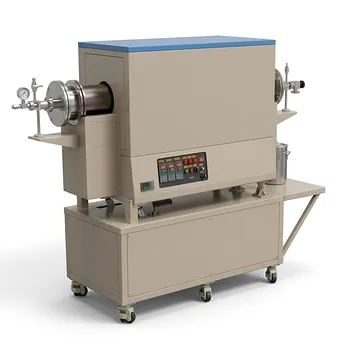
900°C Max Rotary Tube Furnace with 8 Inch 310S Alloy Tube and Optional Multi Zone Heating for Industrial Material Calcination
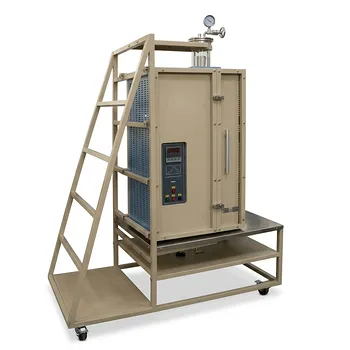
Split Vertical Tube Furnace with 1200C Quartz Tube and Stainless Steel Vacuum Flanges for Rapid Thermal Processing

High Temperature 1700C Tube Furnace with High Vacuum Turbomolecular Pump System and Multi Channel Mass Flow Controller Gas Mixer
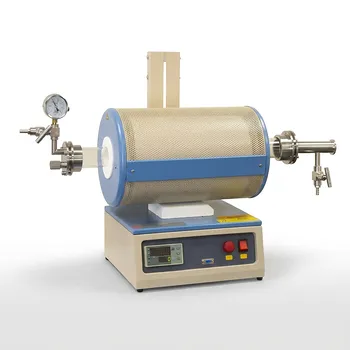
1100C Tube Furnace with Vacuum Flange and Programmable Temperature Controller for Material Science and Industrial Heat Treatment
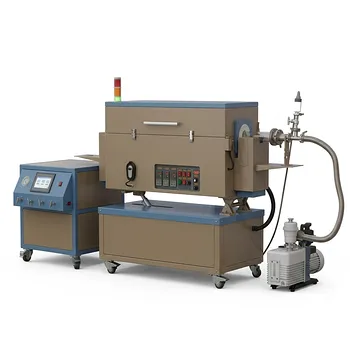
5 Inch Three Zone Rotary Tube Furnace with Integrated Gas Delivery System and 1200C Capability for Advanced Material CVD Processing
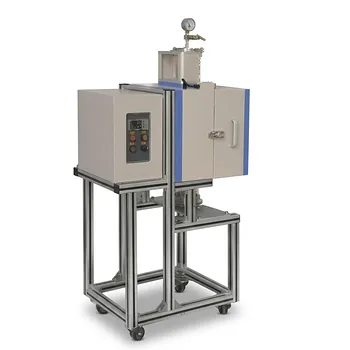
1200°C 5 Inch Vertical Quartz Tube Furnace with Stainless Steel Vacuum Flanges

High Temperature 1700C Six Zone Split Tube Furnace with Alumina Tube and Water Cooled Flanges
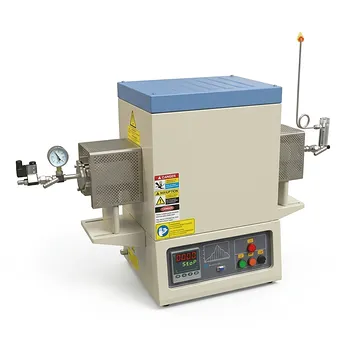
1700C Hydrogen Gas Tube Furnace with 60mm Alumina Process Tube and Integrated Hydrogen Safety Detector

Compact Vertical Split Quartz Tube Furnace with Stainless Steel Vacuum Flanges for Rapid Thermal Quenching and Controlled Atmosphere Material Processing

High Temperature 1700C Benchtop Tube Furnace with 5 Inch Heating Zone High Purity Alumina Tube and Vacuum Sealing Flanges
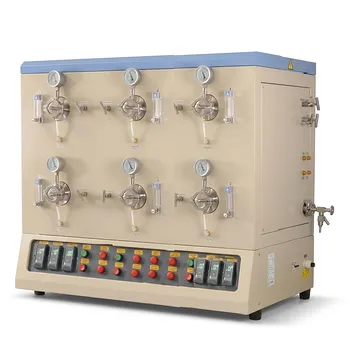
1200C High Throughput Multi Channel Tube Furnace with 50mm Quartz Tubes for Annealing and Material Phase Diagram Research

1800C High Temperature Compact Vacuum Tube Furnace with 60mm OD Alumina Tube and Kanthal MoSi2 Heating Elements
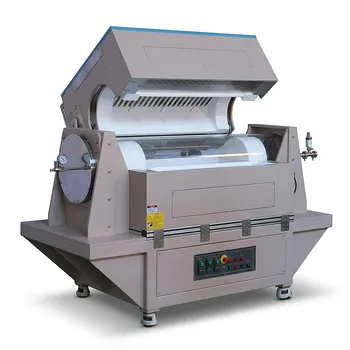
Three Zone Tube Furnace with 11 Inch or 15 Inch Quartz Tube and Hinged Flanges for Vacuum Atmosphere Heat Treatment

High Temperature 1700C Vertical Tube Furnace for Powder Spherification and Material Sintering
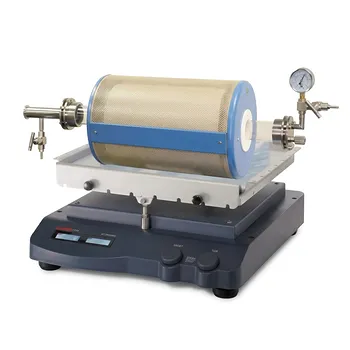
High Temperature Rocking Tube Furnace with Quartz Tube and Vacuum Flange for Materials Synthesis

High Temperature Automated 5 Inch Tube Furnace for Autonomous Material Research and Advanced Laboratory R&D
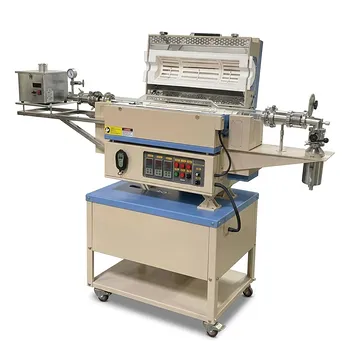
5 Inch Rotary Tube Furnace with Automatic Feeding and Receiving System 1200C Three Zone CVD Powder Processing