How does a gas circulation system equipped in a tube furnace contribute to the modification of biochar? Precision Control
Updated 3 months ago
Gas circulation systems enable precise control over the chemical environment and physical structure of biochar during thermal processing. By introducing specific gas flows, such as nitrogen or carbon dioxide, the system dictates whether the biomass undergoes simple carbonization or advanced physical activation. This control is essential for tailoring the biochar’s porosity and surface chemistry to meet specific agricultural or industrial requirements.
Core Takeaway: The gas circulation system transforms a tube furnace from a simple heater into a precision reactor by managing gas-solid reactions and atmospheric purity. It is the primary mechanism for preventing sample oxidation and inducing the structural changes necessary to enhance biochar's absorption and water-holding capabilities.
The Role of Atmospheric Control
Inert Gas Shielding with Nitrogen
The introduction of high-purity nitrogen (N2) is the most common use of the circulation system. It creates a strictly anaerobic environment by displacing oxygen, which is necessary to prevent the biomass from combusting during high-temperature treatment.
This inert atmosphere facilitates the core thermochemical processes of devolatilization, carbonization, and aromatization. Without this shield, the organic matter would turn to ash rather than forming a stable carbon framework.
Reactive Gas Activation with CO2
When the system introduces carbon dioxide (CO2), it moves beyond protection and into active modification via gas-solid reactions. This process is known as physical activation, where the CO2 reacts with the carbonized surface at high temperatures.
This specific reaction etches the carbon skeleton, significantly increasing the specific surface area. This is a critical step for converting raw biochar into high-performance materials suitable for filtration or catalyst support.
Mass Transfer and Volatile Management
Preventing Secondary Reactions
As biomass heats up, it releases volatile organic compounds and gases. A stable gas flow, often regulated by mass flow controllers, ensures these volatiles are swept out of the furnace tube in a timely manner.
Removing these gases prevents them from undergoing secondary reactions that could deposit unwanted carbon species back onto the biochar. This ensures that the chemical signature of the biochar remains consistent with the intended processing parameters.
Preserving Pore Integrity
If volatile gases are allowed to linger, they can lead to pore blockages within the biochar structure. The circulation system maintains a "clean" environment that keeps the newly formed channels and pores open.
This preservation of pore integrity is vital for applications requiring vacuum impregnation. Open pores allow the biochar to effectively absorb phase change materials or other chemical modifiers later in the production cycle.
Engineering Surface Chemistry
Enhancing Polar Functional Groups
The choice of gas flow directly influences the development of surface functional groups, such as hydroxyl (-OH) and carboxyl (-COOH) groups. These polar groups are essential for the biochar's chemical reactivity.
By adjusting the gas composition and exposure time, researchers can tune the water-holding capacity of the resulting biochar. This makes the material more effective for soil amendment applications where moisture retention is a priority.
Promoting Stable Radical Formation
Precise gas circulation, combined with specific temperature intervals, determines the production of persistent free radicals (PFRs). These radicals contribute to the biochar's ability to reduce contaminants.
Controlled gas flow ensures that phenolic substances convert at the correct rate. This results in a modified biochar that can achieve optimal reduction activity for heavy metals like hexavalent chromium.
Understanding the Trade-offs
Gas Flow Rate vs. Heating Uniformity
High gas flow rates are excellent for rapidly removing volatiles and maintaining a clean atmosphere. However, excessive flow can create thermal gradients within the tube, leading to uneven carbonization across the sample.
Cost of High-Purity Gases
Achieving specific surface modifications often requires high-purity gases and precise flow controllers. This increases the operational cost per gram of biochar compared to simpler, less-controlled pyrolysis methods.
Over-Activation and Structural Integrity
While activation with CO2 increases porosity, excessive exposure can "over-etch" the carbon framework. This may lead to a loss of mechanical strength, causing the biochar to crumble or lose its structural utility in pressurized environments.
Applying Gas Circulation to Your Project
Using Gas Flow to Achieve Specific Outcomes
To effectively modify biochar using a tube furnace, align your gas circulation strategy with your final material goals:
- If your primary focus is high-surface-area filtration: Utilize CO2 activation at elevated temperatures to aggressively expand the pore network.
- If your primary focus is stable soil amendment: Maintain a steady N2 flow to ensure a pure carbon framework while preserving organic functional groups for moisture retention.
- If your primary focus is contaminant reduction: Optimize the flow rate to facilitate the formation of persistent free radicals while preventing the accumulation of inhibitory volatiles.
Mastering the balance between atmospheric composition and flow dynamics is the key to unlocking the full potential of biochar modification.
Summary Table:
| Feature | Mechanism | Impact on Biochar |
|---|---|---|
| Inert Shielding | Nitrogen (N2) Flow | Prevents combustion; ensures stable carbonization. |
| Physical Activation | Carbon Dioxide (CO2) | Etches carbon surface; significantly increases porosity. |
| Mass Transfer | Volatile Removal | Prevents pore blockages and unwanted secondary reactions. |
| Surface Engineering | Flow & Chemistry Tuning | Enhances functional groups for better water retention. |
Maximize Your Material Research with THERMUNITS
Elevate your lab’s thermal processing capabilities with THERMUNITS, a leading manufacturer of high-performance laboratory equipment for material science and industrial R&D. Whether you are optimizing biochar modification or developing advanced catalysts, our precision-engineered systems provide the control you need.
Our extensive range includes:
- Tube & Atmosphere Furnaces (with precise gas circulation systems)
- Vacuum, Muffle, & Rotary Furnaces
- CVD/PECVD Systems & Hot Press Furnaces
- VIM (Vacuum Induction Melting) & Advanced Thermal Elements
Ready to enhance your R&D efficiency? Contact us today to request a quote or consultation and find the perfect heat treatment solution for your project.
References
- Huiying Zhang, Weifeng Chen. Roles of biochars’ properties in their water-holding capacity and bound water evaporation: quantitative importance and controlling mechanism. DOI: 10.1007/s42773-024-00317-2
Mentioned Products
- Vertical 1700C Vacuum and Atmosphere Tube Furnace with 80mm Alumina Tube
- Compact High Temperature 1600C Tube Furnace with 50mm Alumina Tube and Vacuum Flanges for Material Sintering
- 900°C Max Rotary Tube Furnace with 8 Inch 310S Alloy Tube and Optional Multi Zone Heating for Industrial Material Calcination
- Split Vertical Tube Furnace with 1200C Quartz Tube and Stainless Steel Vacuum Flanges for Rapid Thermal Processing
- High Temperature 1700C Tube Furnace with High Vacuum Turbomolecular Pump System and Multi Channel Mass Flow Controller Gas Mixer
People Also Ask
- How does a vertical tube furnace facilitate thermoelectric alloy melting? Precision synthesis for material homogeneity.
- Why is a thermocouple sensor indispensable for monitoring the vertical tube furnace during gallium oxide nanowire production? Optimize VLS Growth
- What is the function of a laboratory-grade vertical tube furnace in fast pyrolysis? Optimize Composite Research.
- How is an industrial-grade vertical tube furnace utilized in smelting leaching residues? Enhance Metal Recovery Efficiency
- Why is a vertical tube furnace preferred for Ga2O3 CVD? Optimize Convection & Nanowire Growth

Tech Team · ThermUnits
Last updated on Jun 03, 2026
Related Products

Vertical 1700C Vacuum and Atmosphere Tube Furnace with 80mm Alumina Tube

Compact High Temperature 1600C Tube Furnace with 50mm Alumina Tube and Vacuum Flanges for Material Sintering
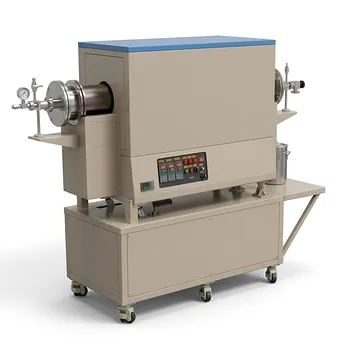
900°C Max Rotary Tube Furnace with 8 Inch 310S Alloy Tube and Optional Multi Zone Heating for Industrial Material Calcination
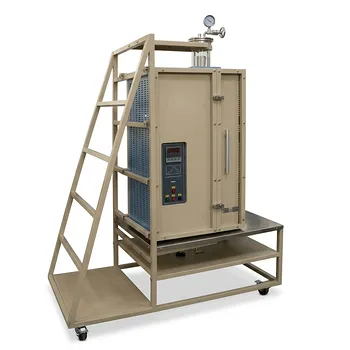
Split Vertical Tube Furnace with 1200C Quartz Tube and Stainless Steel Vacuum Flanges for Rapid Thermal Processing

High Temperature 1700C Tube Furnace with High Vacuum Turbomolecular Pump System and Multi Channel Mass Flow Controller Gas Mixer

1100C Tube Furnace with Vacuum Flange and Programmable Temperature Controller for Material Science and Industrial Heat Treatment
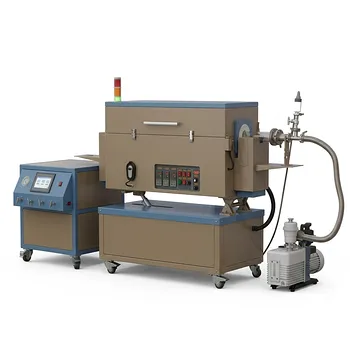
5 Inch Three Zone Rotary Tube Furnace with Integrated Gas Delivery System and 1200C Capability for Advanced Material CVD Processing
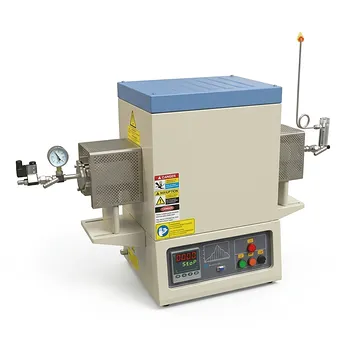
1700C Hydrogen Gas Tube Furnace with 60mm Alumina Process Tube and Integrated Hydrogen Safety Detector

1200°C 5 Inch Vertical Quartz Tube Furnace with Stainless Steel Vacuum Flanges

High Temperature 1700C Six Zone Split Tube Furnace with Alumina Tube and Water Cooled Flanges

Compact Vertical Split Quartz Tube Furnace with Stainless Steel Vacuum Flanges for Rapid Thermal Quenching and Controlled Atmosphere Material Processing

High Temperature 1700C Benchtop Tube Furnace with 5 Inch Heating Zone High Purity Alumina Tube and Vacuum Sealing Flanges
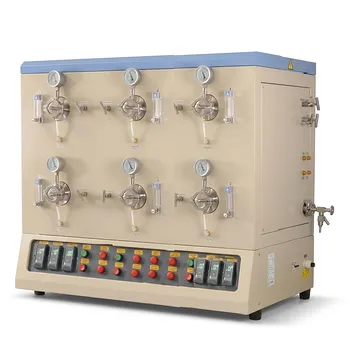
1200C High Throughput Multi Channel Tube Furnace with 50mm Quartz Tubes for Annealing and Material Phase Diagram Research
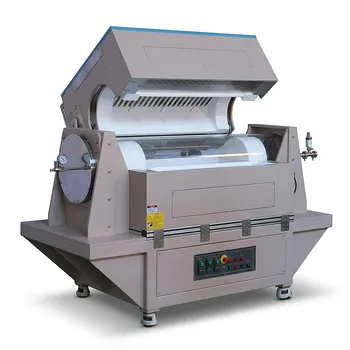
Three Zone Tube Furnace with 11 Inch or 15 Inch Quartz Tube and Hinged Flanges for Vacuum Atmosphere Heat Treatment

1800C High Temperature Compact Vacuum Tube Furnace with 60mm OD Alumina Tube and Kanthal MoSi2 Heating Elements

High Temperature 1700C Vertical Tube Furnace for Powder Spherification and Material Sintering
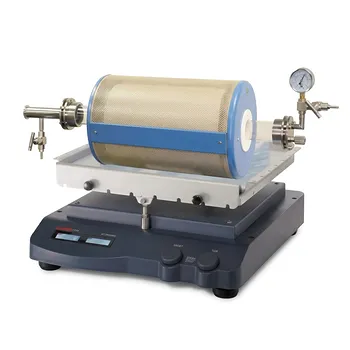
High Temperature Rocking Tube Furnace with Quartz Tube and Vacuum Flange for Materials Synthesis

High Temperature Automated 5 Inch Tube Furnace for Autonomous Material Research and Advanced Laboratory R&D
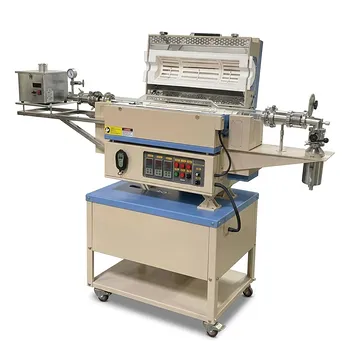
5 Inch Rotary Tube Furnace with Automatic Feeding and Receiving System 1200C Three Zone CVD Powder Processing