What function does a high-precision tube furnace serve during the carbonization of olive stone biomass? Biochar Guide
Updated 3 months ago
The high-precision tube furnace serves as a controlled thermal reactor that facilitates the pyrolysis of olive stone biomass into a carbon-rich biochar framework. By maintaining a constant temperature—typically 400°C for three hours—under a continuous flow of nitrogen, the furnace ensures a strictly anoxic (oxygen-free) environment. This process effectively removes volatile impurities and non-carbon components, establishing the fundamental microporous structure required for high-activity adsorption sites.
Core Takeaway: A high-precision tube furnace is essential for olive stone carbonization because it provides the dual necessity of absolute atmosphere control and precise thermal management. This allows for the predictable transformation of biomass into a stable, porous carbon skeleton while preventing the combustion of the sample.
Creating a Controlled Reaction Environment
Maintaining an Anoxic Atmosphere
The primary role of the tube furnace is to exclude oxygen by providing a continuous nitrogen shield. This prevents the biomass from catching fire (combustion) and instead forces it to undergo pyrolysis, where organic matter decomposes chemically in the absence of oxygen.
Precise Thermal Regulation
High-precision furnaces allow for exact control over heating rates (e.g., 10°C/min) and holding times. This level of accuracy is critical because even minor fluctuations in temperature can lead to inconsistent carbon yields or the destruction of delicate microporous structures.
Ensuring Uniform Heat Distribution
The horizontal or atmospheric design of the tube ensures that the olive stone biomass is heated evenly from all sides. Uniformity is vital for producing standardized biochar samples that are necessary for reliable kinetic studies and industrial applications.
Facilitating Chemical and Structural Transformation
Pyrolysis and Volatile Removal
Under the intense heat of the furnace, the biomass undergoes dehydration and degassing. This process drives off organic volatiles and moisture, which is the first step in converting "raw" olive stone into a high-efficiency carbon carrier.
Increasing Fixed Carbon Content
As non-carbon elements are removed, the furnace facilitates carbon enrichment. By the end of the thermal treatment, the olive stone has a significantly higher concentration of fixed carbon, which forms the structural "backbone" of the resulting biochar.
Establishing the Pore Network
The heat treatment initiates the formation of a preliminary microporous structure. This framework is the foundation for subsequent chemical activation, as it determines the final density and distribution of adsorption sites in the activated carbon.
Understanding the Trade-offs
Temperature Sensitivity
Setting the temperature too low (e.g., below 350°C) may result in incomplete carbonization and high volatile retention. Conversely, excessively high temperatures (above 600-800°C) can cause pore shrinkage or "over-calcination," which reduces the available surface area for future activation.
Throughput vs. Precision
Laboratory tube furnaces are designed for high precision rather than high volume. While they offer superior control over the carbonization environment, they are often limited by the small diameter of the tube, making them more suitable for R&D and pilot studies than mass production.
Gas Flow Management
Maintaining a constant nitrogen flow is essential but requires careful calibration. Too little flow may allow residual oxygen to enter the system, while excessive flow can lead to thermal gradients within the tube, resulting in unevenly processed biomass.
How to Apply This to Your Project
Optimizing Your Carbonization Strategy
To achieve the best results with olive stone biomass, your furnace settings must align with your specific material goals.
- If your primary focus is maximizing adsorption capacity: Maintain a moderate temperature (around 400°C) to preserve the internal pore structure for subsequent chemical activation.
- If your primary focus is structural stability or graphitization: Utilize higher temperatures (600°C to 1600°C) to encourage deep deoxygenation and the reorganization of the carbon skeleton into hard carbon.
- If your primary focus is consistency in kinetic studies: Use a programmed heating rate of exactly 10°C/min to ensure your biochar samples are standardized and reproducible.
The high-precision tube furnace is the indispensable tool for transforming raw olive stone into a high-performance, engineered carbon material.
Summary Table:
| Function | Key Mechanism | Resulting Benefit |
|---|---|---|
| Atmosphere Control | Continuous Nitrogen flow | Prevents combustion; ensures oxygen-free pyrolysis. |
| Thermal Regulation | Programmed heating rates | Standardized carbon yields and stable micropores. |
| Volatile Removal | Dehydration & degassing | Higher fixed carbon content and initial pore network. |
| Heat Uniformity | Even distribution in tube | Reproducible biochar samples for R&D and industry. |
Elevate Your Material Research with THERMUNITS Precision Engineering
At THERMUNITS, we understand that achieving high-performance biochar and advanced materials requires absolute control over every thermal variable. As a leading manufacturer of high-temperature laboratory equipment, we provide the specialized tools necessary for precise carbonization, pyrolysis, and industrial R&D.
Our comprehensive product range includes:
- Furnaces: Muffle, Vacuum, Atmosphere, Tube, Rotary, and Hot Press Furnaces.
- Advanced Systems: CVD/PECVD systems, Vacuum Induction Melting (VIM) Furnaces, and Dental Furnaces.
- Industrial Solutions: Electric rotary kilns, Thermal Elements, and custom laboratory heat treatment equipment.
Whether you are optimizing olive stone biomass or developing next-generation carbon carriers, our equipment delivers the thermal stability and atmosphere precision your project demands.
Ready to upgrade your thermal processing capabilities? Contact us today for a tailored solution!
References
- Younes Dehmani, Éder C. Lima. Copper and nickel composite carbon catalysts prepared from olive husks on the adsorption process of phenol and p-nitrophenol: Comparative theoretical study via an analytical model. DOI: 10.1016/j.molliq.2024.125346
Mentioned Products
- High Temperature Tube Furnace 1500C with Sliding Flanges and 50mm OD for Rapid Thermal Processing Fast Heating and Cooling
- Vertical 1700C Vacuum and Atmosphere Tube Furnace with 80mm Alumina Tube
- 1100C Tube Furnace with Vacuum Flange and Programmable Temperature Controller for Material Science and Industrial Heat Treatment
- Compact High Temperature 1600C Tube Furnace with 50mm Alumina Tube and Vacuum Flanges for Material Sintering
- 900°C Max Rotary Tube Furnace with 8 Inch 310S Alloy Tube and Optional Multi Zone Heating for Industrial Material Calcination
People Also Ask
- How are high-temperature tube furnaces utilized to repair etching damage? Precision Lattice Restoration Solutions
- What role does a high-temperature tube furnace play in CVD synthesis of silicon nanowires? Master VLS Growth Precision.
- What core conditions does a high-temperature tube furnace provide for rGO aerogels? Mastering Precision Synthesis.
- What role does a high-temperature tube furnace play in the sulfidation heat treatment of CoS@C/MXene nanocomposites? Guide
- How does precision tube furnace control influence CoFe nanoparticle formation? Master Your Bimetallic Synthesis.

Tech Team · ThermUnits
Last updated on Jun 02, 2026
Related Products
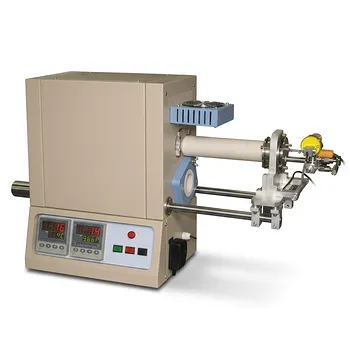
High Temperature Tube Furnace 1500C with Sliding Flanges and 50mm OD for Rapid Thermal Processing Fast Heating and Cooling

Vertical 1700C Vacuum and Atmosphere Tube Furnace with 80mm Alumina Tube

1100C Tube Furnace with Vacuum Flange and Programmable Temperature Controller for Material Science and Industrial Heat Treatment

Compact High Temperature 1600C Tube Furnace with 50mm Alumina Tube and Vacuum Flanges for Material Sintering
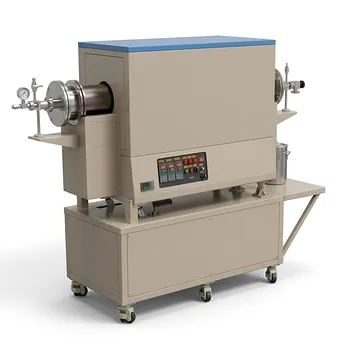
900°C Max Rotary Tube Furnace with 8 Inch 310S Alloy Tube and Optional Multi Zone Heating for Industrial Material Calcination
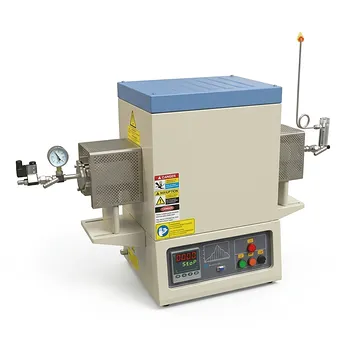
1700C Hydrogen Gas Tube Furnace with 60mm Alumina Process Tube and Integrated Hydrogen Safety Detector

High Temperature 1700C Tube Furnace with High Vacuum Turbomolecular Pump System and Multi Channel Mass Flow Controller Gas Mixer
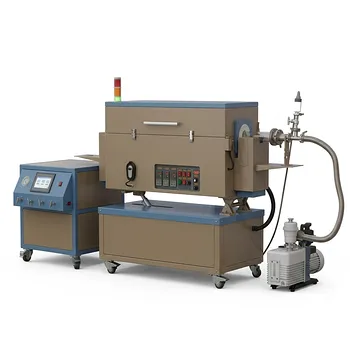
5 Inch Three Zone Rotary Tube Furnace with Integrated Gas Delivery System and 1200C Capability for Advanced Material CVD Processing

Three Zone Tube Furnace with 11 Inch or 15 Inch Quartz Tube and Hinged Flanges for Vacuum Atmosphere Heat Treatment
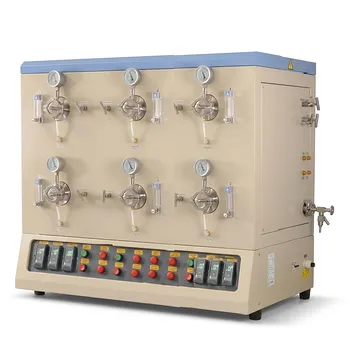
1200C High Throughput Multi Channel Tube Furnace with 50mm Quartz Tubes for Annealing and Material Phase Diagram Research

1200°C 5 Inch Vertical Quartz Tube Furnace with Stainless Steel Vacuum Flanges
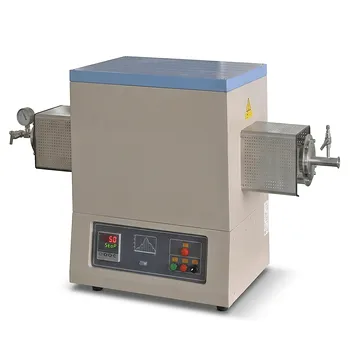
High Temperature 1700C Tube Furnace with 4 Inch OD Alumina Tube and Vacuum Sealing Flanges

High Temperature 1700C Benchtop Tube Furnace with 5 Inch Heating Zone High Purity Alumina Tube and Vacuum Sealing Flanges

High Temperature 1700C Six Zone Split Tube Furnace with Alumina Tube and Water Cooled Flanges

Compact Vertical Split Quartz Tube Furnace with Stainless Steel Vacuum Flanges for Rapid Thermal Quenching and Controlled Atmosphere Material Processing

1800C High Temperature Compact Vacuum Tube Furnace with 60mm OD Alumina Tube and Kanthal MoSi2 Heating Elements
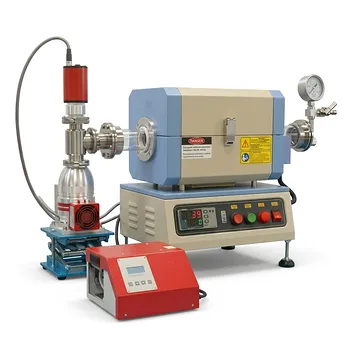
High Vacuum Compact Tube Furnace 1200C with Integrated Turbo Pump System and 8 Inch Heating Zone
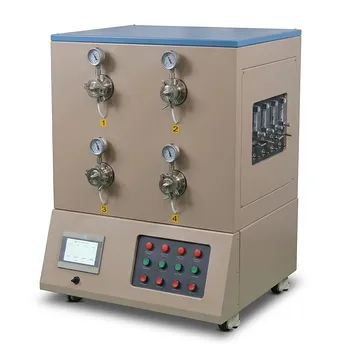
High Throughput 1200C Four Channel Tube Furnace with 3 Inch Quartz Tubes for Multi Zone Annealing and Material Research

High Temperature Automated 5 Inch Tube Furnace for Autonomous Material Research and Advanced Laboratory R&D
