Why is a 20-minute holding time in a tube furnace necessary? Achieve Thermal Equilibrium for Accurate Tensile Testing
Updated 3 months ago
Achieving complete thermal equilibrium is the primary requirement for high-temperature testing. A 20-minute holding time ensures that the nodular cast iron specimen reaches a uniform temperature across its entire length and cross-section. This stability is essential to eliminate internal thermal gradients that would otherwise distort mechanical measurements and lead to premature specimen failure.
The 20-minute dwell time acts as a critical stabilization period, ensuring the specimen’s mechanical response is a result of the target temperature rather than internal temperature variations. By reaching thermal equilibrium, you prevent localized stress concentrations and ensure that your tensile data is both accurate and repeatable.
The Science of Thermal Uniformity
Eliminating Internal Thermal Gradients
Metals like nodular cast iron expand significantly when subjected to heat. If the loading process begins before the core of the specimen reaches the same temperature as the surface, internal stresses will develop independently of the applied load.
The 20-minute window allows heat to soak through the material's volume. This ensures that the entire gauge length of the specimen reacts to the tensile force as a single, thermally consistent unit.
Ensuring Cross-Sectional Consistency
Tensile tests measure how a material handles stress across its entire cross-sectional area. In nodular cast iron, the graphite nodules and the surrounding metallic matrix must be at a stable temperature to interact predictably.
Uniform temperature distribution ensures that the deformation characteristics remain consistent from the surface to the center. This consistency is the only way to obtain reliable data for yield strength, ultimate tensile strength, and elongation.
Microstructural and Chemical Stability
Allowing for Structural Settling
At high temperatures, material microstructures undergo subtle adjustments to reach their most stable state for that specific environment. Just as carbon fibers require time for structural uniformity during polycondensation, cast iron requires a "soak" period to stabilize its internal energy.
Testing the material while its microstructure is still in a state of flux can lead to "noisy" data. The 20-minute hold ensures the properties you measure are representative of the material in a steady, high-temperature state.
Preventing Localized Stress Concentrations
If a specimen has "cold spots" or "hot spots," the stress applied during the tensile test will not be distributed evenly. These temperature variations act as points of weakness where failure may initiate prematurely.
By ensuring a completely uniform temperature profile, you force the material to fail based on its actual mechanical limits. This removes environmental variables from the equation, providing a true reflection of the material's high-temperature performance.
Understanding the Trade-offs
The Risk of Excessive Holding Time
While a minimum soak time is necessary, holding a specimen at high temperatures for too long (hours instead of minutes) can be detrimental. Prolonged exposure may lead to surface oxidation or unwanted phase transformations that alter the material's original properties.
The 20-minute mark is generally regarded as the "sweet spot" for standard specimen sizes. It is long enough to reach equilibrium but short enough to prevent significant atmospheric degradation of the cast iron.
The Danger of Insufficient Soaking
The most common pitfall in high-temperature testing is rushing the process. Testing too early results in a "cold core" where the center of the specimen remains stronger or more brittle than the outer layers.
This leads to non-uniform deformation, where the surface may stretch while the core remains rigid. Such results are technically invalid and cannot be used for critical engineering calculations or safety certifications.
How to Apply This to Your Testing Protocol
When preparing your tube furnace and specimen for high-temperature tensile testing, consider the following recommendations:
- If your primary focus is Data Accuracy: Adhere strictly to the 20-minute hold time to ensure the stress-strain curve reflects the material's true properties at the target temperature.
- If your primary focus is Material Integrity: Monitor the furnace environment to ensure that the 20-minute soak does not lead to excessive scale formation or oxidation on the specimen surface.
- If your primary focus is Repeatability: Standardize the holding time across all tests in your series to ensure that every specimen has the same thermal history before loading begins.
Precise thermal management is the foundation of reliable high-temperature mechanical analysis.
Summary Table:
| Key Factor | Importance in Tensile Testing | Risk of Insufficient Time |
|---|---|---|
| Thermal Equilibrium | Ensures uniform temperature across the entire specimen volume. | "Cold core" leading to non-uniform deformation. |
| Thermal Gradients | Eliminates internal stresses caused by uneven expansion. | Localized stress concentrations and premature failure. |
| Microstructure | Allows the metallic matrix and graphite to stabilize. | "Noisy" or unrepresentative mechanical data. |
| Data Repeatability | Standardizes thermal history for consistent test series. | Inconsistent results and invalid safety certifications. |
| Surface Integrity | Balances soaking needs against oxidation risks. | Excessive scale formation if held too long (hours). |
Elevate Your Material Research with THERMUNITS Precision
Precise thermal management is the foundation of reliable high-temperature mechanical analysis. As a leading manufacturer of high-temperature laboratory equipment for material science and industrial R&D, THERMUNITS provides the stability and uniformity your critical tests demand.
Our comprehensive range of thermal processing solutions includes:
- Advanced Furnaces: Tube, Muffle, Vacuum, Atmosphere, Rotary, and Hot Press Furnaces.
- Specialized Systems: CVD/PECVD systems, Dental Furnaces, and Electric Rotary Kilns.
- Industrial Solutions: Vacuum Induction Melting (VIM) furnaces and high-quality Thermal Elements.
Whether you are conducting high-temperature tensile tests on nodular cast iron or developing next-generation alloys, our equipment ensures your data is accurate, repeatable, and representative.
Ready to optimize your lab’s heat treatment capabilities?
Contact our technical experts today to find the perfect thermal solution for your research requirements.
References
- Mohammed Y. Abdellah, Ahmed H. Backar. Mechanical Properties and Fracture Toughness Prediction of Ductile Cast Iron under Thermomechanical Treatment. DOI: 10.3390/met14030352
Mentioned Products
- High Temperature Tube Furnace 1500C with Sliding Flanges and 50mm OD for Rapid Thermal Processing Fast Heating and Cooling
- Vertical 1700C Vacuum and Atmosphere Tube Furnace with 80mm Alumina Tube
- 1100C Tube Furnace with Vacuum Flange and Programmable Temperature Controller for Material Science and Industrial Heat Treatment
- Compact High Temperature 1600C Tube Furnace with 50mm Alumina Tube and Vacuum Flanges for Material Sintering
- 900°C Max Rotary Tube Furnace with 8 Inch 310S Alloy Tube and Optional Multi Zone Heating for Industrial Material Calcination
People Also Ask
- How are high-temperature tube furnaces utilized to repair etching damage? Precision Lattice Restoration Solutions
- What role does a high-temperature tube furnace play in CVD synthesis of silicon nanowires? Master VLS Growth Precision.
- What core conditions does a high-temperature tube furnace provide for rGO aerogels? Mastering Precision Synthesis.
- What role does a high-temperature tube furnace play in the sulfidation heat treatment of CoS@C/MXene nanocomposites? Guide
- How does precision tube furnace control influence CoFe nanoparticle formation? Master Your Bimetallic Synthesis.

Tech Team · ThermUnits
Last updated on Jun 02, 2026
Related Products
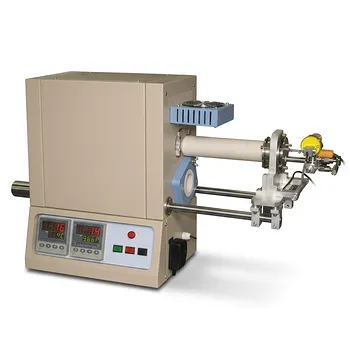
High Temperature Tube Furnace 1500C with Sliding Flanges and 50mm OD for Rapid Thermal Processing Fast Heating and Cooling

Vertical 1700C Vacuum and Atmosphere Tube Furnace with 80mm Alumina Tube
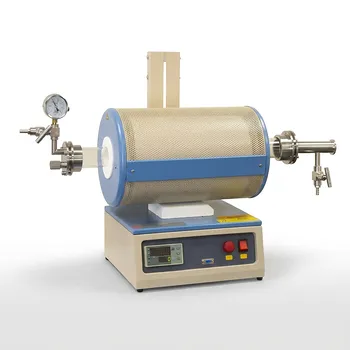
1100C Tube Furnace with Vacuum Flange and Programmable Temperature Controller for Material Science and Industrial Heat Treatment

Compact High Temperature 1600C Tube Furnace with 50mm Alumina Tube and Vacuum Flanges for Material Sintering
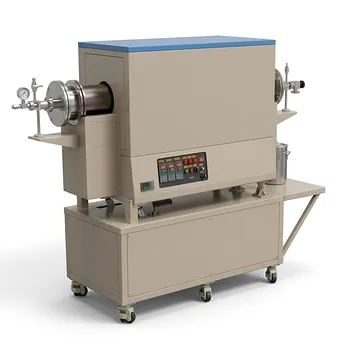
900°C Max Rotary Tube Furnace with 8 Inch 310S Alloy Tube and Optional Multi Zone Heating for Industrial Material Calcination
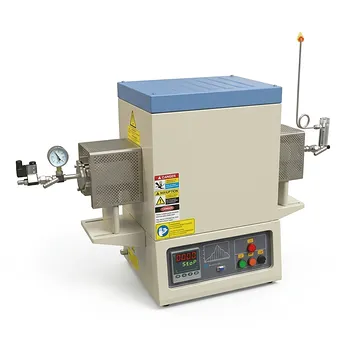
1700C Hydrogen Gas Tube Furnace with 60mm Alumina Process Tube and Integrated Hydrogen Safety Detector

High Temperature 1700C Tube Furnace with High Vacuum Turbomolecular Pump System and Multi Channel Mass Flow Controller Gas Mixer
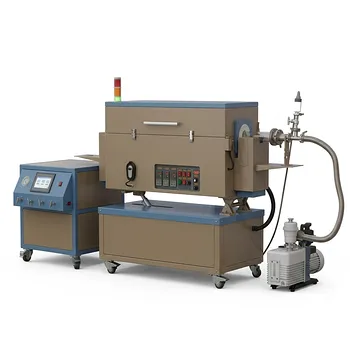
5 Inch Three Zone Rotary Tube Furnace with Integrated Gas Delivery System and 1200C Capability for Advanced Material CVD Processing
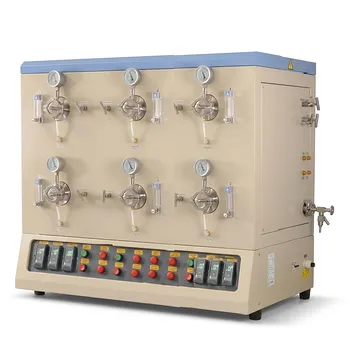
1200C High Throughput Multi Channel Tube Furnace with 50mm Quartz Tubes for Annealing and Material Phase Diagram Research
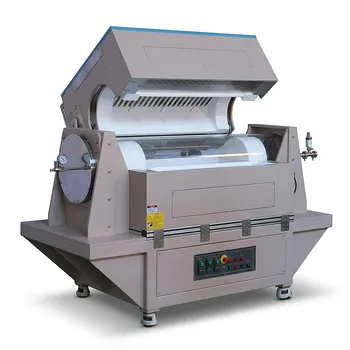
Three Zone Tube Furnace with 11 Inch or 15 Inch Quartz Tube and Hinged Flanges for Vacuum Atmosphere Heat Treatment
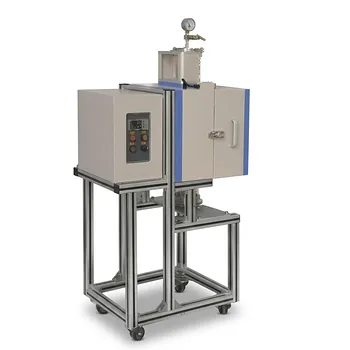
1200°C 5 Inch Vertical Quartz Tube Furnace with Stainless Steel Vacuum Flanges

High Temperature 1700C Six Zone Split Tube Furnace with Alumina Tube and Water Cooled Flanges
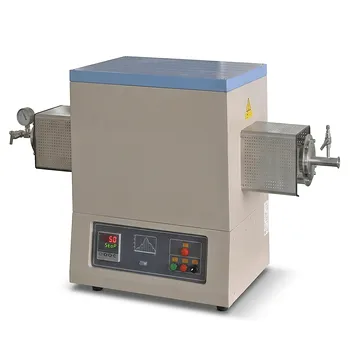
High Temperature 1700C Tube Furnace with 4 Inch OD Alumina Tube and Vacuum Sealing Flanges

High Temperature 1700C Benchtop Tube Furnace with 5 Inch Heating Zone High Purity Alumina Tube and Vacuum Sealing Flanges

Compact Vertical Split Quartz Tube Furnace with Stainless Steel Vacuum Flanges for Rapid Thermal Quenching and Controlled Atmosphere Material Processing

1800C High Temperature Compact Vacuum Tube Furnace with 60mm OD Alumina Tube and Kanthal MoSi2 Heating Elements
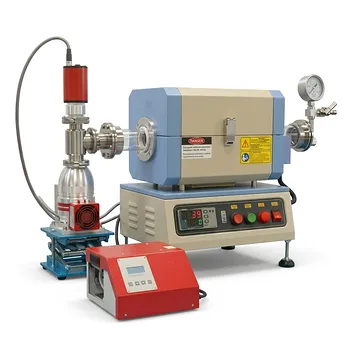
High Vacuum Compact Tube Furnace 1200C with Integrated Turbo Pump System and 8 Inch Heating Zone
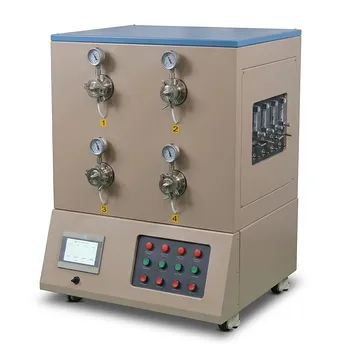
High Throughput 1200C Four Channel Tube Furnace with 3 Inch Quartz Tubes for Multi Zone Annealing and Material Research

High Temperature Automated 5 Inch Tube Furnace for Autonomous Material Research and Advanced Laboratory R&D
