How does a glass substrate function during the growth of CAM crystals in a tube furnace? Mastering SVD for High Purity
Updated 5 months ago
The glass substrate serves as a precision structural regulator. It provides a confined physical platform that limits the available crystallization area and drastically reduces the number of initial nucleation sites. By controlling vapor deposition kinetics within the tube furnace, it forces molecules to arrange into regular, transparent hexagonal single-crystal flakes.
The glass substrate facilitates Substrate-confined Vapor Deposition (SVD) by transforming an open furnace environment into a regulated micro-space. This confinement is essential for slowing down growth rates and ensuring the production of high-crystallinity CAM plates over chaotic, multi-point precipitation.
Regulating the Nucleation Environment
Reducing Nucleation Sites
The glass substrate minimizes the surface area available for the vapor-to-solid transition. This reduction ensures that fewer "seeds" form, allowing the system's energy to focus on growing existing crystals rather than initiating new, competing ones.
Controlling Deposition Kinetics
In the tube furnace, the substrate creates a boundary layer that regulates how vapor molecules interact with the solid surface. This physical barrier prevents the rapid, uncontrolled growth often seen in wet chemical methods, leading to higher structural perfection.
Managing Reactant Transport
The substrate works in tandem with the furnace's pressure regulation to control the transport rate of reactants. By providing a specific landing site, it ensures that CAM molecules deposit at a rate that allows for proper molecular alignment.
Shaping Crystal Morphology
Promoting Two-Dimensional Growth
The planar nature of the glass substrate encourages molecules to deposit and grow parallel to the surface. This specific interaction is the primary driver behind the formation of flat, hexagonal single-crystal plates.
Achieving Specific Orientation
The confinement created by the substrate forces a specific orientation during the deposition process. This results in the growth of transparent flakes that possess the high crystallinity required for advanced technical applications.
Overcoming Growth Rate Issues
Unlike wet chemical synthesis, the substrate-confined environment allows for the "fine-tuning" of growth. This prevents the excessive growth rates that typically lead to defects or polycrystalline formations.
Understanding the Trade-offs
Surface Energy Sensitivity
The quality of the CAM crystal is highly dependent on the cleanliness and chemical state of the glass surface. Even microscopic contaminants can act as unintentional nucleation sites, disrupting the hexagonal symmetry of the final crystal.
Thermal Mass and Gradients
While the substrate helps regulate growth, it also introduces a thermal mass that must be carefully managed. Failure to maintain a stable temperature gradient across the substrate can lead to thermal stresses, potentially cracking the delicate single-crystal flakes.
Scalability Constraints
The confinement method is optimized for producing high-quality single crystals, but it is inherently slower than bulk synthesis methods. This trade-off means that while the quality is superior, the volume of material produced per cycle is relatively low.
Applying This to Your Process
How to Achieve Optimal CAM Growth
To successfully grow CAM single crystals using this method, the focus must remain on the synergy between the furnace settings and the substrate condition.
- If your primary focus is high crystallinity: Prioritize the precise air pressure regulation of the tube furnace to ensure the transport rate of vapor does not overwhelm the substrate surface.
- If your primary focus is specific crystal orientation: Use an ultra-clean, polished glass substrate to maximize the confinement effect and ensure molecules grow flat against the surface.
- If your primary focus is morphological uniformity: Maintain a stable temperature gradient within the furnace to prevent fluctuations that cause irregular thickness in the hexagonal plates.
By mastering the confinement effect of the glass substrate, you can transform vapor-phase reactants into highly ordered, functional single crystals.
Summary Table:
| Substrate Function | Growth Mechanism | Key Outcome |
|---|---|---|
| Nucleation Control | Reduces available surface sites | Focuses energy on high-quality single crystal growth |
| Kinetics Regulation | Creates a controlled boundary layer | Prevents chaotic precipitation and ensures molecular alignment |
| Morphology Shaping | Planar physical confinement | Promotes two-dimensional, hexagonal transparent flakes |
| Transport Management | Works with furnace pressure regulation | Ensures uniform reactant landing and structural perfection |
Elevate Your Material Research with THERMUNITS
Achieving the precision required for Substrate-confined Vapor Deposition (SVD) and CAM crystal growth starts with superior thermal control. THERMUNITS is a leading manufacturer of high-temperature laboratory equipment specifically designed for material science and industrial R&D.
Our comprehensive range of thermal solutions—including high-precision Tube Furnaces, CVD/PECVD systems, Vacuum and Atmosphere Furnaces, and Thermal Elements—provides the stability and pressure regulation necessary for advanced crystal synthesis.
Ready to optimize your heat treatment process? Contact our experts today to discover how THERMUNITS can provide the high-performance furnaces your laboratory needs for breakthrough results.
References
- Yuting Wang, Jingsan Xu. Sublimation‐Induced Vapor Deposition of Cyanuric Acid‐Melamine Supramolecular Single Crystals on Surfaces. DOI: 10.1002/adfm.202403868
Mentioned Products
- Vertical 1700C Vacuum and Atmosphere Tube Furnace with 80mm Alumina Tube
- Compact High Temperature 1600C Tube Furnace with 50mm Alumina Tube and Vacuum Flanges for Material Sintering
- 900°C Max Rotary Tube Furnace with 8 Inch 310S Alloy Tube and Optional Multi Zone Heating for Industrial Material Calcination
- Split Vertical Tube Furnace with 1200C Quartz Tube and Stainless Steel Vacuum Flanges for Rapid Thermal Processing
- High Temperature 1700C Tube Furnace with High Vacuum Turbomolecular Pump System and Multi Channel Mass Flow Controller Gas Mixer
People Also Ask
- How is an industrial-grade vertical tube furnace utilized in smelting leaching residues? Enhance Metal Recovery Efficiency
- What is the function of a laboratory-grade vertical tube furnace in fast pyrolysis? Optimize Composite Research.
- How does a vertical tube furnace facilitate thermoelectric alloy melting? Precision synthesis for material homogeneity.
- Why is a thermocouple sensor indispensable for monitoring the vertical tube furnace during gallium oxide nanowire production? Optimize VLS Growth
- What are the advantages of using a vertical tube furnace for crucible experiments simulating steel-slag interactions?

Tech Team · ThermUnits
Last updated on Apr 14, 2026
Related Products

Vertical 1700C Vacuum and Atmosphere Tube Furnace with 80mm Alumina Tube

Compact High Temperature 1600C Tube Furnace with 50mm Alumina Tube and Vacuum Flanges for Material Sintering
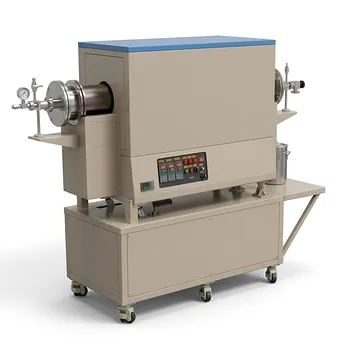
900°C Max Rotary Tube Furnace with 8 Inch 310S Alloy Tube and Optional Multi Zone Heating for Industrial Material Calcination
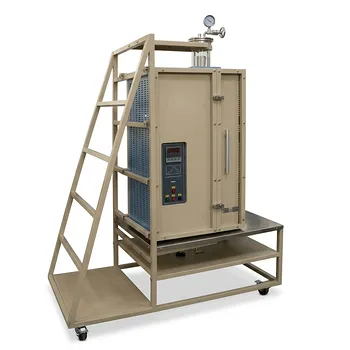
Split Vertical Tube Furnace with 1200C Quartz Tube and Stainless Steel Vacuum Flanges for Rapid Thermal Processing

High Temperature 1700C Tube Furnace with High Vacuum Turbomolecular Pump System and Multi Channel Mass Flow Controller Gas Mixer

1100C Tube Furnace with Vacuum Flange and Programmable Temperature Controller for Material Science and Industrial Heat Treatment
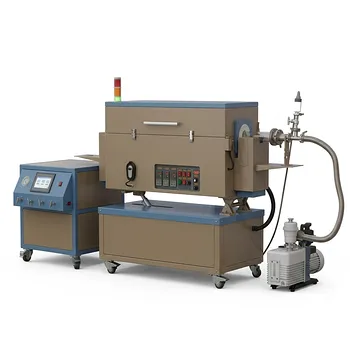
5 Inch Three Zone Rotary Tube Furnace with Integrated Gas Delivery System and 1200C Capability for Advanced Material CVD Processing
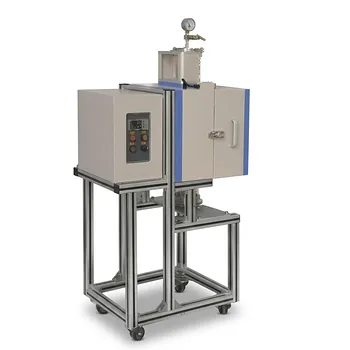
1200°C 5 Inch Vertical Quartz Tube Furnace with Stainless Steel Vacuum Flanges
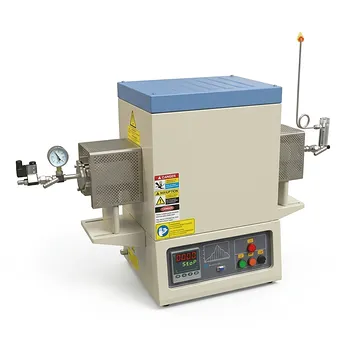
1700C Hydrogen Gas Tube Furnace with 60mm Alumina Process Tube and Integrated Hydrogen Safety Detector

High Temperature 1700C Six Zone Split Tube Furnace with Alumina Tube and Water Cooled Flanges

Compact Vertical Split Quartz Tube Furnace with Stainless Steel Vacuum Flanges for Rapid Thermal Quenching and Controlled Atmosphere Material Processing

High Temperature 1700C Benchtop Tube Furnace with 5 Inch Heating Zone High Purity Alumina Tube and Vacuum Sealing Flanges
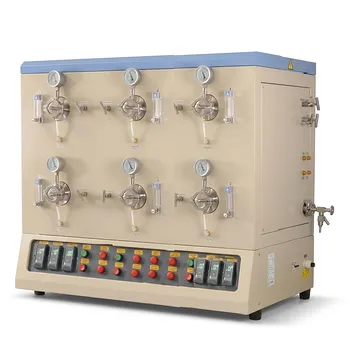
1200C High Throughput Multi Channel Tube Furnace with 50mm Quartz Tubes for Annealing and Material Phase Diagram Research
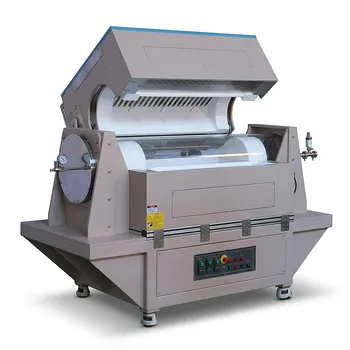
Three Zone Tube Furnace with 11 Inch or 15 Inch Quartz Tube and Hinged Flanges for Vacuum Atmosphere Heat Treatment

1800C High Temperature Compact Vacuum Tube Furnace with 60mm OD Alumina Tube and Kanthal MoSi2 Heating Elements

High Temperature 1700C Vertical Tube Furnace for Powder Spherification and Material Sintering
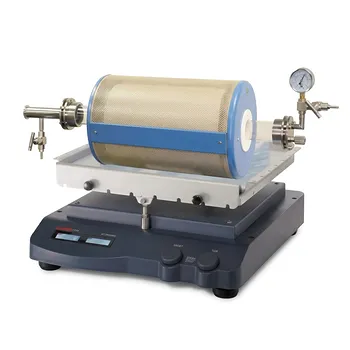
High Temperature Rocking Tube Furnace with Quartz Tube and Vacuum Flange for Materials Synthesis

High Temperature Automated 5 Inch Tube Furnace for Autonomous Material Research and Advanced Laboratory R&D
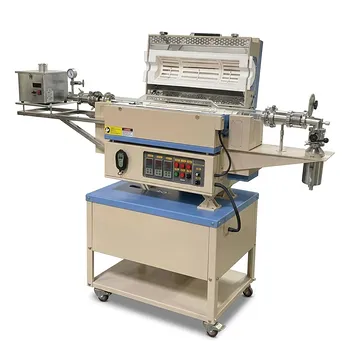
5 Inch Rotary Tube Furnace with Automatic Feeding and Receiving System 1200C Three Zone CVD Powder Processing