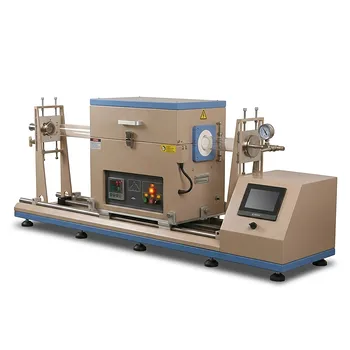
How does a high-precision tube furnace ensure the material performance of Li3InCl6 during two-step heat treatment? Guide
Updated 3 months ago
A high-precision tube furnace ensures the material performance of $Li_3InCl_6$ by providing a strictly controlled two-stage thermal and atmospheric environment. During the first stage, it maintains a vacuum at 100 °C for six hours to eliminate trace moisture, followed by a second stage at 200 °C for four hours to drive the phase transition from an amorphous precursor to a highly crystalline monoclinic structure. This precise regulation of temperature and environment is essential for achieving the high ionic conductivity required for solid-state battery electrolytes.
Core Takeaway: The tube furnace acts as a controlled microenvironment that eliminates chemical impurities through vacuum dehydration while providing the exact thermal energy needed for monoclinic crystallization, directly dictating the electrolyte’s final electrochemical performance.
The Two-Step Mechanism for $Li_3InCl_6$ Synthesis
Phase 1: Dehydration and Vacuum Stability
The initial stage of the heat treatment focuses on the total removal of trace water, which is a critical precursor to preventing the formation of detrimental side products.
By maintaining a constant vacuum at 100 °C for 6 hours, the furnace ensures that any moisture trapped within the precursor material is thoroughly excluded before higher temperatures are reached.
Real-time monitoring of vacuum pressure curves during this phase allows researchers to identify moisture interference immediately, ensuring that the synthesis environment remains pure.
Phase 2: Controlled Crystallization Kinetics
Once dehydration is complete, the furnace increases the temperature to 200 °C for 4 hours to facilitate the necessary structural transformation.
This specific temperature provides the thermal activation energy required to convert the amorphous precursor into a highly crystalline monoclinic structure.
The precision of the furnace’s temperature control system is vital here, as even minor fluctuations can disrupt the nucleation kinetics and lead to the formation of undesirable phases that lower ionic conductivity.
Precision Control as a Performance Safeguard
Thermal Uniformity and Structural Homogeneity
High-precision tube furnaces provide a stable thermal field across the entire length of the reaction tube.
This uniformity ensures that the entire sample batch undergoes the polycondensation and crystallization reactions at the same rate, resulting in a consistent microstructural foundation.
Without this stability, different zones of the material might exhibit varying crystal sizes or phase purities, leading to unreliable and non-repeatable electrochemical measurements.
Atmospheric Purity and Side Reaction Suppression
Beyond vacuum capabilities, the furnace provides a strictly sealed environment that can support inert gas flows, such as argon or nitrogen.
This level of control prevents the $Li_3InCl_6$ from reacting with ambient carbon dioxide or moisture, which could lead to the formation of lithium carbonate or hydroxide impurities.
Protecting the material from these atmospheric contaminants is essential for preserving the high-conductivity cubic or monoclinic phases required for advanced battery applications.
Understanding the Trade-offs and Pitfalls
The Risk of Thermal Gradients
If the furnace lacks high precision or fails to maintain temperature uniformity, the material may experience thermal gradients.
These gradients can cause uneven phase transitions, where one part of the sample achieves the desired monoclinic structure while another remains amorphous or transforms into a competitive, low-conductivity phase.
Vacuum Integrity vs. Throughput
Maintaining a high-quality vacuum for 6 hours increases the total processing time significantly, which may limit production throughput.
However, attempting to accelerate this process by increasing the temperature too quickly can trap moisture within the bulk material, leading to hydrolysis and a permanent loss of material performance.
Applying Furnace Control to Your Synthesis Goals
How to Apply This to Your Project
To achieve optimal results with halide electrolytes like $Li_3InCl_6$, your approach to heat treatment should be dictated by your specific performance targets:
- If your primary focus is maximizing ionic conductivity: Prioritize the 6-hour vacuum dehydration stage at 100 °C to ensure an impurity-free environment before crystallization.
- If your primary focus is phase purity and repeatability: Use a furnace with a high-precision PID controller to maintain a 200 °C thermal field with minimal fluctuation during the 4-hour soaking period.
- If your primary focus is preventing oxidative degradation: Ensure the tube furnace is equipped with high-quality seals and an inert gas (Argon) purging system to supplement the vacuum stages.
The success of $Li_3InCl_6$ synthesis depends entirely on the furnace's ability to provide a clean, uniform, and precisely timed thermal environment.
Summary Table:
| Heat Treatment Stage | Process Parameters | Primary Objective | Impact on Performance |
|---|---|---|---|
| Phase 1: Dehydration | 100 °C, 6 Hours, Vacuum | Moisture removal | Prevents side products & impurities |
| Phase 2: Crystallization | 200 °C, 4 Hours, Controlled | Phase transition | Achieves high ionic conductivity |
| Furnace Stability | High-precision PID Control | Thermal uniformity | Ensures phase purity & repeatability |
| Atmosphere Control | Vacuum / Inert Gas Sealing | Oxidation suppression | Protects microstructural foundation |
Elevate Your Material Research with THERMUNITS Precision
Mastering the synthesis of solid-state electrolytes like $Li_3InCl_6$ requires absolute atmospheric and thermal control. THERMUNITS is a leading manufacturer of high-performance thermal processing solutions, specializing in high-precision Tube, Vacuum, and Atmosphere furnaces designed specifically for material science and industrial R&D.
Our equipment ensures the strict vacuum integrity and thermal uniformity necessary to eliminate impurities and drive perfect phase transitions. Whether you are working on CVD/PECVD, Rotary, or Hot Press applications, our comprehensive range of furnaces—including Dental and Vacuum Induction Melting (VIM) systems—provides the reliability your research demands.
Contact THERMUNITS today to discover how our advanced laboratory heat treatment equipment can optimize your material performance and accelerate your innovation.
References
- Josanelle Angela V. Bilo, Mu‐Huai Fang. Coprecipitation Strategy for Halide-Based Solid-State Electrolytes and Atmospheric-Dependent In Situ Analysis. DOI: 10.1021/acsami.4c03694
Mentioned Products
- Vertical 1700C Vacuum and Atmosphere Tube Furnace with 80mm Alumina Tube
- Compact High Temperature 1600C Tube Furnace with 50mm Alumina Tube and Vacuum Flanges for Material Sintering
- 900°C Max Rotary Tube Furnace with 8 Inch 310S Alloy Tube and Optional Multi Zone Heating for Industrial Material Calcination
- Split Vertical Tube Furnace with 1200C Quartz Tube and Stainless Steel Vacuum Flanges for Rapid Thermal Processing
- High Temperature 1700C Tube Furnace with High Vacuum Turbomolecular Pump System and Multi Channel Mass Flow Controller Gas Mixer
People Also Ask
- How is an industrial-grade vertical tube furnace utilized in smelting leaching residues? Enhance Metal Recovery Efficiency
- What is the function of a laboratory-grade vertical tube furnace in fast pyrolysis? Optimize Composite Research.
- How does a vertical tube furnace facilitate thermoelectric alloy melting? Precision synthesis for material homogeneity.
- Why is a thermocouple sensor indispensable for monitoring the vertical tube furnace during gallium oxide nanowire production? Optimize VLS Growth
- What are the advantages of using a vertical tube furnace for crucible experiments simulating steel-slag interactions?

Tech Team · ThermUnits
Last updated on Jun 02, 2026
Related Products

Vertical 1700C Vacuum and Atmosphere Tube Furnace with 80mm Alumina Tube

Compact High Temperature 1600C Tube Furnace with 50mm Alumina Tube and Vacuum Flanges for Material Sintering
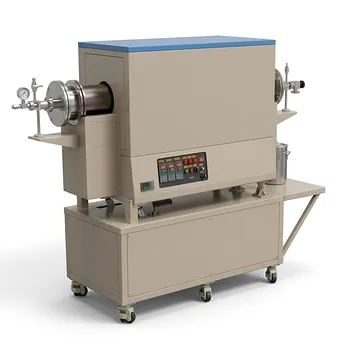
900°C Max Rotary Tube Furnace with 8 Inch 310S Alloy Tube and Optional Multi Zone Heating for Industrial Material Calcination
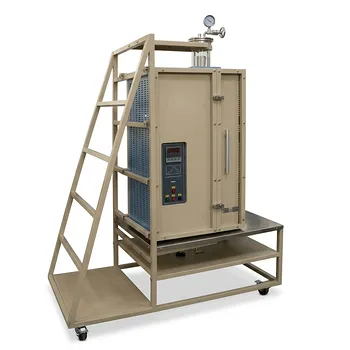
Split Vertical Tube Furnace with 1200C Quartz Tube and Stainless Steel Vacuum Flanges for Rapid Thermal Processing

High Temperature 1700C Tube Furnace with High Vacuum Turbomolecular Pump System and Multi Channel Mass Flow Controller Gas Mixer

1100C Tube Furnace with Vacuum Flange and Programmable Temperature Controller for Material Science and Industrial Heat Treatment
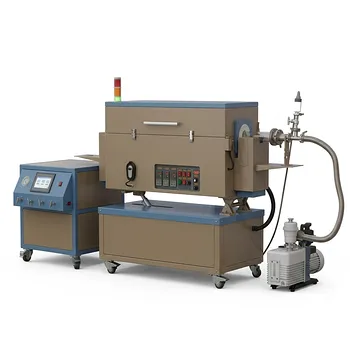
5 Inch Three Zone Rotary Tube Furnace with Integrated Gas Delivery System and 1200C Capability for Advanced Material CVD Processing

1200°C 5 Inch Vertical Quartz Tube Furnace with Stainless Steel Vacuum Flanges

High Temperature 1700C Six Zone Split Tube Furnace with Alumina Tube and Water Cooled Flanges
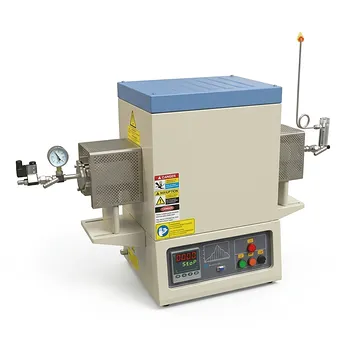
1700C Hydrogen Gas Tube Furnace with 60mm Alumina Process Tube and Integrated Hydrogen Safety Detector

Compact Vertical Split Quartz Tube Furnace with Stainless Steel Vacuum Flanges for Rapid Thermal Quenching and Controlled Atmosphere Material Processing

High Temperature 1700C Benchtop Tube Furnace with 5 Inch Heating Zone High Purity Alumina Tube and Vacuum Sealing Flanges
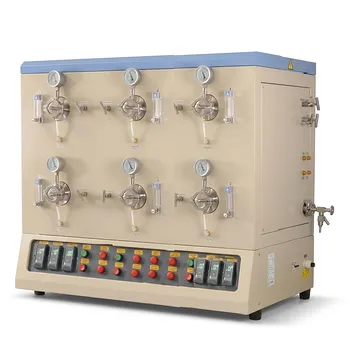
1200C High Throughput Multi Channel Tube Furnace with 50mm Quartz Tubes for Annealing and Material Phase Diagram Research
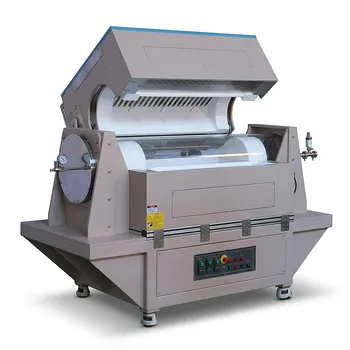
Three Zone Tube Furnace with 11 Inch or 15 Inch Quartz Tube and Hinged Flanges for Vacuum Atmosphere Heat Treatment

1800C High Temperature Compact Vacuum Tube Furnace with 60mm OD Alumina Tube and Kanthal MoSi2 Heating Elements

High Temperature 1700C Vertical Tube Furnace for Powder Spherification and Material Sintering
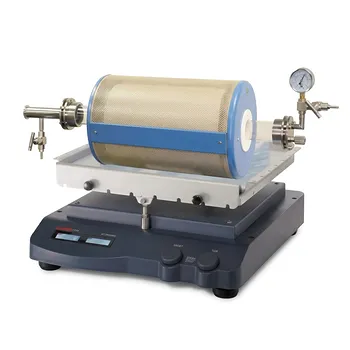
High Temperature Rocking Tube Furnace with Quartz Tube and Vacuum Flange for Materials Synthesis

High Temperature Automated 5 Inch Tube Furnace for Autonomous Material Research and Advanced Laboratory R&D
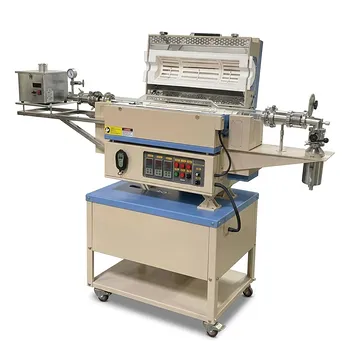
5 Inch Rotary Tube Furnace with Automatic Feeding and Receiving System 1200C Three Zone CVD Powder Processing