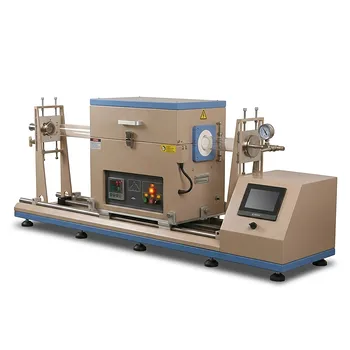
How Tube Furnaces Influence Sodium-Ion Cathodes: Achieving P2-Phase Purity via Controlled Oxygen Atmosphere
Updated 3 months ago
A high-precision tube furnace is the critical instrument for ensuring phase purity in sodium-ion cathodes. It utilizes stable, high-temperature thermal fields and high-purity oxygen flow to regulate the oxidation states of transition metals like manganese and iron. This specific environment suppresses oxygen vacancies and prevents cation disorder, directly facilitating the formation of a highly ordered P2-type layered structure.
The integration of precise temperature regulation and controlled oxygen partial pressure allows for the exact manipulation of transition metal valency. This synergy is essential for eliminating structural defects and ensuring the long-term electrochemical stability of the cathode material.
The Role of Precision Temperature Control
Establishing Thermal Uniformity
High-precision tube furnaces provide a stable isothermal environment, often reaching temperatures such as 950°C for final sintering. This stability ensures that the entire batch of material undergoes a uniform solid-state reaction, preventing the formation of secondary impurity phases.
Managing Atomic Diffusion
The furnace's control system regulates the sintering duration, which is the primary driver for atomic diffusion. Precise timing allows for the fine-tuning of element concentration gradients, such as the diffusion depth of dopants like aluminum, which strengthens the lattice structure.
Multi-Stage Thermal Profiles
Advanced furnaces support multi-stage processing, including low-temperature pre-heating (e.g., 450°C) and high-temperature calcination. This staged approach allows for the steady removal of precursors and controlled grain growth before the final phase is locked in.
The Impact of a Controlled Oxygen Atmosphere
Regulating Transition Metal Valence States
A rich oxygen environment during sintering allows for the accurate control of the valence states of metals like manganese (Mn) and iron (Fe). This is vital because the specific capacity and voltage of the battery depend on these metals remaining in their optimal oxidation states.
Suppressing Oxygen Vacancies
Continuous oxygen flow at high temperatures prevents the loss of oxygen atoms from the crystal lattice. By suppressing oxygen vacancies, the furnace ensures the cathode maintains a dense, highly ordered P2-type layered architecture that can withstand repeated cycling.
Stabilizing the Layered Structure
For materials containing nickel or other sensitive elements, a pure oxygen atmosphere suppresses the reduction of ions (such as trivalent nickel). This stabilization prevents "cation mixing," where transition metals migrate into the sodium layers, which would otherwise degrade the battery's performance.
Understanding the Trade-offs
The Risk of Over-Oxidation
While a rich oxygen atmosphere is generally beneficial for P2-type structures, excessive oxygen partial pressure or overly long sintering times can lead to over-oxidation. This may result in the formation of unwanted phases or excessively large grain sizes that slow down sodium-ion transport.
Atmosphere vs. Energy Consumption
Maintaining a continuous flow of high-purity oxygen or argon-hydrogen mixtures in a tube furnace increases the operational cost. Researchers must balance the need for atmosphere precision with the energy and gas requirements of long-duration calcination cycles.
Equipment Sensitivity
High-precision furnaces are sensitive to the chemical byproducts released during the decomposition of precursors. If the atmosphere is not managed correctly, volatile elements can deposit on the furnace tube, potentially contaminating subsequent batches and altering the phase formation of future materials.
Making the Right Choice for Your Goal
How to Apply This to Your Project
To achieve the best results with your cathode synthesis, tailor your furnace settings to the specific chemistry of your material.
- If your primary focus is P2-type Layered Phases: Utilize a high-precision furnace at 950°C with a constant oxygen flow to ensure high structural order and eliminate vacancies.
- If your primary focus is Dopant Gradient Control: Focus on the precision of the sintering duration to manage the diffusion depth of elements like aluminum or magnesium into the particles.
- If your primary focus is Preventing Transition Metal Reduction: Ensure a continuous, high-purity oxygen flow throughout the cooling phase to keep metals like nickel in their necessary trivalent states.
- If your primary focus is Olivine-type Crystal Structures: Switch to an inert or reducing atmosphere (like hydrogen-argon) to strictly prevent the oxidation of divalent ions like iron.
By masterfully balancing the thermal energy and the chemical environment within the tube furnace, you can dictate the precise atomic arrangement of your battery materials.
Summary Table:
| Factor | Mechanism | Impact on Cathode |
|---|---|---|
| Temperature (950°C) | Thermal Uniformity | Prevents impurity phases; ensures stable sintering |
| Oxygen Atmosphere | Valence Regulation | Suppresses oxygen vacancies and prevents cation mixing |
| Sintering Duration | Atomic Diffusion | Controls dopant gradients (e.g., Al, Mg) for lattice strength |
| Multi-Stage Heating | Pre-heating & Calcination | Enables steady precursor removal and controlled grain growth |
Elevate Your Battery Research with THERMUNITS
As a leading manufacturer of high-temperature laboratory equipment for material science and industrial R&D, THERMUNITS delivers the precision your innovations demand. Our high-precision Tube Furnaces and Atmosphere Furnaces are specifically engineered to provide the stable thermal fields and atmospheric purity necessary for synthesizing high-performance sodium-ion cathodes.
Why Partner with THERMUNITS?
- Advanced Control: Master P2-type layered structures with exact oxygen partial pressure and multi-stage thermal profiles.
- Comprehensive Solutions: From Muffle, Vacuum, and Rotary Furnaces to CVD/PECVD systems and Vacuum Induction Melting (VIM), we cover all heat treatment needs.
- R&D Excellence: We support researchers in optimizing valence states and suppressing structural defects in advanced materials.
Ready to achieve superior phase purity in your materials? Contact our technical experts today to find the ideal thermal processing solution for your laboratory.
References
- Xu Zhang, Haijun Yu. High‐Energy Earth‐Abundant Cathodes with Enhanced Cationic/Anionic Redox for Sustainable and Long‐Lasting Na‐Ion Batteries. DOI: 10.1002/adma.202310659
Mentioned Products
- Vertical 1700C Vacuum and Atmosphere Tube Furnace with 80mm Alumina Tube
- Compact High Temperature 1600C Tube Furnace with 50mm Alumina Tube and Vacuum Flanges for Material Sintering
- 900°C Max Rotary Tube Furnace with 8 Inch 310S Alloy Tube and Optional Multi Zone Heating for Industrial Material Calcination
- Split Vertical Tube Furnace with 1200C Quartz Tube and Stainless Steel Vacuum Flanges for Rapid Thermal Processing
- High Temperature 1700C Tube Furnace with High Vacuum Turbomolecular Pump System and Multi Channel Mass Flow Controller Gas Mixer
People Also Ask
- How is an industrial-grade vertical tube furnace utilized in smelting leaching residues? Enhance Metal Recovery Efficiency
- What is the function of a laboratory-grade vertical tube furnace in fast pyrolysis? Optimize Composite Research.
- How does a vertical tube furnace facilitate thermoelectric alloy melting? Precision synthesis for material homogeneity.
- Why is a thermocouple sensor indispensable for monitoring the vertical tube furnace during gallium oxide nanowire production? Optimize VLS Growth
- What are the advantages of using a vertical tube furnace for crucible experiments simulating steel-slag interactions?

Tech Team · ThermUnits
Last updated on Jun 02, 2026
Related Products
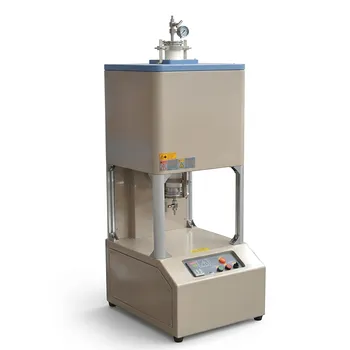
Vertical 1700C Vacuum and Atmosphere Tube Furnace with 80mm Alumina Tube
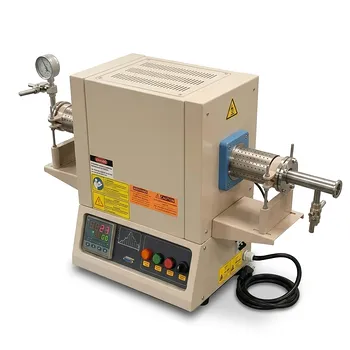
Compact High Temperature 1600C Tube Furnace with 50mm Alumina Tube and Vacuum Flanges for Material Sintering
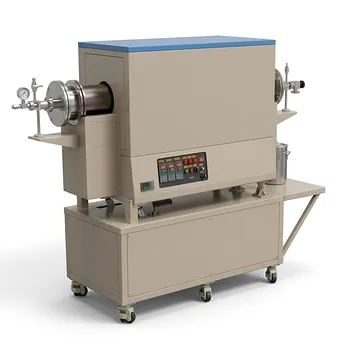
900°C Max Rotary Tube Furnace with 8 Inch 310S Alloy Tube and Optional Multi Zone Heating for Industrial Material Calcination
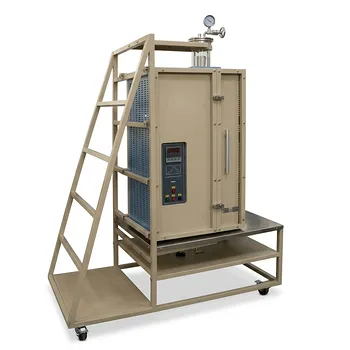
Split Vertical Tube Furnace with 1200C Quartz Tube and Stainless Steel Vacuum Flanges for Rapid Thermal Processing
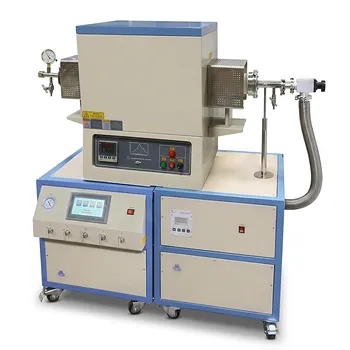
High Temperature 1700C Tube Furnace with High Vacuum Turbomolecular Pump System and Multi Channel Mass Flow Controller Gas Mixer
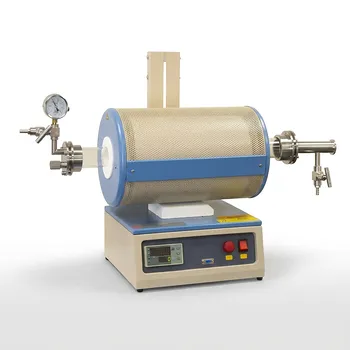
1100C Tube Furnace with Vacuum Flange and Programmable Temperature Controller for Material Science and Industrial Heat Treatment
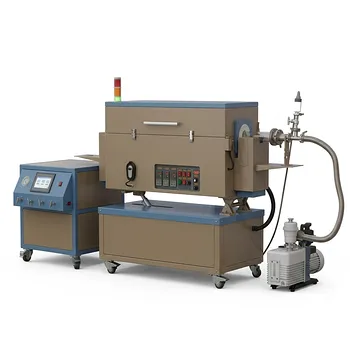
5 Inch Three Zone Rotary Tube Furnace with Integrated Gas Delivery System and 1200C Capability for Advanced Material CVD Processing
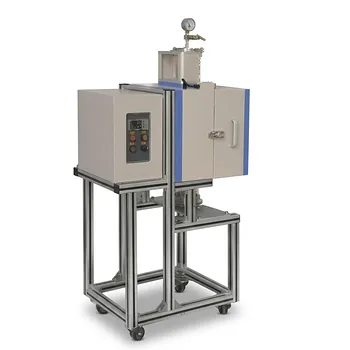
1200°C 5 Inch Vertical Quartz Tube Furnace with Stainless Steel Vacuum Flanges
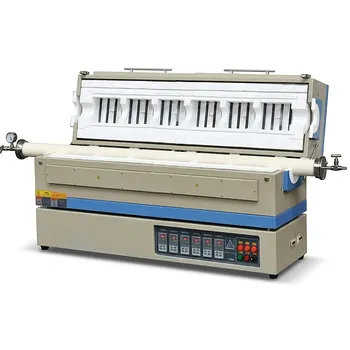
High Temperature 1700C Six Zone Split Tube Furnace with Alumina Tube and Water Cooled Flanges
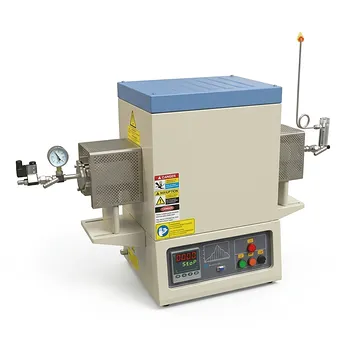
1700C Hydrogen Gas Tube Furnace with 60mm Alumina Process Tube and Integrated Hydrogen Safety Detector
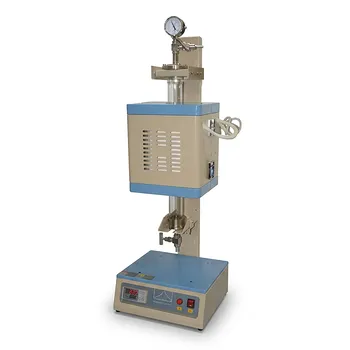
Compact Vertical Split Quartz Tube Furnace with Stainless Steel Vacuum Flanges for Rapid Thermal Quenching and Controlled Atmosphere Material Processing

High Temperature 1700C Benchtop Tube Furnace with 5 Inch Heating Zone High Purity Alumina Tube and Vacuum Sealing Flanges
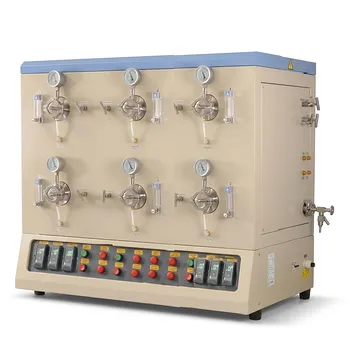
1200C High Throughput Multi Channel Tube Furnace with 50mm Quartz Tubes for Annealing and Material Phase Diagram Research
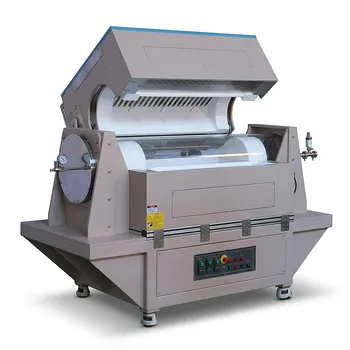
Three Zone Tube Furnace with 11 Inch or 15 Inch Quartz Tube and Hinged Flanges for Vacuum Atmosphere Heat Treatment

1800C High Temperature Compact Vacuum Tube Furnace with 60mm OD Alumina Tube and Kanthal MoSi2 Heating Elements

High Temperature 1700C Vertical Tube Furnace for Powder Spherification and Material Sintering
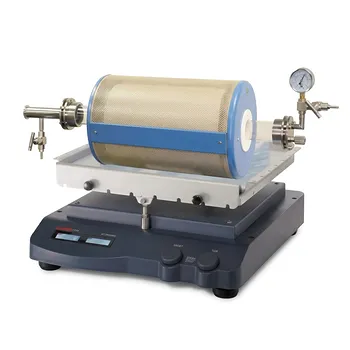
High Temperature Rocking Tube Furnace with Quartz Tube and Vacuum Flange for Materials Synthesis

High Temperature Automated 5 Inch Tube Furnace for Autonomous Material Research and Advanced Laboratory R&D
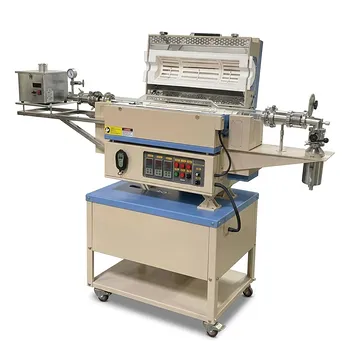
5 Inch Rotary Tube Furnace with Automatic Feeding and Receiving System 1200C Three Zone CVD Powder Processing