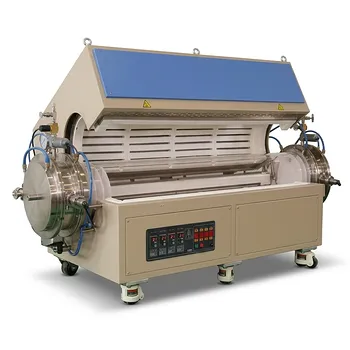
How does a high-precision tube sintering furnace contribute to the formation of the Na3Ge2P3 crystal structure? Precise Thermal Control
Updated 3 months ago
The formation of high-quality $\text{Na}_3\text{Ge}_2\text{P}_3$ crystals depends entirely on the precision of the thermal environment. A high-precision tube sintering furnace contributes to this process by utilizing programmable temperature controls to execute specific heating rates, such as 5 K/min, and extremely slow cooling rates, often 0.5 K/min. This meticulous management eliminates internal thermal stresses and promotes the long-range atomic ordering necessary for high crystallinity and defect-free structures suitable for single-crystal X-ray diffraction.
Core Takeaway: A high-precision tube furnace provides the stable, repeatable thermal cycles required to transform amorphous or semi-ordered precursors into the highly ordered $\text{Na}_3\text{Ge}_2\text{P}_3$ crystal lattice. By controlling cooling kinetics, the furnace prevents structural defects and ensures the long-range periodicity required for advanced materials analysis.
The Mechanics of Atomic Ordering
Eliminating Internal Thermal Stresses
The most critical contribution of a high-precision furnace is its ability to perform ultra-slow cooling at rates like 0.5 K/min. Rapid temperature drops create thermal gradients within the material, leading to internal stresses that fracture the lattice or create dislocations.
Slow, controlled cooling allows the atoms to settle into their lowest-energy positions without the interference of quenching-induced defects. This results in high-quality crystals that exhibit the structural integrity required for sensitive characterization techniques.
Facilitating Long-Range Periodicity
The formation of the $\text{Na}_3\text{Ge}_2\text{P}_3$ structure requires the specific arrangement of sodium, germanium, and phosphorus atoms over a wide spatial scale. High-precision furnaces maintain the constant temperature dwells necessary for atoms to diffuse through the solid state and find their designated lattice sites.
By providing a stable thermal field, the furnace promotes long-range atomic ordering. This is the fundamental difference between a polycrystalline powder and a well-developed crystal structure capable of yielding clear diffraction patterns.
Environmental and Kinetic Control
Precise Heating Rates for Phase Purity
Using a programmable system to set heating rates, such as 5 K/min, ensures that the precursors react at the correct kinetic threshold. If the heating is too rapid, secondary phases may form before the $\text{Na}_3\text{Ge}_2\text{P}_3$ structure can stabilize, leading to chemical impurities.
Precise control ensures that the transition from amorphous components into the NASICON-type or P3-type crystalline phase occurs uniformly throughout the sample volume. This consistency is vital for achieving a phase-pure final product.
Atmosphere Integrity and Chemical Stability
Tube furnaces allow for the introduction of inert protective atmospheres, such as argon flow, which are essential for phosphorus-bearing materials. This environment prevents the unintended oxidation of sensitive elements at high temperatures, typically around 850°C to 900°C.
By shielding the chemical components from reactive gases, the furnace ensures that ions enter the lattice in their intended valence states. This preservation of chemical stoichiometry is a prerequisite for the formation of the specific $\text{Na}_3\text{Ge}_2\text{P}_3$ crystal framework.
Understanding the Trade-offs
Time vs. Crystal Quality
The primary trade-off in using high-precision sintering is the extended duration of the synthesis cycle. While slow cooling rates produce superior crystals, they significantly reduce the throughput of the laboratory and increase energy consumption per sample.
Grain Growth and Coarsening
While high temperatures and long holding times are necessary for crystallinity, they can also lead to excessive grain coarsening. If the furnace dwell time is not precisely calibrated, the resulting crystals may become too large or lose their specific morphology, which can negatively impact electrochemical performance in applications like solid-state batteries.
How to Apply This to Your Project
Recommendations for Material Synthesis
The choice of furnace parameters should be dictated by the intended application of the $\text{Na}_3\text{Ge}_2\text{P}_3$ material.
- If your primary focus is Single-Crystal XRD: Prioritize the slowest possible cooling rates (e.g., 0.5 K/min) to maximize atomic ordering and minimize lattice defects.
- If your primary focus is Electrochemical Performance: Balance the sintering temperature and time to ensure phase purity while suppressing grain coarsening to maintain high ionic conductivity.
- If your primary focus is Atmosphere-Sensitive Chemistry: Ensure the tube furnace is equipped with high-precision flow meters to maintain a constant inert atmosphere, preventing phosphorus loss or germanium oxidation.
Ultimately, the high-precision tube furnace transforms the synthesis of $\text{Na}_3\text{Ge}_2\text{P}_3$ from a process of chance into a repeatable, scientifically rigorous engineering task.
Summary Table:
| Feature | Parameter/Action | Benefit for Na3Ge2P3 Structure |
|---|---|---|
| Heating Rate | 5 K/min | Prevents secondary phase formation; ensures phase purity. |
| Cooling Rate | 0.5 K/min | Promotes long-range atomic ordering and eliminates internal stress. |
| Dwell Time | Constant Temperature | Allows for solid-state diffusion and designated lattice positioning. |
| Atmosphere | Inert Argon Flow | Protects stoichiometry by preventing oxidation and phosphorus loss. |
Optimize Your Material Synthesis with THERMUNITS
As a leading manufacturer of high-temperature laboratory equipment for material science and industrial R&D, THERMUNITS understands that precision is the key to perfect crystallinity. Our comprehensive range of thermal processing solutions—including Tube, Muffle, Vacuum, Atmosphere, and Hot Press furnaces, as well as CVD/PECVD systems and Rotary Kilns—is designed to provide the stable, repeatable thermal cycles required for advanced structures like Na3Ge2P3.
Whether you are working on solid-state batteries or complex semiconductor materials, our equipment ensures maximum phase purity and structural integrity. Contact us today to find the perfect heat treatment solution for your research and development goals.
References
- Manuel Botta, Thomas F. Fässler. Na<sub>3</sub>Ge<sub>2</sub>P<sub>3</sub>: A Zintl Phase Featuring [P<sub>3</sub>Ge–GeP<sub>3</sub>] Dimers as Building Blocks. DOI: 10.1021/acs.inorgchem.4c00287
Mentioned Products
- Compact High Temperature 1600C Tube Furnace with 50mm Alumina Tube and Vacuum Flanges for Material Sintering
- High Temperature 1700C Vertical Tube Furnace for Powder Spherification and Material Sintering
- High Temperature Three Temperature Zone Tube Furnace for Advanced Material Science Sintering and Chemical Vapor Deposition Applications
- Three Temperature Zone Rotating Tube Furnace for Material Sintering and Controlled Atmospheric Heat Treatment
- Compact Hybrid Muffle and Tube Furnace for 1000C Controlled Atmosphere Laboratory Material Sintering
People Also Ask
- What is the role of a high-temperature tube furnace in the calcination process of ZnO/In2O3 nanocomposites?
- Why is a high-temperature tube furnace required for CuAlO2 heat treatment? Master Phase Transformation Today
- Function of tube furnaces in cellulose aerogel carbonization? Achieve High-Performance Materials
- What role does a high-temperature tube furnace play in the carbonization? Mastering Precision Carbon Synthesis
- What role does a high-temperature tube furnace play in executing nitrogen absorption kinetic experiments? Expert Insights

Tech Team · ThermUnits
Last updated on Jun 03, 2026
Related Products

Compact High Temperature 1600C Tube Furnace with 50mm Alumina Tube and Vacuum Flanges for Material Sintering

High Temperature 1700C Vertical Tube Furnace for Powder Spherification and Material Sintering
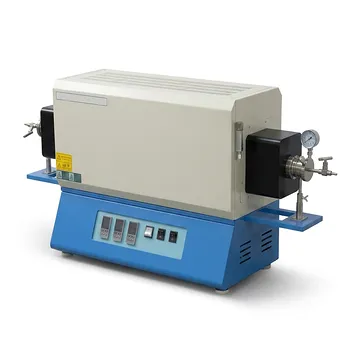
High Temperature Three Temperature Zone Tube Furnace for Advanced Material Science Sintering and Chemical Vapor Deposition Applications
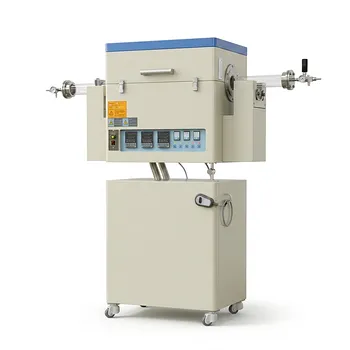
Three Temperature Zone Rotating Tube Furnace for Material Sintering and Controlled Atmospheric Heat Treatment
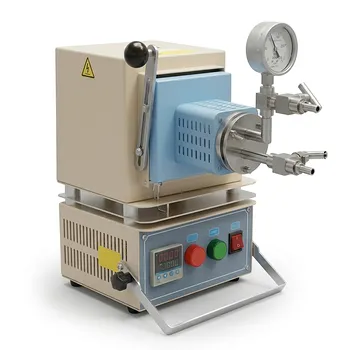
Compact Hybrid Muffle and Tube Furnace for 1000C Controlled Atmosphere Laboratory Material Sintering
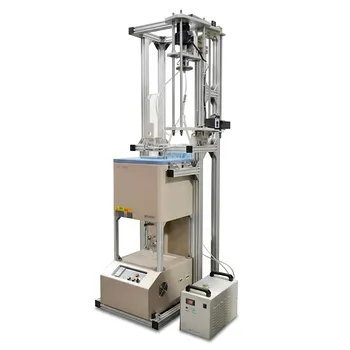
500C Vacuum Vertical Tube Furnace 84mm OD Sample Rotation Lifting System
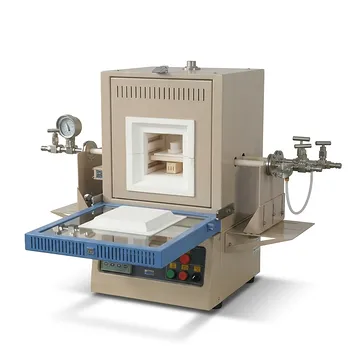
1700C Compact Hybrid Furnace with Dual Layer Box Sintering and Controlled Atmosphere Alumina Tubes
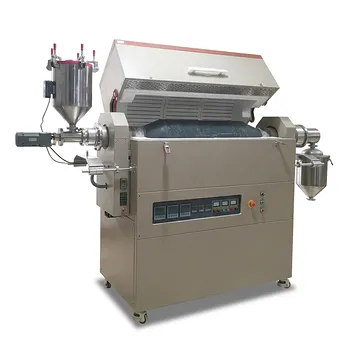
High Temperature Tilting Rotary Tubular Furnace for Continuous Powder Thermal Processing and Controlled Atmosphere Sintering
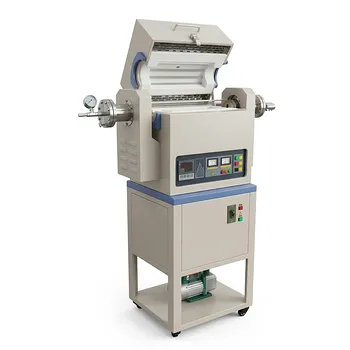
High Temperature Rotary Tilt Tubular Furnaces for Advanced Powder Sintering and Material Processing
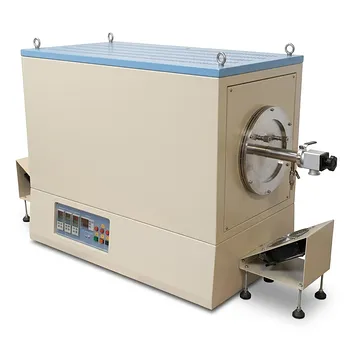
Four Zone Tube Furnace 1100C with 600mm Large Diameter Quartz Tube and Vacuum Flanges

1800C High Temperature Compact Vacuum Tube Furnace with 60mm OD Alumina Tube and Kanthal MoSi2 Heating Elements

Vertical 1700C Vacuum and Atmosphere Tube Furnace with 80mm Alumina Tube

1200C High Throughput Multi Channel Tube Furnace with 50mm Quartz Tubes for Annealing and Material Phase Diagram Research
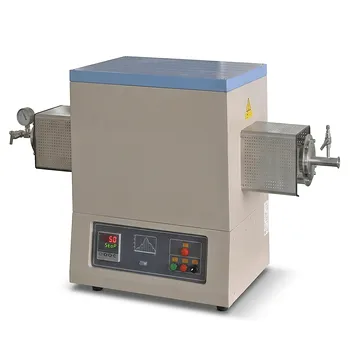
High Temperature 1700C Tube Furnace with 4 Inch OD Alumina Tube and Vacuum Sealing Flanges
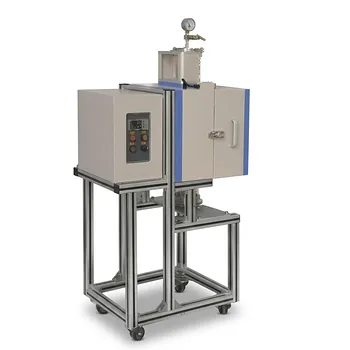
1200°C 5 Inch Vertical Quartz Tube Furnace with Stainless Steel Vacuum Flanges

High Temperature 1700C Benchtop Tube Furnace with 5 Inch Heating Zone High Purity Alumina Tube and Vacuum Sealing Flanges

1100C Tube Furnace with Vacuum Flange and Programmable Temperature Controller for Material Science and Industrial Heat Treatment
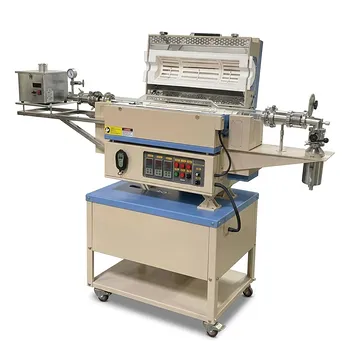
5 Inch Rotary Tube Furnace with Automatic Feeding and Receiving System 1200C Three Zone CVD Powder Processing
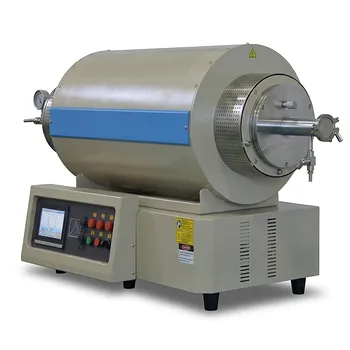
1200C Max Three Zone Tube Furnace 6 Inch OD Max with Tube and Flange