How does a high-temperature tube furnace contribute to the sintering process of aluminum-substituted LLZO? Expert Guide
Updated 3 months ago
A high-temperature tube furnace is the critical catalyst for synthesizing aluminum-substituted LLZO, providing the controlled 1100°C to 1200°C thermal environment required for densification and solid-state reactions. By maintaining an inert argon atmosphere, the furnace prevents the formation of lithium carbonate impurities and inhibits lithium loss, ensuring the electrolyte achieves its high-conductivity cubic phase structure.
A high-temperature tube furnace provides a dual-benefit of precise thermal regulation and atmospheric isolation, which are both essential for transforming raw precursors into a dense, high-performance solid-state electrolyte. Without this specific environment, LLZO fails to reach the necessary density and chemical purity required for efficient ion transport.
Facilitating the Solid-State Reaction
Achieving High-Temperature Densification
The sintering of aluminum-substituted LLZO requires temperatures typically reaching 1200 °C.
At these elevations, the tube furnace facilitates atomic diffusion and grain boundary migration among particles.
This process eliminates porosity and transforms loose powder compacts into a dense ceramic body capable of conducting lithium ions.
Stabilizing the Cubic Phase Structure
Aluminum substitution is specifically intended to stabilize the cubic phase of LLZO, which offers superior ionic conductivity compared to the tetragonal phase.
The furnace's precise temperature control ensures that the material stays within the narrow thermal window required for this phase to form.
A stable thermal field ensures that the solid-state reaction between lithium, lanthanum, zirconium, and aluminum oxides is complete and uniform throughout the sample.
Atmospheric Control and Impurity Prevention
Inhibiting Lithium Volatility
Lithium is highly volatile at temperatures exceeding 1000 °C, and its loss can degrade the electrolyte's performance.
The sealed environment of a tube furnace allows for a saturated local environment that helps inhibit excessive lithium evaporation.
This preservation of stoichiometry is vital for maintaining the high ionic conductivity of the final ceramic pellet.
Preventing Secondary Phase Reactions
LLZO is sensitive to ambient moisture and carbon dioxide, which can lead to the formation of lithium carbonate ($Li_2CO_3$).
By operating under a continuous flow of inert argon (Ar), the tube furnace displaces reactive gases.
This prevents side reactions that would otherwise create insulating impurities at the grain boundaries, which would block lithium-ion movement.
Understanding the Trade-offs
Thermal Gradients and Uniformity
While tube furnaces offer excellent atmospheric control, they can suffer from radial temperature gradients if the sample is too large or placed off-center.
Uneven heating can lead to inconsistent densification or "warping" of the ceramic pellets.
Users must ensure the sample is positioned within the furnace's constant temperature zone to achieve reproducible results.
Cooling Rates and Phase Stress
Rapid cooling (quenching) or inconsistent cooling rates after sintering can induce mechanical stress or micro-cracking in the ceramic.
Because LLZO is a brittle ceramic, the furnace's ability to follow a programmed cooling curve is as important as its heating capability.
Failure to control the descent from 1200 °C can result in compromised structural integrity, even if the chemical composition is perfect.
How to Apply This to Your Project
When utilizing a high-temperature tube furnace for LLZO sintering, your specific setup should be dictated by your final performance requirements.
- If your primary focus is Maximum Ionic Conductivity: Prioritize a strictly sealed argon environment and a sintering temperature near 1200 °C to ensure a pure cubic phase and high density.
- If your primary focus is Surface Purity for Testing: Use a secondary treatment in a muffle furnace at temperatures exceeding 600 °C to decompose any residual surface contaminants before interface testing.
- If your primary focus is Microstructural Control: Utilize a furnace with a sophisticated PID controller to manage the heating and cooling curves precisely, allowing for fine-tuning of grain size and element concentration gradients.
The precision of the tube furnace's thermal and atmospheric systems is ultimately what determines whether LLZO functions as a high-performance electrolyte or a low-conductivity ceramic.
Summary Table:
| Key Feature | Functional Benefit | Impact on LLZO Performance |
|---|---|---|
| 1200°C Thermal Field | Atomic diffusion & densification | Eliminates porosity for high ionic conductivity |
| Inert Argon Flow | Prevents $Li_2CO_3$ & oxidation | Ensures high chemical purity and phase stability |
| Sealed Environment | Inhibits lithium volatility | Maintains stoichiometry for consistent results |
| PID Program Control | Managed heating/cooling curves | Prevents micro-cracking and mechanical stress |
Optimize Your LLZO Sintering with THERMUNITS
As a global leader in high-temperature laboratory equipment for material science and industrial R&D, THERMUNITS provides the precision needed for advanced solid-state electrolyte development. Our comprehensive range includes high-performance Tube, Muffle, and Vacuum furnaces, alongside specialized CVD/PECVD systems and Hot Press furnaces engineered to ensure cubic phase stability and maximum densification.
Ready to elevate your research and industrial heat treatment? Contact our engineering team today to find the perfect thermal processing solution for your application!
References
- Jaron V Moon, Roseanne Warren. Microscale mechanical property variations of Al-substituted LLZO: insights from compression testing and molecular dynamics simulations. DOI: 10.1039/d4ta03596h
Mentioned Products
- Compact High Temperature 1600C Tube Furnace with 50mm Alumina Tube and Vacuum Flanges for Material Sintering
- High Temperature 1700C Vertical Tube Furnace for Powder Spherification and Material Sintering
- High Temperature Three Zone Tube Furnace 1700C with Alumina Tube and Water Cooled Flanges
- High Temperature 1700C Tube Furnace with 4 Inch OD Alumina Tube and Vacuum Sealing Flanges
- 1700C High Temperature Alumina Tube Furnace with 18 Inch Heated Zone and Vacuum Sealing Flanges
People Also Ask
- What is the role of a high-temperature tube furnace in the calcination process of ZnO/In2O3 nanocomposites?
- What role does a high-temperature tube furnace play in the carbonization? Mastering Precision Carbon Synthesis
- What role does a high-temperature tube furnace play in the sulfidation heat treatment of CoS@C/MXene nanocomposites? Guide
- Function of tube furnaces in cellulose aerogel carbonization? Achieve High-Performance Materials
- What role does a high-temperature tube furnace play in executing nitrogen absorption kinetic experiments? Expert Insights

Tech Team · ThermUnits
Last updated on Jun 03, 2026
Related Products
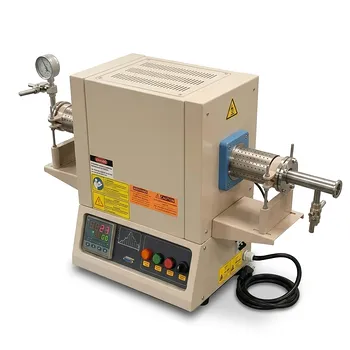
Compact High Temperature 1600C Tube Furnace with 50mm Alumina Tube and Vacuum Flanges for Material Sintering

High Temperature 1700C Vertical Tube Furnace for Powder Spherification and Material Sintering
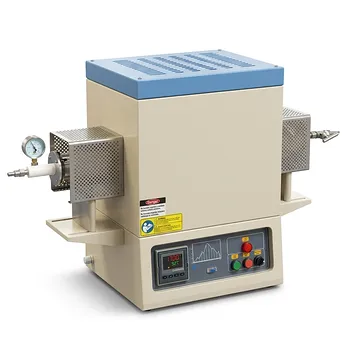
High Temperature Three Zone Tube Furnace 1700C with Alumina Tube and Water Cooled Flanges
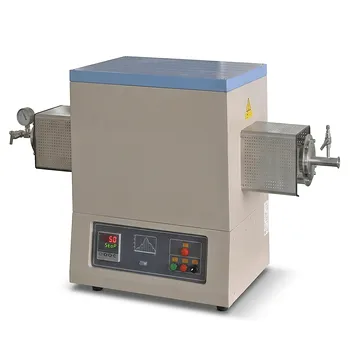
High Temperature 1700C Tube Furnace with 4 Inch OD Alumina Tube and Vacuum Sealing Flanges
1700C High Temperature Alumina Tube Furnace with 18 Inch Heated Zone and Vacuum Sealing Flanges
High Temperature 1700C 4 Channel Tube Furnace 1 Inch Alumina Tube for Hi-Throughput Annealing
1700C Compact Hybrid Furnace with Dual Layer Box Sintering and Controlled Atmosphere Alumina Tubes
High Temperature Compact Vacuum Tube Furnace 1750C Max 60mm OD Alumina Tube
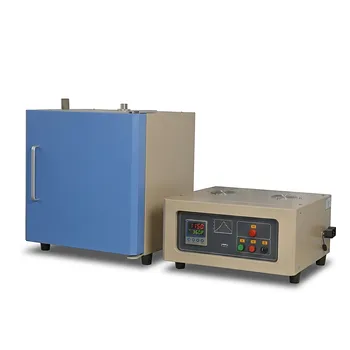
High Temperature Muffle Furnace with Alloy Chamber for Debinding and Sintering Applications

High Temperature 1700C Benchtop Tube Furnace with 5 Inch Heating Zone High Purity Alumina Tube and Vacuum Sealing Flanges

1800C High Temperature Compact Vacuum Tube Furnace with 60mm OD Alumina Tube and Kanthal MoSi2 Heating Elements
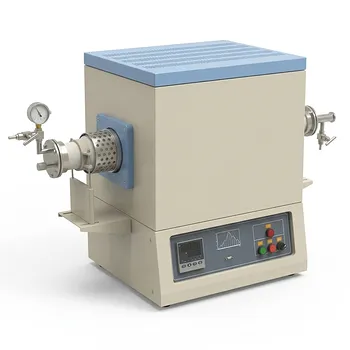
1750°C High Temperature Benchtop Vacuum Atmosphere Tube Furnace with Kanthal Super 1800 Heating Elements and 60mm Alumina Processing Tube
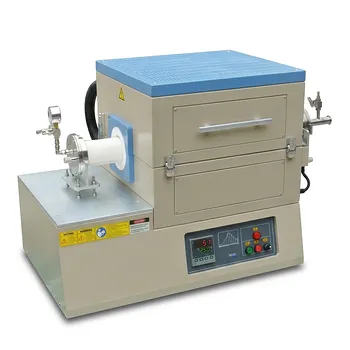
High Temperature 1700C Split Tube Furnace with Vacuum Flanges Valves and 60mm Alumina Tube
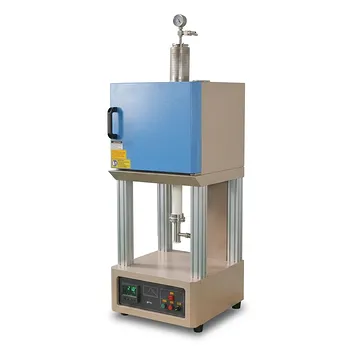
Hybrid High Temperature Tube and Box Furnace 1700C with 2 Inch Alumina Tube for Material Research
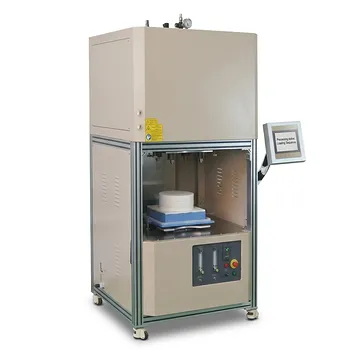
High Temperature Vertical Atmosphere Controlled Furnace with Automatic Bottom Loading and 1700°C Capacity for Advanced Material Research
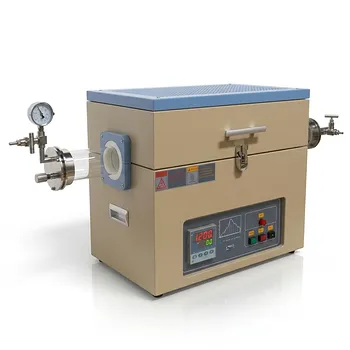
High Temperature 1200C Split Tube Furnace with Optional Quartz Tube Sizes and Vacuum Sealing Flanges for Material Science Research
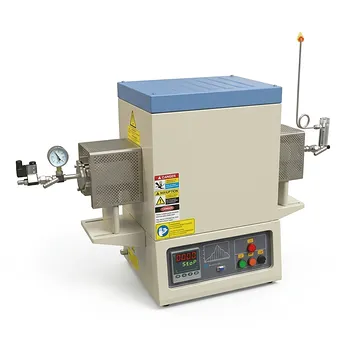
1700C Hydrogen Gas Tube Furnace with 60mm Alumina Process Tube and Integrated Hydrogen Safety Detector
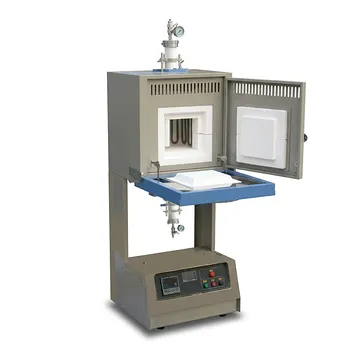
Vertical Hybrid High Temperature Furnace 1500C Alumina Tube SOFC Fuel Cell Testing Laboratory Heat Treatment Research Equipment
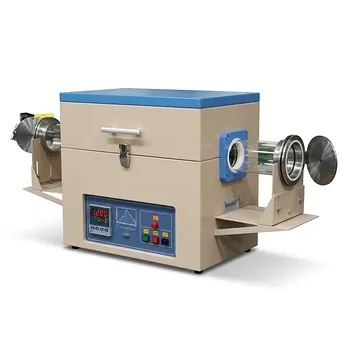
High Temperature 1200C Split Tube Furnace with Hinged Vacuum Flanges and 4 Inch Quartz Tube for Laboratory Research