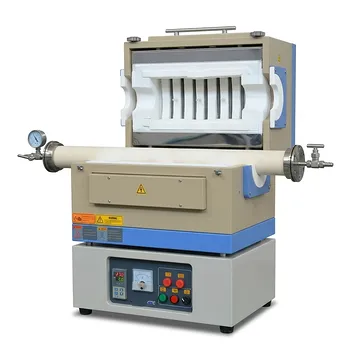
How does a high-temperature tube furnace facilitate the conversion of hZIF-8 into few-layered graphitic carbon? Expert Guide
Updated 3 months ago
The conversion of hZIF-8 into few-layered graphitic carbon is driven by a high-temperature tube furnace's ability to provide a strictly controlled thermal and chemical environment. At a precise temperature of 900°C, the furnace facilitates the pyrolytic carbonization of organic ligands and the evaporative removal of metallic zinc. This process, occurring under an inert atmosphere, allows local cobalt catalysts to reorganize amorphous carbon into highly ordered graphitic structures consisting of 2 to 5 layers.
Core Takeaway: A high-temperature tube furnace acts as a precision reactor that manages the simultaneous decomposition of metal-organic frameworks and the catalytic growth of graphitic layers by maintaining an oxygen-free, high-heat environment.
Atmospheric Control and Chemical Integrity
Preventing Oxidative Combustion
The furnace maintains a strictly controlled vacuum or inert atmosphere, typically using high-purity nitrogen or argon. This oxygen-free environment is critical because it prevents the organic framework from undergoing oxidative combustion. Instead of burning, the hZIF-8 precursor undergoes pyrolysis, ensuring the carbon remains to form the structural carrier.
Enabling In-Situ Nitrogen Doping
The stable environment provided by the tube furnace allows nitrogen atoms from the ZIF-8 imidazole ligands to remain within the system during carbonization. As the organic components break down, these atoms are incorporated directly into the carbon lattice. This results in in-situ nitrogen doping, which enhances the electrical conductivity and catalytic properties of the final c-hZIF-8 material.
The Thermal Mechanisms of Transformation
Pyrolytic Carbonization of Ligands
The furnace provides the high-precision heat necessary to trigger the pyrolytic decomposition of organic ligands. At 900°C, the chemical bonds within the hZIF-8 framework break down, leaving behind a stable carbon substrate. This temperature is high enough to ensure full carbonization while maintaining the integrity of the resulting porous structure.
Evaporative Removal of Zinc
One of the most critical functions of the tube furnace at high temperatures is the evaporative removal of metallic zinc. Zinc has a relatively low boiling point; the furnace’s heat causes it to vaporize and exit the carbon matrix. This removal creates atomic-level vacancies and increases the specific surface area, which is vital for high-performance applications.
Catalytic Reorganization into Graphitic Layers
While the zinc evaporates, the furnace facilitates the action of local cobalt catalysts present in the hZIF-8. Under these high-temperature conditions, the cobalt promotes the reorganization of amorphous carbon into 2 to 5 layers of graphitic carbon. This transition from disordered carbon to few-layered graphene-like structures significantly improves electron transport.
Precision Control for Structural Quality
Managed Heating Rates for Porosity
A high-precision tube furnace allows for a stable heating rate, often as low as 3°C per minute. This slow ramp-up ensures that gases are released gradually, preventing the collapse of the internal framework. This control is essential for forming developed microporous and macroporous channels within the carbon carrier.
Stabilization of Single-Atom Sites
By providing a consistent and uniform heat source, the furnace enables the stabilization of metal sites within the nitrogen-doped carbon framework. For materials derived from ZIFs, this thermal treatment is the core step for constructing efficient catalytic active sites. The result is a two-dimensional porous structure that remains stable even under demanding chemical conditions.
Understanding the Trade-offs
Temperature Sensitivity and Over-Graphitization
While higher temperatures promote graphitization and conductivity, exceeding the optimal 900°C-950°C range can lead to a loss of surface area. Excessive heat may cause the carbon pores to collapse or the graphitic layers to stack too thickly. Finding the "sweet spot" is essential for balancing catalytic activity with structural stability.
Atmosphere Purity and Doping Efficiency
The quality of the inert gas is a critical variable; even trace amounts of oxygen can result in partial oxidation of the carbon. This reduces the efficiency of nitrogen doping and can degrade the performance of the cobalt catalysts. Users must ensure high-purity gas flows to maintain the chemical integrity of the few-layered graphitic carbon.
How to Apply This to Your Project
Making the Right Choice for Your Goal
- If your primary focus is high electrical conductivity: Use the furnace to maintain a precise 900°C environment to maximize the formation of 2-5 layered graphitic structures.
- If your primary focus is maximum surface area: Utilize a slow heating rate (e.g., 3°C/min) to ensure the steady release of zinc vapor without collapsing the porous framework.
- If your primary focus is catalytic activity (PGM-free): Ensure a strict nitrogen atmosphere to promote high-density nitrogen doping and the stabilization of cobalt active sites.
By mastering the furnace's temperature and atmospheric parameters, you can precisely engineer the transformation of MOFs into high-performance graphitic materials.
Summary Table:
| Parameter | Function | Impact on c-hZIF-8 |
|---|---|---|
| Temperature | 900°C Heat Treatment | Triggers carbonization & zinc removal |
| Atmosphere | Inert Gas (N2/Ar) | Prevents oxidation & enables N-doping |
| Heating Rate | Slow Ramp (3°C/min) | Preserves porosity & framework stability |
| Catalysts | Local Cobalt (Co) | Organizes carbon into 2-5 graphitic layers |
| Process | In-Situ Doping | Enhances conductivity & catalytic activity |
Elevate Your Material Research with THERMUNITS
Are you looking to achieve precise, repeatable results in MOF carbonization or advanced graphitization? THERMUNITS is a leading manufacturer of high-performance laboratory equipment for material science. Our high-temperature Tube Furnaces and Vacuum Systems provide the strict atmospheric control and thermal precision required for synthesizing few-layered graphitic carbon and other high-tech materials.
From CVD/PECVD systems and Atmosphere furnaces to Hot Press, Rotary, and Vacuum Induction Melting (VIM) solutions, we empower industrial R&D and academic labs to push the boundaries of heat treatment.
Ready to optimize your thermal processing? Contact THERMUNITS Today to discuss your custom furnace requirements with our technical experts!
References
- Eun Jin Cho, Jeeyoung Shin. Designing few-layered graphitic carbons with atomic-sized cobalt hydroxide by harnessing hollow metal–organic frameworks. DOI: 10.1039/d4na00203b
Mentioned Products
- Ultra High Temperature 2300C Induction Heated Graphite Tube Furnace with Infrared Control
- High Temperature Dual Zone Rotating Tube Furnace 1500C Silicon Carbide Heating for Advanced Material Synthesis
- High Temperature Tube Furnace 1500C with Sliding Flanges and 50mm OD for Rapid Thermal Processing Fast Heating and Cooling
- High Temperature 1700C Vertical Tube Furnace for Powder Spherification and Material Sintering
- High Temperature Vertical Hybrid Furnace with Alumina Tube and SiC Heating for SOFC Coin Cell Testing and Atmosphere Processing
People Also Ask
- How does a high-temp furnace enhance thermal conductivity of graphene & CNT films? Superior Material Graphitization
- What conditions does a graphitization furnace provide for pitch-based carbon? Achieve Superior Crystalline Quality
- Why is an ultra-high temperature graphitization furnace required for coal-based graphite? Unlock Crystalline Performance
- What core technical conditions must an ultra-high temperature graphitization furnace meet? Achieve 2800°C Peak Performance
- Why is a high-temperature graphitization furnace needed for ZrC/SiC/C ceramic aerogels? Master UHTC Synthesis at 1700°C

Tech Team · ThermUnits
Last updated on Jun 02, 2026
Related Products
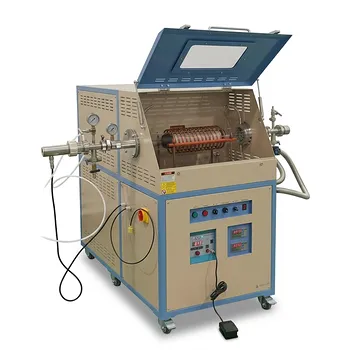
Ultra High Temperature 2300C Induction Heated Graphite Tube Furnace with Infrared Control
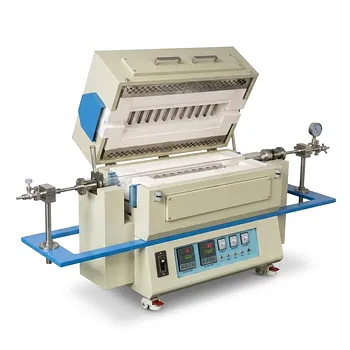
High Temperature Dual Zone Rotating Tube Furnace 1500C Silicon Carbide Heating for Advanced Material Synthesis

High Temperature Tube Furnace 1500C with Sliding Flanges and 50mm OD for Rapid Thermal Processing Fast Heating and Cooling

High Temperature 1700C Vertical Tube Furnace for Powder Spherification and Material Sintering
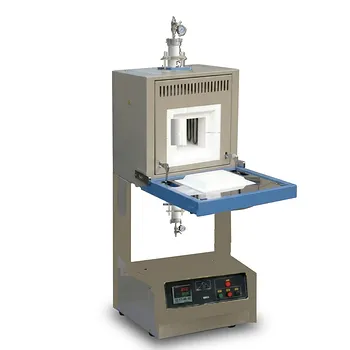
High Temperature Vertical Hybrid Furnace with Alumina Tube and SiC Heating for SOFC Coin Cell Testing and Atmosphere Processing
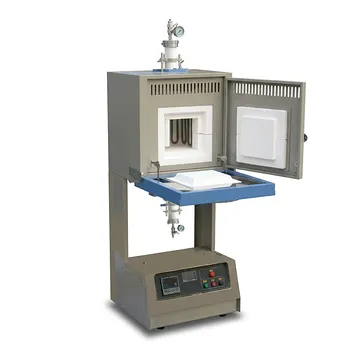
Vertical Hybrid High Temperature Furnace 1500C Alumina Tube SOFC Fuel Cell Testing Laboratory Heat Treatment Research Equipment

High Temperature 1700C Tube Furnace with High Vacuum Turbomolecular Pump System and Multi Channel Mass Flow Controller Gas Mixer

1750°C High Temperature Benchtop Vacuum Atmosphere Tube Furnace with Kanthal Super 1800 Heating Elements and 60mm Alumina Processing Tube

High Temperature 1700C Benchtop Tube Furnace with 5 Inch Heating Zone High Purity Alumina Tube and Vacuum Sealing Flanges
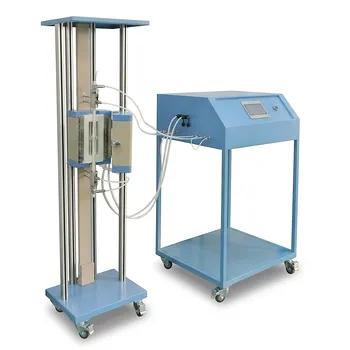
High Temperature Vertical Tube Furnace for Small Solid Oxide Fuel Cell Testing with Four Channel Gas Control

High Temperature 1700C Tube Furnace with 4 Inch OD Alumina Tube and Vacuum Sealing Flanges

High Temperature Automated 5 Inch Tube Furnace for Autonomous Material Research and Advanced Laboratory R&D

1800C High Temperature Compact Vacuum Tube Furnace with 60mm OD Alumina Tube and Kanthal MoSi2 Heating Elements
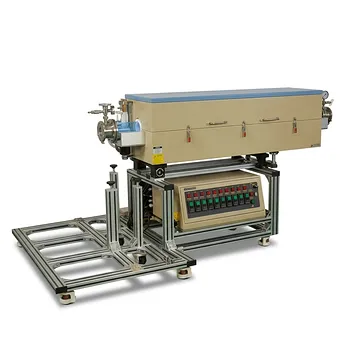
Ten Zone Multi Orientation Laboratory Tube Furnace for 1200C High Temperature Gradient Thermal Processing
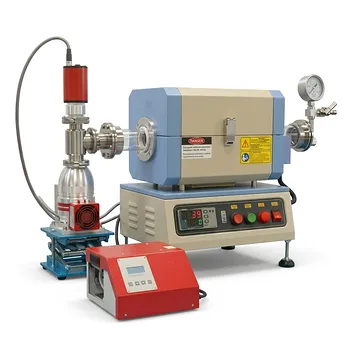
High Vacuum Compact Tube Furnace 1200C with Integrated Turbo Pump System and 8 Inch Heating Zone
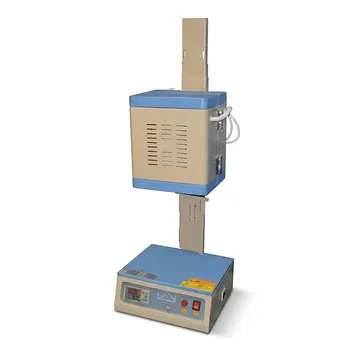
High Temperature Vertical Split Tube Furnace with PID Temperature Controller for 1 and 2 Inch Processing Tubes
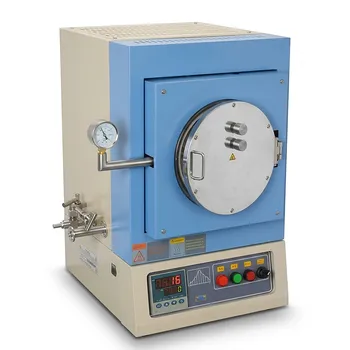
1100°C High Temperature Quartz Chamber Furnace 8 Inch OD with 7.6 Liter Capacity and Vacuum Atmosphere Capability
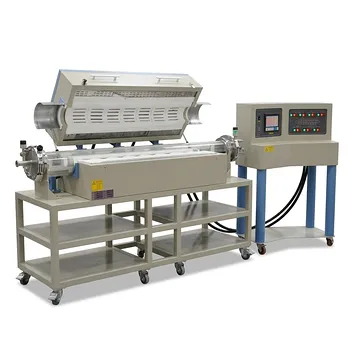
Eight Zone 1100C High Temperature Split Tube Furnace with 4 Inch OD Quartz Tube and Touch Screen Control Panel

1700C Hydrogen Gas Tube Furnace with 60mm Alumina Process Tube and Integrated Hydrogen Safety Detector