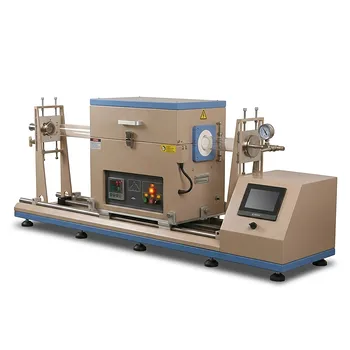
How does a high-temperature tube furnace work with pulsed lasers in LA synthesis? Master Silicon Nanowire Growth.
Updated 3 months ago
The high-temperature tube furnace acts as a controlled thermal reactor that processes the high-energy plasma plume generated by the pulsed laser. While the laser provides the localized energy required to vaporize the silicon target, the furnace maintains the stable background temperature and inert atmosphere necessary for material transport and structural growth. This synergy ensures that the ablated particles do not solidify instantly but instead recrystallize into precise, one-dimensional nanowires.
The integration of a pulsed laser and a tube furnace creates a dual-phase synthesis environment: the laser drives the initial phase transformation into plasma, while the furnace governs the subsequent nucleation and growth kinetics. This partnership is essential for producing nanowires with specific crystalline-core and amorphous-shell structures.
The Role of the Laser in Plasma Generation
High-Energy Ablation of the Target
The process begins when a high-power pulsed laser strikes a target composed of pure silicon or a silicon-metal mixture. This intense burst of energy causes the target material to undergo laser ablation, immediately transitioning from a solid state into a high-energy plasma plume.
Initiation of the Vapor Phase
The laser serves as the primary "engine" for creating the source material in a gaseous state. By using pulses rather than a continuous beam, the system can achieve the extreme energy densities required for vaporization without overheating the entire furnace chamber.
The Furnace as a Thermal and Transport Regulator
Facilitating Recrystallization and Growth
Once the plasma plume is created, the high-temperature tube furnace provides the critical thermal environment required for the silicon to reorganize. The furnace maintains a consistent heat—often ranging from 800°C to 1500°C—which prevents the silicon from quenching too rapidly into disordered clusters.
Managing Product Transport
The furnace is typically filled with an inert gas, such as argon, which serves as a carrier medium. This gas flow guides the ablation products from the high-energy laser site to the cooler end of the furnace chamber, where the actual deposition and growth occur.
Structural Formation of Nanowires
As the silicon particles move through the furnace's controlled thermal gradient, they undergo recrystallization. This results in the formation of nanowires characterized by a crystalline silicon core and an amorphous silicon shell, a dual-structure that provides enhanced mechanical stability and electrochemical performance.
Atmospheric Control and Material Integrity
Preventing Spontaneous Oxidation
A primary function of the tube furnace is to maintain a closed, oxygen-free environment. By establishing a constant flow of high-purity inert gas, the furnace prevents the silicon from reacting with oxygen to form unwanted silica layers, ensuring the purity of the nanowire core.
Establishing Dynamic Equilibrium
The furnace allows for the precise regulation of pressure and gas flow, creating a dynamic equilibrium within the reactor. This stability is necessary for the anisotropic precipitation of silicon, which is the mechanism that forces the material to grow into long, thin wires rather than spherical particles.
Understanding the Technical Trade-offs
Balancing Laser Power and Furnace Temperature
If the laser power is too high relative to the furnace temperature, the resulting plasma may be too energetic, leading to inconsistent nanowire diameters. Conversely, if the furnace temperature is too low, the ablated material may solidify before it can form a high-quality crystalline structure.
Gas Flow Sensitivity
The velocity of the inert gas must be meticulously controlled. Excessive flow can "blow" the plasma plume out of the growth zone too quickly, while insufficient flow can cause the material to deposit on the furnace walls rather than on the intended collection substrate.
Applying This Synthesis Method to Your Project
Recommendations for Targeted Results
- If your primary focus is mechanical stability: Prioritize the cooling gradient of the furnace to ensure the formation of a thick amorphous silicon shell around the crystalline core.
- If your primary focus is high-purity crystalline growth: Focus on maintaining a strictly oxygen-free argon atmosphere at the upper limits of the furnace's temperature range to promote perfect recrystallization.
- If your primary focus is controlling nanowire diameter: Adjust the pulse frequency of the laser in tandem with the furnace's internal pressure to regulate the density of the plasma plume.
The successful synthesis of silicon nanowires relies on the furnace's ability to transform the chaotic energy of laser ablation into a disciplined, predictable environment for crystal growth.
Summary Table:
| Component | Primary Function | Role in Nanowire Synthesis |
|---|---|---|
| Pulsed Laser | Plasma Generation | Vaporizes the silicon target into a high-energy plasma plume. |
| Tube Furnace | Thermal Regulation | Maintains stable background heat (800°C-1500°C) for recrystallization. |
| Inert Gas (Argon) | Carrier Medium | Transports ablated particles from the laser site to the deposition zone. |
| Thermal Gradient | Structural Control | Governs nucleation to form crystalline-core and amorphous-shell structures. |
| Closed Chamber | Atmospheric Purity | Prevents spontaneous oxidation to ensure high-purity material integrity. |
Elevate Your Nanomaterial Research with THERMUNITS
At THERMUNITS, we understand that precision is the foundation of material science innovation. As a leading manufacturer of high-temperature laboratory equipment, we provide the advanced thermal environments necessary for complex processes like Laser Ablation synthesis.
Our comprehensive range of solutions is designed for industrial R&D and academic excellence, including:
- Tube & Atmosphere Furnaces: Perfect for controlled nanowire growth and inert gas processing.
- CVD/PECVD Systems: For high-performance thin film and nanomaterial deposition.
- Vacuum & Hot Press Furnaces: Ensuring material purity and structural integrity under extreme conditions.
- Specialized Equipment: Including Muffle, Rotary, Dental furnaces, Electric Rotary Kilns, and Vacuum Induction Melting (VIM) systems.
Whether you are refining crystalline structures or scaling up industrial heat treatments, THERMUNITS delivers the reliability and control you need.
Ready to optimize your thermal processing?
Contact our technical experts today to discuss your custom laboratory requirements!
References
- Xinyu Chen, Lin Zeng. Advancing high‐performance one‐dimensional Si/carbon anodes: Current status and challenges. DOI: 10.1002/cnl2.118
Mentioned Products
- Vertical 1700C Vacuum and Atmosphere Tube Furnace with 80mm Alumina Tube
- Compact High Temperature 1600C Tube Furnace with 50mm Alumina Tube and Vacuum Flanges for Material Sintering
- 900°C Max Rotary Tube Furnace with 8 Inch 310S Alloy Tube and Optional Multi Zone Heating for Industrial Material Calcination
- Split Vertical Tube Furnace with 1200C Quartz Tube and Stainless Steel Vacuum Flanges for Rapid Thermal Processing
- High Temperature 1700C Tube Furnace with High Vacuum Turbomolecular Pump System and Multi Channel Mass Flow Controller Gas Mixer
People Also Ask
- How is an industrial-grade vertical tube furnace utilized in smelting leaching residues? Enhance Metal Recovery Efficiency
- What is the function of a laboratory-grade vertical tube furnace in fast pyrolysis? Optimize Composite Research.
- How does a vertical tube furnace facilitate thermoelectric alloy melting? Precision synthesis for material homogeneity.
- Why is a thermocouple sensor indispensable for monitoring the vertical tube furnace during gallium oxide nanowire production? Optimize VLS Growth
- What are the advantages of using a vertical tube furnace for crucible experiments simulating steel-slag interactions?

Tech Team · ThermUnits
Last updated on Jun 02, 2026
Related Products

Vertical 1700C Vacuum and Atmosphere Tube Furnace with 80mm Alumina Tube

Compact High Temperature 1600C Tube Furnace with 50mm Alumina Tube and Vacuum Flanges for Material Sintering
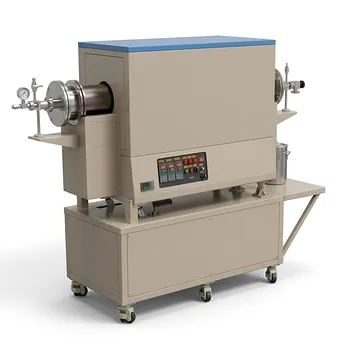
900°C Max Rotary Tube Furnace with 8 Inch 310S Alloy Tube and Optional Multi Zone Heating for Industrial Material Calcination
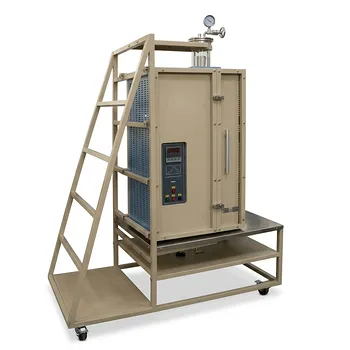
Split Vertical Tube Furnace with 1200C Quartz Tube and Stainless Steel Vacuum Flanges for Rapid Thermal Processing

High Temperature 1700C Tube Furnace with High Vacuum Turbomolecular Pump System and Multi Channel Mass Flow Controller Gas Mixer

1100C Tube Furnace with Vacuum Flange and Programmable Temperature Controller for Material Science and Industrial Heat Treatment

5 Inch Three Zone Rotary Tube Furnace with Integrated Gas Delivery System and 1200C Capability for Advanced Material CVD Processing

1700C Hydrogen Gas Tube Furnace with 60mm Alumina Process Tube and Integrated Hydrogen Safety Detector
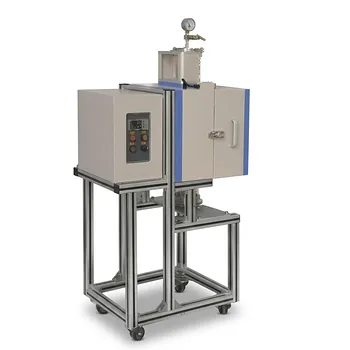
1200°C 5 Inch Vertical Quartz Tube Furnace with Stainless Steel Vacuum Flanges

High Temperature 1700C Six Zone Split Tube Furnace with Alumina Tube and Water Cooled Flanges

Compact Vertical Split Quartz Tube Furnace with Stainless Steel Vacuum Flanges for Rapid Thermal Quenching and Controlled Atmosphere Material Processing

High Temperature 1700C Benchtop Tube Furnace with 5 Inch Heating Zone High Purity Alumina Tube and Vacuum Sealing Flanges

1200C High Throughput Multi Channel Tube Furnace with 50mm Quartz Tubes for Annealing and Material Phase Diagram Research

Three Zone Tube Furnace with 11 Inch or 15 Inch Quartz Tube and Hinged Flanges for Vacuum Atmosphere Heat Treatment

1800C High Temperature Compact Vacuum Tube Furnace with 60mm OD Alumina Tube and Kanthal MoSi2 Heating Elements

High Temperature 1700C Vertical Tube Furnace for Powder Spherification and Material Sintering
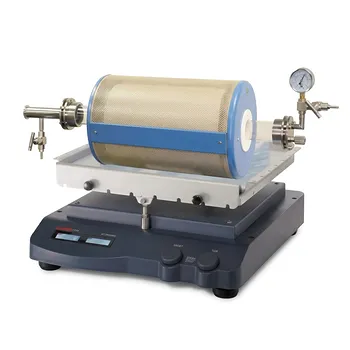
High Temperature Rocking Tube Furnace with Quartz Tube and Vacuum Flange for Materials Synthesis

High Temperature Automated 5 Inch Tube Furnace for Autonomous Material Research and Advanced Laboratory R&D
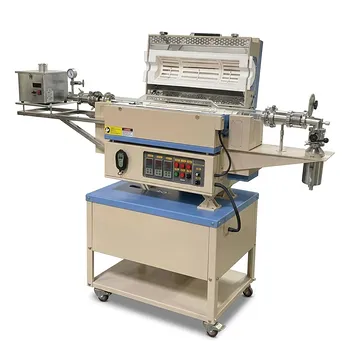
5 Inch Rotary Tube Furnace with Automatic Feeding and Receiving System 1200C Three Zone CVD Powder Processing