How does a Horizontal Tube Furnace (HTF) facilitate the study of solidification behavior in Au-Ge alloys? Mastering Cooling
Updated 3 months ago
The Horizontal Tube Furnace (HTF) enables the precise study of Gold-Germanium (Au-Ge) solidification by providing a platform for extremely slow, controlled cooling rates. By facilitating natural cooling speeds as low as 0.01°C/s, the HTF creates a low-undercooling environment that allows researchers to observe the formation of specific eutectic morphologies, such as coarse ligaments and large pores. This serves as a critical experimental baseline to contrast against rapid thermal annealing, proving how cooling rates dictate final material structure.
The HTF acts as a controlled thermal laboratory that isolates cooling velocity as a primary variable. By achieving near-equilibrium solidification, it reveals the fundamental morphological limits of Au-Ge alloys, allowing for a definitive comparison between slow-cooled and rapidly processed states.
Mechanisms of Morphology Control in HTFs
Achieving Low-Undercooling Environments
The HTF is uniquely suited for studies requiring minimal thermal gradients over extended periods. By utilizing the furnace's natural cooling curve, researchers can maintain a low-undercooling state where the liquid-to-solid transition occurs slowly.
This slow progression allows the Au-Ge alloy to reach a state of near-equilibrium. In this environment, the eutectic structure has sufficient time to develop into coarse ligaments rather than the fine, refined structures seen in high-speed cooling.
Establishing a Comparative Baseline
Solidification studies often require a "control" state to understand the impact of advanced manufacturing techniques. The HTF provides this by producing a "coarse" reference sample that highlights the maximum possible growth of features like ligaments and pores.
When compared to samples produced via rapid thermal annealing, the HTF-processed alloys provide the "before" and "after" context needed to verify the decisive role of cooling rates. This comparison is essential for engineering alloys with specific mechanical or electrical properties.
Environmental Stability and Sample Integrity
Atmosphere Isolation via Quartz Tubing
A critical feature of the HTF is the use of a quartz tube to isolate the Au-Ge alloy from the ambient atmosphere. This prevents oxidation and contamination, ensuring that the observed solidification behavior is a result of thermal dynamics rather than chemical interference.
The isolation also allows for the introduction of specific gases, such as hydrogen, if the study requires deoxygenation of the metal powder before solidification. This ensures the resulting alloy is homogeneous and chemically pure.
High-Precision Thermal Uniformity
HTFs employ high-precision heating systems to maintain stable temperatures, often around 700°C for alloy synthesis. This stability ensures that the alloy is fully melted and the atoms are mutually diffused before the cooling phase begins.
Without this level of thermal uniformity, the solidification process could be skewed by localized temperature pockets. The HTF eliminates these variables, providing a consistent starting point forทุก experiment.
Understanding the Trade-offs
Time and Throughput Constraints
The primary drawback of using an HTF for solidification studies is the significant time investment required for extremely slow cooling. Achieving a rate of 0.01°C/s means a single experiment can take several hours or even days to reach room temperature.
Limited Geometric Flexibility
Samples are typically confined to small crucibles or boats within a narrow tube. This restricts the size and shape of the Au-Ge alloy that can be studied, making it more suitable for fundamental material science than for testing large-scale components.
Susceptibility to Atmospheric Penetration
In certain industrial-grade setups, the configuration may allow ambient oxygen to reach the alloy surface if not properly sealed. While this can be useful for studying corrosion or oxidation mechanisms, it can also inadvertently contaminate solidification experiments if the vacuum or gas flow is not strictly maintained.
Applying HTF Data to Material Design
To effectively utilize a Horizontal Tube Furnace for alloy research, you must align your cooling strategy with your final material goals. The HTF is a tool for understanding the "slow" extreme of the thermal spectrum.
- If your primary focus is establishing a structural baseline: Utilize the slowest possible natural cooling rate (0.01°C/s) to ensure the formation of fully developed coarse ligaments.
- If your primary focus is synthesizing homogeneous alloys: Use the HTF’s ability to maintain high-temperature stability (e.g., 700°C) for extended periods to ensure complete mutual diffusion of Au and Ge atoms.
- If your primary focus is isolating thermal variables: Ensure the use of a high-purity quartz tube and a controlled inert atmosphere to prevent oxidation from masking the effects of the cooling rate.
By mastering the cooling dynamics of the Horizontal Tube Furnace, researchers gain the ability to predict and manipulate the fundamental morphology of Au-Ge alloys for advanced technical applications.
Summary Table:
| Feature | Function in Au-Ge Solidification | Scientific Benefit |
|---|---|---|
| Slow Cooling Control | Achieves rates as low as 0.01°C/s | Creates low-undercooling for coarse morphology |
| Atmosphere Isolation | Quartz tube prevents oxygen contact | Ensures sample purity and prevents oxidation |
| Thermal Uniformity | Stable heating around 700°C | Ensures complete mutual diffusion of atoms |
| Comparative Baseline | Provides a "coarse" reference state | Validates effects of rapid thermal annealing |
| Inert Gas Integration | Allows introduction of H2 or Ar | Enables deoxygenation and chemical homogeneity |
Optimize Your Material Research with THERMUNITS
Are you looking to achieve precise control over alloy morphology and thermal dynamics? THERMUNITS is a leading manufacturer of high-temperature laboratory equipment specifically designed for material science and industrial R&D. We provide the high-precision tools necessary to establish reliable experimental baselines and push the boundaries of heat treatment.
Our Comprehensive Thermal Solutions Include:
- Tube Furnaces (Horizontal, Vertical, & Rotary): Ideal for controlled cooling and atmospheric isolation.
- Advanced Systems: Vacuum, Atmosphere, Muffle, and Hot Press furnaces.
- Specialized Equipment: CVD/PECVD systems, Dental Furnaces, and Vacuum Induction Melting (VIM) furnaces.
- Support: High-quality Thermal Elements and lab-scale heat treatment accessories.
Ready to enhance your lab's capabilities? Contact our expert team today to find the perfect thermal processing solution for your specific research needs!
References
- Lotan Portal, Boaz Pokroy. Morphology Control of Nanoporous Gold Through Selective Dissolution of Au–Ge Eutectic Microstructures. DOI: 10.1002/adem.202401564
Mentioned Products
- Multi Position Tube Furnace 1100C for Laboratory Material Research and Advanced Industrial Thermal Processing
- 1200°C 10-Zone Split Tube Furnace with Horizontal and Vertical Mounting for Multi-Zone Thermal Gradients and Large Diameter Material Processing
- Ten Zone Multi Orientation Laboratory Tube Furnace for 1200C High Temperature Gradient Thermal Processing
- Vertical 1700C Vacuum and Atmosphere Tube Furnace with 80mm Alumina Tube
- Split Vertical Tube Furnace with 1200C Quartz Tube and Stainless Steel Vacuum Flanges for Rapid Thermal Processing
People Also Ask
- Why use a tube furnace for oxygen annealing LaCrO3/LaMnO3? Optimize Phase Transition & Magnetic Performance.
- What key role does a laboratory high-temperature tube furnace play in the production of carbon nanofibers? Guide
- How is a laboratory high-temperature tube furnace utilized to research the products of aluminothermic reduction? Advanced Metallurgical Solutions
- What is the role of a laboratory tube furnace in the carbonization process of porous carbon foam (PCF)? Master 3D Synthesis
- What role does a laboratory tube furnace play in the pyrolysis and carbonization of biomass? Optimize Thermal Research.

Tech Team · ThermUnits
Last updated on Jun 03, 2026
Related Products
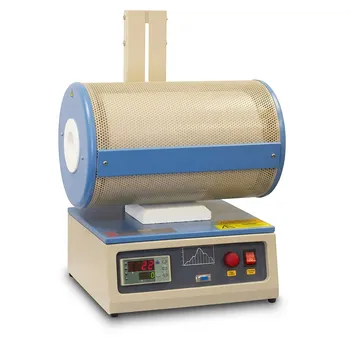
Multi Position Tube Furnace 1100C for Laboratory Material Research and Advanced Industrial Thermal Processing
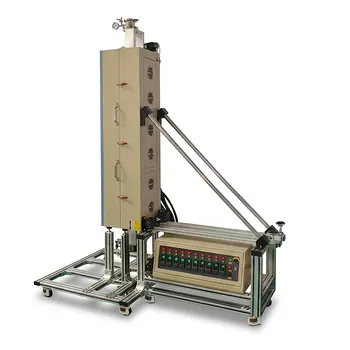
1200°C 10-Zone Split Tube Furnace with Horizontal and Vertical Mounting for Multi-Zone Thermal Gradients and Large Diameter Material Processing
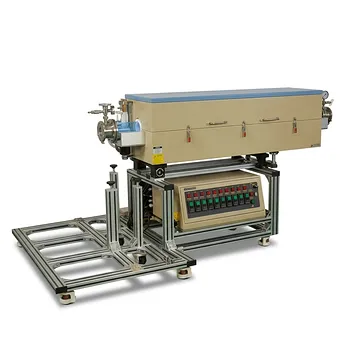
Ten Zone Multi Orientation Laboratory Tube Furnace for 1200C High Temperature Gradient Thermal Processing

Vertical 1700C Vacuum and Atmosphere Tube Furnace with 80mm Alumina Tube
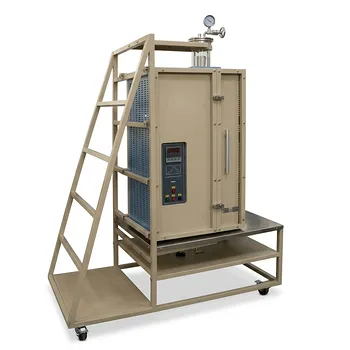
Split Vertical Tube Furnace with 1200C Quartz Tube and Stainless Steel Vacuum Flanges for Rapid Thermal Processing

High Temperature 1700C Vertical Tube Furnace for Powder Spherification and Material Sintering

1200°C 5 Inch Vertical Quartz Tube Furnace with Stainless Steel Vacuum Flanges
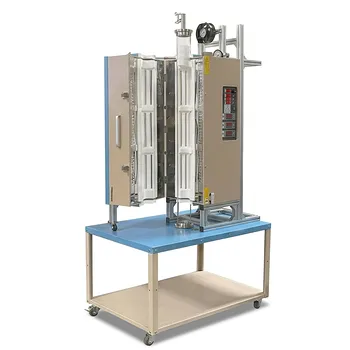
1200C Three Zone Split Vertical Tube Furnace 4 Inch Quartz Tube Stainless Steel Vacuum Flanges
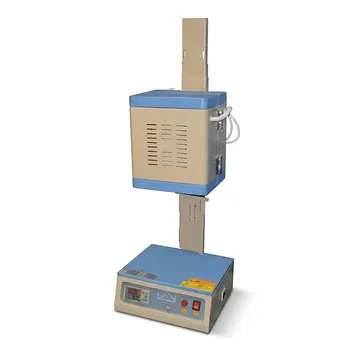
High Temperature Vertical Split Tube Furnace with PID Temperature Controller for 1 and 2 Inch Processing Tubes
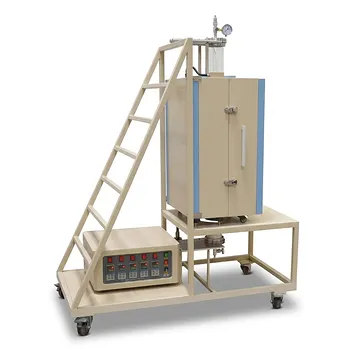
Five Zone Split Vertical Tube Furnace 1200C Max with 4 Inch Quartz Tube and Stainless Steel Vacuum Flanges
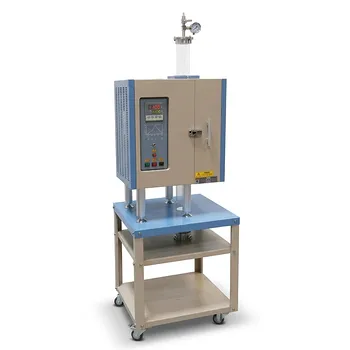
1100°C Split Vertical Tube Furnace with 80mm Quartz Tube and Stainless Steel Vacuum Flanges

Compact Vertical Split Quartz Tube Furnace with Stainless Steel Vacuum Flanges for Rapid Thermal Quenching and Controlled Atmosphere Material Processing

High Temperature 1700C Six Zone Split Tube Furnace with Alumina Tube and Water Cooled Flanges
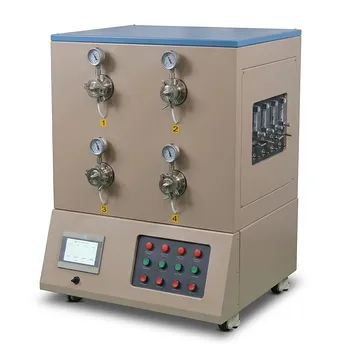
High Throughput 1200C Four Channel Tube Furnace with 3 Inch Quartz Tubes for Multi Zone Annealing and Material Research
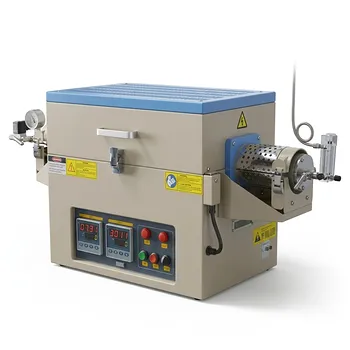
1100C Dual Zone Hydrogen Gas Tube Furnace with Quartz Tube and Integrated H2 Leak Detection System
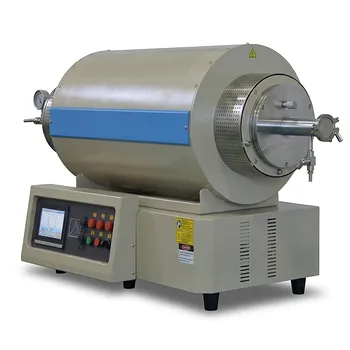
1200C Max Three Zone Tube Furnace 6 Inch OD Max with Tube and Flange

Compact High Temperature 1600C Tube Furnace with 50mm Alumina Tube and Vacuum Flanges for Material Sintering

1200C High Throughput Multi Channel Tube Furnace with 50mm Quartz Tubes for Annealing and Material Phase Diagram Research
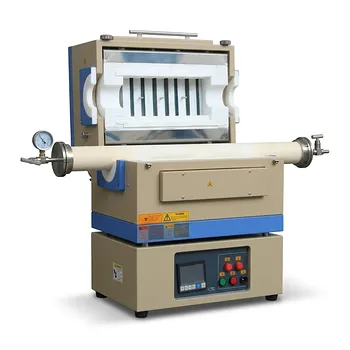
1500C Eight Zone Split Tube Furnace for Thermal Gradient Processing and Advanced Material Research
