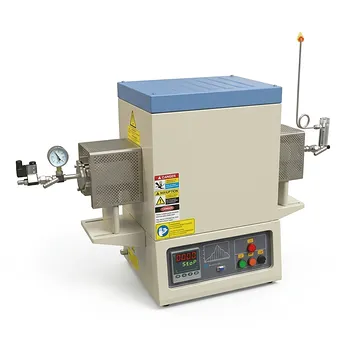
How does a Horizontal Tube Furnace provide a growth environment? Master Precision Nanomaterial Synthesis Today
Updated 3 months ago
The horizontal tube furnace facilitates nanomaterial growth by acting as a precision-controlled reactor that manages the transition of matter from solid to gas and back to solid. It achieves this by heating raw materials to high temperatures within alumina or quartz tubes to create a vapor phase. By establishing a deliberate temperature gradient and utilizing downstream carrier gases, the furnace forces these vapors into a state of supersaturation in cooler zones, where they nucleate and grow into nanostructures on specifically placed substrates.
The core function of a horizontal tube furnace in gas-phase condensation is to create a spatially defined thermal gradient that drives material transport and phase transformation. By balancing high-temperature vaporization with controlled downstream cooling, it provides the thermodynamic "push" necessary for the spontaneous assembly of nanostructures.
The Mechanisms of Thermal Gradient and Transport
Creating the Supersaturation Zone
A horizontal tube furnace establishes a stable thermal field where the source material is heated to its reaction or sublimation temperature. As the material vaporizes, it is carried by an inert gas toward a lower-temperature deposition zone. This cooling causes the vapor to reach a state of supersaturation, a critical thermodynamic threshold where the gas phase becomes unstable and begins to condense into solid nuclei.
Driving Vapor Migration
The furnace utilizes a horizontal temperature gradient to control the movement of material from the source zone to the cold end. This gradient, often enhanced by cooling water systems or specific heating element configurations, ensures that the vapor moves in a predictable direction. This migration is the primary driver for the recrystallization of materials like zinc oxide (ZnO), allowing nanostructures to form spontaneously as the temperature drops.
Maintaining Laminar Gas Flow
The horizontal layout is uniquely advantageous for maintaining stable, laminar gas flow across the length of the reaction tube. By precisely regulating the flow rates of carrier gases like argon or nitrogen, the furnace ensures that the vapor density remains uniform. This uniformity is essential for the growth of ultra-long nanostructures, such as carbon nanotubes, where turbulence would otherwise disrupt the assembly process.
Thermodynamic Control and Chemical Environment
Catalytic Cracking and Precipitation
In processes like chemical vapor deposition (CVD), the furnace provides the high-temperature environment (often around 950°C) required for molecular decomposition. For carbon-based materials, this heat provides the energy to crack precursor gases like methane or acetylene. The resulting carbon atoms then diffuse into catalyst particles and precipitate out as structured nanotubes or graphene.
Atmosphere and Pressure Regulation
The sealing performance of a horizontal tube furnace allows for a strictly controlled internal atmosphere, which can be held at low pressure or atmospheric levels. By displacing oxygen with inert gases, the furnace prevents oxidative combustion of sensitive precursors. This vacuum-tight environment is also critical for processes like sulfurization, where the reaction between vapors (such as sulfur) and thin films must occur without atmospheric interference.
In-Situ Reaction Management
Modern horizontal furnaces often include systems for the in-situ growth of complex composites. By regulating the specific ratios of reactive gases—such as hydrogen for reduction and acetylene for carbon supply—the furnace creates a tailored reducing atmosphere. This precision allows researchers to control the morphology, density, and electrical performance of the resulting nanomaterials directly during the synthesis cycle.
Critical Trade-offs in Tube Furnace Operation
Temperature Lag and Thermal Inertia
While horizontal furnaces provide excellent stability, they suffer from significant thermal inertia. The ceramic or quartz tubes and the surrounding insulation take a considerable amount of time to heat up and cool down. This makes it difficult to achieve the "rapid thermal processing" sometimes required for certain metastable phases, potentially leading to unwanted grain growth if the cooling phase is too slow.
Tube Contamination and Compatibility
The choice of tube material presents a constant trade-off between chemical resistance and temperature limits. Quartz tubes are excellent for visibility and purity but fail at temperatures exceeding 1200°C. Alumina tubes handle much higher temperatures but are more susceptible to thermal shock and can be harder to seal effectively, which may compromise the vacuum integrity required for sensitive condensations.
Applying This Technology to Your Synthesis Goals
How to Apply This to Your Project
- If your primary focus is high-purity metal oxide nanowires: Utilize a steep temperature gradient and high-purity alumina tubes to ensure the source material vaporizes completely and deposits only in the intended cold zone.
- If your primary focus is large-scale carbon nanotube production: Opt for a furnace with a motor-driven transmission system to allow for continuous movement of substrates through the growth zone, ensuring uniform residence time.
- If your primary focus is sensitive 2D material sulfurization: Prioritize a system with advanced sealing and multi-channel gas control to maintain a strictly oxygen-free environment and precise vapor pressure.
By mastering the balance between thermal gradients and gas dynamics, the horizontal tube furnace remains the most versatile tool for engineering the next generation of nanostructured materials.
Summary Table:
| Mechanism | Key Benefit | Application Example |
|---|---|---|
| Thermal Gradient | Drives supersaturation & nucleation | Zinc Oxide (ZnO) Nanowires |
| Laminar Gas Flow | Ensures uniform vapor density | Carbon Nanotubes (CNTs) |
| Atmosphere Control | Prevents oxidative combustion | 2D Material Sulfurization |
| Catalytic Cracking | Enables molecular decomposition | Graphene Synthesis |
Elevate Your Nanomaterial Research with THERMUNITS
As a leading manufacturer of high-temperature laboratory equipment, THERMUNITS provides the precision and reliability required for advanced material science and industrial R&D. Our comprehensive range of thermal processing solutions—including Horizontal Tube Furnaces, CVD/PECVD systems, Vacuum Induction Melting (VIM), Muffle, and Rotary furnaces—are engineered to deliver the perfect thermal gradients and atmosphere control your synthesis requires.
Whether you are developing carbon nanotubes, 2D materials, or advanced composites, our experts are ready to help you optimize your process.
Contact Our Experts Today to Find Your Ideal Solution
References
- Malek Ali. Applications of nanotechnology and nanoproduction techniques. DOI: 10.1515/eng-2024-0063
Mentioned Products
- Multi Position Tube Furnace 1100C for Laboratory Material Research and Advanced Industrial Thermal Processing
- 1200°C 10-Zone Split Tube Furnace with Horizontal and Vertical Mounting for Multi-Zone Thermal Gradients and Large Diameter Material Processing
- Ten Zone Multi Orientation Laboratory Tube Furnace for 1200C High Temperature Gradient Thermal Processing
- Vertical 1700C Vacuum and Atmosphere Tube Furnace with 80mm Alumina Tube
- Split Vertical Tube Furnace with 1200C Quartz Tube and Stainless Steel Vacuum Flanges for Rapid Thermal Processing
People Also Ask
- Why use a tube furnace for oxygen annealing LaCrO3/LaMnO3? Optimize Phase Transition & Magnetic Performance.
- What key role does a laboratory high-temperature tube furnace play in the production of carbon nanofibers? Guide
- How is a laboratory high-temperature tube furnace utilized to research the products of aluminothermic reduction? Advanced Metallurgical Solutions
- What is the role of a laboratory tube furnace in the carbonization process of porous carbon foam (PCF)? Master 3D Synthesis
- What role does a laboratory tube furnace play in the pyrolysis and carbonization of biomass? Optimize Thermal Research.

Tech Team · ThermUnits
Last updated on Jun 03, 2026
Related Products
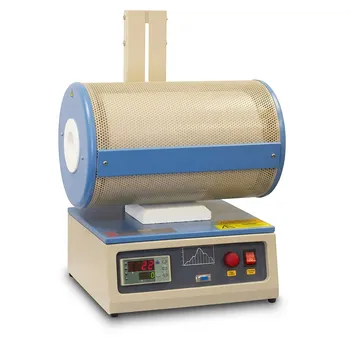
Multi Position Tube Furnace 1100C for Laboratory Material Research and Advanced Industrial Thermal Processing
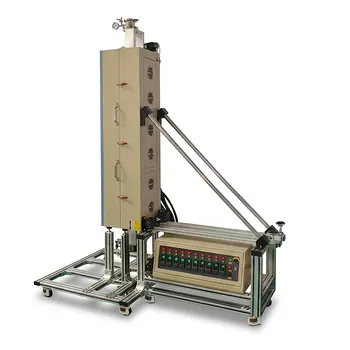
1200°C 10-Zone Split Tube Furnace with Horizontal and Vertical Mounting for Multi-Zone Thermal Gradients and Large Diameter Material Processing
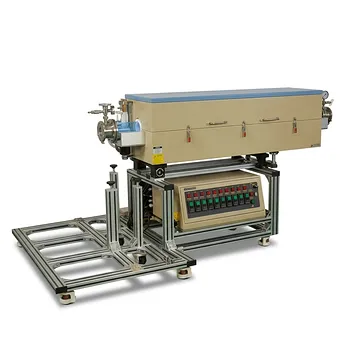
Ten Zone Multi Orientation Laboratory Tube Furnace for 1200C High Temperature Gradient Thermal Processing

Vertical 1700C Vacuum and Atmosphere Tube Furnace with 80mm Alumina Tube
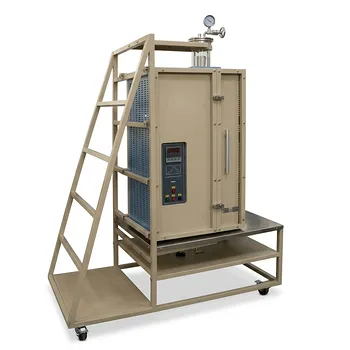
Split Vertical Tube Furnace with 1200C Quartz Tube and Stainless Steel Vacuum Flanges for Rapid Thermal Processing

High Temperature 1700C Vertical Tube Furnace for Powder Spherification and Material Sintering
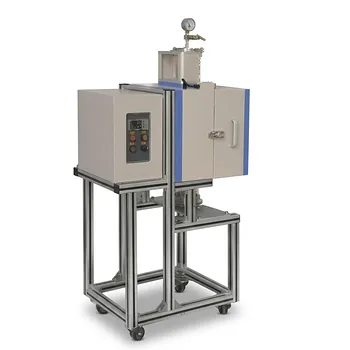
1200°C 5 Inch Vertical Quartz Tube Furnace with Stainless Steel Vacuum Flanges
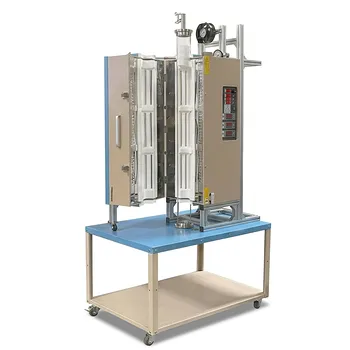
1200C Three Zone Split Vertical Tube Furnace 4 Inch Quartz Tube Stainless Steel Vacuum Flanges
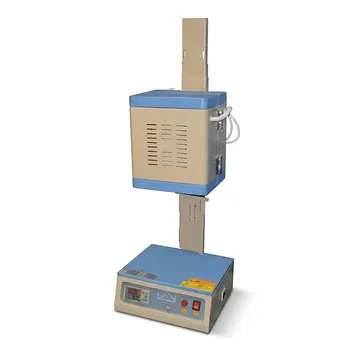
High Temperature Vertical Split Tube Furnace with PID Temperature Controller for 1 and 2 Inch Processing Tubes
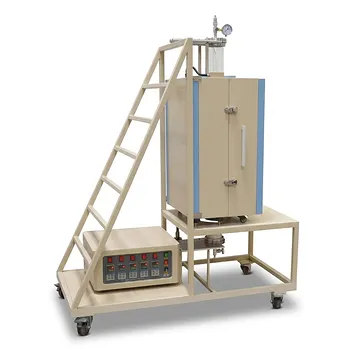
Five Zone Split Vertical Tube Furnace 1200C Max with 4 Inch Quartz Tube and Stainless Steel Vacuum Flanges
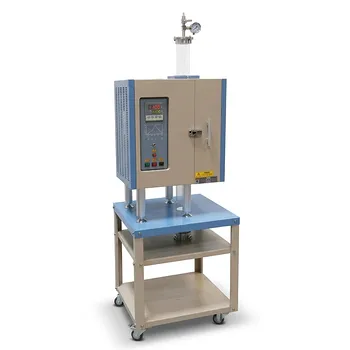
1100°C Split Vertical Tube Furnace with 80mm Quartz Tube and Stainless Steel Vacuum Flanges

Compact Vertical Split Quartz Tube Furnace with Stainless Steel Vacuum Flanges for Rapid Thermal Quenching and Controlled Atmosphere Material Processing

High Temperature 1700C Six Zone Split Tube Furnace with Alumina Tube and Water Cooled Flanges
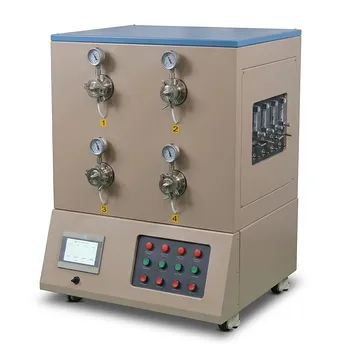
High Throughput 1200C Four Channel Tube Furnace with 3 Inch Quartz Tubes for Multi Zone Annealing and Material Research
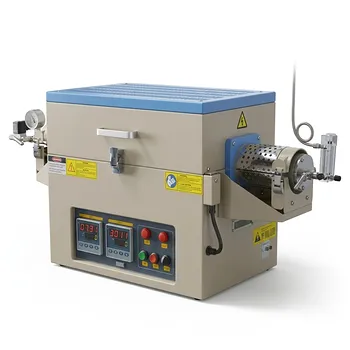
1100C Dual Zone Hydrogen Gas Tube Furnace with Quartz Tube and Integrated H2 Leak Detection System
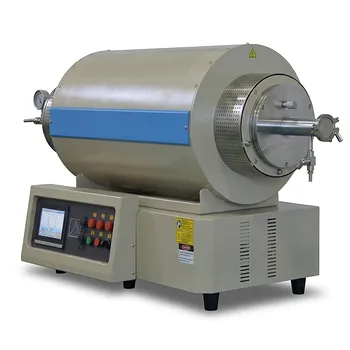
1200C Max Three Zone Tube Furnace 6 Inch OD Max with Tube and Flange
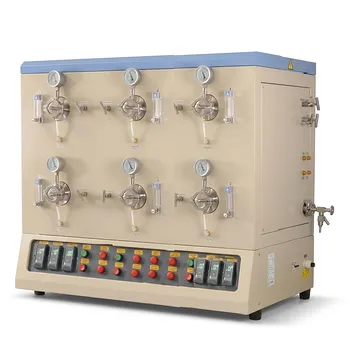
1200C High Throughput Multi Channel Tube Furnace with 50mm Quartz Tubes for Annealing and Material Phase Diagram Research
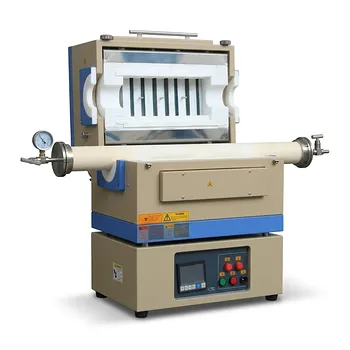
1500C Eight Zone Split Tube Furnace for Thermal Gradient Processing and Advanced Material Research
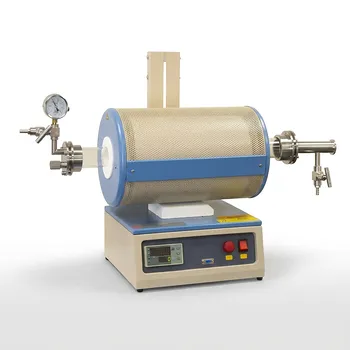
1100C Tube Furnace with Vacuum Flange and Programmable Temperature Controller for Material Science and Industrial Heat Treatment