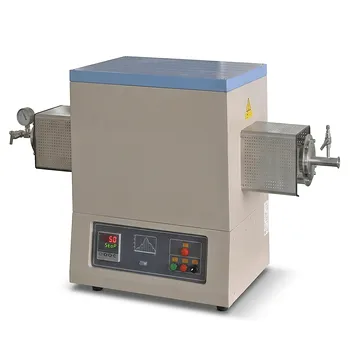
How does a mass flow controller or flow meter assist in the production of biochar within a tube furnace? Boost Results
Updated 5 months ago
Precision gas regulation is the cornerstone of high-quality biochar production. A mass flow controller (MFC) assists in a tube furnace by strictly regulating the flow of inert gases (like nitrogen) or reactive gases (like carbon dioxide) to maintain an oxygen-free environment, remove volatile by-products that cause pore blockages, and facilitate chemical activation for enhanced surface area.
Core Takeaway: By providing milliliter-level accuracy in gas delivery, mass flow controllers transform a tube furnace from a simple heating element into a precision reactor capable of tailoring the porosity and chemical functionality of biochar.
Protecting the Structural Integrity of Biochar
The Removal of Volatile By-products
During pyrolysis, biomass undergoes devolatilization, releasing a variety of gases that can re-condense on the biochar surface. Mass flow controllers ensure a stable, continuous flow of carrier gas that sweeps these volatiles out of the furnace before they can trigger secondary reactions. This prevents pore blockages, ensuring the biochar retains a high-quality porous structure necessary for subsequent applications like vacuum impregnation.
Maintaining an Inert Protective Environment
Biochar production requires a strictly anaerobic environment to prevent the carbon framework from oxidizing into ash. The MFC precisely regulates the intake of high-purity nitrogen (N2) to exclude oxygen throughout the heating and cooling phases. This inert blanket is critical for protecting the raw biochar framework as it transitions through devolatilization, carbonization, and aromatization.
Enhancing Biochar Functionality through Atmosphere Control
Physical Activation via Reactive Gas Flow
Beyond mere protection, MFCs allow for the introduction of reactive gases like carbon dioxide (CO2) to induce physical activation. This gas-solid reaction increases the density of polar functional groups, such as hydroxyl (-OH) and carboxyl (-COOH) groups. Precise flow regulation during this stage is what allows researchers to adjust the biochar’s water-holding capacity and specific surface area.
Simulating Specific Chemical Potentials
High-precision MFCs, often accurate within plus or minus 2 cc/min, enable the simulation of complex roasting atmospheres. By adjusting the ratios of gases like oxygen, argon, and carbon monoxide, operators can establish specific oxygen and sulfur potentials inside the furnace. This level of control is essential for validating thermodynamic models and understanding how different atmosphere grades affect the final chemical activity of the biochar.
Steam Activation and Carrier Gas Synergy
In advanced setups, MFCs regulate the feeding rates of nitrogen carrier gas alongside liquid water delivered to a vaporizer. This creates a stable flow of steam, which acts as an activating agent to create micropores. Accurate control of the activation atmosphere concentration is the only way to achieve targeted conversion rates, which can range from 15% to 85% depending on the intended use.
Understanding the Trade-offs
Precision vs. System Complexity
While digital MFCs offer unmatched accuracy, they introduce higher upfront costs and technical complexity compared to manual rotameters. Electronic controllers require regular calibration and are sensitive to particulate matter, meaning the gas lines must be kept pristine to avoid sensor drift.
The Risk of Over-activation
Excessive gas flow or improper gas ratios can lead to "burn-off," where the carbon matrix is consumed rather than activated. If the MFC is not properly programmed to match the heating rate (e.g., 10°C per minute) and residence time, the resulting biochar may suffer from structural collapse, leading to a loss of the very micropores the process was intended to create.
How to Apply This to Your Project
Making the Right Choice for Your Goal
To maximize the utility of mass flow control in your biochar production, consider your primary objective:
- If your primary focus is high surface area: Use the MFC to maintain a high-velocity nitrogen flow during the secondary pyrolysis phase to ensure all corrosive by-products and volatiles are removed, supporting surface areas up to 1790 m² g⁻¹.
- If your primary focus is chemical functionality: Program the MFC to introduce CO2 at specific temperature intervals to maximize the development of hydroxyl and carboxyl functional groups.
- If your primary focus is structural stability for impregnation: Use the MFC to maintain a low, steady inert flow that prevents pore blockages without inducing the physical wear of high-velocity gas streams.
The integration of precision mass flow control effectively turns the tube furnace into a programmable tool for molecular engineering.
Summary Table:
| Function | Role in Biochar Production | Key Benefit |
|---|---|---|
| Inert Gas Flow (N2) | Maintains an anaerobic atmosphere | Prevents oxidation and ash formation |
| Volatile Removal | Sweeps out devolatilization by-products | Prevents pore blockages and structural collapse |
| Reactive Gas (CO2) | Induces physical activation | Enhances surface area and chemical functionality |
| Precise Regulation | Controls chemical potential & steam feed | Achieves targeted conversion and microporosity |
Elevate Your Carbon Research with THERMUNITS
Precision is the key to high-performance materials. As a leading manufacturer of high-temperature laboratory equipment, THERMUNITS provides the advanced thermal solutions necessary for sophisticated material science and industrial R&D.
Whether you need a specialized Tube Furnace with integrated mass flow controllers, a CVD/PECVD system, or high-purity Atmosphere Furnaces, our equipment is designed to ensure optimal biochar porosity and structural integrity.
Ready to optimize your heat treatment process? Contact our technical team today to explore our comprehensive range of Muffle, Vacuum, Rotary, and Hot Press furnaces tailored to your research goals.
References
- Betül Coşkun, Ümit Nazlı Temel. Farklı Piroliz Maksimum Sıcaklıklarında Üretilen Biyokömür/Faz Değiştiren Malzeme Kompozitlerinin Enerji Depolama Kapasitelerinin Karşılaştırılması. DOI: 10.66248/cumfad.1598630
Mentioned Products
- 1100C Tube Furnace with Vacuum Flange and Programmable Temperature Controller for Material Science and Industrial Heat Treatment
- Compact High Temperature 1600C Tube Furnace with 50mm Alumina Tube and Vacuum Flanges for Material Sintering
- High Temperature 1700C Vertical Tube Furnace for Powder Spherification and Material Sintering
- Compact Split Tube Furnace with Integrated Vacuum System and Precision Temperature Calibrator
- Vertical 1700C Vacuum and Atmosphere Tube Furnace with 80mm Alumina Tube
People Also Ask
- What are the advantages of 1100°C tube furnaces for ORR catalysts? Boost Conductivity and Structural Stability.
- What role does a tube furnace play in PS template removal? Ensure ZnO/SiO2 Structural Integrity & High Performance.
- What core functions does a high-temperature vacuum tube furnace provide? Optimize np-CuSn Sintering & Joint Integrity
- What is the role of a high-temperature tube furnace in the calcination process of ZnO/In2O3 nanocomposites?
- What impact does the heating rate of a tube furnace have on biochar microstructure? Optimize Your Material R&D.

Tech Team · ThermUnits
Last updated on Apr 14, 2026
Related Products

1100C Tube Furnace with Vacuum Flange and Programmable Temperature Controller for Material Science and Industrial Heat Treatment

Compact High Temperature 1600C Tube Furnace with 50mm Alumina Tube and Vacuum Flanges for Material Sintering

High Temperature 1700C Vertical Tube Furnace for Powder Spherification and Material Sintering
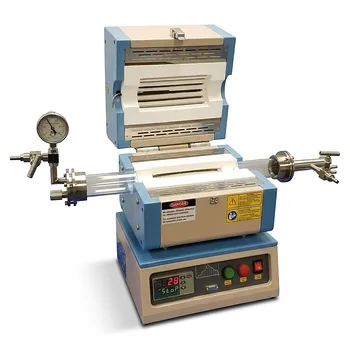
Compact Split Tube Furnace with Integrated Vacuum System and Precision Temperature Calibrator

Vertical 1700C Vacuum and Atmosphere Tube Furnace with 80mm Alumina Tube

1800C High Temperature Compact Vacuum Tube Furnace with 60mm OD Alumina Tube and Kanthal MoSi2 Heating Elements

Compact Vertical Split Quartz Tube Furnace with Stainless Steel Vacuum Flanges for Rapid Thermal Quenching and Controlled Atmosphere Material Processing
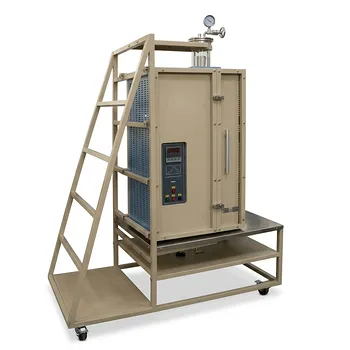
Split Vertical Tube Furnace with 1200C Quartz Tube and Stainless Steel Vacuum Flanges for Rapid Thermal Processing
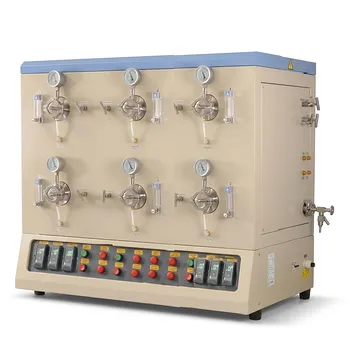
1200C High Throughput Multi Channel Tube Furnace with 50mm Quartz Tubes for Annealing and Material Phase Diagram Research
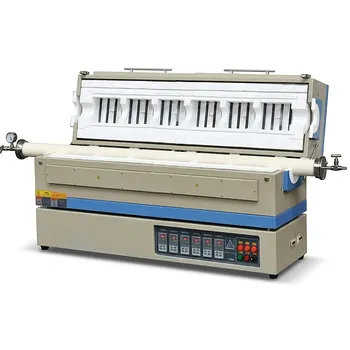
High Temperature 1700C Six Zone Split Tube Furnace with Alumina Tube and Water Cooled Flanges
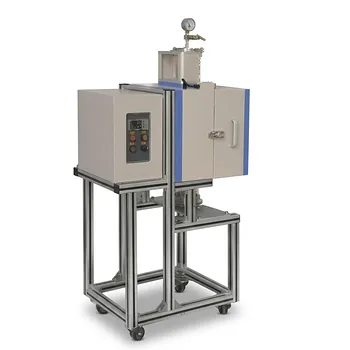
1200°C 5 Inch Vertical Quartz Tube Furnace with Stainless Steel Vacuum Flanges

High Temperature Automated 5 Inch Tube Furnace for Autonomous Material Research and Advanced Laboratory R&D
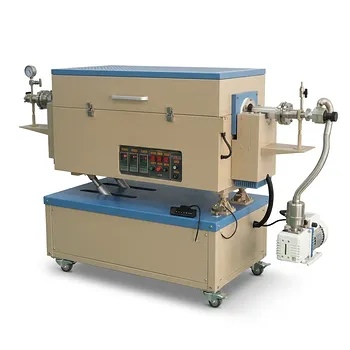
Three Zone Rotary Tube Furnace for High Temperature Powder Processing and Material Research
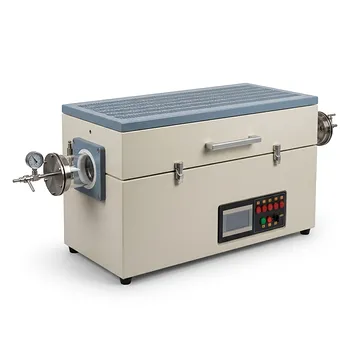
Five Zone 1200C High Temperature Split Tube Furnace with Touch Screen Controller and Multiple Quartz Tube Options
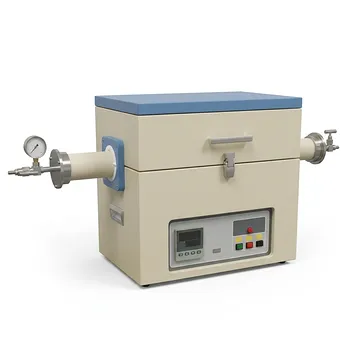
1250C Split Tube Furnace with 3 Inch Mullite Tube and Vacuum Sealing Flanges for Precision Thermal Processing
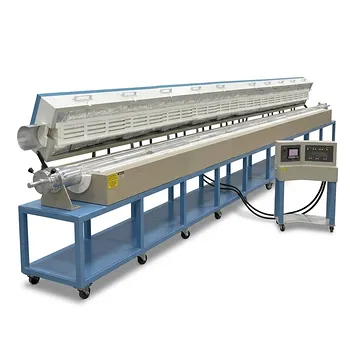
12 Zone Ultra Long Split Tube Furnace with 20 Foot Quartz Tube and 1100C Max Temperature
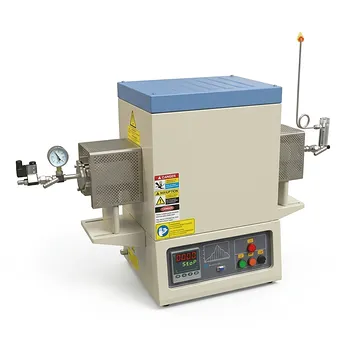
1700C Hydrogen Gas Tube Furnace with 60mm Alumina Process Tube and Integrated Hydrogen Safety Detector
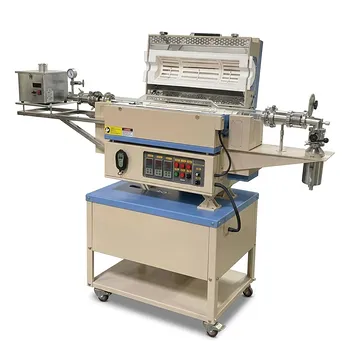
5 Inch Rotary Tube Furnace with Automatic Feeding and Receiving System 1200C Three Zone CVD Powder Processing
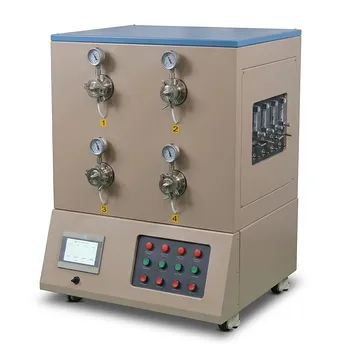
High Throughput 1200C Four Channel Tube Furnace with 3 Inch Quartz Tubes for Multi Zone Annealing and Material Research